
Verwandte Artikel zu What Is Black Lives Matter? (Who HQ Now)
Inhaltsangabe
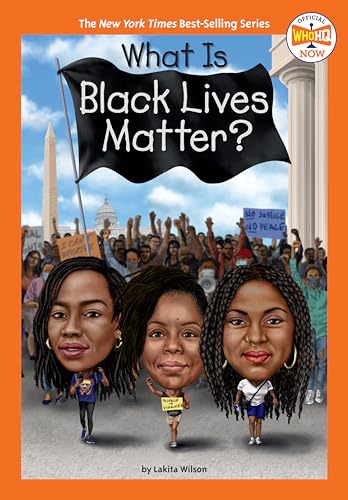
From the #1 New York Times bestselling series comes the latest title in the Who HQ Now format for trending topics. It tells the history of a political and social movement that advocates for non-violent civil disobedience and protests against incidents of police brutality--and all racially motivated violence--against Black people.
When a Black teenager named Trayvon Martin was senselessly killed in 2012, the African American community called for his murderer to be held accountable. But like many other racially sparked incidents in the past, his killer walked free. People looked for justice and healing in the moment. They turned to social media and a simple yet powerful hashtag emerged, #BlackLivesMatter.
The message grew into an international movement and has now become the rallying cry during protests against police brutality and racial acts of violence. The movement gained even more attention and support in 2020 when it called for police reform in the United States after the police-related murder of George Floyd.
Die Inhaltsangabe kann sich auf eine andere Ausgabe dieses Titels beziehen.
Über die Autorin bzw. den Autor
Lakita Wilson is a Professor of Education, writer and advocate for diverse and inclusive children's literature. She lives in Maryland with her two children and Shih-Tzu.
Auszug. © Genehmigter Nachdruck. Alle Rechte vorbehalten.
What Is Black Lives Matter?
On February 26, 2012, seventeen--year--old Trayvon Martin left his father’s girlfriend’s home, in a gated community in Sanford, Florida, to get a quick snack. He purchased a bag of Skittles and an Arizona Iced Tea. Throwing his dark gray hoodie over his head to protect himself from the rain, Trayvon walked home.
As Trayvon made his way back into his quiet community, a man named George Zimmerman watched him from his car and reached for his cell phone. Over the last several years, George had called the police many times to report people in his neighborhood. However, every “suspicious” person George reported was a Black male.
“We’ve had some break--ins in my neighborhood,” George told the police dispatcher. “And there’s a real suspicious guy. This guy looks like he’s up to no good or he’s on drugs or something.”
The dispatcher asked George questions as his car door creaked open. “Are you following him?” she asked. “We don’t need you to do that.”
George answered, “Okay.”
But he left his car and continued following Trayvon on foot. Cornering him, George began to harass the teenager, and a fight began. Moments later, shots rang out, and seventeen-year--old Trayvon Martin fell to the concrete sidewalk, his bag of Skittles still tucked safely in his pocket, only seventy yards from his destination.
Trayvon Martin was a teenager who loved video games and fixing things. He liked trying new things like snowboarding and visiting New York City to see a Broadway play. He had dreams of becoming a pilot someday. Instead, Trayvon was gunned down before he even had the opportunity to attend his high--school prom. And the man who killed him was still free to walk around his gated community, patrolling for more “suspicious people.”
Disappointment rippled through the Black community. In the United States, there is a history of treating Black lives like they don’t matter. Many people who commit crimes against Black people are not punished for their actions. Fifty--seven years before Trayvon Martin’s death, two white men in Mississippi killed fourteen--year--old Emmett Till after a white woman accused him of flirting with her. Emmett’s killers were found not guilty. Twenty--one years before Trayvon’s death, in Los Angeles, a Korean convenience--store owner shot fifteen--year--old Latasha Harlins to death after accusing her of stealing a bottle of orange juice. A California jury decided that Latasha’s killer was guilty, but a judge only sentenced the shop owner to five years of probation.
The Black community demanded justice for Trayvon so strongly that his death made national news. The police finally arrested George Zimmerman, but he claimed self--defense, and in 2013, he was found not guilty of murdering Trayvon.
The evening after the George Zimmerman verdict, community organizer Alicia Garza posted a letter to Black people on Facebook. She wrote, “I continue to be surprised about how little Black lives matter.” Alicia urged everyone in her community to stop giving up on Black life.
Then she ended her post by affirming, “I love you. I love us. Our lives matter.” Later, Alicia’s friend, Patrisse Cullors, changed the last three words into the now famous hashtag: #BlackLivesMatter.
Chapter 1: Three Friends Start a Movement
Alicia Garza was born on January 4, 1981, in Los Angeles, California. She lived with her mother, stepfather, and younger brother, Joey. When Trayvon Martin was killed, Alicia, then thirty--one years old, thought about her younger brother. Trayvon had been racially profiled—-or targeted because he was Black. Joey was tall and had brown skin and curly hair. Someone could racially profile him—-just like they had Trayvon. Alicia felt powerless in that moment. But in reality, Alicia had been full of power since she was a child.
Alicia’s mother began teaching her self--defense moves in their kitchen late at night when she was young. She told Alicia she didn’t have to do anything with anyone if she didn’t want to. Alicia’s mother had been attacked when she was younger, and she wanted her daughter to understand how to protect herself.
When Alicia was twelve, she thought a lot about protection. All around the country, adults argued about what teenagers should do with their bodies. Many adults felt like teenagers were too young to make their own health decisions. But Alicia believed teenagers had a right to protect themselves and their bodies. She fought to bring health education and resources to middle and high schools in her district—-and she won. This was Alicia’s first time organizing—-and she found great power in seeing a problem and making a plan for change.
In college, Alicia joined the student association at University of California San Diego. There, she fought for higher pay for the university janitors. As an adult, Alicia worked as the special projects director for the National Domestic Workers Alliance. This organization fights to make sure labor workers like nannies, housekeepers, and caregivers are treated fairly on the job. Alicia’s efforts supporting people who needed protection would help her later with her activist work.
Patrisse Cullors was born in Van Nuys, California. Living with her mom, sister, and two brothers in a low--income neighborhood had its challenges. Patrisse was nine when she saw her eleven-- and thirteen--year--old brothers slammed into a wall by police officers. She was thirteen when she saw Los Angeles police handcuff and haul away her older brother Monte.
The problem was that Monte suffered from schizoaffective disorder, a mental health condition that affects the way a person thinks, feels, and behaves. Instead of helping Monte, police officers often put him in jail. When Patrisse got older, Monte started writing her letters from jail. He explained that he was beaten and forced to drink toilet water by county sheriffs who patrolled the jails. One time in 1999, he was almost killed. Patrisse and her mom wanted to tell someone—-but there was no one to turn to. The police, in most cases, were always believed—especially over the word of a poor person with brown skin.
By the time she was twelve years old, Patrisse knew she was queer—-a word used to describe someone who does not identify as straight or whose gender identity does not fully match the sex (male or female) they were assigned at birth. She was also part of the Jehovah’s Witness religion. The elders in her faith community believed being queer was wrong. Patrisse knew she and her family would be shunned by the Jehovah’s Witness community if she openly identified as queer. But at age sixteen, she came out to her family anyway and left home.
Young and on her own, Patrisse struggled to survive without much support. This showed her the importance of sticking up for everyone—-even if they were poor, queer, or Black or Brown women.
When Patrisse was seventeen, she joined the Bus Riders Union, a group in Los Angeles that pushed for more funding for the bus system and less money for the city train system. Cutting bus funding meant poor people who lived in the city, those without cars and who didn’t live near train stations, had fewer options to travel to places they needed to go, like grocery stores. In Patrisse’s eyes, the people who were most often forgotten, like bus riders, were Black and poor.
...
„Über diesen Titel“ kann sich auf eine andere Ausgabe dieses Titels beziehen.
Suchergebnisse für What Is Black Lives Matter? (Who HQ Now)

Beispielbild für diese ISBN
What Is Black Lives Matter? (W
Anbieter: World of Books (was SecondSale), Montgomery, IL, USA
Verkäuferbewertung 5 von 5 Sternen

Zustand: Good. Copeland, Gregory (illustrator). Item in good condition. Textbooks may not include supplemental items i.e. CDs, access codes etc. Artikel-Nr. 00108149554
Gebraucht kaufen
EUR 3,72
Versand gratis
Versand innerhalb von USA
Versand innerhalb von USA
Anzahl: 4 verfügbar
Beispielbild für diese ISBN
What Is Black Lives Matter? (W
Anbieter: World of Books (was SecondSale), Montgomery, IL, USA
Verkäuferbewertung 5 von 5 Sternen
Zustand: Very Good. Copeland, Gregory (illustrator). Item in very good condition! Textbooks may not include supplemental items i.e. CDs, access codes etc. Artikel-Nr. 00101261158
Gebraucht kaufen
EUR 3,72
Versand gratis
Versand innerhalb von USA
Versand innerhalb von USA
Anzahl: 4 verfügbar
Beispielbild für diese ISBN
What Is Black Lives Matter? (W
Anbieter: World of Books (was SecondSale), Montgomery, IL, USA
Verkäuferbewertung 5 von 5 Sternen
Zustand: Acceptable. Copeland, Gregory (illustrator). Item in acceptable condition! Textbooks may not include supplemental items i.e. CDs, access codes etc. Artikel-Nr. 00096631470
Gebraucht kaufen
EUR 3,72
Versand gratis
Versand innerhalb von USA
Versand innerhalb von USA
Anzahl: 2 verfügbar
Beispielbild für diese ISBN
What Is Black Lives Matter? (Who HQ Now)
Verlag:
Penguin Workshop (edition ), 2021
ISBN 10: 0593385888
ISBN 13: 9780593385883
Gebraucht
Paperback
Anbieter: BooksRun, Philadelphia, PA, USA
Verkäuferbewertung 5 von 5 Sternen
Paperback. Zustand: Very Good. Copeland, Gregory (illustrator). It's a well-cared-for item that has seen limited use. The item may show minor signs of wear. All the text is legible, with all pages included. It may have slight markings and/or highlighting. Artikel-Nr. 0593385888-11-1
Gebraucht kaufen
EUR 4,21
Versand gratis
Versand innerhalb von USA
Versand innerhalb von USA
Anzahl: 1 verfügbar
Beispielbild für diese ISBN
What Is Black Lives Matter? (Who HQ Now)
Verlag:
Penguin Workshop (edition ), 2021
ISBN 10: 0593385888
ISBN 13: 9780593385883
Gebraucht
Paperback
Anbieter: BooksRun, Philadelphia, PA, USA
Verkäuferbewertung 5 von 5 Sternen
Paperback. Zustand: Very Good. Copeland, Gregory (illustrator). It's a well-cared-for item that has seen limited use. The item may show minor signs of wear. All the text is legible, with all pages included. It may have slight markings and/or highlighting. Artikel-Nr. 0593385888-8-1
Gebraucht kaufen
EUR 4,51
Versand gratis
Versand innerhalb von USA
Versand innerhalb von USA
Anzahl: 1 verfügbar
Beispielbild für diese ISBN
What Is Black Lives Matter?
Anbieter: ThriftBooks-Atlanta, AUSTELL, GA, USA
Verkäuferbewertung 5 von 5 Sternen
Paperback. Zustand: Good. No Jacket. Copeland, Gregory (illustrator). Pages can have notes/highlighting. Spine may show signs of wear. ~ ThriftBooks: Read More, Spend Less. Artikel-Nr. G0593385888I3N00
Gebraucht kaufen
EUR 4,98
Versand gratis
Versand innerhalb von USA
Versand innerhalb von USA
Anzahl: 1 verfügbar
Beispielbild für diese ISBN
What Is Black Lives Matter?
Anbieter: ThriftBooks-Atlanta, AUSTELL, GA, USA
Verkäuferbewertung 5 von 5 Sternen
Paperback. Zustand: Very Good. No Jacket. Copeland, Gregory (illustrator). May have limited writing in cover pages. Pages are unmarked. ~ ThriftBooks: Read More, Spend Less. Artikel-Nr. G0593385888I4N00
Gebraucht kaufen
EUR 4,98
Versand gratis
Versand innerhalb von USA
Versand innerhalb von USA
Anzahl: 1 verfügbar
Beispielbild für diese ISBN
What Is Black Lives Matter?
Verlag:
Penguin Young Readers Group, 2021
ISBN 10: 0593385888
ISBN 13: 9780593385883
Gebraucht
Softcover
Anbieter: Better World Books, Mishawaka, IN, USA
Verkäuferbewertung 5 von 5 Sternen
Zustand: Very Good. Copeland, Gregory (illustrator). Former library copy. Pages intact with possible writing/highlighting. Binding strong with minor wear. Dust jackets/supplements may not be included. Includes library markings. Stock photo provided. Product includes identifying sticker. Better World Books: Buy Books. Do Good. Artikel-Nr. 52540563-6
Gebraucht kaufen
EUR 6,19
Versand gratis
Versand innerhalb von USA
Versand innerhalb von USA
Anzahl: 2 verfügbar
Beispielbild für diese ISBN
What Is Black Lives Matter?
Verlag:
Penguin Young Readers Group, 2021
ISBN 10: 0593385888
ISBN 13: 9780593385883
Gebraucht
Softcover
Anbieter: Better World Books, Mishawaka, IN, USA
Verkäuferbewertung 5 von 5 Sternen
Zustand: Good. Copeland, Gregory (illustrator). Former library copy. Pages intact with minimal writing/highlighting. The binding may be loose and creased. Dust jackets/supplements are not included. Includes library markings. Stock photo provided. Product includes identifying sticker. Better World Books: Buy Books. Do Good. Artikel-Nr. 40866554-6
Gebraucht kaufen
EUR 6,19
Versand gratis
Versand innerhalb von USA
Versand innerhalb von USA
Anzahl: 3 verfügbar
Beispielbild für diese ISBN
What Is Black Lives Matter?
Verlag:
Penguin Young Readers Group, 2021
ISBN 10: 0593385888
ISBN 13: 9780593385883
Gebraucht
Softcover
Anbieter: Better World Books, Mishawaka, IN, USA
Verkäuferbewertung 5 von 5 Sternen
Zustand: Good. Copeland, Gregory (illustrator). Pages intact with minimal writing/highlighting. The binding may be loose and creased. Dust jackets/supplements are not included. Stock photo provided. Product includes identifying sticker. Better World Books: Buy Books. Do Good. Artikel-Nr. 46715016-6
Gebraucht kaufen
EUR 6,19
Versand gratis
Versand innerhalb von USA
Versand innerhalb von USA
Anzahl: 1 verfügbar