
Verwandte Artikel zu The Kew Gardens Girls
Inhaltsangabe
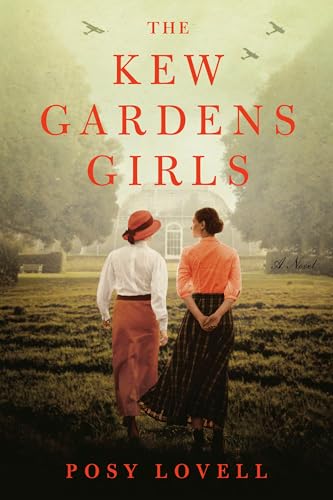
A heart-warming novel inspired by real life events, about the brave women during WWI who worked in the historic grounds of London's Kew Gardens.
Can the women of Kew keep the gardens alive in the midst of war?
London, 1916. England is at war. Desperate to help in whatever way they can, Ivy and Louisa enlist as gardeners at Kew, the Royal Botanic Gardens, taking on the jobs of the men who have gone to fight. Under their care, the gardens begin to flourish and become a safe haven for those seeking solace--but not everyone wants women working at Kew.
The pair begin to face challenges on the home front. When a tragedy overseas affects the people closest to them, can the women of Kew pull together to support themselves and their country through the darkest of times?
Die Inhaltsangabe kann sich auf eine andere Ausgabe dieses Titels beziehen.
Über die Autorin bzw. den Autor
Posy Lovell is a pseudonym for British author and journalist Kerry Barrett. Born in Edinburgh, she moved to London as a child with her family. She has a passion for uncovering the role of women in the past. Kerry lives in London with her family and The Kew Gardens Girls is her American debut.
Auszug. © Genehmigter Nachdruck. Alle Rechte vorbehalten.
Chapter 1
Kew
June 1915
“I’m really not sure about this,” said Douglas MacMillan as he slowly walked down the line of potential new recruits. “Not sure about this at all.”
He shook his head, pausing in his pacing.
“What do you think, Jim?”
His assistant, a younger man with a mop of dark hair and kind eyes, gave his boss an amused glance.
“I think you should give them a chance, Mac,” he said. “We’ve lost more than half our gardeners already, and there are bound to be more that join up. We need them.”
He sighed.
“We had this conversation when we put the ad in the Times, Mac. You agreed. We’re lucky so many have turned up.”
Mac huffed in disapproval.
“I’m just not sure they’re up to the job,” he muttered. “Bunch of namby-pamby lady poets and maiden aunts.”
In the line, two of the recruits exchanged a look of solidarity—they were used to being underestimated by men—before standing to attention again as Mac continued his inspection. He paused by one of the women—tall and elegant, though a closer look would reveal her skirt had been mended many times and her coat was faded.
“What’s your name?” he barked.
The woman winced, just a little, at his sharp tone, then straightened up and looked him straight in the eye.
“Louisa Taylor,” she said.
“And you want to be a horticulturalist, do you? Fancy yourself as a gardener?”
“I’m already a gardener. But I’d like to work here, yes.”
Mac huffed again. “Gardener, eh? What do you grow?”
“Vegetables, mostly, at the moment. But flowers, too. I only have window boxes because my flat is very small.”
Mac nodded and the woman continued.
“I grew up in Kent,” she said. “On a hops farm. I understand plants.”
“Hops?” Mac’s gruff Scottish voice sounded grudgingly impressed. “Not easy.”
“No, sir.”
Behind him, Jim grinned again.
“He’ll come round eventually,” he said in a low voice to the youngest woman in the line. “Don’t worry.”
She smiled at him. “Promise?” she said quietly.
“Promise.”
A kerfuffle at the other end of the line made them both look up. A disheveled young man joined the group. His cap was askew, one trouser leg was half-tucked into his sock and he was breathing heavily.
“Sorry I’m late,” he panted. “Went to the wrong gate, and then it was difficult finding somewhere to lock up my bicycle.”
Mac, looking relieved to see another male face, left his interrogation of Louisa Taylor and turned his attention to the man.
“What’s your name?”
“Bernard,” he said, still out of breath. “Bernie. Bernie Yorke.”
“Well, Bernard Bernie Yorke,” said Mac. “Do you have any horticulture experience?”
Bernie chuckled. “Good heavens, no,” he said. “None whatsoever. But I’m a fast learner, and I’m not frightened of hard work.”
“Good,” said Mac. “You’re in. Go and give Jim your details.”
The two women exchanged another glance and the younger woman, the one who’d been talking to Jim, raised an eyebrow. “Should have said your name was Louis, not Louisa,” she said quietly.
Louisa stifled a laugh. She already liked this rather wild-looking girl beside her and hoped they’d both be chosen to work at Kew.
“Louisa?” Mac said, making her jump.
“Yes, sir?”
“Not one of those Suffragettes, are you?”
Louise looked straight at him. “Absolutely not, sir.”
“Good,” said Mac. “They burned the tea pavilion, you know. And destroyed the orchid house. Terrible business.”
“I heard,” Louise said.
Behind her back, she curled her fingers round the little silver hammer brooch she wore and which she’d removed just before Mac had reached her.
“Terrible.”
“You’re in,” Mac said with a definite tinge of reluctance. “Give your details to Jim.”
As Louisa went to leave the line, the younger woman next to her caught her hand and pushed something into it. It was another tiny hammer brooch.
Louisa looked at her and the younger woman pushed a strand of red hair out of her face and smiled. Giving her the tiniest of nods, Louisa headed over to where Jim sat on a tree trunk, meticulously writing down the names and addresses of all the new recruits. Bernie stood to one side, biting his lip nervously.
While she waited her turn to give Jim her information, she watched Mac interrogate the other women.
“He’s not as bad as he seems,” Jim said, watching her watching. “He’s got a good heart.”
Louisa raised an eyebrow and Jim chuckled.
“You’ll see,” he said.
Over in the line, Mac had reached the redheaded girl.
“Name,” he barked.
“Ivy Adams,” she said.
Beside Louisa, Jim raised his head, his kind eyes fixed on Ivy.
“Do you know her?” Louisa was intrigued by his interest.
“She’s some girl,” he said. “Some girl.”
Ivy was small and wiry, with that unkempt red hair that kept whipping across her face as the breeze took it.
With an exasperated sigh, she gathered her locks up in her tiny hands, twisted, and tucked it into itself.
“Sorry,” she said. “It’s so annoying. I’d like to cut it all off one day. What was you saying?”
Louisa thought Mac would react badly to Ivy’s inattention but, to her surprise, he smiled indulgently.
“You’re Paddy Adams’s oldest,” he said.
Ivy smiled. “S’right.”
“How’s your dad?”
She shrugged. “Times are tough.”
Mac looked sad. “He didn’t want to come here? I’d give him a job any day of the week. Knowledge he has of flowers is second to none.”
“Her dad worked at Columbia Road,” Jim told Louisa. She looked at him, curiously. How did he know that? “One of the best flower sellers down there, until . . .”
“He’s drinking,” Ivy said, abruptly. “Too much. And we ain’t seen him properly for weeks. You know what he’s like. You don’t want him here, sir.”
“Shame,” said Mac.
“He taught me everything.”
Mac looked her up and down. “You might have the knowledge, but you’re tiny. You’re not built for physical work.”
“I’m small, but I’m strong as an ox,” she said. “Give me a chance and I’ll prove it.”
“I don’t know, Ivy.”
“Please,” she said. “For my dad?”
There was a pause. Louisa silently urged Mac to give Ivy the chance she obviously wanted so desperately.
“Fine,” he said eventually. “But if it’s too much, you tell me?”
“I will,” she said. “Thank you, sir.”
“That’s my girl,” breathed Jim next to Louisa. Ahh, so they did know each other? Interesting.
Ivy appeared at Bernie’s elbow.
“I’m in,” she said happily. “One of the team.”
Jim gave her a beaming smile. “You did well.”
“Do you want my details?”
He showed her the form he was filling in with a stubby pencil. “Already wrote them down....
„Über diesen Titel“ kann sich auf eine andere Ausgabe dieses Titels beziehen.
Suchergebnisse für The Kew Gardens Girls

Beispielbild für diese ISBN
The Kew Gardens Girls
Anbieter: World of Books (was SecondSale), Montgomery, IL, USA
Verkäuferbewertung 5 von 5 Sternen

Zustand: Acceptable. Item in acceptable condition! Textbooks may not include supplemental items i.e. CDs, access codes etc. Artikel-Nr. 00102901143
Gebraucht kaufen
EUR 3,59
Versand gratis
Versand innerhalb von USA
Versand innerhalb von USA
Anzahl: 2 verfügbar
Beispielbild für diese ISBN
The Kew Gardens Girls
Anbieter: World of Books (was SecondSale), Montgomery, IL, USA
Verkäuferbewertung 5 von 5 Sternen
Zustand: Good. Item in good condition. Textbooks may not include supplemental items i.e. CDs, access codes etc. Artikel-Nr. 00087703801
Gebraucht kaufen
EUR 3,59
Versand gratis
Versand innerhalb von USA
Versand innerhalb von USA
Anzahl: 17 verfügbar
Beispielbild für diese ISBN
The Kew Gardens Girls
Anbieter: World of Books (was SecondSale), Montgomery, IL, USA
Verkäuferbewertung 5 von 5 Sternen
Zustand: Very Good. Item in very good condition! Textbooks may not include supplemental items i.e. CDs, access codes etc. Artikel-Nr. 00101608974
Gebraucht kaufen
EUR 3,59
Versand gratis
Versand innerhalb von USA
Versand innerhalb von USA
Anzahl: 3 verfügbar
Beispielbild für diese ISBN
The Kew Gardens Girls
Anbieter: World of Books (was SecondSale), Montgomery, IL, USA
Verkäuferbewertung 5 von 5 Sternen
Zustand: Good. Good condition ex-library book with usual library markings and stickers. Artikel-Nr. 00101639870
Gebraucht kaufen
EUR 4,02
Versand gratis
Versand innerhalb von USA
Versand innerhalb von USA
Anzahl: 1 verfügbar
Beispielbild für diese ISBN
The Kew Gardens Girls
Verlag:
G.P. Putnam's Sons (edition Reprint), 2021
ISBN 10: 059332823X
ISBN 13: 9780593328231
Gebraucht
Paperback
Anbieter: BooksRun, Philadelphia, PA, USA
Verkäuferbewertung 5 von 5 Sternen
Paperback. Zustand: Very Good. Reprint. It's a well-cared-for item that has seen limited use. The item may show minor signs of wear. All the text is legible, with all pages included. It may have slight markings and/or highlighting. Artikel-Nr. 059332823X-8-22
Gebraucht kaufen
EUR 4,68
Versand gratis
Versand innerhalb von USA
Versand innerhalb von USA
Anzahl: 1 verfügbar
Beispielbild für diese ISBN
The Kew Gardens Girls
Anbieter: ThriftBooks-Dallas, Dallas, TX, USA
Verkäuferbewertung 5 von 5 Sternen
Paperback. Zustand: Very Good. No Jacket. May have limited writing in cover pages. Pages are unmarked. ~ ThriftBooks: Read More, Spend Less. Artikel-Nr. G059332823XI4N00
Gebraucht kaufen
EUR 5,97
Versand gratis
Versand innerhalb von USA
Versand innerhalb von USA
Anzahl: 1 verfügbar
Beispielbild für diese ISBN
The Kew Gardens Girls
Anbieter: ThriftBooks-Phoenix, Phoenix, AZ, USA
Verkäuferbewertung 5 von 5 Sternen
Paperback. Zustand: Very Good. No Jacket. May have limited writing in cover pages. Pages are unmarked. ~ ThriftBooks: Read More, Spend Less. Artikel-Nr. G059332823XI4N00
Gebraucht kaufen
EUR 5,97
Versand gratis
Versand innerhalb von USA
Versand innerhalb von USA
Anzahl: 1 verfügbar
Beispielbild für diese ISBN
The Kew Gardens Girls
Anbieter: ThriftBooks-Atlanta, AUSTELL, GA, USA
Verkäuferbewertung 5 von 5 Sternen
Paperback. Zustand: Very Good. No Jacket. May have limited writing in cover pages. Pages are unmarked. ~ ThriftBooks: Read More, Spend Less. Artikel-Nr. G059332823XI4N00
Gebraucht kaufen
EUR 5,97
Versand gratis
Versand innerhalb von USA
Versand innerhalb von USA
Anzahl: 1 verfügbar
Beispielbild für diese ISBN
The Kew Gardens Girls
Anbieter: ThriftBooks-Reno, Reno, NV, USA
Verkäuferbewertung 5 von 5 Sternen
Paperback. Zustand: Very Good. No Jacket. May have limited writing in cover pages. Pages are unmarked. ~ ThriftBooks: Read More, Spend Less. Artikel-Nr. G059332823XI4N00
Gebraucht kaufen
EUR 5,97
Versand gratis
Versand innerhalb von USA
Versand innerhalb von USA
Anzahl: 1 verfügbar
Beispielbild für diese ISBN
The Kew Gardens Girls
Anbieter: ThriftBooks-Dallas, Dallas, TX, USA
Verkäuferbewertung 5 von 5 Sternen
Paperback. Zustand: Good. No Jacket. Former library book; Pages can have notes/highlighting. Spine may show signs of wear. ~ ThriftBooks: Read More, Spend Less. Artikel-Nr. G059332823XI3N10
Gebraucht kaufen
EUR 5,97
Versand gratis
Versand innerhalb von USA
Versand innerhalb von USA
Anzahl: 1 verfügbar