
Verwandte Artikel zu The Plague Year: America in the Time of Covid
Inhaltsangabe
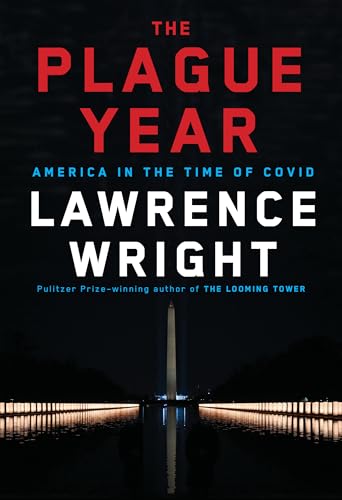
From the Pulitzer Prize–winning author of The Looming Tower, and the pandemic novel The End of October: an unprecedented, momentous account of Covid-19—its origins, its wide-ranging repercussions, and the ongoing global fight to contain it
"A book of panoramic breadth ... managing to surprise us about even those episodes we … thought we knew well … [With] lively exchanges about spike proteins and nonpharmaceutical interventions and disease waves, Wright’s storytelling dexterity makes all this come alive.” —The New York Times Book Review
From the fateful first moments of the outbreak in China to the storming of the U.S. Capitol to the extraordinary vaccine rollout, Lawrence Wright’s The Plague Year tells the story of Covid-19 in authoritative, galvanizing detail and with the full drama of events on both a global and intimate scale, illuminating the medical, economic, political, and social ramifications of the pandemic.
Wright takes us inside the CDC, where a first round of faulty test kits lost America precious time . . . inside the halls of the White House, where Deputy National Security Adviser Matthew Pottinger’s early alarm about the virus was met with confounding and drastically costly skepticism . . . into a Covid ward in a Charlottesville hospital, with an idealistic young woman doctor from the town of Little Africa, South Carolina . . . into the precincts of prediction specialists at Goldman Sachs . . . into Broadway’s darkened theaters and Austin’s struggling music venues . . . inside the human body, diving deep into the science of how the virus and vaccines function—with an eye-opening detour into the history of vaccination and of the modern anti-vaccination movement. And in this full accounting, Wright makes clear that the medical professionals around the country who’ve risked their lives to fight the virus reveal and embody an America in all its vulnerability, courage, and potential.
In turns steely-eyed, sympathetic, infuriated, unexpectedly comical, and always precise, Lawrence Wright is a formidable guide, slicing through the dense fog of misinformation to give us a 360-degree portrait of the catastrophe we thought we knew.
Die Inhaltsangabe kann sich auf eine andere Ausgabe dieses Titels beziehen.
Über die Autorin bzw. den Autor
LAWRENCE WRIGHT is a staff writer for The New Yorker, a playwright, a screenwriter, and the author of ten books of nonfiction, including The Looming Tower, Going Clear, and God Save Texas. His recent novel, The End of October, was a New York Times best seller. Wright's books have received many honors, including a Pulitzer Prize for The Looming Tower. He and his wife are longtime residents of Austin, Texas.
Auszug. © Genehmigter Nachdruck. Alle Rechte vorbehalten.
Chapter 1
“It’s Going to Be Just Fine”
One minute before midnight on December 30, 2019, ProMED, a closely watched online publication of the International Society for Infectious Diseases, posted an article translated from Chinese media stating that twenty-seven cases of what was termed a “pneumonia of unknown cause” had been found in Wuhan. The Centers for Disease Control and Prevention (CDC) and the World Health Organization learned of it almost immediately.
Robert Redfield, the sixty-eight-year-old director of the CDC, was vacationing with his family in Deep Creek, Maryland, when he read the ProMED notice on New Year’s Eve. Several alarming details jumped out. The pneumonia appeared to be associated with a seafood market in Wuhan. Patients suffering from the pneumonia were placed in isolation, which was prudent, but suggestive that the health authorities were concerned about human-to-human transmission. “Whether or not it is SARS has not yet been clarified,” the document said, “and citizens need not panic.”
On January 3, 2020, Redfield spoke with his counterpart in China, George Fu Gao. Like many similarly named organizations around the world, the Chinese Center for Disease Control and Prevention was modeled on the American original. Redfield had heard that the first twenty-seven reported cases included three family clusters. It was unlikely that each of them had been simultaneously infected by a caged civet cat in a wet market. When pressed, Gao assured Redfield that there was no evidence of human-to-human transmission. It seemed to Redfield that Gao was only just learning of the outbreak himself. Redfield offered to send a team of CDC disease detectives from the U.S to investigate, but Gao said he was not authorized to invite them. He told Redfield to make a formal request to the Chinese government. Redfield immediately assembled a team of two dozen epidemiologists and disease specialists, but no invitation ever arrived.
The specter of SARS hung over both men. Gao was teaching at Oxford during the 2003 outbreak. He returned to China the following year to head the Institute of Microbiology at the Chinese Academy of Sciences, and in 2017 he was appointed director of the Chinese CDC. A world-renowned virologist and immunologist, Gao had published over five hundred papers in medical journals. His hiring was a part of the intense investment that China made in medical science after the SARS debacle, establishing almost from scratch the world’s largest reporting system for health emergencies and infectious disease outbreaks, building clinics and specialty hospitals, expanding research budgets, and providing free universal healthcare for almost all citizens. In short order, China appeared poised to become a leader in global health. The Chinese CDC was a critical part of that design, and its main mission was to detect emerging diseases, including anything that looked like SARS. In fact, the Chinese public health system had totally failed. There was no way of really knowing how many people were infected.
When Redfield first spoke to Gao, the “unknown pneumonia” was presumed to be confined to China, not yet posing an imminent threat to the rest of the world. In fact, the virus was already present in California, Oregon, and Washington State, and within the next two weeks would be spreading in Massachusetts, Wisconsin, Iowa, Connecticut, Michigan, and Rhode Island—well before America’s first official case was detected.
In another conversation that first week of the new year, Dr. Gao started to cry. “I think we’re too late,” he told Redfield. “We’re too late.”
Matthew Pottinger was getting nervous. As the Trump administration was entering its final year, he was one of few who had been there from the start. Perhaps his durability was because he was so hard to categorize. Fluent in Mandarin, he had spent seven years in China, reporting for Reuters and the Wall Street Journal. He left journalism at the age of thirty-two and joined the Marines, a career switch that confounded everyone who knew him. In Afghanistan, he co-authored an influential paper with Lieutenant General Michael Flynn on improving military intelligence. When Trump picked Flynn to be his national security adviser, Flynn lured Pottinger to be his Asia director. Scandal evicted Flynn from his job almost overnight, but Pottinger stayed, serving five subsequent national security chiefs. In September 2019, Trump appointed Pottinger deputy national security adviser. In a very noisy administration, he had quietly become one of the most influential people shaping American foreign policy.
Pottinger is of medium height, with blue eyes, his dark blond hair still cropped in a military cut. His eyebrows are a brighter blond, lending him the quality of appearing extra awake. In 2003, he was in China reporting on the SARS cover-up for the Wall Street Journal. Now, when Chinese authorities were assuring the U.S. that there was little evidence of human-to-human transmission, that the virus was fragile and would not stand up to warmer weather, and that the situation was under control, familiar alarms were ringing in Pottinger’s mind.
He was struck by the disparity between official accounts of the novel coronavirus in China, which scarcely mentioned the disease, and Chinese social media, which was aflame with rumors and anecdotes. Someone posted a photograph of a sign on the door of a Wuhan hospital saying that the emergency room was closed because staff were infected. Meantime, the WHO—relying on Chinese assurances—tweeted that there was no clear evidence of human-to-human transmission, countering a statement made the same day in a press briefing by a WHO scientist who said the opposite.
The National Security Council (NSC) addresses global developments and offers the president options to consider. On January 14, Pottinger authorized a briefing for the NSC staff by the State Department and the Department of Health and Human Services, along with CDC director Redfield. That first interagency meeting to discuss the situation in Wuhan wasn’t prompted by official intelligence; in fact, there was practically none of that.
The next day, two hundred guests assembled in the East Room of the White House to witness the signing of the first phase of the U.S.-China trade deal. Cabinet members and corporate leaders mingled with members of Congress, governors, Fox News stars, and the Chinese delegation. “Together we are righting the wrongs of the past and delivering a future of economic justice and security for American workers, farmers, and families,” the president said, in front of a bank of American and Chinese flags. He called Chinese president Xi Jinping “a very, very good friend.”
On January 20, the coronavirus officially arrived in America. “This is a thirty-five-year-old young man who works here in the United States, who visited Wuhan,” Dr. Anthony Fauci, director of the National Institute of Allergy and Infectious Diseases (NIAID), said on a Voice of America broadcast. “There was no doubt that sooner or later we were going to see a case. And we have.” President Trump took note of the event at the World Economic Forum in Davos. “It’s one person coming in from China, and we have it under control,” he remarked. “It’s going to be just fine.”
Covid-19 arrived in America at a vulnerable moment in the nation’s history. The country was undergoing a wrenching political realignment, brought to a head by the 2016 election of Donald Trump, whose policies on trade, deficit, alliances, and immigration were at odds with traditional Republican conservativism. His election pulled the country further...
„Über diesen Titel“ kann sich auf eine andere Ausgabe dieses Titels beziehen.
Suchergebnisse für The Plague Year: America in the Time of Covid

Beispielbild für diese ISBN
The Plague Year: America in the Time of Covid
Anbieter: World of Books (was SecondSale), Montgomery, IL, USA
Verkäuferbewertung 5 von 5 Sternen

Hardback. Zustand: Fair. From the Pulitzer Prize-winning author of The Looming Tower, and the pandemic novel The End of October: an unprecedented, momentous account of Covid-19--its origins, its wide-ranging repercussions, and the ongoing global fight to contain it A book of panoramic breadth . managing to surprise us about even those episodes we . thought we knew well . With] lively exchanges about spike proteins and nonpharmaceutical interventions and disease waves, Wright's storytelling dexterity makes all this come alive. --The New York Times Book Review From the fateful first moments of the outbreak in China to the storming of the U.S. Capitol to the extraordinary vaccine rollout, Lawrence Wright's The Plague Year tells the story of Covid-19 in authoritative, galvanizing detail and with the full drama of events on both a global and intimate scale, illuminating the medical, economic, political, and social ramifications of the pandemic. Wright takes us inside the CDC, where a first round of faulty test kits lost America precious time . . . inside the halls of the White House, where Deputy National Security Adviser Matthew Pottinger's early alarm about the virus was met with confounding and drastically costly skepticism . . . into a Covid ward in a Charlottesville hospital, with an idealistic young woman doctor from the town of Little Africa, South Carolina . . . into the precincts of prediction specialists at Goldman Sachs . . . into Broadway's darkened theaters and Austin's struggling music venues . . . inside the human body, diving deep into the science of how the virus and vaccines function--with an eye-opening detour into the history of vaccination and of the modern anti-vaccination movement. And in this full accounting, Wright makes clear that the medical professionals around the country who've risked their lives to fight the virus reveal and embody an America in all its vulnerability, courage, and potential. In turns steely-eyed, sympathetic, infuriated, unexpectedly comical, and always precise, Lawrence Wright is a formidable guide, slicing through the dense fog of misinformation to give us a 360-degree portrait of the catastrophe we thought we knew. Artikel-Nr. 00101898735
Gebraucht kaufen
EUR 4,05
Versand gratis
Versand innerhalb von USA
Versand innerhalb von USA
Anzahl: 2 verfügbar
Beispielbild für diese ISBN
The Plague Year: America in the Time of Covid
Anbieter: World of Books (was SecondSale), Montgomery, IL, USA
Verkäuferbewertung 5 von 5 Sternen
Hardback. Zustand: Good. From the Pulitzer Prize-winning author of The Looming Tower, and the pandemic novel The End of October: an unprecedented, momentous account of Covid-19--its origins, its wide-ranging repercussions, and the ongoing global fight to contain it A book of panoramic breadth . managing to surprise us about even those episodes we . thought we knew well . With] lively exchanges about spike proteins and nonpharmaceutical interventions and disease waves, Wright's storytelling dexterity makes all this come alive. --The New York Times Book Review From the fateful first moments of the outbreak in China to the storming of the U.S. Capitol to the extraordinary vaccine rollout, Lawrence Wright's The Plague Year tells the story of Covid-19 in authoritative, galvanizing detail and with the full drama of events on both a global and intimate scale, illuminating the medical, economic, political, and social ramifications of the pandemic. Wright takes us inside the CDC, where a first round of faulty test kits lost America precious time . . . inside the halls of the White House, where Deputy National Security Adviser Matthew Pottinger's early alarm about the virus was met with confounding and drastically costly skepticism . . . into a Covid ward in a Charlottesville hospital, with an idealistic young woman doctor from the town of Little Africa, South Carolina . . . into the precincts of prediction specialists at Goldman Sachs . . . into Broadway's darkened theaters and Austin's struggling music venues . . . inside the human body, diving deep into the science of how the virus and vaccines function--with an eye-opening detour into the history of vaccination and of the modern anti-vaccination movement. And in this full accounting, Wright makes clear that the medical professionals around the country who've risked their lives to fight the virus reveal and embody an America in all its vulnerability, courage, and potential. In turns steely-eyed, sympathetic, infuriated, unexpectedly comical, and always precise, Lawrence Wright is a formidable guide, slicing through the dense fog of misinformation to give us a 360-degree portrait of the catastrophe we thought we knew. Artikel-Nr. 00107488116
Gebraucht kaufen
EUR 4,05
Versand gratis
Versand innerhalb von USA
Versand innerhalb von USA
Anzahl: 1 verfügbar
Beispielbild für diese ISBN
The Plague Year: America in the Time of Covid
Anbieter: BooksRun, Philadelphia, PA, USA
Verkäuferbewertung 5 von 5 Sternen
Hardcover. Zustand: Very Good. With dust jacket. It's a well-cared-for item that has seen limited use. The item may show minor signs of wear. All the text is legible, with all pages included. It may have slight markings and/or highlighting. Artikel-Nr. 0593320727-11-1-29
Gebraucht kaufen
EUR 5,43
Versand gratis
Versand innerhalb von USA
Versand innerhalb von USA
Anzahl: 1 verfügbar
Beispielbild für diese ISBN
The Plague Year: America in the Time of Covid
Anbieter: ThriftBooks-Dallas, Dallas, TX, USA
Verkäuferbewertung 5 von 5 Sternen
Hardcover. Zustand: Good. No Jacket. Former library book; Pages can have notes/highlighting. Spine may show signs of wear. ~ ThriftBooks: Read More, Spend Less. Artikel-Nr. G0593320727I3N10
Gebraucht kaufen
EUR 5,96
Versand gratis
Versand innerhalb von USA
Versand innerhalb von USA
Anzahl: 1 verfügbar
Beispielbild für diese ISBN
The Plague Year: America in the Time of Covid
Anbieter: ThriftBooks-Atlanta, AUSTELL, GA, USA
Verkäuferbewertung 5 von 5 Sternen
Hardcover. Zustand: Very Good. No Jacket. May have limited writing in cover pages. Pages are unmarked. ~ ThriftBooks: Read More, Spend Less. Artikel-Nr. G0593320727I4N00
Gebraucht kaufen
EUR 5,96
Versand gratis
Versand innerhalb von USA
Versand innerhalb von USA
Anzahl: 1 verfügbar
Beispielbild für diese ISBN
The Plague Year: America in the Time of Covid
Anbieter: ThriftBooks-Dallas, Dallas, TX, USA
Verkäuferbewertung 5 von 5 Sternen
Hardcover. Zustand: Very Good. No Jacket. Former library book; May have limited writing in cover pages. Pages are unmarked. ~ ThriftBooks: Read More, Spend Less. Artikel-Nr. G0593320727I4N10
Gebraucht kaufen
EUR 5,96
Versand gratis
Versand innerhalb von USA
Versand innerhalb von USA
Anzahl: 1 verfügbar
Beispielbild für diese ISBN
The Plague Year : America in the Time of Covid
Verlag:
Knopf Doubleday Publishing Group, 2021
ISBN 10: 0593320727
ISBN 13: 9780593320723
Gebraucht
Hardcover
Anbieter: Better World Books: West, Reno, NV, USA
Verkäuferbewertung 5 von 5 Sternen
Zustand: Good. Former library copy. Pages intact with minimal writing/highlighting. The binding may be loose and creased. Dust jackets/supplements are not included. Includes library markings. Stock photo provided. Product includes identifying sticker. Better World Books: Buy Books. Do Good. Artikel-Nr. 39853651-6
Gebraucht kaufen
EUR 6,36
Versand gratis
Versand innerhalb von USA
Versand innerhalb von USA
Anzahl: 3 verfügbar
Beispielbild für diese ISBN
The Plague Year : America in the Time of Covid
Verlag:
Knopf Doubleday Publishing Group, 2021
ISBN 10: 0593320727
ISBN 13: 9780593320723
Gebraucht
Hardcover
Anbieter: Better World Books, Mishawaka, IN, USA
Verkäuferbewertung 5 von 5 Sternen
Zustand: Good. Former library copy. Pages intact with minimal writing/highlighting. The binding may be loose and creased. Dust jackets/supplements are not included. Includes library markings. Stock photo provided. Product includes identifying sticker. Better World Books: Buy Books. Do Good. Artikel-Nr. 39853651-6
Gebraucht kaufen
EUR 6,36
Versand gratis
Versand innerhalb von USA
Versand innerhalb von USA
Anzahl: 1 verfügbar
Beispielbild für diese ISBN
The Plague Year : America in the Time of Covid
Verlag:
Knopf Doubleday Publishing Group, 2021
ISBN 10: 0593320727
ISBN 13: 9780593320723
Gebraucht
Hardcover
Anbieter: Better World Books, Mishawaka, IN, USA
Verkäuferbewertung 5 von 5 Sternen
Zustand: Very Good. Former library copy. Pages intact with possible writing/highlighting. Binding strong with minor wear. Dust jackets/supplements may not be included. Includes library markings. Stock photo provided. Product includes identifying sticker. Better World Books: Buy Books. Do Good. Artikel-Nr. 39865971-6
Gebraucht kaufen
EUR 6,36
Versand gratis
Versand innerhalb von USA
Versand innerhalb von USA
Anzahl: 1 verfügbar
Beispielbild für diese ISBN
The Plague Year: America in the Time of Covid
Anbieter: Wonder Book, Frederick, MD, USA
Verkäuferbewertung 5 von 5 Sternen
Zustand: Very Good. Very Good condition. Very Good dust jacket. A copy that may have a few cosmetic defects. May also contain light spine creasing or a few markings such as an owner's name, short gifter's inscription or light stamp. Artikel-Nr. X10G-00709
Gebraucht kaufen
EUR 6,43
Versand gratis
Versand innerhalb von USA
Versand innerhalb von USA
Anzahl: 1 verfügbar