
Verwandte Artikel zu The Red Arrow: A novel
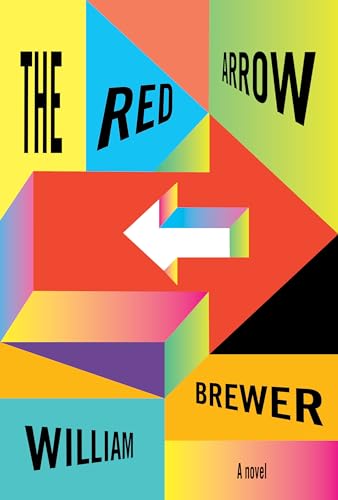
Inhaltsangabe
When a once-promising young writer agrees to ghostwrite a famous physicist’s memoir, his livelihood is already in jeopardy: Plagued by debt, he’s grown distant from his wife and is haunted by an overwhelming sense of dread he describes as “The Mist.” Then, things get worse: The physicist vanishes, leaving everything in limbo, including our narrator’s sanity.
"Among the most accurate and insightful depictions of depression I’ve ever read." —Los Angeles Times
"Brewer’s earnest description of psilocybin therapy turns a bravura comic novel into something deeper and stranger: an account of unexpected, hard-won joy.” —Vogue
In an attempt rid himself of "The Mist," the young writer undergoes an experimental, psychedelic treatment and finds his world completely transformed: Joy suffuses every moment. For the first time, he understands himself in a larger, universal context, and feels his life shift, refract, and crack open to reveal his past and future alike.
Moving swiftly from a chemical spill in West Virginia to Silicon Valley, from a Brooklyn art studio to a high-speed train racing across the Italian countryside, The Red Arrow wades into the shadowy depths of the human psyche only to emerge, as if speeding through a mile-long tunnel, into a world that is so bright and wondrous, it almost feels completely new.
Die Inhaltsangabe kann sich auf eine andere Ausgabe dieses Titels beziehen.
Über die Autorin bzw. den Autor
WILLIAM BREWER is the author of I Know Your Kind, a winner of the National Poetry Series. His work has appeared in The New Yorker, The Nation, and The Best American Poetry series. A former Wallace Stegner Fellow, he is a Jones Lecturer at Stanford University. He lives in Oakland.
Auszug. © Genehmigter Nachdruck. Alle Rechte vorbehalten.
I want to say, first of all, that I am happy. This was not always the case. In truth, it was hardly ever the case--even when I felt happy I wasn’t because I knew that was all it was, a feeling, an illusion that would soon be chased out by something I call the Mist. That I am happy now can be attributed to the fact that the journey worked, the treatment worked. I won’t describe the treatment yet, because if I do so now, I’ll lose you. What you should know is that I am thirty-three years old, of solid physical health (good levels of the new good cholesterol, low levels of the bad, proper pulse, no chemical dependencies), a professional failure, and am sitting solo on the Frecciarossa train waiting to depart from Roma Termini for Modena by way of Bologna. I am in Italy for my honeymoon; I was married in September, nine months ago, but we delayed the trip for better weather. Back on Piazza di Pasquino, at the very posh G-Rough hotel, a seventeenth-century townhouse converted into a temple of Italian design, Annie, my wife, is still asleep--as we both understand this trip is something I should do on my own--in the palatial king bed, an original piece by the famed furniture designer Guglielmo Ulrich, as is all the room’s furniture, and after whom the room is named, and about whom I speak as if I’ve got a clue who he is. I don’t.
I’m going to Modena to find a physicist. Because of the terms of my contract, I am not allowed to name or acknowledge him in any way, publicly or privately, until our project is complete and he has decided if he wants to credit me. For that reason, I will simply call him the Physicist, though if you’re that curious it shouldn’t be too difficult to find the one famous theoretical physicist native to Modena.
I need to find the Physicist because he owes me a story. His story, specifically; more specifically, the second half of his life’s story, from our present moment all the way back to what he calls the “great realization,” the moment when he had a “breakthrough in perception,” as he describes it, after which he excelled in the study of physics, the result of which is his groundbreaking though still-controversial theory of quantum gravity. (I’m not allowed to name that either.) Everything from birth up to a year before the great realization I’ve already got, but it’s the “realization” that matters: it is my ticket out of a sizable debt hole I created when I failed to write a book promised to one of our nation’s largest publishers, publishers who paid me a rather sizable advance I can’t pay back because I blew it all on things like four days in the junior suite of the luxury G-Rough hotel. Many dark-suited women and men in a Manhattan high-rise are eagerly waiting to give me a legal suplex if I don’t deliver.
The good news is that, posttreatment, I’m able to forgive myself for getting into such a position, and I feel grateful for that. Yet no matter how profound the treatment was, how life changing--and it was those things--I realize I can’t ignore that the debt is still very real, still my problem to solve, and, worse, that it haunts me beyond its financial implications. It’s the last thorn stuck in my foot from years spent walking through thorns. Except not only is it keeping that time alive, and keeping me connected to it, it’s also got the power to infect the new life I’ve been gifted. And so even in my happiness and clear mind I also feel anxious enough about the day’s potential that I couldn’t bring myself to eat anything from the G-Rough’s impressive a.m. spread, not even a prosciutto slice or cube of melon to go with my morning cappuccino, which, now in the gut, has me feeling about as eager as possible for this train to come awake and race me closer to closure.
The solution is simple: all I’ve got to do is find the Physicist, get the rest of his story, and finish the job I was hired to do, which is to ghostwrite his memoir. Indeed, through a sequence of events that can seem either cruel or felicitous depending on which side of a life-changing treatment you find yourself, I found myself in a position where, by ghostwriting the Physicist’s memoir, I could cancel my debt with my publisher. Whenever I turn in a new ghostwritten section, the money I’d normally receive in compensation is instead deducted from my negative balance. The more of his life I write, the more of my life I get back.
But then he disappeared. Vanished. All calls to voicemail. His email like a dead address. And nothing but stonewalling from his handlers. So where I’d thought there was some good old-fashioned professional collaboration and momentum, there is now only his absence, an absence that’s not only thrown the project into a state of limbo, but also stands to resurrect my debt, a debt I cannot pay because I am worth approximately zero dollars, which everyone seems to agree on except the state of California, where, under its “community property” laws, I am not worth approximately zero dollars because I am married, meaning Annie--good, bright, unwavering Annie, whose love has been the one thing I’ve not screwed up, and whom I continue to adore more and more every day, especially after my treatment--could see her wages garnished or private assets seized should I be sued, a thought that sends my already hot stomach spinning like a Maytag.
Worse, I’m reminded of this fact nearly constantly by a guy named Richards--that’s his last name, he pronounces it “Ri-shard,” I guess the s is silent? Richards is the editor on this memoir, an older guy from Montana with a JD who moved to New York and went into books but still talks like he hung a shingle in Bozeman. He’s been in the game awhile, but from what I gather he’s had a bad few years--mainly from him saying again and again, “I’ve had a bad few years”--and this book, the Physicist’s memoir, for which he had to put his neck on the line in order to win it at auction, is his last big swing at saving his job. If that wasn’t pressure enough, a recent regime change at the publisher has made it expressly clear that he’s “the whitetail in their sights,” to use his words. To say he was stressed about this project from the beginning would be putting it mildly. And then everything came apart. When I asked Richards early in the Physicist’s disappearance if he was certain it was useless to try to explain the situation to his higher-ups, he just laughed a little pathetically into the phone and said, “Barking at a knot,” whatever that means.
I feel for Richards, truly, but I fear he’s beginning to crack. Or has cracked already. At first his correspondences were understandable: vaguely anxious emails asking if I’d heard anything, maybe once a day. I kept explaining that I’ve never actually had direct contact with the Physicist, so what could I do? But that didn’t seem to matter. Then the emails picked up in frequency and desperation. He started peppering them with phrases like “What will I do?” which became “What will we do?” which evolved into the more personal “I’m sure you’ve got to be worried” before tipping over into “A situation like yours--I can remember from law school what it could mean for you and your wife, so unfortunate,” and then back to “We’ll be ruined” and “You’ll be ruined” and, finally, “I’ll be ruined.”
Then he started calling once a day, sometimes twice, every time leaving me a voicemail where pretty much the only thing I can hear is this weird labored breathing sound he makes between clauses....
„Über diesen Titel“ kann sich auf eine andere Ausgabe dieses Titels beziehen.
Suchergebnisse für The Red Arrow: A novel

Beispielbild für diese ISBN
The Red Arrow: A novel
Anbieter: World of Books (was SecondSale), Montgomery, IL, USA
Verkäuferbewertung 5 von 5 Sternen

Zustand: Good. Good condition ex-library book with usual library markings and stickers. Artikel-Nr. 00103840881
Gebraucht kaufen
EUR 4,57
Versand gratis
Versand innerhalb von USA
Versand innerhalb von USA
Anzahl: 1 verfügbar
Beispielbild für diese ISBN
The Red Arrow: A novel
Anbieter: World of Books (was SecondSale), Montgomery, IL, USA
Verkäuferbewertung 5 von 5 Sternen
Zustand: Very Good. Item in very good condition! Textbooks may not include supplemental items i.e. CDs, access codes etc. Artikel-Nr. 00105439144
Gebraucht kaufen
EUR 4,57
Versand gratis
Versand innerhalb von USA
Versand innerhalb von USA
Anzahl: 1 verfügbar
Beispielbild für diese ISBN
The Red Arrow : A Novel
Verlag:
Knopf Doubleday Publishing Group, 2022
ISBN 10: 0593320123
ISBN 13: 9780593320129
Gebraucht
Hardcover
Anbieter: Better World Books: West, Reno, NV, USA
Verkäuferbewertung 5 von 5 Sternen
Zustand: Very Good. Former library copy. Pages intact with possible writing/highlighting. Binding strong with minor wear. Dust jackets/supplements may not be included. Includes library markings. Stock photo provided. Product includes identifying sticker. Better World Books: Buy Books. Do Good. Artikel-Nr. 41582440-75
Gebraucht kaufen
EUR 6,33
Versand gratis
Versand innerhalb von USA
Versand innerhalb von USA
Anzahl: 1 verfügbar
Beispielbild für diese ISBN
The Red Arrow : A Novel
Verlag:
Knopf Doubleday Publishing Group, 2022
ISBN 10: 0593320123
ISBN 13: 9780593320129
Gebraucht
Hardcover
Anbieter: Better World Books, Mishawaka, IN, USA
Verkäuferbewertung 5 von 5 Sternen
Zustand: Good. Pages intact with minimal writing/highlighting. The binding may be loose and creased. Dust jackets/supplements are not included. Stock photo provided. Product includes identifying sticker. Better World Books: Buy Books. Do Good. Artikel-Nr. 46558422-6
Gebraucht kaufen
EUR 6,33
Versand gratis
Versand innerhalb von USA
Versand innerhalb von USA
Anzahl: 2 verfügbar
Beispielbild für diese ISBN
The Red Arrow: A novel
Anbieter: Redux Books, Grand Rapids, MI, USA
Verkäuferbewertung 5 von 5 Sternen
Hardcover. Zustand: Very Good. Hardcover with dust jacket. Pages are clean and unmarked. Covers show very minor shelf wear. Dust jacket shows light edge wear. Binding is tight, hinges strong. APPEARS UNREAD. ALMOST LIKE NEW.; 100% Satisfaction Guaranteed! Ships same or next business day! Artikel-Nr. 142502180016
Gebraucht kaufen
EUR 7,35
Versand gratis
Versand innerhalb von USA
Versand innerhalb von USA
Anzahl: 1 verfügbar
Beispielbild für diese ISBN
The Red Arrow
Anbieter: ThriftBooks-Atlanta, AUSTELL, GA, USA
Verkäuferbewertung 5 von 5 Sternen
Hardcover. Zustand: Very Good. No Jacket. May have limited writing in cover pages. Pages are unmarked. ~ ThriftBooks: Read More, Spend Less. Artikel-Nr. G0593320123I4N00
Gebraucht kaufen
EUR 8,54
Versand gratis
Versand innerhalb von USA
Versand innerhalb von USA
Anzahl: 1 verfügbar
Beispielbild für diese ISBN
The Red Arrow
Anbieter: ThriftBooks-Dallas, Dallas, TX, USA
Verkäuferbewertung 5 von 5 Sternen
Hardcover. Zustand: Very Good. No Jacket. May have limited writing in cover pages. Pages are unmarked. ~ ThriftBooks: Read More, Spend Less. Artikel-Nr. G0593320123I4N00
Gebraucht kaufen
EUR 8,54
Versand gratis
Versand innerhalb von USA
Versand innerhalb von USA
Anzahl: 1 verfügbar
Beispielbild für diese ISBN
The Red Arrow
Anbieter: ThriftBooks-Dallas, Dallas, TX, USA
Verkäuferbewertung 5 von 5 Sternen
Hardcover. Zustand: Very Good. No Jacket. Missing dust jacket; May have limited writing in cover pages. Pages are unmarked. ~ ThriftBooks: Read More, Spend Less. Artikel-Nr. G0593320123I4N01
Gebraucht kaufen
EUR 8,54
Versand gratis
Versand innerhalb von USA
Versand innerhalb von USA
Anzahl: 1 verfügbar
Beispielbild für diese ISBN
The Red Arrow
Anbieter: ThriftBooks-Dallas, Dallas, TX, USA
Verkäuferbewertung 5 von 5 Sternen
Hardcover. Zustand: Very Good. No Jacket. Former library book; May have limited writing in cover pages. Pages are unmarked. ~ ThriftBooks: Read More, Spend Less. Artikel-Nr. G0593320123I4N10
Gebraucht kaufen
EUR 8,54
Versand gratis
Versand innerhalb von USA
Versand innerhalb von USA
Anzahl: 1 verfügbar
Beispielbild für diese ISBN
The Red Arrow
Anbieter: WorldofBooks, Goring-By-Sea, WS, Vereinigtes Königreich
Verkäuferbewertung 5 von 5 Sternen
Paperback. Zustand: Very Good. The book has been read, but is in excellent condition. Pages are intact and not marred by notes or highlighting. The spine remains undamaged. Artikel-Nr. GOR013707493
Gebraucht kaufen
EUR 2,54
EUR 6,59 Versand
Versand von Vereinigtes Königreich nach USA
Versand von Vereinigtes Königreich nach USA
Anzahl: 1 verfügbar