
Verwandte Artikel zu More Than I Love My Life: A novel
Inhaltsangabe
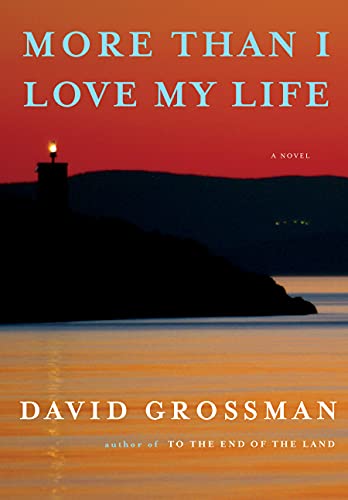
INTERNATIONAL BOOKER PRIZE NOMINEE • A remarkable novel of suffering, love, and healing—the story of three generations of women on an unlikely journey to a Croatian island and a secret that needs to be told—from the internationally best-selling author of To the End of the Land
“A magnificent book ... The way Grossman writes about these regions is unique, with a deep understanding of our experience.” —Josip Mlakić, Express (Croatia)
More Than I Love My Life is the story of three strong women: Vera, age ninety; her daughter, Nina; and her granddaughter, Gili, who at thirty-nine is a filmmaker and a wary consumer of affection. A bitter secret divides each mother and daughter pair, though Gili—abandoned by Nina when she was just three—has always been close to her grandmother.
With Gili making the arrangements, they travel together to Goli Otok, a barren island off the coast of Croatia, where Vera was imprisoned and tortured for three years as a young wife after she refused to betray her husband and denounce him as an enemy of the people. This unlikely journey—filtered through the lens of Gili’s camera, as she seeks to make a film that might help explain her life—lays bare the intertwining of fear, love, and mercy, and the complex overlapping demands of romantic and parental passion.
More Than I Love My Life was inspired by the true story of one of David Grossman’s longtime confidantes, a woman who, in the early 1950s, was held on the notorious Goli Otok (“the Adriatic Alcatraz”). With flashbacks to the stalwart Vera protecting what was most precious on the wretched rock where she was held, and Grossman’s fearless examination of the human heart, this swift novel is a thrilling addition to the oeuvre of one of our greatest living novelists, whose revered moral voice continues to resonate around the world.
Die Inhaltsangabe kann sich auf eine andere Ausgabe dieses Titels beziehen.
Über die Autorin bzw. den Autor
DAVID GROSSMAN was born in Jerusalem. He is the author of numerous works of fiction, nonfiction, and children's literature. His writing has appeared in The New Yorker and has been translated into more than forty languages. He is the recipient of many prizes, including the French Chevalier de l'Ordre des Arts et des Lettres, the Buxtehuder Bulle in Germany, Rome's Premio per la Pace e l'Azione Umanitaria, the Premio Ischia International Journalism Award, Israel's EMET Prize, the Man Booker International Prize, and the Albatross Prize given by the Günter Grass Foundation. He lives in Jerusalem.
JESSICA COHEN translates contemporary Israeli prose, poetry, and other creative work. She shared the 2017 Man Booker International Prize with David Grossman, for her translation of A Horse Walks into a Bar, and has translated works by major Israeli writers, including Amos Oz, Etgar Keret, Ronit Matalon and Nir Baram.
Auszug. © Genehmigter Nachdruck. Alle Rechte vorbehalten.
Rafael was fifteen years old when his mother died and put him out of her misery. Rain poured down on the mourn-ers huddled under umbrellas in the small kibbutz cemetery. Tuvia, Rafael’s father, sobbed bitterly. He had cared for his wife devotedly for years and now looked lost and bereft. Rafael, wearing shorts, stood apart from the others and pulled the hood of his sweatshirt over his eyes so that no one would know he wasn’t crying. He thought: Now that she’s dead, she can see all the things I thought of her.
That was in the winter of 1962. A year later his father met Vera Novak, who had come to Israel from Yugoslavia, and they became a couple. Vera had arrived with her only daughter, Nina, a tall, fair- haired girl of seventeen whose long face, which was pale and very beautiful, showed almost no expression.
The boys in Rafael’s class called Nina “Sphinx.” They would sneak behind her and mimic her gait, the way she hugged her body and stared ahead vacantly. When she once caught two kids imitating her, she simply pummeled them bloody. They’d never seen such fighting on the kibbutz. It was hard to believe how much ferocious strength she had in her thin arms and legs. Rumors started flying. They said that while her mother was a political prisoner in the Gulag, little Nina had lived on the streets. The streets, they said, with a meaningful look. They said that in Belgrade she’d joined a gang of feral kids who kidnapped children for ransom. That’s what they said. People say things.
The fight, as well as other incidents and rumors, failed to pierce the fog in which Rafael lived after his mother’s death. For months he was in a self-induced coma. Twice a day, morning and evening, he took a powerful sleeping pill from his mother’s medicine cabi-net. He didn’t even notice Nina when he occasionally ran into her around the kibbutz.
But one evening, about six months after his mother died, he was taking a shortcut through the avocado orchard to the gym-nasium when Nina came toward him. She walked with her head bowed, hugging herself as if everything around her was cold. Rafael stopped, tensing up for reasons he did not understand. Nina was in her own world and did not notice him. He saw the way she moved. That was his first impression: her quiet, sparing motion. The lim-pid, high forehead, and a thin blue dress that fluttered halfway down her shins.
The expression on his face when he recounted—
Only when they got closer did Rafael see that she was crying— quiet, muffled sobs—and then she noticed him and stopped, and curved inward. Their gazes entangled fleetingly and, one might sorrowfully add, inextricably. “The sky, the earth, the trees,” Rafael told me, “I don’t know . . . I felt like nature had passed out.”
Nina was the first to recover. She gave an angry puff and hurried away. He had time to glimpse her face, which had instantly shed all expression, and something inside him coursed toward her. He held out his hand after her.
I can actually see him standing there with his hand out.
And that is how he’s remained, with the outstretched hand, for forty- five years.
But that day, in the orchard, without thinking, before he could hesitate and trip himself up, he sprinted after her to tell her what he’d understood the moment he’d seen her. Everything had come to life inside him, he told me. I asked him to explain. He mumbled something about all the things that had fallen asleep in him during the years of his mother’s illness, and even more so after her death. Now it was all suddenly urgent and fateful, and he had no doubt that Nina would yield to him right then and there.
Nina heard his footsteps chasing her. She stopped, turned around, and slowly surveyed him. “What is it?” she barked into his face. He flinched, shocked by her beauty and perhaps also by her coarseness—and mostly, I’m afraid, by the combination of the two. That’s something he still has: a weakness for women with a bit—just a drop—of aggression and even crudeness. That spiciness. Rafael, Rafi—
Nina put her hands on her waist, and a tough street girl jutted out. Her nostrils widened, she sniffed him, and Rafael saw a delicate blue vein throbbing on her neck, and his lips suddenly hurt; that’s what he told me: they were literally stinging and thirsting.
Okay, I get it, I thought. I don’t need the details.
Tears were still glistening on Nina’s cheeks, but her eyes were cold and serpentine. “Go home, boy,” she said, and he shook his head no. She slowly moved her forehead toward his head, tracking it back and forth as if searching for precisely the right point, and he shut his eyes and then she butted, and he flew back and landed in the hollow of an avocado tree.
“Ettinger cultivar,” he specified the name of the tree when he told me the story, so that I wouldn’t forget, God forbid, that every detail in the scene was important, because that is how you construct a mythology.
Stunned, he lay in the hollow, touched the bump already grow-ing on his forehead, then stood up dizzily. Since his mother’s death, Rafael had not touched anyone, nor had he been touched, except by the kids who fought with him. But this, he sensed, was something different. She’d come along to finally open up his mind and rescue him from the torture. Through the blinding pain, he shouted out what he had realized the moment he’d seen her, though he was amazed when the words left his mouth, insipid and crude. “Words the guys used,” he told me, “like ‘I wanna fuck you,’ that kind of thing.” So different from his pure, scrupulous thought. “But for a second or two I saw on her face that, despite the dirty language, she got me.”
And maybe that is what happened—how should I know? Why not give her the benefit of the doubt and believe that a girl born in Yugoslavia, who for a few years really was, as it later turned out, an abandoned child with no mother or father, could—despite those opening stats, or perhaps because of them—at a moment of kind-ness glance into the eyes of an Israeli kibbutz kid, an inward-looking boy, or so I imagine him at sixteen, a lonely boy full of secrets and intricate calculations and grand gestures that no one in the world knew about. A sad, gloomy boy, but so handsome you could cry.
Rafael, my father.
There’s a well-known film, I can’t remember what it’s called right now (and I’m not wasting a second on Google), where the hero goes back to the past to repair something, to prevent a world war or something like that. What I wouldn’t give to return to the past just to prevent those two from ever meeting.
Over the days and, mostly, the nights that came afterward, Rafael tormented himself about the marvelous moment he’d squandered. He stopped taking his mother’s sleeping pills so that he could experience the love unclouded. He searched all over the kibbutz, but he could not find her. In those days he hardly spoke to anyone, so he did not know that Nina had left the singles’ neighborhood, where she’d lived with her mother, and expropriated a little room in a moldering old shack from back in the founders’ days. The shack was like a train of tiny rooms, located behind the orchards, in an area that the...
„Über diesen Titel“ kann sich auf eine andere Ausgabe dieses Titels beziehen.
Suchergebnisse für More Than I Love My Life: A novel

Beispielbild für diese ISBN
More Than I Love My Life A nov
Anbieter: World of Books (was SecondSale), Montgomery, IL, USA
Verkäuferbewertung 5 von 5 Sternen

Zustand: Good. Item in good condition. Textbooks may not include supplemental items i.e. CDs, access codes etc. Artikel-Nr. 00103377177
Gebraucht kaufen
EUR 4,43
Versand gratis
Versand innerhalb von USA
Versand innerhalb von USA
Anzahl: 2 verfügbar
Beispielbild für diese ISBN
More Than I Love My Life
Anbieter: ThriftBooks-Dallas, Dallas, TX, USA
Verkäuferbewertung 5 von 5 Sternen
Hardcover. Zustand: Very Good. No Jacket. May have limited writing in cover pages. Pages are unmarked. ~ ThriftBooks: Read More, Spend Less. Artikel-Nr. G0593318919I4N00
Gebraucht kaufen
EUR 5,87
Versand gratis
Versand innerhalb von USA
Versand innerhalb von USA
Anzahl: 1 verfügbar
Beispielbild für diese ISBN
More Than I Love My Life
Anbieter: ThriftBooks-Atlanta, AUSTELL, GA, USA
Verkäuferbewertung 5 von 5 Sternen
Hardcover. Zustand: Very Good. No Jacket. May have limited writing in cover pages. Pages are unmarked. ~ ThriftBooks: Read More, Spend Less. Artikel-Nr. G0593318919I4N00
Gebraucht kaufen
EUR 5,87
Versand gratis
Versand innerhalb von USA
Versand innerhalb von USA
Anzahl: 1 verfügbar
Beispielbild für diese ISBN
More Than I Love My Life
Anbieter: ThriftBooks-Dallas, Dallas, TX, USA
Verkäuferbewertung 5 von 5 Sternen
Hardcover. Zustand: Very Good. No Jacket. Former library book; May have limited writing in cover pages. Pages are unmarked. ~ ThriftBooks: Read More, Spend Less. Artikel-Nr. G0593318919I4N10
Gebraucht kaufen
EUR 5,87
Versand gratis
Versand innerhalb von USA
Versand innerhalb von USA
Anzahl: 1 verfügbar
Beispielbild für diese ISBN
More Than I Love My Life : A Novel
Verlag:
Knopf Doubleday Publishing Group, 2021
ISBN 10: 0593318919
ISBN 13: 9780593318911
Gebraucht
Hardcover
Anbieter: Better World Books, Mishawaka, IN, USA
Verkäuferbewertung 5 von 5 Sternen
Zustand: Good. Former library copy. Pages intact with minimal writing/highlighting. The binding may be loose and creased. Dust jackets/supplements are not included. Includes library markings. Stock photo provided. Product includes identifying sticker. Better World Books: Buy Books. Do Good. Artikel-Nr. 41026954-6
Gebraucht kaufen
EUR 6,26
Versand gratis
Versand innerhalb von USA
Versand innerhalb von USA
Anzahl: 3 verfügbar
Beispielbild für diese ISBN
More Than I Love My Life : A Novel
Verlag:
Knopf Doubleday Publishing Group, 2021
ISBN 10: 0593318919
ISBN 13: 9780593318911
Gebraucht
Hardcover
Anbieter: Better World Books, Mishawaka, IN, USA
Verkäuferbewertung 5 von 5 Sternen
Zustand: Very Good. Former library copy. Pages intact with possible writing/highlighting. Binding strong with minor wear. Dust jackets/supplements may not be included. Includes library markings. Stock photo provided. Product includes identifying sticker. Better World Books: Buy Books. Do Good. Artikel-Nr. 39636755-6
Gebraucht kaufen
EUR 6,26
Versand gratis
Versand innerhalb von USA
Versand innerhalb von USA
Anzahl: 3 verfügbar
Beispielbild für diese ISBN
More Than I Love My Life: A novel
Anbieter: BooksRun, Philadelphia, PA, USA
Verkäuferbewertung 5 von 5 Sternen
Hardcover. Zustand: Very Good. With dust jacket. It's a well-cared-for item that has seen limited use. The item may show minor signs of wear. All the text is legible, with all pages included. It may have slight markings and/or highlighting. Artikel-Nr. 0593318919-11-18-29
Gebraucht kaufen
EUR 6,78
Versand gratis
Versand innerhalb von USA
Versand innerhalb von USA
Anzahl: 1 verfügbar
Beispielbild für diese ISBN
More Than I Love My Life: A novel
Anbieter: Wonder Book, Frederick, MD, USA
Verkäuferbewertung 5 von 5 Sternen
Zustand: Good. Good condition. Acceptable dust jacket. A copy that has been read but remains intact. May contain markings such as bookplates, stamps, limited notes and highlighting, or a few light stains. Artikel-Nr. Q16B-04353
Gebraucht kaufen
EUR 7,04
Versand gratis
Versand innerhalb von USA
Versand innerhalb von USA
Anzahl: 1 verfügbar
Beispielbild für diese ISBN
More Than I Love My Life: A novel
Anbieter: Books From California, Simi Valley, CA, USA
Verkäuferbewertung 4 von 5 Sternen

hardcover. Zustand: Fine. First Edition. Artikel-Nr. mon0003771244
Gebraucht kaufen
EUR 9,05
EUR 4,39 Versand
Versand innerhalb von USA
Versand innerhalb von USA
Anzahl: 1 verfügbar
Beispielbild für diese ISBN
More Than I Love My Life
Verlag:
Alfred A. Knopf, New York, 2021
ISBN 10: 0593318919
ISBN 13: 9780593318911
Gebraucht
Hardcover
Erstausgabe
Anbieter: Abacus Bookshop, Pittsford, NY, USA
Verkäuferbewertung 5 von 5 Sternen
hardcover. Zustand: Fine copy in fine dust jacket. 1st. 8vo, 281 pp., Translated byJessica Cohen. Artikel-Nr. 116612
Gebraucht kaufen
EUR 18,10
EUR 3,52 Versand
Versand innerhalb von USA
Versand innerhalb von USA
Anzahl: 1 verfügbar