
Verwandte Artikel zu The Rejection That Changed My Life: 25+ Powerful Women...
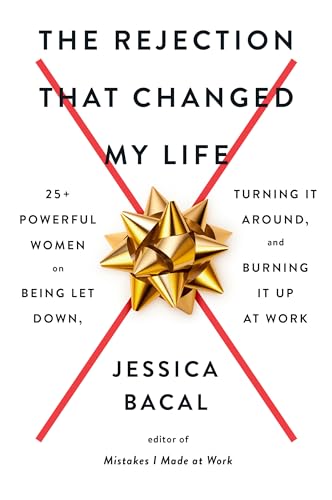
The Rejection That Changed My Life: 25+ Powerful Women on Being Let Down, Turning It Around, and Burning It Up at Work - Softcover
Inhaltsangabe
From the groundbreaking author of Mistakes I Made at Work, comes the perfect book for anyone who needs inspiration after dealing with rejection, failure, or is searching for a new beginning in the workplace. Featuring fascinating interviews with more than twenty-five women, including Keri Smith, Angela Duckworth, and Roz Chast, The Rejection That Changed My Life provides an exciting new way to think about career challenges, changes, and triumphs.
Rejections don't go on your résumé, but they are part of every successful person's career. All of us will apply for jobs that we don't get and have ambitions that aren't fulfilled, because that is part of being a working person, part of pushing oneself to the next step professionally. While everyone deserves feel-better stories, women are more likely to ruminate, more likely to overthink rejection until it becomes even more painful—a situation that the women in this collection are determined to change, and in so doing, normalize rejection and encourage others to talk about it.
Empowering and full of heart, the stories in this collection are diverse in every sense, by top women from many cultural backgrounds and in a wide variety of fields; many of their hard-earned lessons are universal. There are stories from engineers, entrepreneurs, activists, comedians, professors, lawyers, chefs, and more on how they coped with rejection and even experienced it as a catalyst for their own personal professional growth. Powerful, motivating, and endlessly quotable and shareable, The Rejection That Changed My Life will become the go-to book for women at any stage of their career learning to navigate the workforce.
Die Inhaltsangabe kann sich auf eine andere Ausgabe dieses Titels beziehen.
Über die Autorin bzw. den Autor
Jessica Bacal is director of Reflective and Integrative Practices and of the Narratives Project at Smith College. She leads programs to help students explore identity and find resilience in community. She also teaches a course called Designing Your Path, which guides students to consider questions like: What is your story? Where have you been and where are you going? What matters to you? What skills do you need to pursue what matters? Before her career in higher education, she was an elementary school teacher in New York City, and then a curriculum developer and consultant. She received a bachelor's degree from Carleton College, an MFA in writing from Hunter College, and an EdD from the University of Pennsylvania. She lives in Northampton, Massachusetts, with her husband, two children, and two dogs.
Auszug. © Genehmigter Nachdruck. Alle Rechte vorbehalten.
Angela Duckworth
Rejection is hard for me, even though I study it. I'm not the kind of person who's just like, "Oh, I love critical feedback; telling me what I did wrong is like whipped cream." It's really not. It's like a sour lemon.
Angela Duckworth is one of the most successful psychologists of our generation. She is famous for developing the theoretical framework around "grit": the combination of passion and perseverance for a long-term goal.
When I spoke with Duckworth over the phone, I learned she also has a good sense of humor. We had arranged the interview through Duckworth's assistant, Jamie, who had written polite, friendly e-mails like "Happy to help find a time for you and Angela to talk!" and "Let me check in with Angela and I'll get back to you as soon as I can."
When we finally got on the phone, I let Duckworth know that I appreciated her assistant setting up our conversation. "I don't know if Jamie told you," I said, "but you and I have a mutual friend, Andy Sokatch."
"Yes! Andy is such a good guy." Duckworth laughed. "But I have to tell you, Jamie is a robot. A very smart robot." I had been e-mailing back and forth with her virtual assistant as if it was a person.
Duckworth is on the faculty at the University of Pennsylvania, and she co-founded Character Lab, which uses psychological science to help children thrive. She studies grit and self-control, which she says are not the same-more like first cousins. Self-control is the ability to resist fun temptations in the moment in order to do something less fun but good for you-even ten minutes later. Grit is about the ability to work toward goals you really care about that are further out.
In 2013, she received a MacArthur Fellowship-the prize often known as the MacArthur Genius Grant-a large sum of no-strings-attached funding given to the recipient out of the blue. Duckworth may be the first Genius Grant recipient I have ever spoken to, and she was extremely down-to-earth and open.
Lessons I've Learned
When you tell someone a new idea, you are looking for approval-we all are. But that doesn't always mean you need it in order to move forward.
One of my early research projects in graduate school examined middle schoolers and self-control. I was familiar with "the marshmallow test," and you may be too-a researcher in the 1980s would put a marshmallow in front of a preschooler and tell the child that she'd be right back. The researcher would mention that if the child could wait and not eat the marshmallow, then the prize would be two marshmallows when she returned. The children who waited turned out to have more self-control than peers across multiple non-marshmallow contexts, such as at school.
I wanted to test self-control in middle schoolers, so I wondered: What's the marshmallow test for older kids? Early piloting told me that it would not be something that I could do easily. Middle schoolers didn't want toys; they didn't care about snacks. They were not about to get all excited about an Oreo. Plus, the school administrators were not thrilled about food as a reward. They were like, "You don't know who is going to be allergic to it, and we don't want to be liable." I wondered, "What is something that everybody wants at some level?" It didn't take long to realize that the teenagers in my studies would all appreciate a little pocket money.
I took this idea to my doctoral advisor. "I'm going to do this thing where I give kids a dollar," I told him. "Then I'm going to see if they want to keep the dollar-or give it back and in a week get two dollars. And that choice is going to be a measure of their self-control."
Right away, my advisor said, "That's a terrible idea." He began trying to poke holes in the plan, asking, for example, "How will the students know you'll come back?"
I was disappointed not to have his approval. There I sat, a newbie graduate student, and the person whose advice I most respected was telling me not to go ahead with my experiment. I had to question whose judgment was better-my own or the judgment of this super-famous person who had been doing psychology for forty-five years?
And maybe that's the difference between backing down and moving forward. How firm are your convictions? In my case, I thought it was a good experiment. The fact that he didn't think so actually motivated me. Plus, I didn't have a better idea. I decided to go with my judgment. I told him, "Even though you think it's a bad plan, I'm doing it anyway."
As a side note, at my twenty-fifth college reunion I asked one of my good friends, Tina, "Just candidly between you and me, I'm interested in what you think. I'm not the smartest one here; I'm not the prettiest. I'm not the richest or most athletic one here. Why do you think I've had the success that I have had?"
She replied, "You're not afraid."
I think that's true. I wasn't afraid for the experiment to not work out. What was the worst that was going to happen? I would blow a few hundred dollars. It wasn't the end of the world.
My advisor had been right about this experiment in that there were logistical issues to fix: Whereas the marshmallow test takes an hour to do each person, one-on-one, I wanted to be able to give the test to a whole classroom. Also, I was going to give the kids money, but I didn't want them to walk around knowing other kids' choices, whether they had kept one dollar or waited for two. I gave each kid an envelope, saying, "This has your name on it. Take out the dollar bill or put it back and you can have two dollars later." I had all of them pass back the envelopes, whether they took the dollar bill out or not.
My test ended up being essential to part of the measurement battery for self-control in middle schoolers, and in fact it predicted kids' grades as well as their IQ scores. I wrote up the experiment and submitted it to what is arguably the most prestigious journal in my field. It was accepted, and when my advisor found out, he was very proud of me.
What my early publication success meant, in part, was that I didn't know for a long time just how hard it is to get published. You get rejected most of the time, and it's a hard rejection, with reader comments to the effect of "Let me tell you all the reasons you are stupid and boring and this is unbelievable and somebody already did this." But I didn't know that. When I submitted my article, I received gentle peer reviews, like "It's pretty good, maybe you could change this one little thing?" Then it was published.
Sometimes I wonder whether early success is important to maintaining that beginner's drive. If I had received harsh criticism early in my career, I might not have proceeded with the same level of energy and enthusiasm. I think that with kids and people starting out, having some early wins helps to develop confidence.
I'm very open with my graduate students. I try not only to share with them my own failures, but also to correct the wrong ideas that they and others have about success. When you're starting out in academia and get rejected, you feel like an idiot. And you might look around and pay attention to someone else's successes. But failures are hidden. People don't put their failures and their errors into the public realm, so we walk around thinking that we're the only ones feeling insecure.
I try to read articles about things like that. Most recently, I read and sent around a study of academics who almost got a particular grant but didn't get it. So they were probably about as deserving of funding but didn't...
„Über diesen Titel“ kann sich auf eine andere Ausgabe dieses Titels beziehen.
Suchergebnisse für The Rejection That Changed My Life: 25+ Powerful Women...

Beispielbild für diese ISBN
The Rejection That Changed My
Anbieter: World of Books (was SecondSale), Montgomery, IL, USA
Verkäuferbewertung 5 von 5 Sternen

Zustand: Good. Good condition ex-library book with usual library markings and stickers. Artikel-Nr. 00094075878
Gebraucht kaufen
EUR 3,58
Versand gratis
Versand innerhalb von USA
Versand innerhalb von USA
Anzahl: 2 verfügbar
Beispielbild für diese ISBN
The Rejection That Changed My
Anbieter: World of Books (was SecondSale), Montgomery, IL, USA
Verkäuferbewertung 5 von 5 Sternen
Zustand: Very Good. Item in very good condition! Textbooks may not include supplemental items i.e. CDs, access codes etc. Artikel-Nr. 00103325930
Gebraucht kaufen
EUR 3,58
Versand gratis
Versand innerhalb von USA
Versand innerhalb von USA
Anzahl: 2 verfügbar
Beispielbild für diese ISBN
The Rejection That Changed My Life: 25+ Powerful Women on Being Let Down, Turning It Around, and Burning It Up at Work
Anbieter: BooksRun, Philadelphia, PA, USA
Verkäuferbewertung 5 von 5 Sternen
Paperback. Zustand: Very Good. It's a well-cared-for item that has seen limited use. The item may show minor signs of wear. All the text is legible, with all pages included. It may have slight markings and/or highlighting. Artikel-Nr. 0593187652-11-6
Gebraucht kaufen
EUR 4,34
Versand gratis
Versand innerhalb von USA
Versand innerhalb von USA
Anzahl: 1 verfügbar
Beispielbild für diese ISBN
The Rejection That Changed My Life: 25+ Powerful Women on Being Let Down, Turning It Around, and Burning It Up at Work
Verlag:
Penguin Publishing Group, 2021
ISBN 10: 0593187652
ISBN 13: 9780593187654
Gebraucht
Softcover
Anbieter: Wonder Book, Frederick, MD, USA
Verkäuferbewertung 5 von 5 Sternen
Zustand: Good. Good condition. A copy that has been read but remains intact. May contain markings such as bookplates, stamps, limited notes and highlighting, or a few light stains. Artikel-Nr. K15Q-00097
Gebraucht kaufen
EUR 6,19
Versand gratis
Versand innerhalb von USA
Versand innerhalb von USA
Anzahl: 1 verfügbar
Beispielbild für diese ISBN
The Rejection That Changed My Life: 25+ Powerful Women on Being Let Down, Turning It Around, and Burning It Up at Work
Verlag:
Penguin Publishing Group, 2021
ISBN 10: 0593187652
ISBN 13: 9780593187654
Gebraucht
Paperback
Anbieter: ThriftBooks-Phoenix, Phoenix, AZ, USA
Verkäuferbewertung 5 von 5 Sternen
Paperback. Zustand: Very Good. No Jacket. Former library book; May have limited writing in cover pages. Pages are unmarked. ~ ThriftBooks: Read More, Spend Less. Artikel-Nr. G0593187652I4N10
Gebraucht kaufen
EUR 6,25
Versand gratis
Versand innerhalb von USA
Versand innerhalb von USA
Anzahl: 1 verfügbar
Beispielbild für diese ISBN
The Rejection That Changed My Life: 25+ Powerful Women on Being Let Down, Turning It Around, and Burning It Up at Work
Verlag:
Penguin Publishing Group, 2021
ISBN 10: 0593187652
ISBN 13: 9780593187654
Gebraucht
Paperback
Anbieter: ThriftBooks-Dallas, Dallas, TX, USA
Verkäuferbewertung 5 von 5 Sternen
Paperback. Zustand: Very Good. No Jacket. Former library book; May have limited writing in cover pages. Pages are unmarked. ~ ThriftBooks: Read More, Spend Less. Artikel-Nr. G0593187652I4N10
Gebraucht kaufen
EUR 6,25
Versand gratis
Versand innerhalb von USA
Versand innerhalb von USA
Anzahl: 1 verfügbar
Beispielbild für diese ISBN
The Rejection That Changed My Life : 25+ Powerful Women on Being Let down, Turning It Around, and Burning It up at Work
Verlag:
Penguin Publishing Group, 2021
ISBN 10: 0593187652
ISBN 13: 9780593187654
Gebraucht
Softcover
Anbieter: Better World Books: West, Reno, NV, USA
Verkäuferbewertung 5 von 5 Sternen
Zustand: Very Good. Former library copy. Pages intact with possible writing/highlighting. Binding strong with minor wear. Dust jackets/supplements may not be included. Includes library markings. Stock photo provided. Product includes identifying sticker. Better World Books: Buy Books. Do Good. Artikel-Nr. 56028467-75
Gebraucht kaufen
EUR 6,95
Versand gratis
Versand innerhalb von USA
Versand innerhalb von USA
Anzahl: 1 verfügbar
Beispielbild für diese ISBN
The Rejection That Changed My Life : 25+ Powerful Women on Being Let down, Turning It Around, and Burning It up at Work
Verlag:
Penguin Publishing Group, 2021
ISBN 10: 0593187652
ISBN 13: 9780593187654
Gebraucht
Softcover
Anbieter: Better World Books, Mishawaka, IN, USA
Verkäuferbewertung 5 von 5 Sternen
Zustand: Very Good. Pages intact with possible writing/highlighting. Binding strong with minor wear. Dust jackets/supplements may not be included. Stock photo provided. Product includes identifying sticker. Better World Books: Buy Books. Do Good. Artikel-Nr. 56027601-6
Gebraucht kaufen
EUR 6,95
Versand gratis
Versand innerhalb von USA
Versand innerhalb von USA
Anzahl: 1 verfügbar
Beispielbild für diese ISBN
The Rejection That Changed My Life: 25+ Powerful Women on Being Let Down, Turning It Around, and Burning It Up at Work
Verlag:
Penguin Publishing Group, 2021
ISBN 10: 0593187652
ISBN 13: 9780593187654
Gebraucht
Paperback
Anbieter: WorldofBooks, Goring-By-Sea, WS, Vereinigtes Königreich
Verkäuferbewertung 5 von 5 Sternen
Paperback. Zustand: Very Good. The book has been read, but is in excellent condition. Pages are intact and not marred by notes or highlighting. The spine remains undamaged. Artikel-Nr. GOR014821392
Gebraucht kaufen
EUR 5,04
EUR 6,52 Versand
Versand von Vereinigtes Königreich nach USA
Versand von Vereinigtes Königreich nach USA
Anzahl: 1 verfügbar
Beispielbild für diese ISBN
The Rejection That Changed My Life: 25+ Powerful Women on Being Let Down, Turning It Around, and Burning It Up at Work
Anbieter: AwesomeBooks, Wallingford, Vereinigtes Königreich
Verkäuferbewertung 5 von 5 Sternen
Paperback. Zustand: Very Good. The Rejection That Changed My Life: 25+ Powerful Women on Being Let Down, Turning It Around, and Burning It Up at Work This book is in very good condition and will be shipped within 24 hours of ordering. The cover may have some limited signs of wear but the pages are clean, intact and the spine remains undamaged. This book has clearly been well maintained and looked after thus far. Money back guarantee if you are not satisfied. See all our books here, order more than 1 book and get discounted shipping. Artikel-Nr. 7719-9780593187654
Gebraucht kaufen
EUR 7,34
EUR 4,80 Versand
Versand von Vereinigtes Königreich nach USA
Versand von Vereinigtes Königreich nach USA
Anzahl: 2 verfügbar