
Verwandte Artikel zu Three-Edged Sword: A Novel (A Riley Wolfe Novel, Band...
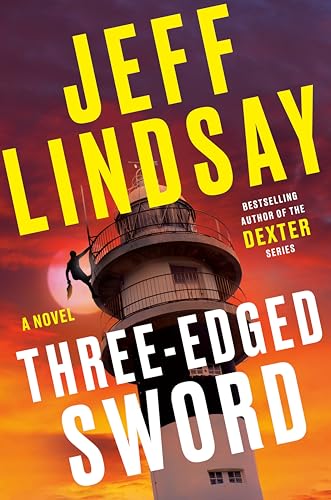
Inhaltsangabe
Wickedly funny. Wildly twisty. The new book from the master of the heist novel.
“A super-thief who leaves no trace.”—Andy Garcia
“An anti-hero for our times.”—Sarah Dunn
“A can't-miss master.”—David Baldacci
Super thief Riley Wolfe can do it all. He is a master of disguise, can scale a wall, and can vanish into thin air (thick air, too). He uses these unique talents to rob the richest. But this time, it’s the most powerful who have him in their grips.
ONE MADMAN. TWO HOSTAGES.
It’s not just that the high-up, rogue government agent has abducted the only two people Riley loves: it’s the fact that Riley has to do the man’s dirty work to set them free. It’s something Riley ordinarily would find a modest day’s work, infiltrating a madman’s Soviet missile silo in one of the world’s most remote places, all to find a secret on a tiny flash drive—but he’s never had to race the clock like this.
SOMETIMES TRUTH CAN BE A THREE-EDGED SWORD.
From its vivid, remote locales to its John Wick-meets-Deadpool dialogue, this gripping heist novel from Jeff Lindsay, author of the Dexter series, is everything: an utterly escapist, must-read novel of espionage, thievery, love and betrayal. It twists, it turns, and keeps everything on the line until the very end. Even for Riley, it looks like this time, the only way out is through.
Die Inhaltsangabe kann sich auf eine andere Ausgabe dieses Titels beziehen.
Über die Autorin bzw. den Autor
Jeff Lindsay is the New York Times bestselling author of the Dexter novels, which debuted in 2004 with Darkly Dreaming Dexter. They are the basis of the hit Showtime and CBS series Dexter. He lives in South Florida with his family.
Auszug. © Genehmigter Nachdruck. Alle Rechte vorbehalten.
1
Amahle Khumalo hurried through the hallway of the exclusive, private, very expensive extended-care facility where she worked as a nurse. She was in a near panic because she could not find her phone, and like any modern woman, she felt lost without it. It was a small nursing home, and she was being paid very, very well to look after only one patient. The extra money was badly needed, so she was extremely diligent. She stayed close to her patient, leaving only to go to the lunchroom, the lounge, or on small errands like getting supplies from storage.
So there were only a few places Amahle might have left her phone. She had checked the nurses' lounge, a room where she spent her time between checkups, since her patient was stable and nonresponsive. The phone was not there.
She was now quite sure she must have left her phone in her patient's room. She had been working on a crossword puzzle on the phone when she went into the room on her last check. No doubt she had put it down on the little bedside table by the window in order to check vital signs and record them on the chart. And then her friend Lesedi stuck her head through the door and asked for her help with Mr. Van der Merwe, who had dementia and had wandered off again.
Amahle had rushed out to help, and Mr. Van der Merwe had been surprisingly elusive for an old man. By the time they had him back in his room and calmed down, it was time for lunch, which she and Lesedi spent talking as they ate. And so it had been nearly two hours until she noticed that her phone was missing. If she had left it there on the little table by the window . . .
In two hours, the sun had moved across the sky, of course-just enough so that the light would be pouring through the window of her patient's room. And it would be shining its intense heat and light on that small table by the window. If she had really left her phone there, it would be in direct sunlight. That South African sunlight was hot; hot enough that if you left a metal object in its light for too long, it would burn your fingers when you picked it up. If you left electronic devices in that kind of heat, it could be fatal to the circuits.
As she raced into the room, the sun was pouring in through the curtained window as if it had been released from a large dam. It was relentlessly bright, and it lit up the entire room like a searchlight. The window was closed, of course, and there was a soft flow of air-conditioned air blowing through, but even so, Amahle could feel the heat.
The phone was there, on the table by the window, in the full glare of the sunlight. Amahle crossed the room quickly and picked up her phone-and swore as it burned her fingers. She hurriedly wrapped it in the hem of her scrub shirt, a pale lavender today. She juggled it clumsily for a moment, found a secure grip that was not too hot to hold, and breathlessly touched the screen.
It lit up, showing the picture of her nephew, Gabriel. The phone was not broken. "Thank you, Jesus!" she said.
". . . What . . . ?"
The voice that came from behind her was a terrible dry croak, almost inaudible, but it froze Amahle where she stood, because it came from a place where no voice could have been.
Her comatose patient.
The patient who was nonresponsive, and had been for several months.
Amahle turned. The attractive young woman in the bed looked at her with wide-open eyes. She was awake.
Immediately, amazement faded and a nurse's calm sense of purpose took over. Amahle dropped the phone into the pocket of her scrubs and stepped to the patient's bedside.
". . . What-where, what?" the woman whispered.
"Hush, dear, don't try to speak," Amahle said as she hurriedly checked the woman's vital signs. Blood pressure good; heartbeat steady-a little elevated at ninety beats per minute, but that was to be expected of someone waking up in a strange room with no idea how they'd gotten there. "You are in hospital," Amahle said. "A private hospital-a very good private hospital."
"But, but . . . Ha-how, how . . . where?" the patient repeated in an insistent croak.
"Cape Town, of course," Amahle said. She turned from the bed and reached for the call button. "Now be quiet and lay still, dear, while I call Doctor."
"But . . ."
"I said lay still," Amahle said with the stern authority all nurses develop. And then, relenting slightly, she gave the woman a tender smile. "Don't worry your head, dear," she said. "You are going to be just fine."
Amahle patted the woman's hand reassuringly. Then she left the room to tell Dr. Sipoyo the news. But she did not go directly to find the doctor. Instead, she paused at the door to a supply closet. She looked carefully around to make sure no one was looking. Then she stepped inside the closet and closed the door.
Amahle took out her phone. It was still very warm, but it was usable. She flipped to her Contacts page and called a number there. It rang three times. Then a mechanical-sounding voice said, "Yes."
Amahle was not sure why, but she was a little frightened. But the extra money was enough to make a very large difference, and she had already decided to do this. So she took a breath and did it.
"She's awake," she said.
There was a pause on the other end, then the same flat, metallic voice said, "Good," and the connection broke.
Feeling slightly dizzy, Amahle put her phone away. She tried to swallow and found that her mouth and throat were almost too dry. But it was done.
Amahle took another, deeper breath and slipped out of the closet to find Dr. Sipoyo.
2
It was not a pleasure for me, of course. Not at all.
It was a setup from the very start. How had they known I'd come here, to Keresemose? Simple. They knew I had been in South Africa for a while, just sitting around and waiting and probably getting bored. It was an easy guess that eventually I'd want to find something to do, and with me that meant just one thing: stealing something. And in South Africa, where would a bored thief go? A diamond mine, of course. So they put out the word about the upcoming showing to make sure it was this diamond mine. And I had walked right into their trap.
When you look at how it turned out, it seems stupid. But the thing that made me the best ever is doing impossible things, and there's a really thin line between impossible and stupid. So if I cross the line into pure stupid now and then-well, shit. I usually make it back, and with the score, too.
This time, though, it wasn't really about the score. I was just bored. And mixed in with the boredom was enough real anxiety to turn that boredom into the kind that makes you jumpy. Like, you're on edge all the time even though you know there's no good reason and nothing you can do about it, and the only smart thing you can do is to find a good book and just sit there and read it. And what you really want to do is light your hair on fire and run screaming into the night.
I had good reasons, for both the boredom and the worry. I'd been sitting in South Africa for six weeks, waiting for Monique to come out of her coma. She hadn't so far, and the doctors were not being really encouraging. And Monique-she is one of the only two people in the world I really give a crap about. I almost trust Monique, which is as near to it as I can get. I trust her enough to work with her, and that's hard, because trust makes you vulnerable. She's never betrayed me, though. And I don't want to work with anybody else, because she is hands down the best art forger in the world. She can make a copy of absolutely anything. Nobody else comes close.
And I like her. I mean, we aren't in love or anything. We had one night, celebrating a great heist we did together, when we got ripped and jumped in the sack, and it was legendary. For both of us, I'm positive about that. But she insisted that it had been a mistake, a one-timer, and so far it has stayed that way.
Last time out she got dragged into a truly bad thing, and because of me. I got her out of it, but along the way she got smacked on the head by a freakishly strong psycho. I got her to Cape Town, the closest good hospital, and waited for the doctors to bring her around.
Six weeks later, I was still in Cape Town, and still waiting. I wasn't going anywhere, because I had to be there when she came out of it. She would come out of it; I knew that for sure. Not from what the doctors said. They'd shake their heads and tell me not to be too optimistic, the odds were very long, there might have been brain damage, she'd sustained a serious blah blah blah. I didn't care. They didn't know Monique. I did, and I knew she would wake up, and she'd be fine. And I would be there when it happened.
After a week, the hospital waiting room lost its charm, so I rented a house nearby. After three weeks, I'd read seventeen books and forty-two magazines. And after four weeks, I was chewing my teeth and looking for something to hit. I knew if this kept up I was going to do something that would inflict serious bodily harm on myself and others. That is not the best way to maintain a low profile, which is usually a good idea for someone in my line of work. I knew I had to find something to take my mind off Monique and keep me busy for a few days. And what could that possibly be? Well, I am, after all, the greatest thief in the world. I had to believe that if I looked around a little, I could find something interesting to do in my line of work. Something nearby, close to Monique.
So I did something stupid. If you don't look at it too closely, it made perfect sense. I mean, this is me, world's greatest thief, and here I am in South Africa. And South Africa is known for what, exactly? Go ahead, guess. Hint: If you're thinking "Nelson Mandela," or "vuvuzelas," or even "That amazing fake sign language translator guy when Barack Obama was there," you're on the wrong page. You must have missed the part where I said "world's greatest thief."
Because if you look at it from that angle, South Africa is also known as the home of the greatest diamond mines on earth. And do you know what great diamond mines have that no place else in the world has?
That's right.
And if I need to say that diamonds are worth a lot of money, you probably should stick with the vuvuzela thing.
So I did a quick check around, and I found the Keresemose, just across the border in Botswana. They'd been dragging up some unbelievable stones lately, huge monsters with perfect color and clarity. Even better-they had announced a showing for select bidders in three weeks. That meant they'd have their best stones all clean and pretty in one handy location. That made it a perfect setup for somebody like me.
A little more checking, and I came up with a plan that looked perfect. I would do it in plain sight, in broad daylight, as a mine inspector. I could grab the stones and be away before they knew anything was happening. Boom, perfect, why not.
Getting the paperwork was easy, and so was finding an outfit of suitably beat-up clothing. The Afrikaans accent took a little work, though. It's tricky; kind of close to an Aussie accent, which I already had in the bank, but there are enough differences to trip you up easily, and the locals would know if I screwed up. But I worked it, tried it out in a few places around Cape Town, and got away with it. I was ready.
Now here's where the stupid part comes in. Like I said, bored and anxious, and that made me impatient. That's a mortal sin in my occupation. In the past, I was always extra careful about details when I planned. Always. Except this time, I wasn't. I was just so damn antsy to do something, I jumped into it too soon, only half ready. I figured I could get away with it just this once.
I was wrong. And so here I was, looking down the barrel of a pistol.
3
They didn't even handcuff me. No rope, no chains, not even duct tape. Nothing. Maybe I should have taken that as a major put-down, like, Hey this guy's a lightweight. Why bother? But of course, there was the matter of the four well-armed assholes pointing stuff at me, everything from two Tasers to a Heckler & Koch MP5. So I guess the real message was, We are more badass than you can imagine and we would love it if you would try something. Or maybe, We're all professionals here, why screw around? And all the stuff pointed at me? That was just so I knew they were serious.
Okay, got it. You're serious. You probably figured, who the hell needs chains? Riley knows the score. And of course, there was also the fact that, only a minute or two after I put my hands up, the old Gooney Bird had lurched up into the sky and started winging away to wherever the fuck they were taking me. I have done a lot of totally impossible things-and yeah, I am always looking for more. But jumping out of an airplane without a parachute is not on the list.
And I did know the score. These guys were clearly professionals. You can always tell by the way they move, the way they keep it just business, no unnecessary sadism, little tells like that. And we were already flying at a few thousand feet, which was not ideal jump-without-a-parachute altitude. So when you are in the air and surrounded by exceedingly ugly professionals with lots of weapons, it was not the time or the place to go all Jason Statham on them and make your daring escape. That time would come. It always has before, and it always will again. Because there is always a way, and the whole reason I got to be the very best ever is that I believe that-I know that-and I am smart enough to wait for it and know it when I see it.
„Über diesen Titel“ kann sich auf eine andere Ausgabe dieses Titels beziehen.
Suchergebnisse für Three-Edged Sword: A Novel (A Riley Wolfe Novel, Band...

Beispielbild für diese ISBN
Three-Edged Sword: A Novel
Anbieter: World of Books (was SecondSale), Montgomery, IL, USA
Verkäuferbewertung 5 von 5 Sternen

Hardback. Zustand: Good. Wickedly funny. Wildly twisty. The new book from the master of the heist novel. "A super-thief who leaves no trace."--Andy Garcia "An anti-hero for our times."--Sarah Dunn "A can't-miss master."--David Baldacci Super thief Riley Wolfe can do it all. He is a master of disguise, can scale a wall, and can vanish into thin air (thick air, too). He uses these unique talents to rob the richest. But this time, it's the most powerful who have him in their grips. ONE MADMAN. TWO HOSTAGES. It's not just that the high-up, rogue government agent has abducted the only two people Riley loves: it's the fact that Riley has to do the man's dirty work to set them free. It's something Riley ordinarily would find a modest day's work, infiltrating a madman's Soviet missile silo in one of the world's most remote places, all to find a secret on a tiny flash drive--but he's never had to race the clock like this. SOMETIMES TRUTH CAN BE A THREE-EDGED SWORD. From its vivid, remote locales to its John Wick-meets-Deadpool dialogue, this gripping heist novel from Jeff Lindsay, author of the Dexter series, is everything: an utterly escapist, must-read novel of espionage, thievery, love and betrayal. It twists, it turns, and keeps everything on the line until the very end. Even for Riley, it looks like this time, the only way out is through. Artikel-Nr. 00107340073
Gebraucht kaufen
EUR 5,18
Versand gratis
Versand innerhalb von USA
Versand innerhalb von USA
Anzahl: 2 verfügbar
Beispielbild für diese ISBN
Three-Edged Sword: A Novel (A Riley Wolfe Novel)
Anbieter: BooksRun, Philadelphia, PA, USA
Verkäuferbewertung 5 von 5 Sternen
Hardcover. Zustand: Good. With dust jacket. It's a preowned item in good condition and includes all the pages. It may have some general signs of wear and tear, such as markings, highlighting, slight damage to the cover, minimal wear to the binding, etc., but they will not affect the overall reading experience. Ex-Library. Artikel-Nr. 0593186222-11-22-12_29
Gebraucht kaufen
EUR 5,62
Versand gratis
Versand innerhalb von USA
Versand innerhalb von USA
Anzahl: 1 verfügbar
Beispielbild für diese ISBN
Three-Edged Sword : A Novel
Verlag:
Penguin Publishing Group, 2022
ISBN 10: 0593186222
ISBN 13: 9780593186220
Gebraucht
Hardcover
Anbieter: Better World Books, Mishawaka, IN, USA
Verkäuferbewertung 5 von 5 Sternen
Zustand: Very Good. Former library copy. Pages intact with possible writing/highlighting. Binding strong with minor wear. Dust jackets/supplements may not be included. Includes library markings. Stock photo provided. Product includes identifying sticker. Better World Books: Buy Books. Do Good. Artikel-Nr. 45228884-6
Gebraucht kaufen
EUR 6,36
Versand gratis
Versand innerhalb von USA
Versand innerhalb von USA
Anzahl: 3 verfügbar
Beispielbild für diese ISBN
Three-Edged Sword : A Novel
Verlag:
Penguin Publishing Group, 2022
ISBN 10: 0593186222
ISBN 13: 9780593186220
Gebraucht
Hardcover
Anbieter: Better World Books, Mishawaka, IN, USA
Verkäuferbewertung 5 von 5 Sternen
Zustand: Good. Pages intact with minimal writing/highlighting. The binding may be loose and creased. Dust jackets/supplements are not included. Stock photo provided. Product includes identifying sticker. Better World Books: Buy Books. Do Good. Artikel-Nr. 54902462-75
Gebraucht kaufen
EUR 6,36
Versand gratis
Versand innerhalb von USA
Versand innerhalb von USA
Anzahl: 1 verfügbar
Beispielbild für diese ISBN
Three-Edged Sword : A Novel
Verlag:
Penguin Publishing Group, 2022
ISBN 10: 0593186222
ISBN 13: 9780593186220
Gebraucht
Hardcover
Anbieter: Better World Books: West, Reno, NV, USA
Verkäuferbewertung 5 von 5 Sternen
Zustand: Good. Pages intact with minimal writing/highlighting. The binding may be loose and creased. Dust jackets/supplements are not included. Stock photo provided. Product includes identifying sticker. Better World Books: Buy Books. Do Good. Artikel-Nr. 54902462-75
Gebraucht kaufen
EUR 6,36
Versand gratis
Versand innerhalb von USA
Versand innerhalb von USA
Anzahl: 1 verfügbar
Beispielbild für diese ISBN
Three-Edged Sword : A Novel
Verlag:
Penguin Publishing Group, 2022
ISBN 10: 0593186222
ISBN 13: 9780593186220
Gebraucht
Hardcover
Anbieter: Better World Books, Mishawaka, IN, USA
Verkäuferbewertung 5 von 5 Sternen
Zustand: Good. Former library copy. Pages intact with minimal writing/highlighting. The binding may be loose and creased. Dust jackets/supplements are not included. Includes library markings. Stock photo provided. Product includes identifying sticker. Better World Books: Buy Books. Do Good. Artikel-Nr. 45230228-6
Gebraucht kaufen
EUR 6,36
Versand gratis
Versand innerhalb von USA
Versand innerhalb von USA
Anzahl: 1 verfügbar
Beispielbild für diese ISBN
Three-Edged Sword : A Novel
Verlag:
Penguin Publishing Group, 2022
ISBN 10: 0593186222
ISBN 13: 9780593186220
Gebraucht
Hardcover
Anbieter: Better World Books: West, Reno, NV, USA
Verkäuferbewertung 5 von 5 Sternen
Zustand: Very Good. Former library copy. Pages intact with possible writing/highlighting. Binding strong with minor wear. Dust jackets/supplements may not be included. Includes library markings. Stock photo provided. Product includes identifying sticker. Better World Books: Buy Books. Do Good. Artikel-Nr. 45228884-6
Gebraucht kaufen
EUR 6,36
Versand gratis
Versand innerhalb von USA
Versand innerhalb von USA
Anzahl: 1 verfügbar
Beispielbild für diese ISBN
Three-Edged Sword
Anbieter: ThriftBooks-Atlanta, AUSTELL, GA, USA
Verkäuferbewertung 5 von 5 Sternen
Hardcover. Zustand: Good. No Jacket. Former library book; Pages can have notes/highlighting. Spine may show signs of wear. ~ ThriftBooks: Read More, Spend Less. Artikel-Nr. G0593186222I3N10
Gebraucht kaufen
EUR 7,15
Versand gratis
Versand innerhalb von USA
Versand innerhalb von USA
Anzahl: 1 verfügbar
Beispielbild für diese ISBN
Three-Edged Sword: A Novel
Anbieter: Kennys Bookstore, Olney, MD, USA
Verkäuferbewertung 5 von 5 Sternen
Zustand: New. Artikel-Nr. V9780593186220
Neu kaufen
EUR 36,19
EUR 9,37 Versand
Versand innerhalb von USA
Versand innerhalb von USA
Anzahl: 15 verfügbar
Foto des Verkäufers
Three-Edged Sword
Verlag:
Penguin Publishing Group Dez 2022, 2022
ISBN 10: 0593186222
ISBN 13: 9780593186220
Neu
Hardcover
Anbieter: AHA-BUCH GmbH, Einbeck, Deutschland
Verkäuferbewertung 5 von 5 Sternen
Buch. Zustand: Neu. Neuware - Wickedly funny. Wildly twisty. The new book from the master of the heist novel. "A super-thief who leaves no trace."Andy Garcia "An anti-hero for our times."Sarah Dunn "A can't-miss master."David Baldacci Super thief Riley Wolfe can do it all. He is a master of disguise, can scale a wall, and can vanish into thin air (thick air, too). He uses these unique talents to rob the richest. But this time, it's the most powerful who have him in their grips. ONE MADMAN. TWO HOSTAGES. It's not just that the high-up, rogue government agent has abducted the only two people Riley loves: it's the fact that Riley has to do the man's dirty work to set them free. It's something Riley ordinarily would find a modest day's work, infiltrating a madman's Soviet missile silo in one of the world's most remote places, all to find a secret on a tiny flash drivebut he's never had to race the clock like this. SOMETIMES TRUTH CAN BE A THREE-EDGED SWORD. From its vivid, remote locales to its John Wick-meets-Deadpool dialogue, this gripping heist novel from Jeff Lindsay, author of the Dexter series, is everything: an utterly escapist, must-read novel of espionage, thievery, love and betrayal. It twists, it turns, and keeps everything on the line until the very end. Even for Riley, it looks like this time, the only way out is through. Artikel-Nr. 9780593186220
Neu kaufen
EUR 36,05
EUR 35,00 Versand
Versand von Deutschland nach USA
Versand von Deutschland nach USA
Anzahl: 1 verfügbar