
Verwandte Artikel zu Parent Nation: Unlocking Every Child's Potential,...
Inhaltsangabe
***INSTANT New York Times, Wall Street Journal, and USA Today Bestseller***
2023 Gold Winner — Nautilus Book Award
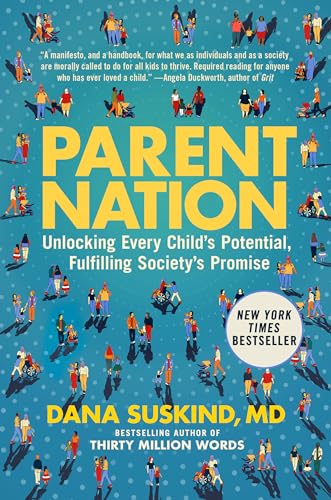
World-class pediatric surgeon, social scientist, and best-selling author of Thirty Million Words Dr. Dana Suskind returns with a revelatory new look at the neuroscience of early childhood development—and how it can guide us toward a future in which every child has the opportunity to fulfill their potential.
Her prescription for this more prosperous and equitable future, as clear as it is powerful, is more robust support for parents during the most critical years of their children’s development. In her poignant new book, Parent Nation, written with award-winning science writer Lydia Denworth, Dr. Suskind helps parents recognize both their collective identity and their formidable power as custodians of our next generation.
Weaving together the latest science on the developing brain with heart-breaking and relatable stories of families from all walks of life, Dr. Suskind shows that the status quo—scores of parents convinced they should be able to shoulder the enormous responsibility of early childhood care and education on their own—is not only unsustainable, but deeply detrimental to the wellbeing of children, families, and society.
Anyone looking for a blueprint for how to build a brighter future for our children will find one in Parent Nation. Informed by the science of foundational brain development as well as history, political science, and the lived experiences of families around the country, this book clearly outlines how society can and should help families meet the developmental needs of their children. Only then can we ensure that all children are able to enjoy the promise of their potential.
Die Inhaltsangabe kann sich auf eine andere Ausgabe dieses Titels beziehen.
Über die Autorin bzw. den Autor
Dana Suskind, MD, is founder and co-director of the TMW Center for Early Learning + Public Health, director of the Pediatric Cochlear Implant Program, and professor of Surgery and Pediatrics at the University of Chicago. Dr. Suskind is the author of over forty-five scientific publications and Thirty Million Words: Building a Child’s Brain. She is a member of the American Academic of Pediatrics and a fellow for the Council on Early Childhood. Her work has been profiled by numerous media outlets, including The New York Times, The Economist, Forbes, NPR, and Freakonomics.
Lydia Denworth is an award-winning science writer and a contributing editor at Scientific American. She is the author of several books of popular science including Friendship: The Evolution, Biology and Extraordinary Power of Life’s Fundamental Bond and I Can Hear You Whisper: An Intimate Journey Through the Science of Sound and Language.
Auszug. © Genehmigter Nachdruck. Alle Rechte vorbehalten.
¥ One ¥
Toward a New North Star
"There can be no keener revelation of a society's soul than the way in which it treats its children."
-Nelson Mandela
As we near the "red line," the demarcation between the hospital's pre-op area and its collection of operating rooms, a mother and father hand me their baby. Their eyes are filled with tears as they look at me with a combination of hope and fear. The little boy is just eight months old and was born deaf. He is here to receive his cochlear implant. When I surgically implant the small device that will give him access to sound, I am replicating what I did for his father many years earlier when he was a teenager. As the baby melts into my arms, I reassure his nervous parents, "I promise to care for your baby like he's my own."
The parents settle in for a long, anxious wait, while I carry their son to the operating room. In OR4, where I spend each Tuesday morning, we are greeted by the team of medical professionals I rely on for every surgery, and by the cacophony of monitor beeps that I find so comforting every time I hear it. My two OR nurses are circulating. Gary Rogers makes sure the cochlear implant is present and that my favorite drill and facial nerve monitor are working properly. Nelson Floresco checks out the operating room microscope, which is the size of a Smart Car and gives me a remarkably clear, precise view of the ear's tiny, delicate interior spaces. Robin Mills, the OR tech, is scrubbed in and organizing the array of sterile microscopic ear instruments on the surgical table. The pediatric anesthesiologist gently places a face mask filled with colorless gases on the squirming baby. Very quickly, the baby is fast asleep.
Before I start the operation, we double-check that everything is in order. Do we have the right patient? Check. Do we have the correct implant with all the right instruments? Check. Do we know if the patient has any medical allergies? Check. Are the pre-operative antibiotics in? Check. This routine ensures the accuracy and safety of what we're doing. Each person in the operating room plays an essential role. No one forgets why we are here: to help a child.
As a surgeon performing delicate work just millimeters from the brain, I have no room for error. It's critical that I have the necessary tools and, even more importantly, my A-team by my side. If any part of this carefully crafted system falls away, no matter my skill or good intentions, my job will be infinitely more difficult, if not impossible. Some obstacles can be overcome-a few missing instruments, for instance. But what if the power went out in the hospital and I suddenly had to operate without light or oxygen? Or what if Robin, Gary, and Nelson suddenly walked out the door, leaving me alone? The odds would be stacked against me, and the job would seem impossible.
The challenge of successfully rearing children is not so different. To raise a child into a happy, healthy adult capable of achieving their full potential, you need a plan, and you need an appropriate, safe environment, one that provides backup as required. But far too many parents are not operating-that is, parenting-in an optimal environment. For too many parents, in our country and throughout the world, it is as if they are trying to function in the midst of an endless power failure, asked to achieve a critical goal without the necessary tools or any backup.
Twenty years ago, I started my own life as a parent with what I thought were all the necessary tools in place. But, in one painful day, it all changed, when my husband, Don, drowned while trying to rescue two boys, leaving me a young widow and my three children with no father. While we still had a roof over our heads and food on the table, advantages that many families lack, Don's death left a vast hole in our lives.
For a long time after he died, I would wake at night, jolted by the same terrifying nightmare, which went something like this: I'm standing on a foggy riverbank. Splinters of moonlight stream through the clouds and illuminate a small wooden boat next to me at the water's edge. Three small, terrified faces-my young children, Genevieve, Asher, and Amelie-peer from the boat, staring at the foreboding river. Its fierce currents resemble the waters of Lake Michigan, whose undertow claimed Don's life. I feel the intense pull of the water, the same pull that Don must have faced when he left the protective shoreline to swim toward the cries of the two struggling boys. Like Don, I have a desperate need to ensure young children are safe. In my dream, I have to get my kids across the river. I believe that if I can just do that, they will be okay . . . It will all be okay. But the torrent is too rough, the boat too flimsy, the opposite riverbank too far away. I wake sobbing, helpless, alone.
It was not hard to grasp the significance of my dream. I wanted what all parents want: to ferry my children into healthy, stable, and productive adult lives-that is what awaited on the far shore. I wanted to give them every opportunity. But it would take some time before I saw how fully all the elements of my dream-the turbulent water, the inadequate boat, the fact that there was no one standing next to me on that riverbank-symbolized the hurdles that so many parents face in the effort to successfully rear their children.
How could I navigate that torrent on my own, with no support, no help? How can anyone? Although I had been a surgeon for years and thought I had a deep familiarity with the lives of the families whose children I cared for, my struggles as a grieving, single parent gave me a new window of understanding into the challenges facing families.
Thirty Million Words . . . and Beyond
I became a surgeon because I thought I could change lives, one child at a time. By giving deaf children cochlear implants, I give them access to sound, to hearing, and to spoken language. I want there to be no barriers to their success, and I believe restoring their access to sound accomplishes that. Sign language can provide a rich, early language environment when provided by fluent signers. The baby whose surgery I just described is now fluent in two languages-American Sign Language and English. But the reality is that more than 90 percent of deaf children are born to hearing parents who don't sign. And early in my practice, I noticed profound differences in my patients' progress after surgery. Some children excelled developmentally, others not at all. Some learned to talk, others did not. The ability to hear, it turned out, did not always unlock their full capacity to learn and thrive intellectually. I could neither accept nor ignore the disturbing disparities I saw among my patients, but I didn't understand them. Compelled to discover their cause and to find solutions, I began a journey far outside the operating room and into the world of social science.
Initially, I was inspired by pioneering research that found a stark difference in the amount of language-the actual number of words-that children were exposed to early in life. That difference often, although not always, fell along socioeconomic lines, with more language occurring in more affluent homes and less language in homes where families have been denied access to educational opportunities, often for generations. Researchers calculated that by the time children reached their fourth birthday, there was a gap of roughly thirty million words between those who heard a lot of language and those who heard very little. Although the research was done in hearing children, it explained what I was observing in my patients. In order to fully benefit from their new cochlear implants, they needed to hear a lively stream of words every day, they needed to practice listening. The quantity and quality of the words children hear stimulate the brain. Regions that are learning to process grammar and meaning will be critical to the ability to speak and later to read. Exposure to words also affects areas of the brain that handle feelings and reason, which will help children regulate their emotions and behavior as they grow older. The more language a child hears in those early years, the more securely the foundational connections are built in that child's brain.
Some of my patients were getting that kind of essential experience with language, others were not. As I learned more, I realized that what I was seeing in my deaf patients mirrored the population at large and that this phenomenon was the basis of what is called the educational opportunity gap. In all children, the difference in early language exposure correlates with later differences in achievement. Too often that opportunity gap results in disparities between rich and poor children.
The research was inspiring because it was based on the idea that parents are their children's first brain architects-that every parent, through the power of their words, has the ability to build their child's brain-and that we, therefore, have to make sure that parents have the resources they need to do that. The research also accentuated the urgency of actively building the brain during the first three years of life. Those early studies weren't perfect, and their limitations became clearer over time, but I think of them now as the first sentence in what has become an extensive body of literature. The work gave me and my colleagues a relatively simple explanation of the underlying disparities to target. It gave me a critical place to start. And it was persuasive enough to pull me out of the operating room for much of each week and into the world of research and social science.
In 2010, when I launched the Thirty Million Words Initiative, now the TMW Center for Early Learning + Public Health, my primary goal was to help ensure healthy development in all children and to give every child the ability to reach his or her potential, intellectually and emotionally. Brain science pointed the way. Everything we designed and did was based on the fact that nurturing talk and interaction between caregivers and infants lay the foundations for brain development. My team and I developed evidence-based strategies to show parents the importance of talking to babies and young children. Those strategies became the theme of TMW: Tune In, Talk More, and Take Turns, or what we call the 3Ts. Our work is centered on the knowledge that rich conversation is what unlocks a child's potential and on the belief that parents as well as other loving caregivers hold the key during those early years. All adults-no matter their level of education, wealth, or work-can master the essential techniques for optimally building a child's brain.
The idea, a straightforward approach to a complex problem, was intuitively appealing and a great success. It was the "magic bullet" that people were looking for and it took me to the nation's capital, where I convened the first Washington, DC, conference on closing the word gap in 2013. Soon after, in 2015, I wrote a book called Thirty Million Words: Building a Child's Brain, which explained what research has revealed about the role of early language exposure in the development of children's brains. It was never just about the sheer number of words; but the difference between the effects of a lot of language exposure and a little served as a memorable representation of the brain-building strength of talk and interaction. The book caught on around the world. Everyone seemed to get its message. No matter the nuances of culture, vocabulary, or socioeconomic status, people had an almost instinctive understanding of language as the key to developing the brain to its maximum potential.
Yet the more deeply I engaged in this new work, the more troubled I became. Or, to put it more honestly, the more I came to realize how naive my ideas were, limited by my own comfortable life circumstances. I had thought the answers lay in the actions and beliefs of individual parents, in their knowledge and behavior. (I still believe those elements are critical!) And it followed that the goal should be to ensure, as I put it in Thirty Million Words, that "all parents, everywhere, understood that a word spoken to a young child is not simply a word but a building block for that child's brain, nurturing a stable, empathetic, intelligent adult." To that end, we were testing early language programs in randomized controlled trials-the scientific gold standard for determining what works and what doesn't. We found that, indeed, our strategies worked and the science that supports them is solid. The programs we promote at TMW can-and often do-improve the lives of children.
But there was more to it than that. For our studies we recruited families, most of them low-income, from all over Chicago and later in other parts of the country. Our research followed children from their first day of life into kindergarten, and our programs took us into families' homes and into their lives. I was getting to know people up close and over time. The parents' enthusiasm was thrilling. They embraced the 3Ts with gusto, tuning in to their children, talking more as they went about their daily lives, and taking turns, encouraging their children to join the conversation. They wanted what we all want: to help their children get off to the best possible start. The problem was that the 3Ts took parents only so far. Real life would intrude, again and again and again.
There was Randy, who was excited to discover that talking about his love of baseball (Cubs only, never White Sox!) could help his son learn math but who had to work two jobs and, most days, had less than thirty minutes to spend with his kids. There was Sabrina, who gave up a well-paying job to care for her husband when he got sick and whose family ended up spending over two years in a homeless shelter, where she raised her two children, the youngest still a baby, in a stressful and chaotic environment. Most searing of all was the story of Michael and Keyonna, whose son, Mikeyon, missed out on all his father had to teach him for the first five years of his life because Michael spent that time in prison waiting to be tried for a crime he didn't commit-not appealing or serving a sentence, mind you, just waiting for his case to be heard.
„Über diesen Titel“ kann sich auf eine andere Ausgabe dieses Titels beziehen.
Suchergebnisse für Parent Nation: Unlocking Every Child's Potential,...

Beispielbild für diese ISBN
Parent Nation: Unlocking Every Child's Potential, Fulfilling Society's Promise
Anbieter: World of Books (was SecondSale), Montgomery, IL, USA
Verkäuferbewertung 5 von 5 Sternen

Hardback. Zustand: Very Good. This book explains exactly what parents need to know about enhancing healthy brain development - how to physically interact with kids (at their level), how to talk about math, new ideas on how to build grit and character, among many other practical insights. Readers will see from fascinating research illustrated with compelling stories that across ethnicities, faiths, and the socio-economic spectrum, kids need essentially the same things when it comes to healthy brain development - and it all starts with the parents. Artikel-Nr. 00074749734
Gebraucht kaufen
EUR 4,68
Versand gratis
Versand innerhalb von USA
Versand innerhalb von USA
Anzahl: 7 verfügbar
Beispielbild für diese ISBN
Parent Nation: Unlocking Every Child's Potential, Fulfilling Society's Promise
Anbieter: World of Books (was SecondSale), Montgomery, IL, USA
Verkäuferbewertung 5 von 5 Sternen
Hardback. Zustand: Fair. This book explains exactly what parents need to know about enhancing healthy brain development - how to physically interact with kids (at their level), how to talk about math, new ideas on how to build grit and character, among many other practical insights. Readers will see from fascinating research illustrated with compelling stories that across ethnicities, faiths, and the socio-economic spectrum, kids need essentially the same things when it comes to healthy brain development - and it all starts with the parents. Artikel-Nr. 00080108113
Gebraucht kaufen
EUR 4,68
Versand gratis
Versand innerhalb von USA
Versand innerhalb von USA
Anzahl: 1 verfügbar
Beispielbild für diese ISBN
Parent Nation: Unlocking Every Child's Potential, Fulfilling Society's Promise
Anbieter: World of Books (was SecondSale), Montgomery, IL, USA
Verkäuferbewertung 5 von 5 Sternen
Hardback. Zustand: Good. This book explains exactly what parents need to know about enhancing healthy brain development - how to physically interact with kids (at their level), how to talk about math, new ideas on how to build grit and character, among many other practical insights. Readers will see from fascinating research illustrated with compelling stories that across ethnicities, faiths, and the socio-economic spectrum, kids need essentially the same things when it comes to healthy brain development - and it all starts with the parents. Artikel-Nr. 00071237374
Gebraucht kaufen
EUR 4,68
Versand gratis
Versand innerhalb von USA
Versand innerhalb von USA
Anzahl: 12 verfügbar
Beispielbild für diese ISBN
Parent Nation: Unlocking Every Child's Potential, Fulfilling Society's Promise
Anbieter: ThriftBooks-Atlanta, AUSTELL, GA, USA
Verkäuferbewertung 5 von 5 Sternen
Hardcover. Zustand: Very Good. No Jacket. Former library book; May have limited writing in cover pages. Pages are unmarked. ~ ThriftBooks: Read More, Spend Less. Artikel-Nr. G0593185609I4N10
Gebraucht kaufen
EUR 6,61
Versand gratis
Versand innerhalb von USA
Versand innerhalb von USA
Anzahl: 1 verfügbar
Beispielbild für diese ISBN
Parent Nation: Unlocking Every Child's Potential, Fulfilling Society's Promise
Anbieter: ThriftBooks-Dallas, Dallas, TX, USA
Verkäuferbewertung 5 von 5 Sternen
Hardcover. Zustand: As New. No Jacket. Pages are clean and are not marred by notes or folds of any kind. ~ ThriftBooks: Read More, Spend Less. Artikel-Nr. G0593185609I2N00
Gebraucht kaufen
EUR 6,62
Versand gratis
Versand innerhalb von USA
Versand innerhalb von USA
Anzahl: 1 verfügbar
Beispielbild für diese ISBN
Parent Nation: Unlocking Every Child's Potential, Fulfilling Society's Promise
Anbieter: ThriftBooks-Atlanta, AUSTELL, GA, USA
Verkäuferbewertung 5 von 5 Sternen
Hardcover. Zustand: Very Good. No Jacket. May have limited writing in cover pages. Pages are unmarked. ~ ThriftBooks: Read More, Spend Less. Artikel-Nr. G0593185609I4N00
Gebraucht kaufen
EUR 6,62
Versand gratis
Versand innerhalb von USA
Versand innerhalb von USA
Anzahl: 1 verfügbar
Beispielbild für diese ISBN
Parent Nation: Unlocking Every Child's Potential, Fulfilling Society's Promise
Anbieter: ThriftBooks-Dallas, Dallas, TX, USA
Verkäuferbewertung 5 von 5 Sternen
Hardcover. Zustand: Very Good. No Jacket. Missing dust jacket; May have limited writing in cover pages. Pages are unmarked. ~ ThriftBooks: Read More, Spend Less. Artikel-Nr. G0593185609I4N01
Gebraucht kaufen
EUR 6,62
Versand gratis
Versand innerhalb von USA
Versand innerhalb von USA
Anzahl: 1 verfügbar
Beispielbild für diese ISBN
Parent Nation: Unlocking Every Child's Potential, Fulfilling Society's Promise
Anbieter: ThriftBooks-Atlanta, AUSTELL, GA, USA
Verkäuferbewertung 5 von 5 Sternen
Hardcover. Zustand: As New. No Jacket. Pages are clean and are not marred by notes or folds of any kind. ~ ThriftBooks: Read More, Spend Less. Artikel-Nr. G0593185609I2N00
Gebraucht kaufen
EUR 6,62
Versand gratis
Versand innerhalb von USA
Versand innerhalb von USA
Anzahl: 1 verfügbar
Beispielbild für diese ISBN
Parent Nation : Unlocking Every Child's Potential, Fulfilling Society's Promise
Verlag:
Penguin Publishing Group, 2022
ISBN 10: 0593185609
ISBN 13: 9780593185605
Gebraucht
Hardcover
Anbieter: Better World Books, Mishawaka, IN, USA
Verkäuferbewertung 5 von 5 Sternen
Zustand: Good. Former library copy. Pages intact with minimal writing/highlighting. The binding may be loose and creased. Dust jackets/supplements are not included. Includes library markings. Stock photo provided. Product includes identifying sticker. Better World Books: Buy Books. Do Good. Artikel-Nr. 42716633-6
Gebraucht kaufen
EUR 8,56
Versand gratis
Versand innerhalb von USA
Versand innerhalb von USA
Anzahl: 1 verfügbar
Beispielbild für diese ISBN
Parent Nation: Unlocking Every Child's Potential, Fulfilling Society's Promise
Anbieter: WorldofBooks, Goring-By-Sea, WS, Vereinigtes Königreich
Verkäuferbewertung 5 von 5 Sternen
Paperback. Zustand: Very Good. The book has been read, but is in excellent condition. Pages are intact and not marred by notes or highlighting. The spine remains undamaged. Artikel-Nr. GOR013364070
Gebraucht kaufen
EUR 12,98
EUR 6,68 Versand
Versand von Vereinigtes Königreich nach USA
Versand von Vereinigtes Königreich nach USA
Anzahl: 1 verfügbar