
Inhaltsangabe
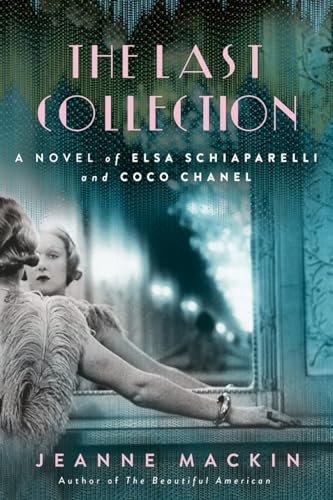
An American woman becomes entangled in the intense rivalry between iconic fashion designers Coco Chanel and Elsa Schiaparelli in this captivating novel from the acclaimed author of The Beautiful American.
Paris, 1938. Coco Chanel and Elsa Schiaparelli are fighting for recognition as the most successful and influential fashion designer in France, and their rivalry is already legendary. They oppose each other at every turn, in both their politics and their designs: Chanel’s are classic, elegant, and practical; Schiaparelli’s bold, experimental, and surreal.
When Lily Sutter, a recently widowed young American teacher, visits her brother, Charlie, in Paris, he insists on buying her a couture dress—a Chanel. Lily, however, prefers a Schiaparelli. Charlie’s beautiful and socially prominent girlfriend soon begins wearing Schiaparelli’s designs as well, and much of Paris follows in her footsteps.
Schiaparelli offers budding artist Lily a job at her store, and Lily finds herself increasingly involved with Schiaparelli and Chanel’s personal war. Their fierce competition reaches new and dangerous heights as the Nazis and the looming threat of World War II bear down on Paris.
Die Inhaltsangabe kann sich auf eine andere Ausgabe dieses Titels beziehen.
Über die Autorin bzw. den Autor
Jeanne Mackin is the author of several historical novels, including The Beautiful American. She taught creative writing at Goddard College and has given numerous workshops. She lives with her husband in upstate New York.
Auszug. © Genehmigter Nachdruck. Alle Rechte vorbehalten.
The Last Collection by Jeanne Mackin
A Novel of Elsa Schiaparelli and Coco Chanel
Berkley
New York
Copyright © 2019 by Jeanne Mackin
Part 1
Blue
Of the three primary colors, blue is most suggestive of paradox: it is the color of longing and sadness, and yet it is also the color of joy and fulfillment. On a ship, at night, blue water merges into blue sky, so blue is the color of places with no borders, no edges.
If you throw salt into a fire, the flames will burn blue. Salt rubbed into a wound renews the pain, intensifies it. Seeing others kiss and embrace was salt in my wound, a blue flame burning the length of me.
Blue best represents the contradictions of the heart, the need to be loved and cherished at the same time that we wish for freedom.
Blue, the color of the Worth gown that the little girl Elsa Schiaparelli found in her Roman piazza attic, the color of the covers of the penny romances Coco Chanel found in the orphanage attic.
Blue is what made Elsa Schiaparelli’s daring color, shocking pink, so special: it is pink infused with blue, turning a demure blush into an electric surge. Schiaparelli turned girlish pink into the color of seduction by adding that touch of blue.
And always, there is the blue of the Paris sky on a June day.
Listen. I’m going to tell you a story about fashion, and politics. And of course, about love. The three primaries, like the primary colors.
1
New York, 1954
“For you.” Liz, the gallery assistant, handed me the telegram. Pale blue paper, bold blue lettering. I turned it over and over in my hands. During the war we had learned to dread telegrams. The war was over and whoever was coming home was already there, but dread remained, the fear of again reading those words, “We regret to inform you . . .”
“Aren’t you going to open it?” she asked.
“Of course.” I hesitated. The only people I loved, those still left to me, were just a few blocks away, downtown. No telegram would be needed, if something had happened to them; they were a local telephone call away. Open it, I ordered myself.
I sat on a packing crate and tore at the paper with my chipped fingernails, reminding myself that sometimes telegrams carried good news. It’s possible.
The message was brief. Come to Paris. Need to see you. Signed, Schiap.
Elsa Schiaparelli. Of course she would send a telegram instead of making a transatlantic phone call. It wasn’t the expense of the call but one of her many phobias and superstitions: she hated telephones. All the noise of the Madison Avenue gallery, the hammering, the whir of measuring tapes, the scraping of ladders being pushed across the floor, fell away. New York dissolved, and I was in Paris again.
I closed my eyes and remembered the accordion player on the corner of rue Saint-Honoré playing “Parlez-moi d’Amour,” the throaty laugh of Schiap as she shared a bit of gossip with her assistant, Bettina. Usually, it had been gossip about Coco Chanel, her archrival. Charlie, handsome in his tuxedo, blond bombshell Ania turning heads in the Ritz bar. The taste of strong café, the smell of yeasty bread, the colors, the gleam of the Eiffel Tower, the medieval miracles of rose windows in the churches.
How long had it been? I’d been twenty-five when I met Schiap in Paris. She’d been forty-eight, only nine years older than I was now. And I had thought of her as old, though she never had. “Women don’t age if their clothes stay new,” she had told me once. “Grown women must never dress childishly, but neither should they accept age as inevitable. It is not, not in fashion.”
After the war Schiap and I had gone separate ways, eager to get on with our lives, to return to what had been interrupted, to try to find what had been lost. Of course, there is no going back. Time is an arrow that flies forward, not back. I’d learned that particular lesson well. Too much looking over the shoulder turns you to salt, like Lot’s wife, salt which burns blue.
Even so, why did Schiap “need” to see me? Why not just “want” or even demand, as she was known to do? There had usually been a bit of drama in her messages, a bit of the self-importance and self-absorption often found in the personalities of the very driven, the very successful. She’d earned that drama, the very famous, some would say infamous, Elsa Schiaparelli, designer of the most beautiful, and sometimes most bizarre, women’s clothing ever worn.
“Bad news?” The assistant put down the wooden frame she was carrying.
“No. I don’t know what it’s about,” I said, folding up the telegram and putting it in my pocket. “Just from an old friend. In Paris.”
She gave an exaggerated sigh of relief. Mr. Rosenberg’s gallery employee was a caring person, likely to give you a hug for no reason, to hold your hand if she suspected you’d had bad news. I liked that quality in her, and I liked how her hands, pale and slender, reminded me of Ania.
“Paris. I’d love to go there some day. You’ve been, haven’t you?”
“Yes. I’ve been.” Oh, how I had been. “We’re just about done. Can we call it quits for today?” I needed to think about that telegram, to decide.
“But the show has to be hung by Monday.” She looked more worried than ever. It was my first show in the famous Rosenberg gallery, and not to be taken lightly. I had been in several group exhibits, and even sold some paintings, but if this show was well received . . . well. I’d be successfully on my way.
Liz looked at the telegram I was still holding. “Okay,” she agreed.
“We can finish tomorrow. Go. Go home.” And that was what Schiap had said to me once, years ago. Life was breaking into repetitive refrains, pulling me back.
The echo of her words didn’t startle me, though. It was the echoed action of opening a telegram and reading those words that had. Come to Paris. Need to see you. Exactly what my brother, Charlie, had written sixteen years ago.
Of course I would go. Impossible not to, in both cases. As Liz began to clean up, I found a scrap of paper and began the list-making needed for any complicated journey made during a busy time. I’d stay for my opening reception and then I’d take an airplane to Paris. An airplane! Before the war, the ocean had been busy with steamers to-ing and fro-ing; now, people traveled by air. It was cheaper. It was faster. Schiap had been one of the first to fly transatlantic, had loved the possibility of being in Paris for breakfast on Monday and New York for breakfast on Tuesday.
Liz folded the stepladder and gave me another concerned look over her spectacles, always worn low on her nose, the way Coco Chanel wore hers when she thought no one was looking. Outside the gallery window, Madison Avenue throbbed with life. New York had recovered from the war. The shelves in the neighborhood delis were full; the window displays at Bonwit Teller, Macy’s, Henri Bendel were opulent. The city was stronger than ever, like a flu patient who wakes up to find himself healthier for having spent a few days in bed.
The children out walking with their mothers or nannies that day were well-fed, rosy-cheeked in their winter hats and mittens; the women were dressed in their new postwar coats and dresses, mostly Dior and Dior knockoffs; the New Look, the yards of fabric...
„Über diesen Titel“ kann sich auf eine andere Ausgabe dieses Titels beziehen.
Weitere beliebte Ausgaben desselben Titels

Suchergebnisse für The Last Collection: A Novel of Elsa Schiaparelli and...

Beispielbild für diese ISBN
Last Collection, The
Anbieter: World of Books (was SecondSale), Montgomery, IL, USA
Verkäuferbewertung 5 von 5 Sternen

Zustand: Good. Item in good condition. Textbooks may not include supplemental items i.e. CDs, access codes etc. Artikel-Nr. 00043171536
Gebraucht kaufen
EUR 5,57
Versand gratis
Versand innerhalb von USA
Versand innerhalb von USA
Anzahl: 1 verfügbar