
Verwandte Artikel zu White Generals
Suchergebnisse für White Generals

Beispielbild für diese ISBN
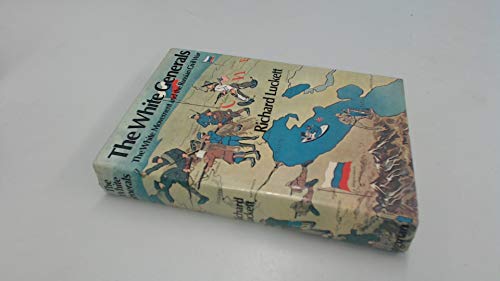
The White Generals; An Account of the White Movement and the Russian Civil War
Verlag:
Longman, London, 1971
ISBN 10: 0582127777
ISBN 13: 9780582127777
Gebraucht
Hardcover
Erstausgabe
Anbieter: Ground Zero Books, Ltd., Silver Spring, MD, USA
Verkäuferbewertung 5 von 5 Sternen

Hardcover. Zustand: Very good. Zustand des Schutzumschlags: Very good. John Flower (Maps) (illustrator). xviii, 413, [1] pages. Footnotes. Illustrations. Maps. Select Bibliography. Index. DJ has some wear and soiling. Some edge soiling. The author received both his M.A. and Ph.D. from Cambridge University. He taught at the Royal Military Academy at Sandhurst. This account of the Russian Civil War combines a vivid narrative of the military events with a biographical discussion of the White Generals, figures of the former Imperial Russian Army officers who led the separate campaigns against the Red Soviets - men such as Kornilov, Alekseev, Kolchak, Denikin, Wrangel, Yudenich and the Finnish Yudeniol Marshal Mannerheim. Despite their shared designation, the White Generals had no common program. Their tragedy was that Lenin's dogmatism, intransigence and ruthlessness, all essential qualities in a country which had never known anything other than autocracy, were alien to their characters. The White movement, also known as the Whites, was a loose confederation of anti-communist forces that fought the communist Bolsheviks, also known as the Reds, in the Russian Civil War (1917-1923). The movement's military arm was the White Army, also known as the White Guard, or White Guardsmen. During the Russian Civil War, the White movement functioned as a big-tent political movement representing an array of political opinions in Russia united in their opposition to the Bolsheviksâ"from the republican-minded liberals and Kerenskyite social democrats on the left through monarchists and supporters of a united multinational Russia to the ultra-nationalist Black Hundreds on the right. Following the military defeat of the Whites, remnants and continuations of the movement remained in several organizations, some of which only had narrow support, enduring within the wider White émigré overseas community. Derived from a Kirkus review: The author traces the military course of the Russian Civil War. It begins with a description of the February 1917 revolution; Luckett assumes that the Russian continued participation war should have been pursued. Trotsky, the chief organizer of the Red forces, is termed a ruthless but magnetic character. The White generals are the centerpiece of the book. The variety of their political commitments is stressed; they were by no means arch-reactionaries all. Luckett is right to conclude that their essential weakness was a failure to organize politically against the revolutionary elan of the Reds. Luckett is also right in playing down the importance of the Allied intervention on the Whites' side. The book will reward historians, military buffs, and students of the revolution. Presumed First U. K. Edition, First printing. Artikel-Nr. 88589
Gebraucht kaufen
EUR 81,74
EUR 4,41 Versand
Versand innerhalb von USA
Versand innerhalb von USA
Anzahl: 1 verfügbar