
Verwandte Artikel zu Keepers of the Flame: Literary Estates and the Rise...
Keepers of the Flame: Literary Estates and the Rise of Biography from Shakespeare to Plath - Hardcover
Buch 10 von 72: Faber Finds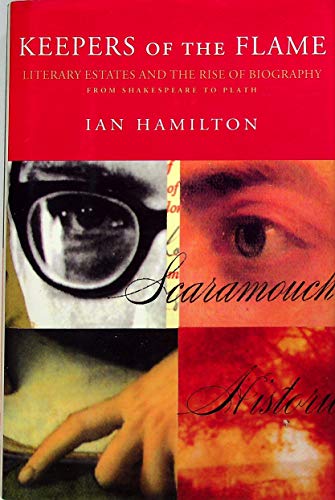
Inhaltsangabe
We live in the great age of literary biography. But how much should a biographer tell? How much should an executor suppress? Does the public's right to know override an individual's right to privacy?
To answer these questions, Ian Hamilton presents a probing and far-reaching account of literary estate management and mismanagement through the centuries from Donne and Shakespeare to Plath and Larkin. In a gripping series of case studies, he recounts the battles between the protective and the curious, between the keepers of the sacred flame and those who might seek to snuff it out.
Hamilton offers a violent, lurid and hugely entertaining history of broken promises and mismanaged wills, of reputations whitewashed or maligned, of scholars and crooks, of muddle, trickery, scandal and vendetta. He includes the burning of Byron's memoir, the deification of Shelley and Henry James' attempt to "fix" his own posthumous reputation as well as the more recent controversies surrounding the Plath and Larkin estates. Throughout, Hamilton presents an array of well-meaning acolytes - admirers, best friends, widows - whose task it was to keep the flame sacred.
Offering a compelling contribution to current debate on the moral issues of biography, Hamilton writes of the "greats" of English literature with an intimacy and a subversive wit that make this book a joy to read.
Die Inhaltsangabe kann sich auf eine andere Ausgabe dieses Titels beziehen.
Rezensionen
Hamilton here selects the lives of 12 literary giants through which to explore the question of what happens to an author's work and reputation after death. Although many writers leave instructions regarding posthumous publication and designate official biographers, conflicting interests between heirs and the public often overturn the expressed wishes of the deceased, shows Hamilton. His subjects span a historical gamut from the 16th century to the 20th and include John Donne, Percy Bysshe Shelley, Thomas Carlyle, Charles Dickens, Henry James and Sylvia Plath--and the keepers of their flames. Although Hamilton ( In Search of J. D. Salinger ) provides interesting information on emerging overwhelmed by an excess of gossipy detail about his subjects' sex lives and negative character traits and marred by poor organization of his material.
Copyright 1994 Reed Business Information, Inc.
A surprisingly original study of the literary estates of
many famed writers, and a look at the tangled relationship
between estate management and biography. Hamilton wrote the
strong Robert Lowell (1982) and the admirable In Search of J.D.
Salinger (1988).
Estates that Hamilton looks into include those of John Donne
the Younger, Shakespeare, Marvell, Milton, Pope, Boswell, Robert
Burns, Byron, Dickens, Tennyson, Swinburne, Robert Louis
Stevenson, Henry James, Hardy, Kipling, Joyce, Eliot, and Sylvia
Plath. John Donne made no mention of his poems in his will and,
thinking them a young man's ``evaporations'' and ``vanities,''
would have preferred that these sins be destroyed. Following his
death, Shakespeare's plays were edited by two fellow actors and
``set forth according to their first originals,'' as these
friends put it, saving eighteen of Shakespeare's plays from
oblivion (including King Lear, The Tempest, and Macbeth) and
several others, according to Hamilton, from being handed down in
``irretrievably corrupt'' texts. While poets' posthumous papers
gave rise to biography, Dr. Johnson wrote his hasty Lives of the
Poets to consolidate publishers' copyrights on various posthumous
materials. Meanwhile, Boswell took down Johnson's table talk for
his monumental Life of Johnson (Macauley later damned Boswell as
a drunkard, pipsqueak, and lickspittle), then left a hoard of
journals and Boswelliana that engendered the great Boswell papers
saga. Hamilton follows the styles of biography as one mode rises
over the body of earlier modes: the Victorian biography, for
instance, reflects the newly emerging Romantic concept of the
artist. Dickens writes long letters to his future
``beeograffer,'' John Forster. Joyce appoints his benefactress
Harriet Shaw Weaver as his literary executor; she also inherits
his mad daughter. Eliot directed that there should be ``no
biographies,'' and his estate will not go public until 2015. Ted
Hughes' trial-by-gravestone bequeathed him by Sylvia Plath is
quite moving.
As a commentary on literary mortality, and on biography and
trumpery, this is book is a treasure. -- Copyright ©1994, Kirkus Associates, LP. All rights reserved.
„Über diesen Titel“ kann sich auf eine andere Ausgabe dieses Titels beziehen.
Suchergebnisse für Keepers of the Flame: Literary Estates and the Rise...

Beispielbild für diese ISBN
Keepers of the Flame: Literary Estates and the Rise of Biography
Anbieter: World of Books (was SecondSale), Montgomery, IL, USA
Verkäuferbewertung 5 von 5 Sternen

Hardback. Zustand: Fair. Artikel-Nr. CIN0571198430A
Gebraucht kaufen
EUR 5,53
Versand gratis
Versand innerhalb von USA
Versand innerhalb von USA
Anzahl: 1 verfügbar
Beispielbild für diese ISBN
Keepers of the Flame: Literary Estates and the Rise of Biography
Anbieter: ThriftBooks-Phoenix, Phoenix, AZ, USA
Verkäuferbewertung 5 von 5 Sternen
Hardcover. Zustand: Very Good. No Jacket. May have limited writing in cover pages. Pages are unmarked. ~ ThriftBooks: Read More, Spend Less. Artikel-Nr. G0571198430I4N00
Gebraucht kaufen
EUR 6,17
Versand gratis
Versand innerhalb von USA
Versand innerhalb von USA
Anzahl: 1 verfügbar
Beispielbild für diese ISBN
Keepers of the Flame: Literary Estates and the Rise of Biography
Anbieter: ThriftBooks-Reno, Reno, NV, USA
Verkäuferbewertung 5 von 5 Sternen
Hardcover. Zustand: Very Good. No Jacket. May have limited writing in cover pages. Pages are unmarked. ~ ThriftBooks: Read More, Spend Less. Artikel-Nr. G0571198430I4N00
Gebraucht kaufen
EUR 6,17
Versand gratis
Versand innerhalb von USA
Versand innerhalb von USA
Anzahl: 1 verfügbar
Beispielbild für diese ISBN
Keepers of the Flame: Literary Estates and the Rise of Biography
Anbieter: ThriftBooks-Atlanta, AUSTELL, GA, USA
Verkäuferbewertung 5 von 5 Sternen
Hardcover. Zustand: Very Good. No Jacket. May have limited writing in cover pages. Pages are unmarked. ~ ThriftBooks: Read More, Spend Less. Artikel-Nr. G0571198430I4N00
Gebraucht kaufen
EUR 6,18
Versand gratis
Versand innerhalb von USA
Versand innerhalb von USA
Anzahl: 1 verfügbar
Beispielbild für diese ISBN
Keepers of the Flame: Literary Estates and the Rise of Biography
Anbieter: ThriftBooks-Dallas, Dallas, TX, USA
Verkäuferbewertung 5 von 5 Sternen
Hardcover. Zustand: Very Good. No Jacket. May have limited writing in cover pages. Pages are unmarked. ~ ThriftBooks: Read More, Spend Less. Artikel-Nr. G0571198430I4N00
Gebraucht kaufen
EUR 6,18
Versand gratis
Versand innerhalb von USA
Versand innerhalb von USA
Anzahl: 1 verfügbar
Beispielbild für diese ISBN
Keepers of the Flame: Literary Estates and the Rise of Biography
Anbieter: ThriftBooks-Atlanta, AUSTELL, GA, USA
Verkäuferbewertung 5 von 5 Sternen
Hardcover. Zustand: As New. No Jacket. Pages are clean and are not marred by notes or folds of any kind. ~ ThriftBooks: Read More, Spend Less. Artikel-Nr. G0571198430I2N00
Gebraucht kaufen
EUR 6,18
Versand gratis
Versand innerhalb von USA
Versand innerhalb von USA
Anzahl: 1 verfügbar
Beispielbild für diese ISBN
Keepers of the Flame : Literary Estates and the Rise of Biography
Verlag:
Faber & Faber, Incorporated, 1994
ISBN 10: 0571198430
ISBN 13: 9780571198436
Gebraucht
Hardcover
Anbieter: Better World Books, Mishawaka, IN, USA
Verkäuferbewertung 5 von 5 Sternen
Zustand: Good. Reprint. Former library copy. Pages intact with minimal writing/highlighting. The binding may be loose and creased. Dust jackets/supplements are not included. Includes library markings. Stock photo provided. Product includes identifying sticker. Better World Books: Buy Books. Do Good. Artikel-Nr. GRP28554773
Gebraucht kaufen
EUR 10,16
Versand gratis
Versand innerhalb von USA
Versand innerhalb von USA
Anzahl: 1 verfügbar
Beispielbild für diese ISBN
Keepers of the Flame: Literary Estates and the Rise of Biography from Shakespeare to Plath
Anbieter: WorldofBooks, Goring-By-Sea, WS, Vereinigtes Königreich
Verkäuferbewertung 5 von 5 Sternen
Paperback. Zustand: Very Good. The book has been read, but is in excellent condition. Pages are intact and not marred by notes or highlighting. The spine remains undamaged. Artikel-Nr. GOR005699798
Gebraucht kaufen
EUR 5,71
EUR 6,72 Versand
Versand von Vereinigtes Königreich nach USA
Versand von Vereinigtes Königreich nach USA
Anzahl: 1 verfügbar
Beispielbild für diese ISBN
Keepers of the Flame: Literary Estates and the Rise of Biography
Verlag:
Faber & Faber, 1994
ISBN 10: 0571198430
ISBN 13: 9780571198436
Gebraucht
Hardcover
Erstausgabe
Anbieter: Wonder Book, Frederick, MD, USA
Verkäuferbewertung 5 von 5 Sternen
Zustand: As New. First edition copy. . Very Good dust jacket. In protective mylar cover. (literary criticism, literature, biography). Artikel-Nr. P06N-00719
Gebraucht kaufen
EUR 15,26
Versand gratis
Versand innerhalb von USA
Versand innerhalb von USA
Anzahl: 1 verfügbar
Beispielbild für diese ISBN
Keepers of the Flame; Literary Estates and the Rise of Biography from Shakespeare to Plath
Verlag:
Faber and Faber, 1994
ISBN 10: 0571198430
ISBN 13: 9780571198436
Gebraucht
Hardcover
Erstausgabe
Anbieter: Ystwyth Books, Aberystwyth, Vereinigtes Königreich
Verkäuferbewertung 5 von 5 Sternen
Hardcover. Zustand: Fine. Zustand des Schutzumschlags: Fine. 1st Edition. Fine copy. Fine dustwrapper. No inscriptions. Artikel-Nr. 037807
Gebraucht kaufen
EUR 10,68
EUR 9,60 Versand
Versand von Vereinigtes Königreich nach USA
Versand von Vereinigtes Königreich nach USA
Anzahl: 1 verfügbar