
Verwandte Artikel zu Shooting the Sun
Inhaltsangabe
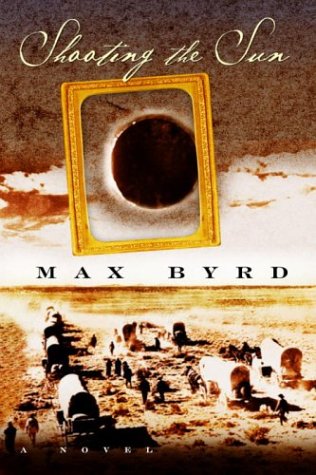
Inspired by eccentric inventor Charles Babbage, who believes that his Difference Engine, a forerunner of the modern computer, can calculate the precise longitude of a long total solar eclipse, astronomer Selena Cott invents a revolutionary technique to photograph it and embarks on a dangerous journey into the heart of the American Southwest to prove it.
Die Inhaltsangabe kann sich auf eine andere Ausgabe dieses Titels beziehen.
Über die Autorin bzw. den Autor
Max Byrd is the author of the bestselling historical novels <i>Jefferson, Jackson</i>, and <i>Grant</i>. He makes his home in Davis, California.
Aus dem Klappentext
Charles Babbage was an English genius of legendary eccentricity. He invented the cowcatcher, the ophthalmoscope, and the “penny post.” He was an expert lock picker, he wrote a ballet, he pursued a vendetta against London organ-grinders that made him the laughingstock of Europe. And all his life he was in desperate need of enormous sums of money to build his fabled reasoning machine, the Difference Engine, the first digital computer in history.<br><br>To publicize his Engine, Babbage sponsors a private astronomical expedition―a party of four men and one remarkable woman―who will set out from Washington City and travel by wagon train two thousand miles west, beyond the last known outposts of civilization. Their ostensible purpose is to observe a total eclipse of the sun predicted by<br>Babbage’s computer, and to photograph it with the newly invented camera of Louis Daguerre.<br><br>The actual purpose, however…<br><br>Suffice it to say that in Shooting the Sun nothing is what it seems, eclipses have minds of their own, and even the best computer cannot predict treachery, greed, and the fickle passions of the human heart.
Auszug. © Genehmigter Nachdruck. Alle Rechte vorbehalten.
CHAPTER ONE
Miss Selena Cott
If you were my daughter," said the comte de Broglie, taking Selena Cott's hand and kissing his own thumb, as was the continental custom, "I would put you across my knee and paddle you."
Selena, who had known the comte since she was a baby, smiled at him and in her mind's eye pulled his great red French nose till it honked. "Well, of course you would," she replied, and retrieved her hand and used it to shade her brow. The docks of Baltimore City, where he had come to greet her, were astonishingly hot for the month of June, deafeningly noisy. She hardly knew whether to look at them or the disapproving comte, a small, foppish man of sixty or so, much given (as she now recalled) to the old-fashioned eighteenth-century ways. He had evidently doused himself in cologne, and unmistakably he had coated his face with rouge and white powder. Under the blazing American sun, with his black silk parasol held stiffly over his head, he looked like an exotic and demented Robinson Crusoe.
Because he disapproved, the comte was silent for a full twenty paces up the wharf, but because he was French he was constitutionally unable to keep it up.
"One young girl and two dozen men," he muttered as they reached the Customs building.
"Seulement cinq ou six," Selena said mildly. "Only five or six men."
"And in the middle of the burning desert!" The comte signalled briskly to a hatless black stevedore whose arms and face were gleaming with perspiration.
"Mr. Babbage made a calculation."
"Ah, Mr. Babbage," began the comte, and then apparently thought better of where his sentence was going. "The lady's telescope," he commanded the stevedore.
Inside the Customs building it was even hotter than outside. Selena fanned herself with her baggage ticket and followed the comte across a crowded reception hall toward a rank of queues and official desks at the other end. On every side, knots of busy merchants and sailors turned to stare as she passed by.
As indeed they might.
Selena Cott was twenty-three years old just that month, and even though she had worn it six of her seventeen days at sea, her blue taffeta travelling dress still clung to her figure with Parisian style. She was slender and five feet six inches tall, four inches taller than the comte. She had striking blonde hair, worn unconventionally short and without a bonnet, and a quick, dancing smile which caused the comte unconsciously to stretch to his full height and rise on his toes as he walked beside her, and which from the cradle on had quite unfairly disguised, as the comte had almost forgotten, her absolutely maddening obstinacy of purpose, whatever that purpose happened to be.
He glowered at the staring merchants and sailors. Selena ignored them and concentrated instead on the reception hall. There were four desks and queues in front of them now, and high overhead, suspended by ropes from the ceiling, the biggest American flag she had ever seen. Sunlight poured in on either side of the flag through a series of tall dirty windows like golden lava (in the heat she allowed herself to be fanciful). The room was lined with barrels and stacks of crates and smelled of fish scales, raw cotton, pine boards, and something she identified after a moment as linseed oil, and while the comte guided her into the shortest queue, reserved for disembarking passengers, she tried to remember the triangular trade routes that her father used to draw on his old sea charts on the Rue Jacob.
"The lady is American," the comte informed the clerk and flourished Selena's neatly folded passport. "Born in Massachusetts, America."
Whatever the clerk answered was lost in the growl of a steam-driven winch starting up on the docks outside. He spat on the floor, stamped her papers, and stabbed a thumb to his right, and thus, Selena concluded, the democratic formalities were over.
Selena was not a sentimental person. From her sea captain father she had inherited, along with her height and smile, an indisputably New England directness. She prided herself on being objective and self-controlled; to describe herself she liked the crisp, cool new word much in use, "scientist." Nonetheless, she thought she would have liked to stand there for an instant or two of quiet exhilaration, to drink it all in--her return at last to her native soil, the twenty-eight bright stars glittering on the beautiful flag above her like a good omen, the rich liquid sounds of American voices, American accents. But the comte's hand was on her elbow, the black stevedore was holding a door open, and she found herself unceremoniously whisked outside, onto a tilted brick sidewalk under an awning.
Next to her, the comte seemed to have been suddenly transformed from eighteenth-century fop into brisk nineteenth-century man of business.
He rattled off a volley of orders to the stevedore. He opened his gold watch, then closed it with a snap. The parasol waved imperiously, and a hackney carriage detached itself from a row of wagons half a block away and clattered up. Yet another black man heaved her trunk into the back. Selena had time enough only to notice the horses--unfamiliar buff-colored drays with hooves the size of soup plates--and then they were lurching and swaying up the street.
"Your mother, dear unhappy lady, says you're as reckless and terrible as ever." The comte smiled maliciously and leaned close to make himself heard over the racket of the wheels. "Still the same"--he searched for a word, reverted to French--"same old gamine."
"Tomboy."
"Tomboy," the comte agreed. Outside the carriage, the city of Baltimore was rolling past like a strip of badly painted theatrical scenery--wooden storefronts with patched roofs and slanting porches; weedy vacant lots; an occasional two- or three-story red-brick building. There were signboards everywhere, stray animals, odd abandoned wagon parts, a pervasive sense of clutter: Gen. Mdse., Dry Goods, Jos. Parker Hatter, Jowett and Pitts Fairly Honest Stables.
"So I wrote the poor woman I would go with you as far as Cincinnati, or perhaps Louisville in the Kentucky."
"A mature chaperon," said Selena, with a touch of the comte's own malice, "just what a girl needs."
And the comte, who perhaps thought of himself as more gallant than "mature," gave an untranslatable but dismissive Gallic shrug. "And after that," he said, "the whole world goes black, no?"
"Not exactly that, no. What actually happens--"
But before she could say a word more, the carriage came rocking and bouncing to a halt, and the comte held up one flat palm like a traffic policeman.
"And I also told her I would give you a modern comfortable trip, too, before you start in with all your mules and pirogues and covered wagons. Look out the window, there. They have the chemins in Europe, of course, your friend Babbage is an expert, but over here they blow up all the time--boom!"
With a cheerful cackle he jumped to the ground and held out his hand for Selena. Behind him, in the scorching, shimmering heat, she could barely read the sign: Baltimore & Washington Railway Company.
She took a step forward and felt the full, amazing sun slam her bare face and scalp like a hammer. A lady, as her mother insisted, should always travel in a bonnet.
Beyond a grill fence, a steam whistle blew. The comte lifted his parasol and led her ruthlessly up a set of stairs to the station entrance. Her telescope, he explained in French as they ducked inside, and all her other instruments had to be passed separately through...
„Über diesen Titel“ kann sich auf eine andere Ausgabe dieses Titels beziehen.
Weitere beliebte Ausgaben desselben Titels

Suchergebnisse für Shooting the Sun

Beispielbild für diese ISBN
Shooting the Sun
Anbieter: World of Books (was SecondSale), Montgomery, IL, USA
Verkäuferbewertung 5 von 5 Sternen

Zustand: Good. Item in very good condition! Textbooks may not include supplemental items i.e. CDs, access codes etc. Artikel-Nr. 00073339358
Gebraucht kaufen
EUR 6,21
Versand gratis
Versand innerhalb von USA
Versand innerhalb von USA
Anzahl: 1 verfügbar
Beispielbild für diese ISBN
Shooting the Sun
Anbieter: Wonder Book, Frederick, MD, USA
Verkäuferbewertung 5 von 5 Sternen
Zustand: Good. Good condition. Good dust jacket. A copy that has been read but remains intact. May contain markings such as bookplates, stamps, limited notes and highlighting, or a few light stains. Artikel-Nr. R03C-04503
Gebraucht kaufen
EUR 6,22
Versand gratis
Versand innerhalb von USA
Versand innerhalb von USA
Anzahl: 1 verfügbar
Beispielbild für diese ISBN
Shooting the Sun : A Novel
Anbieter: Better World Books, Mishawaka, IN, USA
Verkäuferbewertung 5 von 5 Sternen
Zustand: Fine. Used book that is in almost brand-new condition. May contain a remainder mark. Better World Books: Buy Books. Do Good. Artikel-Nr. 53627551-6
Gebraucht kaufen
EUR 6,79
Versand gratis
Versand innerhalb von USA
Versand innerhalb von USA
Anzahl: 1 verfügbar
Beispielbild für diese ISBN
Shooting the Sun : A Novel
Anbieter: Better World Books: West, Reno, NV, USA
Verkäuferbewertung 5 von 5 Sternen
Zustand: Good. Pages intact with minimal writing/highlighting. The binding may be loose and creased. Dust jackets/supplements are not included. Stock photo provided. Product includes identifying sticker. Better World Books: Buy Books. Do Good. Artikel-Nr. 56074530-75
Gebraucht kaufen
EUR 6,79
Versand gratis
Versand innerhalb von USA
Versand innerhalb von USA
Anzahl: 1 verfügbar
Beispielbild für diese ISBN
Shooting the Sun : A Novel
Anbieter: Better World Books: West, Reno, NV, USA
Verkäuferbewertung 5 von 5 Sternen
Zustand: Very Good. Former library copy. Pages intact with possible writing/highlighting. Binding strong with minor wear. Dust jackets/supplements may not be included. Includes library markings. Stock photo provided. Product includes identifying sticker. Better World Books: Buy Books. Do Good. Artikel-Nr. 38773178-6
Gebraucht kaufen
EUR 6,79
Versand gratis
Versand innerhalb von USA
Versand innerhalb von USA
Anzahl: 1 verfügbar
Beispielbild für diese ISBN
Shooting the Sun
Anbieter: ThriftBooks-Phoenix, Phoenix, AZ, USA
Verkäuferbewertung 5 von 5 Sternen
Hardcover. Zustand: Very Good. No Jacket. May have limited writing in cover pages. Pages are unmarked. ~ ThriftBooks: Read More, Spend Less. Artikel-Nr. G0553802089I4N00
Gebraucht kaufen
EUR 6,86
Versand gratis
Versand innerhalb von USA
Versand innerhalb von USA
Anzahl: 1 verfügbar
Beispielbild für diese ISBN
Shooting the Sun
Anbieter: ThriftBooks-Dallas, Dallas, TX, USA
Verkäuferbewertung 5 von 5 Sternen
Hardcover. Zustand: Very Good. No Jacket. May have limited writing in cover pages. Pages are unmarked. ~ ThriftBooks: Read More, Spend Less. Artikel-Nr. G0553802089I4N00
Gebraucht kaufen
EUR 6,89
Versand gratis
Versand innerhalb von USA
Versand innerhalb von USA
Anzahl: 1 verfügbar
Foto des Verkäufers
SHOOTING THE SUN.
Verlag:
Bantam, New York, 2003
ISBN 10: 0553802089
ISBN 13: 9780553802085
Gebraucht
Hardcover
Erstausgabe
Anbieter: Bookfever, IOBA (Volk & Iiams), Ione, CA, USA
Verkäuferbewertung 5 von 5 Sternen
Zustand: NEAR FINE. First printing. Historical novel based on an event in the life of Charles Babbage - "an English genius of legendary eccentricity. He invented the cowcatcher, the ophthalmoscope, and the 'penny post' . . . And all his life he was in desperate need of enormous sums of money to build his fabled reasoning machine, the Difference Engine, the first digital computer in history. To publicize his Engine, Babbage sponsors a private astronomical expedition - a party of four men and one remarkable woman - who will set out from Washington City and travel by wagon train two thousand miles west, beyond the last known outposts of civilization. Their ostensible purpose is to observe a total eclipse of the sun predicted by Babbage's computer, and to photograph it with the newly invented camera of Louis Daguerre." 305 pp. Near fine in near fine dust jacket (initials bottom edge of textblock). Artikel-Nr. 48988
Gebraucht kaufen
EUR 17,36
EUR 4,28 Versand
Versand innerhalb von USA
Versand innerhalb von USA
Anzahl: 1 verfügbar
Foto des Verkäufers
SHOOTING THE SUN.
Verlag:
Bantam, New York, 2003
ISBN 10: 0553802089
ISBN 13: 9780553802085
Gebraucht
Hardcover
Erstausgabe
Signiert
Anbieter: Bookfever, IOBA (Volk & Iiams), Ione, CA, USA
Verkäuferbewertung 5 von 5 Sternen
Zustand: FINE. First printing. Historical novel based on an event in the life of Charles Babbage - "an English genius of legendary eccentricity. He invented the cowcatcher, the ophthalmoscope, and the 'penny post' . . . And all his life he was in desperate need of enormous sums of money to build his fabled reasoning machine, the Difference Engine, the first digital computer in history. To publicize his Engine, Babbage sponsors a private astronomical expedition - a party of four men and one remarkable woman - who will set out from Washington City and travel by wagon train two thousand miles west, beyond the last known outposts of civilization. Their ostensible purpose is to observe a total eclipse of the sun predicted by Babbage's computer, and to photograph it with the newly invented camera of Louis Daguerre." INSCRIBED by the author on the title page "For . . . Greetings from the old Santa Fe Trail. All best wishes." 305 pp. Fine in fine dust jacket. Artikel-Nr. 87413
Gebraucht kaufen
EUR 31,15
EUR 4,28 Versand
Versand innerhalb von USA
Versand innerhalb von USA
Anzahl: 1 verfügbar
Foto des Verkäufers
Shooting The Sun
Anbieter: SZ Global, Toronto, ON, Kanada
Verkäuferbewertung 5 von 5 Sternen
Hardcover. Zustand: New. Charles Babbage was an English genius of legendary eccentricity. He invented the cowcatcher, the ophthalmoscope, and the ?penny post.? He was an expert lock picker, he wrote a ballet, he pursued a vendetta against London organ-grinders that made him the laughingstock of Europe. And all his life he was in desperate need of enormous sums of money to build his fabled reasoning machine, the Difference Engine, the first digital computer in history.To publicize his Engine, Babbage sponsors a private astronomical expedition?a party of four men and one remarkable woman?who will set out from Washington City and travel by wagon train two thousand miles west, beyond the last known outposts of civilization. Their ostensible purpose is to observe a total eclipse of the sun predicted byBabbage?s computer, and to photograph it with the newly invented camera of Louis Daguerre.The actual purpose, however?Suffice it to say that in Shooting the Sun nothing is what it seems, eclipses have minds of their own, and even the best computer cannot predict treachery, greed, and the fickle passions of the human heart. Artikel-Nr. 9780553802085
Neu kaufen
EUR 70,25
EUR 32,15 Versand
Versand von Kanada nach USA
Versand von Kanada nach USA
Anzahl: 4 verfügbar