
Verwandte Artikel zu Anatomy of a Miracle: A Novel*
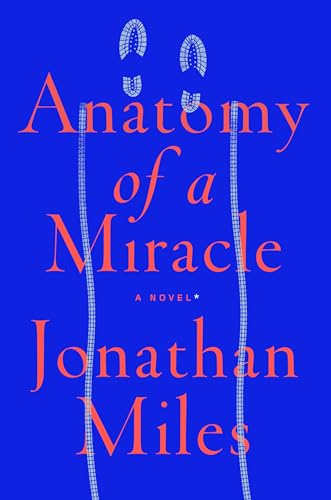
Inhaltsangabe
“Funny, bighearted...Miles specializes in giving fully rounded humanity to characters who might elsewhere be treated as stock figures...pitch-perfect.”
— New York Times Book Review
"Miles is a writer so virtuosic that readers will feel themselves becoming better, more observant people from reading him."
— Los Angeles Review of Books
A profound new novel about a paralyzed young man’s unexplainable recovery—a stunning exploration of faith, science, mystery, and the meaning of life
Rendered paraplegic after a traumatic event four years ago, Cameron Harris has been living his new existence alongside his sister, Tanya, in their battered Biloxi, Mississippi neighborhood where only half the houses made it through Katrina. One stiflingly hot August afternoon, as Cameron sits waiting for Tanya during their daily run to the Biz-E-Bee convenience store, he suddenly and inexplicably rises up and out of his wheelchair.
In the aftermath of this “miracle,” Cameron finds himself a celebrity at the center of a contentious debate about what’s taken place. And when scientists, journalists, and a Vatican investigator start digging, Cameron’s deepest secrets—the key to his injury, to his identity, and, in some eyes, to the nature of his recovery—become increasingly endangered. Was Cameron’s recovery a genuine miracle, or a medical breakthrough? And, finding himself transformed into a symbol, how can he hope to retain his humanity?
Brilliantly written as closely observed journalistic reportage and filtered through a wide lens that encompasses the vibrant characters affected by Cameron’s story, Anatomy of a Miracle will be read, championed, and celebrated as a powerful story of our time, and the work of a true literary master.
Die Inhaltsangabe kann sich auf eine andere Ausgabe dieses Titels beziehen.
Über die Autorin bzw. den Autor
JONATHAN MILES is the author of the novels Dear American Airlines and Want Not, both New York Times Notable Books. He is a former columnist for the New York Times, has served as a Contributing Editor to magazines ranging from Details to Field & Stream, and his journalism has been frequently anthologized in Best American Sports Writing and Best American Crime Writing. He is also the author of a book on fish and game cookery, The Wild Chef, and competed in the Dakar Rally, an off-road race through Africa.
Auszug. © Genehmigter Nachdruck. Alle Rechte vorbehalten.
***This excerpt is from an advance uncorrected copy proof***
Copyright © 2018 Jonathan Miles
On the afternoon of August 23, 2014, Tanya Harris wheeled her younger brother, Cameron, to the Biz-E-Bee store on the corner of Reconfort Avenue and Division Street in Biloxi, Mississippi. Nothing about the afternoon or about Cameron or about Tanya herself suggested this would be her final time doing so; she was merely out of cigarettes, and her brother, slack-faced and sulky on a day that felt lethally humid, short on beer.
Tanya Harris is a squat, wide-hipped woman of twenty-nine whose gently popped eyes lend her face an expression of perpetual surprise or amazement, and whose flat-footed manner of walking appears consciously orchestrated, as though she’s never outgrown the fear of stepping on a crack thereby breaking her mother’s back. She’d recently dip-dyed one side of her hair, which is naturally a dingy shade of blond faintly slashed with premature gray, and on this afternoon streaks of a vividly chemical pink spilled down one side of a white T-shirt on which was printed hap-pay hap-pay hap-pay. Pushing her brother’s wheelchair down the center of Reconfort Avenue, to avoid the uneven jags of the sidewalk and the mini-dunes of sand swept there, she maintained the freewheeling stream of humming, commentary, rhetorical questioning, and singing that is her hallmark to family and friends. (“She does not shut up,” grumbles her brother, with acerbic affection. “Not ever.”) The chorus to Jay Z’s song “99 Problems” came flitting between observations about the “swampy-ass” August heat and her sharp denunciation of a neighbor whose neglected laundry, drooping on a mildewed clothesline, had already weathered, by Tanya’s reckoning, its third rainstorm. “Gonna need to re-wash every one of those shirts,” she muttered, over the fwap fwap fwap of her flip-flops spanking the asphalt. The sight of a chow mix, chained to a ginkgo tree in another neighbor’s front yard, elicited the same cluck of pity it had been eliciting from her for almost a decade.
Her brother Cameron wasn’t listening; or, if he was, he doesn’t remember it. As he explains: “She repeats things two or three times if you’re supposed to answer.” But Cameron was also, by his own admission, “a little out of it.” He’d popped his first can of Bud Light at noon, to wash down the Klonopin and Concerta he was taking for anxiety and memory loss, and he’d followed that beer with three, maybe five more. “Thermal angel blood,” he calls it, a reference to a blood and intravenous fluid warmer he’d seen medics use during his combat tour in Afghanistan.
Afghanistan was the last place Cameron ever walked—more precisely, on a ridge outside the mountain village of Sar-Dasair, in the Darah Khujz District of Zabul Province, where, in the early hours of March 22, 2010, Private First Class Harris and a fellow soldier wandered off-course during a foot patrol. Cameron was roughly twelve yards away when the soldier, a staff sergeant, stepped onto a PMN-2 land mine—a buried remnant from the former Soviet occupation. The explosion sheared off the staff sergeant’s legs, genitals, and right forearm and blasted seventy-nine pieces of shrapnel, along with bone shards from the sergeant’s legs, into Cameron’s body. One or more of those fragments severed the nerves of his lower vertebrae, instantly paralyzing him below the waist. Two doctors at the Landstuhl Regional Medical Center in Germany divulged the permanence of his condition to him on the evening of his twenty-second birthday, bookending the news with brief and awkward apologies for the poor timing.
Cameron’s most prominent physical feature, paralysis aside, might be the long alabaster scar that runs down the side of his face, from just below his left temple almost to his jawline. It’s a squiggly, sinuous scar, evoking a river’s course on a map, but it’s not, as one might reasonably presume, collateral residuum from Afghanistan. The scar dates to his early childhood, when he slipped while running on a slick fishing pier and snagged his face on a nail. The scar only adds to the rugged, almost harsh cast of his face, which is further amplified by his high Cliffside cheekbones, sharp-cornered jaw, the military-specs trim of his blond hair, and an angry vein in his neck that pulses and squirms from even the mildest aggravation. His eyes, however, cast a different spell: They’re wide and large like his sister’s, with a peculiar boyishness to them, as though his eyes retired their development at puberty while the rest of his features forged ahead. They impart a dissonance to his expressions that can sometimes be jarring; his temper, when it flares, can seem both fearsome and puerile. Most of all, however, those eyes highlight the gross tragedy of what happened to him in Afghanistan—that he had yet to fully graduate from boyhood when he was struck down in the Darah Khujz.
On this particular August afternoon, Cameron was dressed in his usual way: a T-shirt, this one advertising the Mississippi Deep Sea Fishing Rodeo, atop a pair of baggy black knee-length nylon shorts, and on his sockless feet a pair of red Nike tennis shoes that he sometimes called his “front bumpers.” The home that he and Tanya share is a narrow, half-century-old shotgun-style house that wasn’t designed with a wheelchair in mind, and, without shoes, his insensate feet often bore bruises from colliding with sheetrock and door frames.
Their hometown of Biloxi occupies a skinny, six-mile-long peninsula that juts eastward into the Gulf. For most of its history Biloxi was a fishing village, with canneries lining the water and shrimp boats and oyster luggers docked in its harbor. Immigrants drawn by jobs in this seafood industry—Slavs and Italians especially—lent the city an idiosyncratic seasoning, tilting its spirit more toward south Louisiana than to the rest of Mississippi lying north of the salt line. “Most were Catholic,” as the former Biloxian Jack Nelson explained in Scoop: The Evolution of a Southern Reporter, “and they brought with them a more relaxed attitude toward drinking, sex, gambling, and other human frailties.” In the 1950s, when the state dumped leftover dredging sand on the coastline to create an artificial beach, Biloxi began advertising itself as “the Poor Man’s Riviera,” a Deep South analog to Coney Island. Elvis Presley vacationed here. Jayne Mansfield had just left a Biloxi supper club, in 1967, when she died in a car wreck on U.S. 90. Casinos arrived in the 1990s, adding another layer of sheen, and yet, for all its synthetic, tropical-print ease and its tolerance for frailties, Biloxi has never comported itself like a resort town. It bears no illusions of itself as a paradise. It doesn’t mind the smell of fish guts. Its hands are cracked and calloused and it sweats a lot.
The Harris house, near the end of Reconfort Avenue, where the street dead-ends at the CSX railroad tracks, is the only house Cameron and his sister have ever known. Their parents bought it in 1985, just after Tanya was born. After their father left for an oilfield job in Texas when Cameron was three, and failed to return, the children remained in the house with their mother. They remained in it, too, after their mother was killed in a car accident on I-10 when Cameron was sixteen. And they remained in it as well—if more accurately beside it for a time, during the year they spent living in a FEMA trailer—after the storm surge from Hurricane Katrina devastated their East Biloxi neighborhood, their house included, just fourteen months...
„Über diesen Titel“ kann sich auf eine andere Ausgabe dieses Titels beziehen.
Suchergebnisse für Anatomy of a Miracle: A Novel*

Beispielbild für diese ISBN
Anatomy of a Miracle: A Novel
Anbieter: World of Books (was SecondSale), Montgomery, IL, USA
Verkäuferbewertung 5 von 5 Sternen

Hardback. Zustand: Good. Funny, bighearted.Miles specializes in giving fully rounded humanity to characters who might elsewhere be treated as stock figures.pitch-perfect.-- New York Times Book Review Miles is a writer so virtuosic that readers will feel themselves becoming better, more observant people from reading him.-- Los Angeles Review of Books A profound new novel about a paralyzed young man's unexplainable recovery--a stunning exploration of faith, science, mystery, and the meaning of life Rendered paraplegic after a traumatic event four years ago, Cameron Harris has been living his new existence alongside his sister, Tanya, in their battered Biloxi, Mississippi neighborhood where only half the houses made it through Katrina. One stiflingly hot August afternoon, as Cameron sits waiting for Tanya during their daily run to the Biz-E-Bee convenience store, he suddenly and inexplicably rises up and out of his wheelchair. In the aftermath of this miracle, Cameron finds himself a celebrity at the center of a contentious debate about what's taken place. And when scientists, journalists, and a Vatican investigator start digging, Cameron's deepest secrets--the key to his injury, to his identity, and, in some eyes, to the nature of his recovery--become increasingly endangered. Was Cameron's recovery a genuine miracle, or a medical breakthrough? And, finding himself transformed into a symbol, how can he hope to retain his humanity? Brilliantly written as closely observed journalistic reportage and filtered through a wide lens that encompasses the vibrant characters affected by Cameron's story, Anatomy of a Miracle will be read, championed, and celebrated as a powerful story of our time, and the work of a true literary master. Artikel-Nr. 00100739508
Gebraucht kaufen
EUR 3,99
Versand gratis
Versand innerhalb von USA
Versand innerhalb von USA
Anzahl: 11 verfügbar
Beispielbild für diese ISBN
Anatomy of a Miracle: A Novel*
Verlag:
Hogarth (edition First Edition), 2018
ISBN 10: 0553447580
ISBN 13: 9780553447583
Gebraucht
Hardcover
Erstausgabe
Anbieter: BooksRun, Philadelphia, PA, USA
Verkäuferbewertung 5 von 5 Sternen
Hardcover. Zustand: Very Good. First Edition. With dust jacket. It's a well-cared-for item that has seen limited use. The item may show minor signs of wear. All the text is legible, with all pages included. It may have slight markings and/or highlighting. Artikel-Nr. 0553447580-11-18-29
Gebraucht kaufen
EUR 5,11
Versand gratis
Versand innerhalb von USA
Versand innerhalb von USA
Anzahl: 1 verfügbar
Beispielbild für diese ISBN
Anatomy of a Miracle: A Novel*
Verlag:
Hogarth (edition First Edition), 2018
ISBN 10: 0553447580
ISBN 13: 9780553447583
Gebraucht
Hardcover
Erstausgabe
Anbieter: BooksRun, Philadelphia, PA, USA
Verkäuferbewertung 5 von 5 Sternen
Hardcover. Zustand: Very Good. First Edition. It's a well-cared-for item that has seen limited use. The item may show minor signs of wear. All the text is legible, with all pages included. It may have slight markings and/or highlighting. Artikel-Nr. 0553447580-11-18
Gebraucht kaufen
EUR 5,91
Versand gratis
Versand innerhalb von USA
Versand innerhalb von USA
Anzahl: 1 verfügbar
Beispielbild für diese ISBN
Anatomy of a Miracle
Anbieter: ThriftBooks-Atlanta, AUSTELL, GA, USA
Verkäuferbewertung 5 von 5 Sternen
Hardcover. Zustand: As New. No Jacket. Pages are clean and are not marred by notes or folds of any kind. ~ ThriftBooks: Read More, Spend Less. Artikel-Nr. G0553447580I2N00
Gebraucht kaufen
EUR 6,18
Versand gratis
Versand innerhalb von USA
Versand innerhalb von USA
Anzahl: 1 verfügbar
Beispielbild für diese ISBN
Anatomy of a Miracle : A Novel*
Verlag:
Crown/Archetype, 2018
ISBN 10: 0553447580
ISBN 13: 9780553447583
Gebraucht
Hardcover
Erstausgabe
Anbieter: Better World Books, Mishawaka, IN, USA
Verkäuferbewertung 5 von 5 Sternen
Zustand: Good. 1st. Former library copy. Pages intact with minimal writing/highlighting. The binding may be loose and creased. Dust jackets/supplements are not included. Includes library markings. Stock photo provided. Product includes identifying sticker. Better World Books: Buy Books. Do Good. Artikel-Nr. 15483421-6
Gebraucht kaufen
EUR 6,26
Versand gratis
Versand innerhalb von USA
Versand innerhalb von USA
Anzahl: 2 verfügbar
Beispielbild für diese ISBN
Anatomy of a Miracle : A Novel*
Verlag:
Crown/Archetype, 2018
ISBN 10: 0553447580
ISBN 13: 9780553447583
Gebraucht
Hardcover
Erstausgabe
Anbieter: Better World Books Ltd, Dunfermline, Vereinigtes Königreich
Verkäuferbewertung 5 von 5 Sternen
Zustand: Good. 1st. Former library copy. Pages intact with minimal writing/highlighting. The binding may be loose and creased. Dust jackets/supplements are not included. Includes library markings. Stock photo provided. Product includes identifying sticker. Better World Books: Buy Books. Do Good. Artikel-Nr. 15483421-6
Gebraucht kaufen
EUR 5,67
EUR 5,81 Versand
Versand von Vereinigtes Königreich nach USA
Versand von Vereinigtes Königreich nach USA
Anzahl: 1 verfügbar
Beispielbild für diese ISBN
Anatomy of a Miracle (Signed First Edition)
Verlag:
Hogarth (New York), 2018
ISBN 10: 0553447580
ISBN 13: 9780553447583
Gebraucht
Hardcover
Erstausgabe
Signiert
Anbieter: Dan Pope Books, West Hartford, CT, USA
Verkäuferbewertung 5 von 5 Sternen
Hardcover. Zustand: As New. Zustand des Schutzumschlags: As New. 1st Edition. First printing (with full number sequence including the 1). Very Fine in a very fine dust jacket. A tight, clean copy, new and unread. Comes with archival-quality mylar dust jacket protector. NOT price clipped. Shipped in well padded box. SIGNED BY AUTHOR on title page--the author's name only, without any inscriptions. Purchased new and opened only for author signature. Signed by Author(s). Artikel-Nr. signed-fiction-408
Gebraucht kaufen
EUR 22,64
EUR 3,96 Versand
Versand innerhalb von USA
Versand innerhalb von USA
Anzahl: 1 verfügbar
Beispielbild für diese ISBN
Anatomy of a Miracle: A Novel*
Verlag:
Hogarth, 2018
ISBN 10: 0553447580
ISBN 13: 9780553447583
Gebraucht
Hardcover
Erstausgabe
Signiert
Anbieter: Books From California, Simi Valley, CA, USA
Verkäuferbewertung 4 von 5 Sternen

Hardcover. Zustand: Very Good. Signed. First Edition. SIGNED. Flat signature. 1st edition/1st printing. Artikel-Nr. mon0003007385
Gebraucht kaufen
EUR 27,17
EUR 4,39 Versand
Versand innerhalb von USA
Versand innerhalb von USA
Anzahl: 1 verfügbar