
Verwandte Artikel zu The Sunlight Pilgrims
Inhaltsangabe
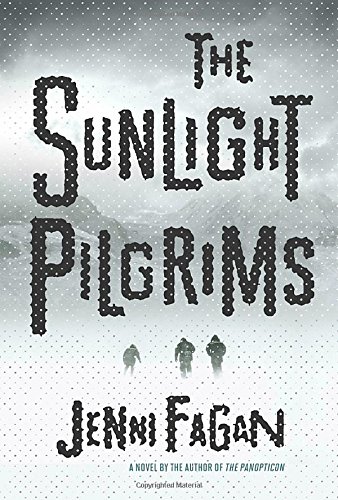
The stunning new novel from the highly-acclaimed author of The Panopticon
It's November of 2020, and the world is freezing over. Each day colder than the last.
There's snow in Israel, the Thames is overflowing, and an iceberg separated from the Fjords in Norway is expected to drift just off the coast of Scotland. As ice water melts into the Atlantic, frenzied London residents evacuate by the thousands for warmer temperatures down south. But not Dylan. Grieving and ready to build life anew, he heads north to bury his mother's and grandmother's ashes on the Scottish islands where they once lived.
Hundreds of miles away, twelve-year-old Estella and her survivalist mother, Constance, scrape by in the snowy, mountainous Highlands, preparing for a record-breaking winter. Living out of a caravan, they spend their days digging through landfills, searching for anything with restorative and trading value. When Dylan arrives in their caravan park in the middle of the night, life changes course for Estella and Constance. Though the weather worsens, his presence brings a new light to daily life, and when the ultimate disaster finally strikes, they'll all be ready.
Written in incandescent, dazzling prose, The Sunlight Pilgrims is a visionary story of courage and resilience in the midst of nature's most violent hour; by turns an homage to the portentous beauty of our natural world, and to just how strong we can be, if the will and the hope is there, to survive its worst.
- NPR “Best Books of 2016” – Family Matters, Identity & Culture, Science Fiction & Fantasy, and Tales from Around the World
Die Inhaltsangabe kann sich auf eine andere Ausgabe dieses Titels beziehen.
Über die Autorin bzw. den Autor
JENNI FAGAN was born in Scotland. She attended Greenwich University and won a scholarship to the Royal Holloway MFA. A Pushcart Prize nominee, she was shortlisted for the Dublin Impac, The James Tait Black, and was named one of Granta's Best of Young British Novelists.
Auszug. © Genehmigter Nachdruck. Alle Rechte vorbehalten.
***This excerpt is from an advance uncorrected proof***
Copyright © 2016 Jenni Fagan
Part I
November 2020, −6 degrees
1
They are quite clear about it. They use short declarative statements. Capital letters. Red ink. Some points are underlined. In summation: they want everything. It is the end. Dylan uses nail scissors to trim the longest stragglers on his beard, he bends over a row of sinks in the ladies’ and splashes water on his face. He has acted out many roles in front of these mirrors: Jedi, Goonie, zombie, vengeful telekinetic teen—a Soho kid growing up in an art-house cinema: he’d lie onstage in his pajamas watching stars glide across the ceiling for hours. His grandmother used to say that they were keepers of a conclave, a place where people came to feel momentarily safe, to remember who they once were—a thing so often ignored (out there) but in here: lights, camera, action!
Dylan pulls on his jumper and heads for the empty foyer. The ticket stall is musty. A trail of empty gin glasses leads to his projection booth. He briefly recalls toasting Tom and Jerry, Man Ray, Herzog and Lynch, Besson and Bergman, the girls from the peep show next door, Hansel, Gretel and all of their friends. He picks up the letter again. Even if she had told him, he couldn’t have done anything. The account is empty. There is less than nothing. The deficit has so many figures he quit counting. A pile of unpaid bills are stacked neatly in Vivienne’s vintage sewing box and when he got back from the crematorium he found an envelope containing the deeds for a caravan 578.3 miles away, with a pink Post‑it note and her scrawl: Bought for cash—no record in any of our accounts. Mum x.
What kind of last words are those, exactly?
He crumples the Post‑it note, drops it in the bin. It’s typically Vivienne—his mother: the moirologist, every sentence delivered like a eulogy. The woman wore winkle-pickers all her days and swore the purest form of water was gin; her finger would trail along their huge medical encyclopedia (their family bible) hoping to find a rare, incurable disease, something to penetrate her to the bone and never leave her.
There was less than six months between one passing and the next.
Gunn went first.
Then Vivienne.
Now he knows something he did not know before—there is a totality to silence.
It makes his bones ache.
His body has its habits. It is trained to listen for footsteps on the attic stairs each morning. His eyes stray toward the draining board, expecting to find mismatched mugs. The fridge probably still has sliced lemon in Tupperware boxes for a late-night session on the gin. He fills the kettle up enough for three mugs. A stack of records next to Gunn’s gramophone have still not been put back in their sleeves. Their cigarette ends (or Vivienne’s at least) are still in the ashtray. It’s almost like he had thought if he didn’t tidy the place for long enough they’d come back, out of sheer fucking irritation at him.
There is an impenetrability to absence.
He feels slighted, as if some wider trick has been played. Inconclusivity—rattles! He is a child questioning a magician’s trick. Where is the rabbit? Where is her voice? Where is their laughter? How come their voices were here and now they are not? It’s a basic question. Where exactly have they gone? They have made the ultimate disappearing act. Exit stage left—then the curtains of the magician’s tent flounce shut and a closed sign is placed right in front of it so the living cannot follow.
This is only grief—it will not bring them home.
He presses his fists into his eyes and swallows down hard. Repossessors will clamp metal shutters over the foyer doors in about ten hours and he will not be here to watch them. No doubt it will only be a matter of months before wealthy city types move into a well-designed property with great original features right in the middle of Soho. They’re doing it to all the businesses that go bust. He picks up a glass, wanting to hurl it with enough force that it could spin all the way through to the future—while the new residents walk around wearing unsubtle signifiers of wealth, the woman (in another room) would just hear a definite clunk one day as her other half took a tumbler to the head and slid perplexed, eyes glazed, down the wall.
If he is here when the repossessors arrive with cutters.
It won’t end well.
Dylan’s footsteps echo in the empty building. He strides along corridors that hold memories from his childhood in each and every nook. It’s all borrowed: bricks; bodies; breathing—it’s all on loan! Eighty years on the planet if you’re lucky; why do they say if you’re lucky ? Eighty years and people trying to get permanent bits of stone before they go, as if permanence were a real thing. Everyone has been taken hostage. Bankers and big business are tyrannical demigods. Where is the comeback? There is no comeback because they own the people who have the guns who are there to keep the people (bankers and big business and governments) fucking safe and now they’re saying on the news it is too little, too late. The temperature is plummeting. Four scientists murdered at the Arctic. By whom?
Vast amounts of fresh water are flooding into the ocean from melting polar caps.
Environmentalists have been campaigning outside Westminster for weeks.
Nobody wants to have sex with him (he hasn’t tried, really).
He can’t be bothered breathing anymore.
The debt collectors have been to the door twice today. There was a minor scuffle. They said, quite seriously, they’ll take the lot by force if necessary, and they seemed hopeful for that possibility; they quite fancied battering a giant bearded weirdo, just for kicks, perk of the job, a wee added bonus for them. They are gnarly, violent-looking Serbians—if he had a cat they’d likely behead the thing, spike its head on the gates of the city so it could grin at passersby.
London is not lined with lollipops.
Businesses are closing—everywhere.
He should: take the keys to the bailiffs immediately. This is written in red capital letters. That’s not going to happen. If they want his family’s home then they can break in. He’s not handing it to them. Banks are doing this up and down the country; any hint of weakness (which they generate by wrecking the economy) and they swoop in, put great big metal shutters right across the doors, do it up and sell it for a profit. They’ll make a bomb. In all truth, he can’t be in this cinema without his mother and grandmother. This was their place. Everywhere he looks another part of him hurts.
Nobody told him grief would be so physical.
Adrenaline.
Sitting down.
Each muscle aching like he has been beaten from head to toe. Grief is in his marrow. It is in his brain. It has even slowed the way he washes his hands. Dylan enters their only auditorium and presses a button on the wall. Red curtains whirr toward each other, they trail across the stage like a dancer’s ballgown in an old film, and he turns on star lights so they glide across the ceiling. He will leave Cinema 1 like this. It’s only right. For the first time in over sixty years there will not be a MacRae in ownership at 345a Fat Boy Lane, Soho. Babylon (the smallest art-house cinema in all of Europe) will no longer glow from the foyer chandelier as people hurry by in the rain.
Dylan pulls on socks, boots, grabs a scarf.
He packs Vivienne’s old suitcase.
Art-deco ashtrays.
Clothes.
Two cinema...
„Über diesen Titel“ kann sich auf eine andere Ausgabe dieses Titels beziehen.
Suchergebnisse für The Sunlight Pilgrims

Beispielbild für diese ISBN
The Sunlight Pilgrims: A Novel
Anbieter: World of Books (was SecondSale), Montgomery, IL, USA
Verkäuferbewertung 5 von 5 Sternen

Zustand: Good. Good condition ex-library book with usual library markings and stickers. Artikel-Nr. 00102025482
Gebraucht kaufen
EUR 3,86
Versand gratis
Versand innerhalb von USA
Versand innerhalb von USA
Anzahl: 2 verfügbar
Beispielbild für diese ISBN
The Sunlight Pilgrims
Anbieter: Better World Books, Mishawaka, IN, USA
Verkäuferbewertung 5 von 5 Sternen
Zustand: Very Good. Former library copy. Pages intact with possible writing/highlighting. Binding strong with minor wear. Dust jackets/supplements may not be included. Includes library markings. Stock photo provided. Product includes identifying sticker. Better World Books: Buy Books. Do Good. Artikel-Nr. 9841759-75
Gebraucht kaufen
EUR 6,13
Versand gratis
Versand innerhalb von USA
Versand innerhalb von USA
Anzahl: 1 verfügbar
Beispielbild für diese ISBN
The Sunlight Pilgrims
Anbieter: Better World Books, Mishawaka, IN, USA
Verkäuferbewertung 5 von 5 Sternen
Zustand: Good. Former library copy. Pages intact with minimal writing/highlighting. The binding may be loose and creased. Dust jackets/supplements are not included. Includes library markings. Stock photo provided. Product includes identifying sticker. Better World Books: Buy Books. Do Good. Artikel-Nr. 10432042-6
Gebraucht kaufen
EUR 6,13
Versand gratis
Versand innerhalb von USA
Versand innerhalb von USA
Anzahl: 1 verfügbar
Beispielbild für diese ISBN
The Sunlight Pilgrims
Anbieter: Better World Books: West, Reno, NV, USA
Verkäuferbewertung 5 von 5 Sternen
Zustand: Very Good. Former library copy. Pages intact with possible writing/highlighting. Binding strong with minor wear. Dust jackets/supplements may not be included. Includes library markings. Stock photo provided. Product includes identifying sticker. Better World Books: Buy Books. Do Good. Artikel-Nr. 9841759-75
Gebraucht kaufen
EUR 6,13
Versand gratis
Versand innerhalb von USA
Versand innerhalb von USA
Anzahl: 1 verfügbar
Beispielbild für diese ISBN
The Sunlight Pilgrims: A Novel
Anbieter: ThriftBooks-Atlanta, AUSTELL, GA, USA
Verkäuferbewertung 5 von 5 Sternen
Hardcover. Zustand: Very Good. No Jacket. Former library book; May have limited writing in cover pages. Pages are unmarked. ~ ThriftBooks: Read More, Spend Less. Artikel-Nr. G0553418874I4N10
Gebraucht kaufen
EUR 6,18
Versand gratis
Versand innerhalb von USA
Versand innerhalb von USA
Anzahl: 1 verfügbar
Beispielbild für diese ISBN
The Sunlight Pilgrims: A Novel
Anbieter: ThriftBooks-Dallas, Dallas, TX, USA
Verkäuferbewertung 5 von 5 Sternen
Hardcover. Zustand: As New. No Jacket. Pages are clean and are not marred by notes or folds of any kind. ~ ThriftBooks: Read More, Spend Less. Artikel-Nr. G0553418874I2N00
Gebraucht kaufen
EUR 6,18
Versand gratis
Versand innerhalb von USA
Versand innerhalb von USA
Anzahl: 1 verfügbar
Beispielbild für diese ISBN
The Sunlight Pilgrims: A Novel
Anbieter: ThriftBooks-Dallas, Dallas, TX, USA
Verkäuferbewertung 5 von 5 Sternen
Hardcover. Zustand: Very Good. No Jacket. May have limited writing in cover pages. Pages are unmarked. ~ ThriftBooks: Read More, Spend Less. Artikel-Nr. G0553418874I4N00
Gebraucht kaufen
EUR 6,18
Versand gratis
Versand innerhalb von USA
Versand innerhalb von USA
Anzahl: 1 verfügbar
Beispielbild für diese ISBN
The Sunlight Pilgrims: A Novel
Anbieter: ThriftBooks-Atlanta, AUSTELL, GA, USA
Verkäuferbewertung 5 von 5 Sternen
Hardcover. Zustand: Very Good. No Jacket. Missing dust jacket; May have limited writing in cover pages. Pages are unmarked. ~ ThriftBooks: Read More, Spend Less. Artikel-Nr. G0553418874I4N01
Gebraucht kaufen
EUR 6,18
Versand gratis
Versand innerhalb von USA
Versand innerhalb von USA
Anzahl: 1 verfügbar
Beispielbild für diese ISBN
The Sunlight Pilgrims: A Novel
Anbieter: Wonder Book, Frederick, MD, USA
Verkäuferbewertung 5 von 5 Sternen
Zustand: Good. Good condition. Good dust jacket. A copy that has been read but remains intact. May contain markings such as bookplates, stamps, limited notes and highlighting, or a few light stains. Artikel-Nr. X00A-02520
Gebraucht kaufen
EUR 6,20
Versand gratis
Versand innerhalb von USA
Versand innerhalb von USA
Anzahl: 1 verfügbar
Beispielbild für diese ISBN
The Sunlight Pilgrims
Anbieter: Abacus Bookshop, Pittsford, NY, USA
Verkäuferbewertung 5 von 5 Sternen
hardcover. Zustand: Fine copy in fine dust jacket. 2nd prt. 8vo, 272 pp. Artikel-Nr. 123367
Gebraucht kaufen
EUR 6,65
EUR 3,44 Versand
Versand innerhalb von USA
Versand innerhalb von USA
Anzahl: 1 verfügbar