
Inhaltsangabe
Lucy and Ernessa have become inseparable. Ernessa’s taken her over. She’s consuming her.
What I saw wasn’t real. And I know it wasn’t a dream.
Ernessa is a vampire.
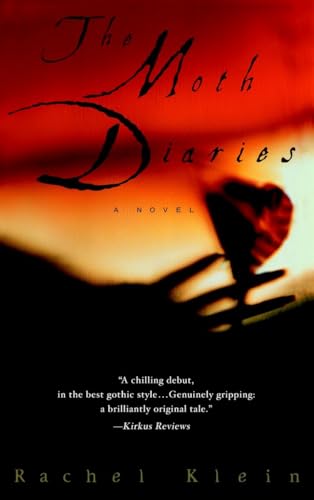
At an exclusive girls’ boarding school, a sixteen-year-old girl records her most intimate thoughts in a diary. The object of her growing obsession is her roommate, Lucy Blake, and Lucy’s friendship with their new and disturbing classmate. Ernessa is an enigmatic, moody presence with pale skin and hypnotic eyes.
Around her swirl dark rumors, suspicions, and secrets as well as a series of ominous disasters. As fear spreads through the school and Lucy isn’t Lucy anymore, fantasy and reality mingle until what is true and what is dreamed bleed together into a waking nightmare that evokes with gothic menace the anxieties, lusts, and fears of adolescence. And at the center of the diary is the question that haunts all who read it: Is Ernessa really a vampire? Or has the narrator trapped herself in the fevered world of her own imagining?
Die Inhaltsangabe kann sich auf eine andere Ausgabe dieses Titels beziehen.
Über die Autorin bzw. den Autor
Rachel Klein
Von der hinteren Coverseite
Lucy and Ernessa have become inseparable. Ernessa's taken her over. She's consuming her.
What I saw wasn't real. And I know it wasn't a dream.
Ernessa is a vampire.
At an exclusive girls' boarding school, a sixteen-year-old girl records her most intimate thoughts in a diary. The object of her growing obsession is her roommate, Lucy Blake, and Lucy's friendship with their new and disturbing classmate. Ernessa is an enigmatic, moody presence with pale skin and hypnotic eyes.
Around her swirl dark rumors, suspicions, and secrets as well as a series of ominous disasters. As fear spreads through the school and Lucy isn't Lucy anymore, fantasy and reality mingle until what is true and what is dreamed bleed together into a waking nightmare that evokes with gothic menace the anxieties, lusts, and fears of adolescence. And at the center of the diary is the question that haunts all who read it: Is Ernessa really a vampire? Or has the narrator trapped herself in the fevered world of her own imagining?
Aus dem Klappentext
essa have become inseparable. Ernessa s taken her over. She s consuming her.
What I saw wasn t real. And I know it wasn t a dream.
Ernessa is a vampire.
At an exclusive girls boarding school, a sixteen-year-old girl records her most intimate thoughts in a diary. The object of her growing obsession is her roommate, Lucy Blake, and Lucy s friendship with their new and disturbing classmate. Ernessa is an enigmatic, moody presence with pale skin and hypnotic eyes.
Around her swirl dark rumors, suspicions, and secrets as well as a series of ominous disasters. As fear spreads through the school and Lucy isn t Lucy anymore, fantasy and reality mingle until what is true and what is dreamed bleed together into a waking nightmare that evokes with gothic menace the anxieties, lusts, and fears of adolescence. And at the center of the diary is the question that haunts all who read it: Is Ernessa really a vampire? Or ha
Auszug. © Genehmigter Nachdruck. Alle Rechte vorbehalten.
Preface
When Dr. Karl Wolff first suggested publishing the journal that I kept during my junior year in boarding school, I thought I hadn’t heard him correctly. He’s been interested in me—or maybe I should say my case—since I was under his psychiatric care, and we talk on the phone every year or so. But I hadn’t seen the journal since I handed it over to him in the hospital thirty years ago, and we discussed it on only one occasion, when he made it clear I needed to put that period of my life behind me. Giving up writing in the journal was a first step.
My instinctive response to publication was to say no. I didn’t write the journal with the intention of having anyone else read it. And Dr. Wolff kept it only because of a promise he made to my mother before I left the hospital. I wrote it to preserve my sixteen-year-old self. Or at least that’s what I thought at the time. Besides, I have a daughter who is the same age I was when I kept this journal, and I want to protect her. I don’t feel that she needs to know everything about me.
Dr. Wolff reassured me. All the names would be changed. It would be impossible to recognize me in the person of the narrator. It would even be difficult to recognize the school. Above all, he felt the journal would be an invaluable addition to the literature on female adolescence at a time when risk-taking behavior has reached epidemic proportions. He happened to reread it while packing up his office before retirement and was struck by how convincing my writing was.
I’m not sure I agree with him. But I have always been intrigued by the journals that girls keep. They are like dollhouses. Once you look inside them, the rest of the world seems very far away, even unbelievable. If only we had the power to leap outside ourselves at such moments, we would spare ourselves so much pain and fear. I’m not talking about truth or falsehood but about surviving.
I agreed to Dr. Wolff’s suggestion with reservations. If, after reading my journal, I felt he was right, I would allow him to arrange for its publication. Dr. Wolff also asked me to write an afterword, as a kind of closure on the experience. He felt it was relatively rare for someone suffering from borderline personality disorder complicated by depression and psychosis to recover and never have another “episode,” as he so kindly put it. He was sure my reactions to the journal would be illuminating.
I can’t begin to judge that. When I opened this notebook, I found the razor blade I had hidden among the pages so long ago. Dr. Wolff had kept it as part of the “clinical picture,” as he explained. It looked utterly incongruous. It was just a razor blade. And the words on the page were just that—words in a familiar handwriting.
To anyone who wonders whether it’s possible to survive adolescence, that’s as much as I can offer of reassurance.
September
September 10
My mother dropped me off at two. Practically everyone is back. Except for Lucy. I can’t wait for her to come so that we can unpack together. I’m going to write in my journal until she’s here.
After my mother left, I felt an emptiness in my stomach that spread up through my throat to the back of my eyes. I didn’t cry, even though I probably would have felt better afterward. I needed to hold on to that feeling, that pain. If Lucy had been here, she would have distracted me. I had a moment of panic when I said good-bye to my mother. I almost begged her not to leave me here. It’s so strange. I’ve been looking forward to school for the past month. I was even excited when I got my new uniforms in the mail. The light blue spring skirt was as stiff as cardboard. I had to wash it before I could wear it. I’m glad I’m not a day student, worried about how I look on the train ride home. They sneak into the bathroom at the station and put on makeup and change from their saddle shoes into loafers, in case they run into boys they know on the train. I’ve seen them waiting for the train with their skirts hiked above their knees, and it’s hard to tell that they are wearing a uniform. We boarders couldn’t care less if we look like nurses.
Now that I’m here, I want to run away.
I’m always afraid to leave my mother. I’m afraid that I’ll never see her again. I want to run after her like a little girl, grab onto her skirt, grope for her hand, sniffle. Instead I stand very stiff and don’t say a word. “Can’t you at least say good-bye?” she says. After a few days, I get caught up in school. Then I’m glad to be away from her, even though she’s all I have left. I like to get letters from her, but I hate it when she calls. I never call her. Her voice is so heavy. It pulls me down. I’m always scared when I’m called to the phone. It’s incredibly hard for me to put the receiver to my ear. It wants to swallow me. I’m struggling to lift it, while the person on the other end is hanging in space, waiting for my voice.
From my window, I watched my mother speed down the drive. I lost sight of her car behind the Workshop. When she turned left onto the avenue, I could see it again, a streak of blue flashing through the black fence. And then she was gone. My mother always drives too fast; she doesn’t care what happens to her. Lucy’s mother would never drive like that.
I stood at the window for a long time. Then I turned around and looked at my room, my new room, with my trunk and bags and boxes piled up in the middle of the floor. It isn’t as wonderful as I had thought it would be all summer long. The walls are dirty. The girl who lived here last year left smudged black fingerprints in odd places. There’s nothing on the floor. Under the window is a chair with wooden arms, covered in tan and pink flowered material. It’s not very inviting. I think I’ll put some pillows on the sill and turn it into a window seat. I thought it would be the best room in the Residence. When I’ve unpacked and Lucy is next door, it will be different.
I got tired of waiting for Lucy, so I took a walk up to the train station. In the stationery store next to the drugstore, I found an old French composition book with a mottled crimson cover and a thick black spine, like a real book, but with blank pages. Somehow it ended up in the back of the store, forgotten. I grabbed it and walked up to the register, hugging it to my chest, afraid someone might snatch it away from me. It’s exactly like the journals my father used to keep. It was a sign, and I had to buy it. Now I’m going to fill it with words, the way he filled his notebooks: the pages, the margins, the endpapers all covered with little notes that made no sense to anyone else. I won’t tell anyone about it, not even Lucy.
I read the Claudine books over the summer. They were a replacement for school, which I missed so much. I hope the words flow from my pen onto the paper the way they did for Colette: the exact words I need. I’ve got Claudine at School on my desk, for inspiration. She knows what it’s like to be shut up in a place like this, where all your emotions are focused on the girls around you, where you dream of a boyfriend but only feel comfortable with your arm around another girl’s waist.
Already I’ve put too many sad thoughts down on these pages. I have to start all over again, very slowly and carefully. Everything has to be perfect. I’m not in a hurry. First, I open the notebook on my desk, flatten the smooth pages ruled with green lines, and uncap my fountain pen, the one my mother gave me for my sixteenth birthday. It’s also crimson and...
„Über diesen Titel“ kann sich auf eine andere Ausgabe dieses Titels beziehen.
Weitere beliebte Ausgaben desselben Titels

Suchergebnisse für The Moth Diaries: A Novel

Beispielbild für diese ISBN
The Moth Diaries
Anbieter: ThriftBooks-Dallas, Dallas, TX, USA
Verkäuferbewertung 5 von 5 Sternen

Paperback. Zustand: Very Good. No Jacket. May have limited writing in cover pages. Pages are unmarked. ~ ThriftBooks: Read More, Spend Less. Artikel-Nr. G0553382187I4N00
Gebraucht kaufen
EUR 6,27
Versand gratis
Versand innerhalb von USA
Versand innerhalb von USA
Anzahl: 1 verfügbar
Beispielbild für diese ISBN
The Moth Diaries
Anbieter: ThriftBooks-Atlanta, AUSTELL, GA, USA
Verkäuferbewertung 5 von 5 Sternen
Paperback. Zustand: Very Good. No Jacket. May have limited writing in cover pages. Pages are unmarked. ~ ThriftBooks: Read More, Spend Less. Artikel-Nr. G0553382187I4N00
Gebraucht kaufen
EUR 6,27
Versand gratis
Versand innerhalb von USA
Versand innerhalb von USA
Anzahl: 1 verfügbar
Beispielbild für diese ISBN
The Moth Diaries : A Novel
Verlag:
Random House Publishing Group, 2003
ISBN 10: 0553382187
ISBN 13: 9780553382181
Gebraucht
Softcover
Anbieter: Better World Books, Mishawaka, IN, USA
Verkäuferbewertung 5 von 5 Sternen
Zustand: Fine. Used book that is in almost brand-new condition. May contain a remainder mark. Better World Books: Buy Books. Do Good. Artikel-Nr. 18574981-75
Gebraucht kaufen
EUR 9,48
Versand gratis
Versand innerhalb von USA
Versand innerhalb von USA
Anzahl: 1 verfügbar
Beispielbild für diese ISBN
The Moth Diaries
Anbieter: AwesomeBooks, Wallingford, Vereinigtes Königreich
Verkäuferbewertung 5 von 5 Sternen
Paperback. Zustand: Very Good. The Moth Diaries This book is in very good condition and will be shipped within 24 hours of ordering. The cover may have some limited signs of wear but the pages are clean, intact and the spine remains undamaged. This book has clearly been well maintained and looked after thus far. Money back guarantee if you are not satisfied. See all our books here, order more than 1 book and get discounted shipping. Artikel-Nr. 7719-9780553382181
Gebraucht kaufen
EUR 13,67
EUR 5,78 Versand
Versand von Vereinigtes Königreich nach USA
Versand von Vereinigtes Königreich nach USA
Anzahl: 2 verfügbar
Beispielbild für diese ISBN
The Moth Diaries
Anbieter: Bahamut Media, Reading, Vereinigtes Königreich
Verkäuferbewertung 5 von 5 Sternen
Paperback. Zustand: Very Good. This book is in very good condition and will be shipped within 24 hours of ordering. The cover may have some limited signs of wear but the pages are clean, intact and the spine remains undamaged. This book has clearly been well maintained and looked after thus far. Money back guarantee if you are not satisfied. See all our books here, order more than 1 book and get discounted shipping. Artikel-Nr. 6545-9780553382181
Gebraucht kaufen
EUR 13,44
EUR 8,08 Versand
Versand von Vereinigtes Königreich nach USA
Versand von Vereinigtes Königreich nach USA
Anzahl: 2 verfügbar
Beispielbild für diese ISBN
The Moth Diaries
Verlag:
Random House Publishing Group, 2003
ISBN 10: 0553382187
ISBN 13: 9780553382181
Gebraucht
Softcover
Anbieter: medimops, Berlin, Deutschland
Verkäuferbewertung 5 von 5 Sternen
Zustand: very good. Gut/Very good: Buch bzw. Schutzumschlag mit wenigen Gebrauchsspuren an Einband, Schutzumschlag oder Seiten. / Describes a book or dust jacket that does show some signs of wear on either the binding, dust jacket or pages. Artikel-Nr. M00553382187-V
Gebraucht kaufen
EUR 13,17
EUR 10,00 Versand
Versand von Deutschland nach USA
Versand von Deutschland nach USA
Anzahl: 1 verfügbar
Beispielbild für diese ISBN
The Moth Diaries
Anbieter: Revaluation Books, Exeter, Vereinigtes Königreich
Verkäuferbewertung 5 von 5 Sternen
Paperback. Zustand: Brand New. reprint edition. 256 pages. 8.50x5.00x0.50 inches. In Stock. Artikel-Nr. x-0553382187
Neu kaufen
EUR 20,34
EUR 11,58 Versand
Versand von Vereinigtes Königreich nach USA
Versand von Vereinigtes Königreich nach USA
Anzahl: 2 verfügbar