
Verwandte Artikel zu Just Like a Woman: How Gender Science Is Redefining...
Inhaltsangabe
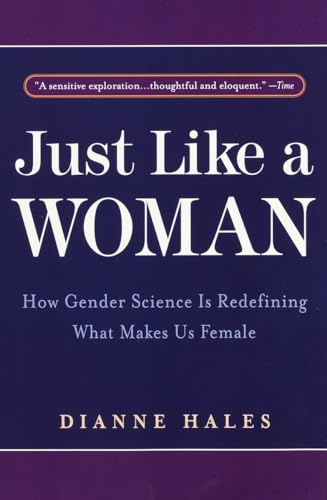
In recent years researchers in many scientific fields have actively focused on what being female really means. Their startling conclusion: Almost every assumption made about women--physical, medical, historical, psychological--turns out to be untested, unproven, or untrue.
Stereotypes about women are as old as time--and as current as still-too-prevalent beliefs based on male models. Acclaimed health writer Dianne Hales brings together the cutting-edge research in anthropology, physiology, psychology, neuroscience, endocrinology, and medicine in a book that reveals the complex interconnections between all aspects of a woman's life from infancy to old age. Gender science is now clearly demonstrating that women are not the second sex but a separate sex, unique in body, mind, and spirit.
Just Like a Woman explains what it means to live in a woman's body, think with a woman's brain, drink in the world with a woman's senses, and react with a woman's sensibility to the stresses and elations of her multiple roles. Refreshingly free of ideology, this meticulously documented book offers a stunningly liberating message that expands our concept of human potential--and will forever change the way every woman views herself.
Die Inhaltsangabe kann sich auf eine andere Ausgabe dieses Titels beziehen.
Über die Autorin bzw. den Autor
Dianne Hales is one of the country's most widely published and honored writers on health subjects, the author of twelve texts and lay books, and most recently the co-author, with Robert E. Hales, M.D., of the award-winning compendium of mental health and mental disorders, Caring for the Mind. She lives in Marin County, California, with her husband and daughter.
Von der hinteren Coverseite
In recent years researchers in many scientific fields have actively focused on what being female really means. Their startling conclusion: Almost every assumption made about women -- physical, medical, historical, psychological -- turns out to be untested, unproven, or untrue.
Stereotypes about women are as old as time -- and as current as still-too-prevalent beliefs based on male models. Acclaimed health writer Dianne Hales brings together the cutting-edge research in anthropology, physiology, psychology, neuroscience, endocrinology, and medicine in a book that reveals the complex interconnections between all aspects of a woman's life from infancy to old age. Gender science is now clearly demonstrating that women are not the second sex but a separate sex, unique in body, mind, and spirit.
Just Like a Woman explains what it means to live in a woman's body, think with a woman's brain, drink in the world with a woman's senses, and react with a woman's sensibility to the stresses and elations of her multiple roles. Refreshingly free of ideology, this meticulously documented book offers a stunningly liberating message that expands our concept of human potential -- and will forever change the way every woman views herself.
Aus dem Klappentext
In recent years researchers in many scientific fields have actively focused on what being female really means. Their startling conclusion: Almost every assumption made about women--physical, medical, historical, psychological--turns out to be untested, unproven, or untrue.
Stereotypes about women are as old as time--and as current as still-too-prevalent beliefs based on male models. Acclaimed health writer Dianne Hales brings together the cutting-edge research in anthropology, physiology, psychology, neuroscience, endocrinology, and medicine in a book that reveals the complex interconnections between all aspects of a woman's life from infancy to old age. Gender science is now clearly demonstrating that women are not the second sex but a separate sex, unique in body, mind, and spirit.
Just Like a Woman explains what it means to live in a woman's body, think with a woman's brain, drink in the world with a woman's senses, and react with a woman's sensibility to the stresses and elations of her multiple roles. Refreshingly free of ideology, this meticulously documented book offers a stunningly liberating message that expands our concept of human potential--and will forever change the way every woman views herself.
Auszug. © Genehmigter Nachdruck. Alle Rechte vorbehalten.
Unasked Questions
Not long ago, Marianne Legato recalls, a scientist reported his preliminary findings from tests of a new compound on laboratory rats--all male. "What happens in females?" she asked.
"The same," he replied.
"How do you know?" she inquired.
"Because females respond just like males," he answered.
"But how can you be sure if you haven't tested females?" she pressed. Flustered, he insisted that he "just knew."
"I couldn't understand how he could possibly be so sure," Legato says. "Then, finally, it dawned on me: Dolly the sheep wasn't the first clone, Eve was. This man still assumed that women are essentially small men." (No one ever thinks of the converse: men as large women.)
A lack of actual proof for their premises has never gotten in the way of medical experts' assumption that they "just know" the way women are. Aristotle "just knew" that women nursed their babies with blanched menstrual blood stored in their breasts. Medical illustrators in the Middle Ages "just knew" that women were duplicates of men with an inside-out penis for a vagina, an inverted scrotum for a womb, and testicles for ovaries. Voltaire "just knew" that "the delicacy of women's limbs render them ill-suited to any type of labor or occupation that requires strength or endurance." Physicians of the late nineteenth century "just knew" that removal of a woman's ovaries was the best way to "repair" mental disorders--the reason, according to an 1889 report from the U.S. Surgeon General, for 51 percent of such operations.
Even today doctors routinely perform tests, prescribe drugs, and recommend treatments on the assumption that they will be as effective and beneficial for women as for men. How do they know? The truth is they often don't. From 1977 to 1993 the FDA banned women of childbearing potential from participating in the safety tests of new drugs to prevent possible damage to their unborn children and reproductive capacity. To scientists, this offered an advantage: They did not have to take into account such messy variables as women's fluctuating hormones or monthly cycles. As exclusion of women from all sorts of medical testing became common, this ban extended even to women who'd undergone sterilization or were past reproductive age. In a further attempt to keep the science "clean," laboratory researchers experimented only on male animals. As a result, in the landmark studies that shaped many modern medical practices, females were written out--and off.
The landmark Multiple Risk Factor Intervention Trials (known, aptly enough, as Mr. Fit), which studied vulnerability to heart disease, the number-one killer of both sexes, included 12,000 to 15,000 men--and no women. The Physician's Health Study of the potential benefits of taking an aspirin a day to lower the risk of heart attack looked at 22,071 physicians--none of them women. A major evaluation of coffee intake and its impact on stroke and heart attack studied 45,589 men--and no women. Only in 1998 did researchers discover that HIV tests misstate a woman's need for treatment. Even when a woman and a man have the same amount of virus in their blood, the woman is at a more advanced state of infection and at much greater risk of developing AIDS. Incredibly, even a study of the impact of obesity on the risk of breast and endometrial cancer--female diseases--extrapolated from only male subjects.
Aging--something women do better, or at least longer--has been primarily studied in men. In 1958 the federally sponsored researchers who launched what was to become the Baltimore Longitudinal Study of Aging decided not to include women, even though they make up two thirds of the elderly and more than 70 percent of the old old (those over age eighty-five). The reason was what former congresswoman Patricia Schroeder, one of the first champions of women's health research, dubbed "the rest room excuse."
At the time, the investigators had to work out of a single room at the city hospital. The study participants had access to only one rest room, which they had to share with elderly male patients in an adjacent hospital ward. Rather than ask women subjects to use this facility during overnight evaluations, the scientists excluded them altogether. As the budget for this high-profile project grew, the researchers acquired more space--and more rest rooms. However, for twenty years their studies included no women--an omission that did not keep the scientists from entitling their initial four-hundred-page report Normal Human Aging.
The very fact that research never took women's menstrual cycling into account has created a black hole in scientific understanding of femaleness. We know that women's bodies work differently at various times of the month, that temperature fluctuates, that fluid volume and weight increase, and that food moves through the digestive system at different rates. But only recently have physicians realized that various diagnostic tests, including cholesterol and blood fat measurements, yield different results at different times of the month and that the timing of medical treatments during a woman's cycle can affect their efficacy--sometimes with life-or-death implications.
According to an intriguing report at an American Society of Clinical Oncology meeting, women who undergo breast cancer surgery during the second half, or luteal phase, of their monthly cycles (days 14 to 28) are twice as likely to suffer a recurrence as those who are operated on earlier in their cycles. Recent research suggests that women with insulin-dependent diabetes may have higher blood sugar levels during the luteal phase of their cycles because fluctuations in sex hormones affect insulin blood levels.
Many medications also have stronger or weaker effects at different times in a woman's cycle and may require adjustments in dosage. However, the doses of most medications--along with their safety and efficacy--have never been tested in women or studied across the menstrual cycle. This may account for the fact that adverse drug reactions, including ones as serious as seizures, are reported twice as often in women.
"More than half of the drugs prescribed today have been tested only in men," says psychiatrist Steven Dubofsky, of the University of Colorado in Boulder, who notes that because of differences in size, absorption, metabolism, and liver function, "there can be tremendous gender differences in both beneficial and adverse effects in women." Yet when Dubofsky tested an experimental medication for Alzheimer's disease, the research review committee banned female participants. "The reason was that women might become pregnant--although the average age in my study was eighty-two."
Even treatments for problems that are more common in women have rarely been tested in them. Research on aspirin's usefulness in preventing migraine headaches, which strike far more women, included only men. Appetite suppressants and diet drugs--used far more often by women--have been tested almost exclusively in men. Men traditionally were the sole subjects of tests of drugs to treat depression, a disorder that affects twice as many women.
The relatively few studies that have been done on pharmacokinetics (how a drug is absorbed) in women have identified...
„Über diesen Titel“ kann sich auf eine andere Ausgabe dieses Titels beziehen.
Suchergebnisse für Just Like a Woman: How Gender Science Is Redefining...

Beispielbild für diese ISBN
Just Like a Woman How Gender S
Anbieter: World of Books (was SecondSale), Montgomery, IL, USA
Verkäuferbewertung 5 von 5 Sternen

Zustand: Very Good. Item in very good condition! Textbooks may not include supplemental items i.e. CDs, access codes etc. Artikel-Nr. 00073931301
Gebraucht kaufen
EUR 3,22
Versand gratis
Versand innerhalb von USA
Versand innerhalb von USA
Anzahl: 1 verfügbar
Beispielbild für diese ISBN
Just Like a Woman: How Gender Science Is Redefining What Makes Us Female
Verlag:
Random House Publishing Group, 2000
ISBN 10: 055337818X
ISBN 13: 9780553378184
Gebraucht
Softcover
Anbieter: Wonder Book, Frederick, MD, USA
Verkäuferbewertung 5 von 5 Sternen
Zustand: Good. Good condition. A copy that has been read but remains intact. May contain markings such as bookplates, stamps, limited notes and highlighting, or a few light stains. Artikel-Nr. T00B-02711
Gebraucht kaufen
EUR 6,42
Versand gratis
Versand innerhalb von USA
Versand innerhalb von USA
Anzahl: 1 verfügbar
Beispielbild für diese ISBN
Just Like a Woman: How Gender Science Is Redefining What Makes Us Female
Verlag:
Random House Publishing Group, 2000
ISBN 10: 055337818X
ISBN 13: 9780553378184
Gebraucht
Softcover
Anbieter: Wonder Book, Frederick, MD, USA
Verkäuferbewertung 5 von 5 Sternen
Zustand: Very Good. Very Good condition. A copy that may have a few cosmetic defects. May also contain light spine creasing or a few markings such as an owner's name, short gifter's inscription or light stamp. Artikel-Nr. M04E-01583
Gebraucht kaufen
EUR 6,42
Versand gratis
Versand innerhalb von USA
Versand innerhalb von USA
Anzahl: 1 verfügbar
Beispielbild für diese ISBN
Just Like a Woman: How Gender Science Is Redefining What Makes Us Female
Verlag:
Random House Publishing Group, 2000
ISBN 10: 055337818X
ISBN 13: 9780553378184
Gebraucht
Paperback
Anbieter: ThriftBooks-Atlanta, AUSTELL, GA, USA
Verkäuferbewertung 5 von 5 Sternen
Paperback. Zustand: Good. No Jacket. Pages can have notes/highlighting. Spine may show signs of wear. ~ ThriftBooks: Read More, Spend Less. Artikel-Nr. G055337818XI3N00
Gebraucht kaufen
EUR 6,87
Versand gratis
Versand innerhalb von USA
Versand innerhalb von USA
Anzahl: 1 verfügbar
Beispielbild für diese ISBN
Just Like a Woman: How Gender Science Is Redefining What Makes Us Female
Verlag:
Random House Publishing Group, 2000
ISBN 10: 055337818X
ISBN 13: 9780553378184
Gebraucht
Paperback
Anbieter: ThriftBooks-Atlanta, AUSTELL, GA, USA
Verkäuferbewertung 5 von 5 Sternen
Paperback. Zustand: Very Good. No Jacket. May have limited writing in cover pages. Pages are unmarked. ~ ThriftBooks: Read More, Spend Less. Artikel-Nr. G055337818XI4N00
Gebraucht kaufen
EUR 6,87
Versand gratis
Versand innerhalb von USA
Versand innerhalb von USA
Anzahl: 1 verfügbar
Beispielbild für diese ISBN
Just Like a Woman : How Gender Science Is Redefining What Makes Us Female
Verlag:
Random House Publishing Group, 2000
ISBN 10: 055337818X
ISBN 13: 9780553378184
Gebraucht
Softcover
Anbieter: Better World Books, Mishawaka, IN, USA
Verkäuferbewertung 5 von 5 Sternen
Zustand: Good. Reprint. Former library copy. Pages intact with minimal writing/highlighting. The binding may be loose and creased. Dust jackets/supplements are not included. Includes library markings. Stock photo provided. Product includes identifying sticker. Better World Books: Buy Books. Do Good. Artikel-Nr. 2383073-6
Gebraucht kaufen
EUR 7,19
Versand gratis
Versand innerhalb von USA
Versand innerhalb von USA
Anzahl: 2 verfügbar
Beispielbild für diese ISBN
Just Like a Woman: How Gender Science Is Redefining What Makes Us Female
Anbieter: Bookplate, Chestertown, MD, USA
Verkäuferbewertung 4 von 5 Sternen

Soft cover. Zustand: Very Good. Gentle shelf wear to edges and corners of cover. Small scratch to edge of spine. Pages are clean and crisp and free from markings or creases. Binding is tight. BP/Gender Studies. Artikel-Nr. ABE-1581349518745
Gebraucht kaufen
EUR 11,02
EUR 7,58 Versand
Versand innerhalb von USA
Versand innerhalb von USA
Anzahl: 1 verfügbar
Beispielbild für diese ISBN
Just Like a Woman
Anbieter: Robinson Street Books, IOBA, Binghamton, NY, USA
Verkäuferbewertung 4 von 5 Sternen
Paperback. Zustand: Very Good. Prompt Shipment, shipped in Boxes, Tracking PROVIDEDVery good. Some creasing *. Artikel-Nr. nt758kr1271
Gebraucht kaufen
EUR 12,41
EUR 8,47 Versand
Versand innerhalb von USA
Versand innerhalb von USA
Anzahl: 1 verfügbar
Beispielbild für diese ISBN
Just Like a Woman: How Gender Science Is Redefining What Makes Us Female
Anbieter: Revaluation Books, Exeter, Vereinigtes Königreich
Verkäuferbewertung 5 von 5 Sternen
Paperback. Zustand: Brand New. reprint edition. 416 pages. 9.25x6.25x1.25 inches. In Stock. Artikel-Nr. x-055337818X
Neu kaufen
EUR 30,25
EUR 14,75 Versand
Versand von Vereinigtes Königreich nach USA
Versand von Vereinigtes Königreich nach USA
Anzahl: 2 verfügbar