Inhaltsangabe
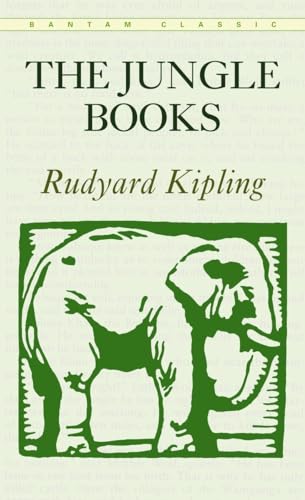
First published in 1894 and 1895, The Jungle Books remain some of the most beloved tales of all time. Adored by readers of all ages, these classic stories in two volumes spin the unforgettable story of Mowgli—a boy raised by a pack of wolves—as he learns indelible lessons about the laws of the jungle as well as the needs of the heart. Through Mowgli’s journey, readers also meet the tiger Shere Khan, who stalks man and beast alike, the rock python Kaa, who dispenses wisdom, and the aging wolf Akela, who struggles as his leadership of the pack is challenged. Set in India, Kipling’s great masterpiece is an allegory for Britain’s imperialism, filled with high adventure and extraordinary characters. The mythic tale of a boy looking for where he truly belongs—either with the man-pack of the village or the wolf-pack of the wild—The Jungle Books touch both our intellect and our emotions, while Kipling’s dazzling storytelling makes them the timeless archetype for popular tales to come.
Die Inhaltsangabe kann sich auf eine andere Ausgabe dieses Titels beziehen.
Über die Autorin bzw. den Autor
Rudyard Kipling was born in Bombay, India to British parents on December 30, 1865. In 1871, Rudyard and his sister, Trix, aged three, were left to be cared for by a couple in Southsea, England. Five years passed before he saw his parents again. His sense of desertion and despair were later expressed in his story “Baa Baa, Black Sheep” (1888), in his novel The Light that failed (1890), and his autobiography, Something of Myself (1937). As late as 1935 Kipling still spoke bitterly of the “House of Desolation” at Southsea: “I should like to burn it down and plough the place with salt.”
At twelve he entered a minor public school, the United Services College at Westward Ho, North Devon. In Stalky and CO. (1899) the myopic Beetle is a self-caricature, and the days at Westward Ho are recalled with mixed feelings. At sixteen, eccentric and literary, Kipling sailed to India to become a journalist. His Indian experiences led to seven volumes of stories, including Soldiers Three (1888) and Wee Willie Winkie (1888).
At twenty-four he returned to England and quickly tuned into a literary celebrity. In London he became close friends with an American, (Charles) Wolcott Balestier, with whom he collaborated on what critics called a “dime store novel.” Wolcott died suddenly in 1891, and a few weeks later Kipling married Wolcott’s sister, Caroline. The newlyweds settled in Brattleboro, Vermont, where Kipling wrote The Jungle Book (1895), and most of Captains Courageous (1897). By this time Kipling’s popularity and financial success were enormous.
In 1899 the Kiplings settled in Sussex, England, where he wrote some of his best books: Kim (1901), Just So Stories (1902), and Puck of Pooks Hill (1906). In 1907 he received the Nobel Prize for literature. By the time he died, on January 18 1936, critical opinion was deeply divided about his writings, but his books continued to be read by thousands, and such unforgettable poems and stories as ”Gunga Din,” “If,” “The Man Who Would Be King,” and “Rikki-Tikki-Tavi” have lived on in the consciousness of succeeding generations.
Von der hinteren Coverseite
First published in 1894 and 1895, The Jungle Books remain some of the most beloved tales of all time.
Adored by readers of all ages, these classic stories in two volumes spin the unforgettable story of Mowgli -- a boy raised by a pack of wolves -- as he learns indelible lessons about the laws of the jungle, as well as the needs of the heart. Through Mowgli's journey, readers also meet the tiger Shere Khan, who stalks man and beast alike, the rock python Kaa, who dispenses wisdom, and the aging wolf Akela, who struggles as his leadership of the pack is challenged. Set in India, Kipling's great masterpiece is an allegory for Britain's imperialism, filled with high adventure and extraordinary characters. The mythic tale of a boy looking for where he truly belongs -- either with the man-pack of the village or the wolf-pack of the wild -- The Jungle Books touch both our intellect and our emotions, while Kipling's dazzling storytelling makes them the timeless archetype for popular tales to come.
Aus dem Klappentext
aders of all ages, these classic spin the unforgettable story of Mowgli--a boy raised by a pack of wolves--as he learns indelible lessons about the laws of the jungle, as well as the needs of the heart. Set in India, Kipling's great masterpiece is an allegory for Britain's imperialism, filled with high adventure and extraordinary characters.
Auszug. © Genehmigter Nachdruck. Alle Rechte vorbehalten.
Mowgli's Brothers
Now Chil the Kite brings home the night
That Mang the Bat sets free—
The herds are shut in byre and hut
For loosed till dawn are we.
This is the hour of pride and power,
Talon and tush and claw.
Oh hear the call!—Good hunting all
That keep the Jungle Law!
Night-Song in the Jungle
It was seven o'clock of a very warm evening in the Seeonee hills when Father Wolf woke up from his day's rest, scratched himself, yawned, and spread out his paws one after the other to get rid of the sleepy feeling in their tips. Mother Wolf lay with her big gray nose dropped across her four tumbling, squealing cubs, and the moon shone into the mouth of the cave where they all lived. "Augrh!" said Father Wolf, "it is time to hunt again"; and he was going to spring down hill when a little shadow with a bushy tail crossed the threshold and whined: "Good luck go with you, O Chief of the Wolves; and good luck and strong white teeth go with the noble children, that they may never forget the hungry in this world."
It was the jackal—Tabaqui, the Dish-licker—and the wolves of India despise Tabaqui because he runs about making mischief, and telling tales, and eating rags and pieces of leather from the village rubbish-heaps. But they are afraid of him too, because Tabaqui, more than anyone else in the jungle, is apt to go mad, and then he forgets that he was ever afraid of anyone, and runs through the forest biting everything in his way. Even the tiger runs and hides when little Tabaqui goes mad, for madness is the most disgraceful thing that can overtake a wild creature. We call it hydrophobia, but they call it dewanee—the madness—and run.
"Enter, then, and look," said Father Wolf, stiffly; "but there is no food here."
"For a wolf, no," said Tabaqui; "but for so mean a person as myself a dry bone is a good feast. Who are we, the Gidur-log (the jackal people), to pick and choose?" He scuttled to the back of the cave, where he found the bone of a buck with some meat on it, and sat cracking the end merrily.
"All thanks for this good meal," he said, licking his lips. "How beautiful are the noble children! How large are their eyes! And so young too! Indeed, indeed, I might have remembered that the children of kings are men from the beginning."
Now, Tabaqui knew as well as anyone else that there is nothing so unlucky as to compliment children to their faces; and it pleased him to see Mother and Father Wolf look uncomfortable.
Tabaqui sat still, rejoicing in the mischief that he had made, and then he said spitefully:
"Shere Khan, the Big One, has shifted his hunting-grounds. He will hunt among these hills for the next moon, so he has told me."
Shere Khan was the tiger who lived near the Waingunga River, twenty miles away.
"He has no right!" Father Wolf began angrily—"By the Law of the Jungle he has no right to change his quarters without due warning. He will frighten every head of game within ten miles, and I—I have to kill for two, these days."
"His mother did not call him Lungri (the Lame One) for nothing," said Mother Wolf, quietly. "He has been lame in one foot from his birth. That is why he has only killed cattle. Now the villagers of the Waingunga are angry with him, and he has come here to make our villagers angry. They will scour the jungle for him when he is far away, and we and our children must run when the grass is set alight. Indeed, we are very grateful to Shere Khan!"
"Shall I tell him of your gratitude?" said Tabaqui.
"Out!" snapped Father Wolf. "Out and hunt with thy master. Thou hast done harm enough for one night."
"I go," said Tabaqui, quietly. "Ye can hear Shere Khan below in the thickets. I might have saved myself the message."
Father Wolf listened, and below in the valley that ran down to a little river, he heard the dry, angry, snarly, singsong whine of a tiger who has caught nothing and does not care if all the jungle knows it.
"The fool!" said Father Wolf. "To begin a night's work with that noise! Does he think that our buck are like his fat Waingunga bullocks?"
"H'sh. It is neither bullock nor buck he hunts tonight," said Mother Wolf. "It is Man." The whine had changed to a sort of humming purr that seemed to come from every quarter of the compass. It was the noise that bewilders woodcutters and gipsies sleeping in the open, and makes them run sometimes into the very mouth of the tiger.
"Man!" said Father Wolf, showing all his white teeth. "Faugh! Are there not enough beetles and frogs in the tanks that he must eat Man, and on our ground too!"
The Law of the Jungle, which never orders anything without a reason, forbids every beast to eat Man except when he is killing to show his children how to kill, and then he must hunt outside the hunting-grounds of his pack or tribe. The real reason for this is that man-killing means, sooner or later, the arrival of white men on elephants, with guns, and hundreds of brown men with gongs and rockets and torches. Then everybody in the jungle suffers. The reason the beasts give among themselves is that Man is the weakest and most defenseless of all living things, and it is unsportsmanlike to touch him. They say too—and it is true—that man-eaters become mangy, and lose their teeth.
The purr grew louder, and ended in the full-throated "Aaarh!" of the tiger's charge.
Then there was a howl—an untigerish howl—from Shere Khan. "He has missed," said Mother Wolf. "What is it?"
Father Wolf ran out a few paces and heard Shere Khan muttering and mumbling savagely, as he tumbled about in the scrub.
"The fool has had no more sense than to jump at a woodcutter's camp-fire, and has burned his feet," said Father Wolf, with a grunt. "Tabaqui is with him."
"Something is coming uphill," said Mother Wolf, twitching one ear. "Get ready."
The bushes rustled a little in the thicket, and Father Wolf dropped with his haunches under him, ready for his leap. Then, if you had been watching, you would have seen the most wonderful thing in the world—the wolf checked in mid-spring. He made his bound before he saw what it was he was jumping at, and then he tried to stop himself. The result was that he shot up straight into the air for four or five feet, landing almost where he left ground.
"Man!" he snapped. "A man's cub. Look!"
Directly in front of him, holding on by a low branch, stood a naked brown baby who could just walk—as soft and as dimpled a little atom as ever came to a wolf's cave at night. He looked up into Father Wolf's face, and laughed.
"Is that a man's cub?" said Mother Wolf. "I have never seen one. Bring it here."
A wolf accustomed to moving his own cubs can, if necessary, mouth an egg without breaking it, and though Father Wolf's jaws closed right on the child's back not a tooth even scratched the skin, as he laid it down among the cubs.
"How little! How naked, and—how bold!" said Mother Wolf, softly. The baby was pushing his way between the cubs to get close to the warm hide. "Ahai! He is taking his meal with the others. And so this is a man's cub. Now, was there ever a wolf that could boast of a man's cub among her children?"
"I have heard now and again of such a thing, but never in our Pack or in my time," said Father Wolf....
„Über diesen Titel“ kann sich auf eine andere Ausgabe dieses Titels beziehen.
Weitere beliebte Ausgaben desselben Titels

Suchergebnisse für The Jungle Books (Bantam classics)

Beispielbild für diese ISBN
The Jungle Books
Verlag:
Bantam Classics, 1985
ISBN 10: 0553211994
ISBN 13: 9780553211993
Gebraucht
Mass Market Paperback
Anbieter: ThriftBooks-Atlanta, AUSTELL, GA, USA
Verkäuferbewertung 5 von 5 Sternen

Mass Market Paperback. Zustand: Very Good. No Jacket. May have limited writing in cover pages. Pages are unmarked. ~ ThriftBooks: Read More, Spend Less. Artikel-Nr. G0553211994I4N00
Gebraucht kaufen
EUR 5,07
Versand gratis
Versand innerhalb von USA
Versand innerhalb von USA
Anzahl: 1 verfügbar
Beispielbild für diese ISBN
The Jungle Books
Verlag:
Bantam Classics, 1985
ISBN 10: 0553211994
ISBN 13: 9780553211993
Gebraucht
Mass Market Paperback
Anbieter: ThriftBooks-Dallas, Dallas, TX, USA
Verkäuferbewertung 5 von 5 Sternen
Mass Market Paperback. Zustand: Very Good. No Jacket. May have limited writing in cover pages. Pages are unmarked. ~ ThriftBooks: Read More, Spend Less. Artikel-Nr. G0553211994I4N00
Gebraucht kaufen
EUR 5,07
Versand gratis
Versand innerhalb von USA
Versand innerhalb von USA
Anzahl: 1 verfügbar
Beispielbild für diese ISBN
The Jungle Books
Verlag:
Bantam Classics, 1985
ISBN 10: 0553211994
ISBN 13: 9780553211993
Gebraucht
Mass Market Paperback
Anbieter: ThriftBooks-Atlanta, AUSTELL, GA, USA
Verkäuferbewertung 5 von 5 Sternen
Mass Market Paperback. Zustand: Good. No Jacket. Pages can have notes/highlighting. Spine may show signs of wear. ~ ThriftBooks: Read More, Spend Less 0.46. Artikel-Nr. G0553211994I3N00
Gebraucht kaufen
EUR 5,07
Versand gratis
Versand innerhalb von USA
Versand innerhalb von USA
Anzahl: 1 verfügbar
Beispielbild für diese ISBN
The Jungle Books
Verlag:
Random House Publishing Group, 1985
ISBN 10: 0553211994
ISBN 13: 9780553211993
Gebraucht
Softcover
Anbieter: Better World Books, Mishawaka, IN, USA
Verkäuferbewertung 5 von 5 Sternen
Zustand: Good. Used book that is in clean, average condition without any missing pages. Artikel-Nr. 652521-75
Gebraucht kaufen
EUR 6,04
Versand gratis
Versand innerhalb von USA
Versand innerhalb von USA
Anzahl: 3 verfügbar
Beispielbild für diese ISBN
The Jungle Books and Just So Stories (Bantam classics)
Anbieter: AwesomeBooks, Wallingford, Vereinigtes Königreich
Verkäuferbewertung 5 von 5 Sternen
Mass Market Paperback. Zustand: Very Good. The Jungle Books and Just So Stories (Bantam classics) This book is in very good condition and will be shipped within 24 hours of ordering. The cover may have some limited signs of wear but the pages are clean, intact and the spine remains undamaged. This book has clearly been well maintained and looked after thus far. Money back guarantee if you are not satisfied. See all our books here, order more than 1 book and get discounted shipping. Artikel-Nr. 7719-9780553211993
Gebraucht kaufen
EUR 11,28
EUR 5,73 shipping
Versand von Vereinigtes Königreich nach USA
Versand von Vereinigtes Königreich nach USA
Anzahl: 2 verfügbar
Beispielbild für diese ISBN
The Jungle Books and Just So Stories (Bantam classics)
Anbieter: Bahamut Media, Reading, Vereinigtes Königreich
Verkäuferbewertung 5 von 5 Sternen
Mass Market Paperback. Zustand: Very Good. This book is in very good condition and will be shipped within 24 hours of ordering. The cover may have some limited signs of wear but the pages are clean, intact and the spine remains undamaged. This book has clearly been well maintained and looked after thus far. Money back guarantee if you are not satisfied. See all our books here, order more than 1 book and get discounted shipping. Artikel-Nr. 6545-9780553211993
Gebraucht kaufen
EUR 11,28
EUR 8,01 shipping
Versand von Vereinigtes Königreich nach USA
Versand von Vereinigtes Königreich nach USA
Anzahl: 1 verfügbar
Beispielbild für diese ISBN
The Jungle Books and Just So Stories (Bantam classics)
Anbieter: Kennys Bookstore, Olney, MD, USA
Verkäuferbewertung 4 von 5 Sternen

Zustand: New. 1985. Reissue. Mass Market Paperback. . . . . . Books ship from the US and Ireland. Artikel-Nr. V9780553211993
Neu kaufen
EUR 12,10
EUR 8,95 shipping
Versand innerhalb von USA
Versand innerhalb von USA
Anzahl: 15 verfügbar
Beispielbild für diese ISBN
The Jungle Books and Just So Stories
Verlag:
Bantam Classic & Loveswept, 1986
ISBN 10: 0553211994
ISBN 13: 9780553211993
Neu
Mass Market Paperback
Anbieter: Revaluation Books, Exeter, Vereinigtes Königreich
Verkäuferbewertung 5 von 5 Sternen
Mass Market Paperback. Zustand: Brand New. mass paperback edition edition. 384 pages. 7.00x4.25x1.00 inches. In Stock. Artikel-Nr. 0553211994
Neu kaufen
EUR 16,17
EUR 11,48 shipping
Versand von Vereinigtes Königreich nach USA
Versand von Vereinigtes Königreich nach USA
Anzahl: 1 verfügbar
Foto des Verkäufers
The Jungle Books
Verlag:
Random House Publishing Group, 1985
ISBN 10: 0553211994
ISBN 13: 9780553211993
Neu
Softcover
Anbieter: moluna, Greven, Deutschland
Verkäuferbewertung 4 von 5 Sternen
Zustand: New. Rudyard Kipling was born in Bombay, India to British parents on December 30, 1865. In 1871, Rudyard and his sister, Trix, aged three, were left to be cared for by a couple in Southsea, England. Five years passed before he saw his parents again. His sense . Artikel-Nr. 594774657
Neu kaufen
EUR 14,96
EUR 48,99 shipping
Versand von Deutschland nach USA
Versand von Deutschland nach USA
Anzahl: Mehr als 20 verfügbar