
Verwandte Artikel zu Icon: An unstoppable political thriller from the No....
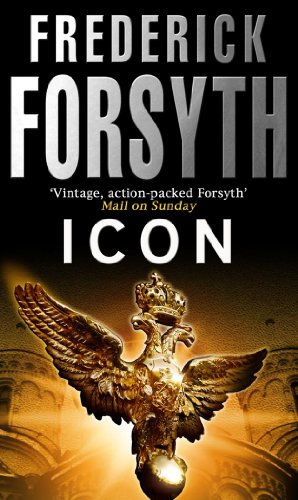
Inhaltsangabe
'One of his best works for a long time' Sunday Times
'Another strong performance by a writer who know exactly what he's about' Publisher's Weekly
'A cunningly constructed action thriller . . . the story is terrifying and timely and grips you to the end' Daily Telegraph
_______________________________
From the world-renowned, bestselling author of The Day of the Jackal and The Fox
It is 1999 and Russia is on the edge of total implosion.
Social and moral order has collapsed. The only rule is imposed by mafia-like criminal gangs. And a visionary patriot whose voice rises above it all: Igor Komarov.
It is in to this world that former CIA agent Jason Monk is plunged. Drawn out of retirement by the CIA's desperate bid to halt Komarov's meteoric rise, he must slip back in to Russia undetected and carry out a covert mission that the world depends on. With Komarov set to win the next election, Monk discovers a secret document that is smuggled in to the British Embassy in Moscow. Named The Black Manifesto, it reveals Komarov's horrifying and deadly secret agenda.
With many Western leaders persuaded that Komraov can lead his country into a new age, and the election looming, time is running out. . .
***Praise for Frederick Forsyth***
'In a class by itself. Unputdownable.' Sunday Times
'Forsyth did away with the conventions of thriller-writing and still kept readers enthralled. He reset the whole genre.' Guardian
'Meticulously researched' BBC
''Forsyth...personified the journalist-author as superstar.' Telegraph
***Don't miss Revenge of Odessa, the new book from Frederick Forsyth and Tony Kent***
Die Inhaltsangabe kann sich auf eine andere Ausgabe dieses Titels beziehen.
Über die Autorin bzw. den Autor
Former RAF pilot and investigative journalist, Frederick Forsyth defined the modern thriller when he wrote The Day of The Jackal, described by Lee Child as ‘the book that broke the mould’, with its lightning-paced storytelling, effortlessly cool reality and unique insider information. Since then he has written twelve novels which have been bestsellers around the world: The Odessa File, The Dogs of War, The Devil's Alternative, The Fourth Protocol, The Negotiator, The Deceiver, The Fist of God, Icon, Avenger, The Afghan, The Cobra and, most recently, The Kill List. He lives in Buckinghamshire, England.
Auszug. © Genehmigter Nachdruck. Alle Rechte vorbehalten.
It was just before noon on the same day, July 16, that Igor Komarov, sitting in his office on the first floor of the dacha off Kiselny Boulevard, contacted his chief personal assistant by intercom.
"The document I lent you yesterday, you have had a chance to read it?" he asked.
"I have indeed, Mr. President. Quite brilliant, if I may say so," Akopov replied. All of Komarov's staff referred to him as Mr. President, meaning president of the executive committee of the Union of Patriotic Forces. They were in any case convinced that within twelve months he would still be Mr. President but for a different reason.
"Thank you," said Komarov. "Then please return it to me."
The intercom went dead. Akopov rose and went to his wall safe. He knew the combination by heart and spun the central dial the required six times. When the door swung open he looked inside for the black-bound file. It was not there.
Puzzled, he emptied the safe, paper by paper and file by file. A cold fear, part panic and part disbelief, gripped him. Taking a hold on himself, he began again. The files on the carpet around his knees were sorted out and examined, sheet by sheet and one by one. No black file. A light sweat beaded his forehead. He had worked contentedly in the office all morning, convinced that before leaving the previous evening he had put every confidential document safely away. He always did; he was a creature of habit.
After the safe, he began on the drawers of his desk. Nothing. He searched the floor under the desk, then every cupboard and closet. Just before one he knocked on Igor Komarov's door, was admitted, and confessed he could not find it.
The man who most of the world presumed would be the next president of Russia was a highly complex personality who, behind his public persona, preferred to keep much of himself intensely private. He could not have been a greater contrast to his predecessor, the ousted Zhirinovsky, whom he now openly referred to as a buffoon.
Komarov was of medium height and build, clean-shaven, with neatly trimmed iron-gray hair. Among his two most evident fetishes were an absorption with personal cleanliness and a deep dislike of physical contact. Unlike most Russian politicians, with their back-slapping, vodka-toasting, arms-around-the-shoulders bonhomie, Komarov insisted on formal dress and manner of speech in his personal entourage. He rarely if ever donned the uniform of the Black Guard and was usually to be found in a double-breasted gray suit with collar and tie.
After years in politics none but a very few could claim to be on close personal terms with him, and no one dared pretend to be an intimate. Nikita Ivanovich Akopov had been his confidential private secretary for a decade but the relationship was still one of master and slavishly devoted servant.
Unlike Yeltsin, who had raised staff members to the rank of drinking and tennis-playing buddies, Komarov would, so far as was known, only permit one man to refer to him by first name and patronymic. That was his Head of Security, Colonel Anatoli Grishin.
But like all successful politicians, Komarov could play the chameleon when he had to. To the media, on the rare occasions when he deigned to meet them personally, he could become the grave statesman. Before his own rallies, he became transformed in a manner that never ceased to evoke Akopov's utter admiration. On the podium the precise former engineer vanished as if he had never been. In his place appeared the orator, a pillar of passion, a sorcerer of words, a man of all the people enunciating their hopes, fears, and desires, their rage and their bigotry, with unerring accuracy. To them and only them would he play the figure of geniality with the common touch.
Beneath both personae there was a third, the one that frightened Akopov. Even the rumor of the existence of the third man beneath the veneer was enough to keep those around him--staff, colleagues, and guards--in a permanent state of the deference he demanded.
Only twice in ten years had Nikita Akopov seen the demonic rage inside the man well up and spew out of control. On another dozen occasions he had seen the struggle to control that rage, and witnessed the effort succeed. On the two occasions when the control had failed, Akopov had seen the man who dominated, fascinated, and controlled him, the man he followed and worshipped, turn into a screaming, raging demon.
He had hurled telephones, vases, and ink-stands at the trembling servant who had offended him, reducing one senior Black Guard officer to a blubbering wreck. He had used language more foul than Akopov had ever heard, broken furniture, and once had to be restrained as he belabored a victim with a heavy ebony ruler lest he actually kill the man.
Akopov knew the sign that one of these rages in the president of the UPF was coming to the surface. Komarov's face went deathly pale, his manner became even more formal and courteous, and two bright red spots burned high on each cheekbone.
"Are you saying you have lost it, Nikita Ivanovich?"
"Not lost, Mr. President. Apparently mislaid."
"That document is of a more confidential nature than anything you have ever handled. You have read it. You can understand why."
"I do indeed, Mr. President."
"There are only three copies in existence, Nikita. Two are in my own safe. No more than a tiny group of those closest to me will ever be allowed to see it. I even wrote it and typed it myself. I, Igor Komarov, actually typed all the pages myself rather than entrust it to a secretary. It is that confidential."
"Very wise, Mr. President."
"And because I count . . . counted you as one of that tiny group, I permitted you to see it. Now you tell me it is lost."
"Mislaid, temporarily mislaid, I assure you, Mr. President."
Komarov was staring at him with those mesmeric eyes that could charm skeptics into collaboration or terrify backsliders. On each cheekbone the red spot burned bright in the pale face.
"When did you last see it?"
"Last night, Mr. President. I stayed late in order to read it in privacy. I left at eight o'clock."
Komarov nodded. The night-duty guards' register would confirm or deny that.
"You took it with you. Despite my orders, you permitted the file to leave the building."
"No, Mr. President, I swear it. I locked it in the safe. I would never leave a confidential document lying around, or take it with me."
"It is not in the safe now?"
Akopov swallowed, but he had no saliva.
"How many times have you been to the safe before my call?"
"None, Mr. President. When you called, that was the first time I went to the safe."
"It was locked?"
"Yes, as usual."
"It had been broken into?"
"Apparently not, Mr. President."
"You have searched the room?"
"From top to bottom and end to end. I cannot understand it."
Komarov thought for several minutes. Behind his blank face he felt a rising...
„Über diesen Titel“ kann sich auf eine andere Ausgabe dieses Titels beziehen.
Suchergebnisse für Icon: An unstoppable political thriller from the No....

Beispielbild für diese ISBN
Icon
Verlag:
Transworld Publishers Ltd, 1997
ISBN 10: 0552139912
ISBN 13: 9780552139915
Gebraucht
Softcover
Anbieter: World of Books (was SecondSale), Montgomery, IL, USA
Verkäuferbewertung 5 von 5 Sternen

Zustand: Good. It's called The Black Manifesto and it appears to show Komarov's secret agenda - his political blueprint is really Mein Kampf, the rebirth of Russia will be as a New Third Reich with Komarov as Fuhrer. Artikel-Nr. 00094805359
Gebraucht kaufen
EUR 4,05
Versand gratis
Versand innerhalb von USA
Versand innerhalb von USA
Anzahl: 1 verfügbar
Beispielbild für diese ISBN
Icon
Verlag:
Transworld Publishers Limited, 1997
ISBN 10: 0552139912
ISBN 13: 9780552139915
Gebraucht
Softcover
Anbieter: Better World Books: West, Reno, NV, USA
Verkäuferbewertung 5 von 5 Sternen
Zustand: Good. New Ed. Pages intact with minimal writing/highlighting. The binding may be loose and creased. Dust jackets/supplements are not included. Stock photo provided. Product includes identifying sticker. Better World Books: Buy Books. Do Good. Artikel-Nr. GRP69874593
Gebraucht kaufen
EUR 6,18
Versand gratis
Versand innerhalb von USA
Versand innerhalb von USA
Anzahl: 1 verfügbar
Beispielbild für diese ISBN
Icon
Verlag:
Transworld Publishers Limited, 1997
ISBN 10: 0552139912
ISBN 13: 9780552139915
Gebraucht
Softcover
Anbieter: Better World Books, Mishawaka, IN, USA
Verkäuferbewertung 5 von 5 Sternen
Zustand: Very Good. New Ed. Pages intact with possible writing/highlighting. Binding strong with minor wear. Dust jackets/supplements may not be included. Stock photo provided. Product includes identifying sticker. Better World Books: Buy Books. Do Good. Artikel-Nr. 5225552-75
Gebraucht kaufen
EUR 6,18
Versand gratis
Versand innerhalb von USA
Versand innerhalb von USA
Anzahl: 1 verfügbar
Beispielbild für diese ISBN
Icon
Verlag:
Transworld Publishers Limited, 1997
ISBN 10: 0552139912
ISBN 13: 9780552139915
Gebraucht
Softcover
Anbieter: Better World Books, Mishawaka, IN, USA
Verkäuferbewertung 5 von 5 Sternen
Zustand: Good. New Ed. Pages intact with minimal writing/highlighting. The binding may be loose and creased. Dust jackets/supplements are not included. Stock photo provided. Product includes identifying sticker. Better World Books: Buy Books. Do Good. Artikel-Nr. GRP69874593
Gebraucht kaufen
EUR 6,18
Versand gratis
Versand innerhalb von USA
Versand innerhalb von USA
Anzahl: 3 verfügbar
Beispielbild für diese ISBN
Icon
Anbieter: ThriftBooks-Dallas, Dallas, TX, USA
Verkäuferbewertung 5 von 5 Sternen
Paperback. Zustand: Fair. No Jacket. Readable copy. Pages may have considerable notes/highlighting. ~ ThriftBooks: Read More, Spend Less. Artikel-Nr. G0552139912I5N00
Gebraucht kaufen
EUR 7,26
Versand gratis
Versand innerhalb von USA
Versand innerhalb von USA
Anzahl: 1 verfügbar
Foto des Verkäufers
Icon: An unstoppable political thriller from the No. 1 Sunday Times bestselling author
Anbieter: WeBuyBooks, Rossendale, LANCS, Vereinigtes Königreich
Verkäuferbewertung 5 von 5 Sternen
Paperback. Zustand: Good. Most items will be dispatched the same or the next working day. A copy that has been read but remains in clean condition. All of the pages are intact and the cover is intact and the spine may show signs of wear. The book may have minor markings which are not specifically mentioned. Artikel-Nr. rev5179494932
Gebraucht kaufen
EUR 1,35
EUR 6,05 Versand
Versand von Vereinigtes Königreich nach USA
Versand von Vereinigtes Königreich nach USA
Anzahl: 5 verfügbar
Foto des Verkäufers
Icon: An unstoppable political thriller from the No. 1 Sunday Times bestselling author
Anbieter: WeBuyBooks, Rossendale, LANCS, Vereinigtes Königreich
Verkäuferbewertung 5 von 5 Sternen
Paperback. Zustand: Very Good. Most items will be dispatched the same or the next working day. A copy that has been read, but is in excellent condition. Pages are intact and not marred by notes or highlighting. The spine remains undamaged. Artikel-Nr. rev8270469364
Gebraucht kaufen
EUR 1,35
EUR 6,05 Versand
Versand von Vereinigtes Königreich nach USA
Versand von Vereinigtes Königreich nach USA
Anzahl: 5 verfügbar
Beispielbild für diese ISBN
Icon
Anbieter: AwesomeBooks, Wallingford, Vereinigtes Königreich
Verkäuferbewertung 5 von 5 Sternen
Zustand: Very Good. This book is in very good condition and will be shipped within 24 hours of ordering. The cover may have some limited signs of wear but the pages are clean, intact and the spine remains undamaged. This book has clearly been well maintained and looked after thus far. Money back guarantee if you are not satisfied. See all our books here, order more than 1 book and get discounted shipping. . Artikel-Nr. 7719-9780552139915
Gebraucht kaufen
EUR 3,46
EUR 4,91 Versand
Versand von Vereinigtes Königreich nach USA
Versand von Vereinigtes Königreich nach USA
Anzahl: 6 verfügbar
Beispielbild für diese ISBN
Icon: An unstoppable political thriller from the No. 1 Sunday Times bestselling author
Verlag:
Transworld Publishers Ltd, United Kingdom, London, 1997
ISBN 10: 0552139912
ISBN 13: 9780552139915
Gebraucht
Paperback
Anbieter: WorldofBooks, Goring-By-Sea, WS, Vereinigtes Königreich
Verkäuferbewertung 5 von 5 Sternen
Paperback. Zustand: Good. 'One of his best works for a long time' Sunday Times'Another strong performance by a writer who know exactly what he's about' Publisher's Weekly'A cunningly constructed action thriller . . . the story is terrifying and timely and grips you to the end' Daily Telegraph_______________________________From the world-renowned, bestselling author of The Day of the Jackal and The FoxIt is 1999 and Russia is on the edge of total implosion.Social and moral order has collapsed. The only rule is imposed by mafia-like criminal gangs. And a visionary patriot whose voice rises above it all: Igor Komarov.It is in to this world that former CIA agent Jason Monk is plunged. Drawn out of retirement by the CIA's desperate bid to halt Komarov's meteoric rise, he must slip back in to Russia undetected and carry out a covert mission that the world depends on. With Komarov set to win the next election, Monk discovers a secret document that is smuggled in to the British Embassy in Moscow. Named The Black Manifesto, it reveals Komarov's horrifying and deadly secret agenda.With many Western leaders persuaded that Komraov can lead his country into a new age, and the election looming, time is running out. . .***Praise for Frederick Forsyth***'In a class by itself. Unputdownable.' Sunday Times 'Forsyth did away with the conventions of thriller-writing and still kept readers enthralled. He reset the whole genre.' Guardian'Meticulously researched' BBC''Forsyth.personified the journalist-author as superstar.' Telegraph ***Don't miss Revenge of Odessa, the new book from Frederick Forsyth and Tony Kent***. The book has been read but remains in clean condition. All pages are intact and the cover is intact. Some minor wear to the spine. Artikel-Nr. GOR003101229
Gebraucht kaufen
EUR 3,08
EUR 6,68 Versand
Versand von Vereinigtes Königreich nach USA
Versand von Vereinigtes Königreich nach USA
Anzahl: 2 verfügbar
Beispielbild für diese ISBN
Icon: An unstoppable political thriller from the No. 1 Sunday Times bestselling author
Anbieter: WorldofBooks, Goring-By-Sea, WS, Vereinigtes Königreich
Verkäuferbewertung 5 von 5 Sternen
Paperback. Zustand: Fair. A readable copy of the book which may include some defects such as highlighting and notes. Cover and pages may be creased and show discolouration. Artikel-Nr. GOR003106601
Gebraucht kaufen
EUR 3,08
EUR 6,68 Versand
Versand von Vereinigtes Königreich nach USA
Versand von Vereinigtes Königreich nach USA
Anzahl: 8 verfügbar