
Verwandte Artikel zu Odd Girl Out: The Hidden Culture of Aggression in Girls
Inhaltsangabe
REVISED AND UPDATED
WITH NEW MATERIAL ON CYBERBULLYING AND
HELPING GIRLS HANDLE THE DANGERS OF LIFE ONLINE
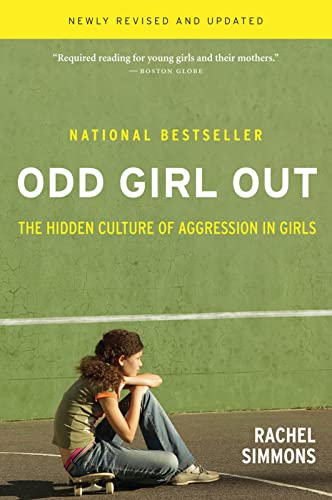
When Odd Girl Out was first published, it became an instant bestseller and ignited a long-overdue conversation about the hidden culture of female bullying. Today the dirty looks, taunting notes, and social exclusion that plague girls’ friendships have gained new momentum in cyberspace.
In this updated edition, educator and bullying expert Rachel Simmons gives girls, parents, and educators proven and innovative strategies for navigating social dynamics in person and online, as well as brand new classroom initiatives and step-by-step parental suggestions for dealing with conventional bullying. With up-to-the-minute research and real-life stories, Odd Girl Out continues to be the definitive resource on the most pressing social issues facing girls today.
READING GROUP GUIDE AND TEACHER’S GUIDE available at www.marinnerreadersguides.com
WITH NEW MATERIAL ON CYBERBULLYING AND
HELPING GIRLS HANDLE THE DANGERS OF LIFE ONLINE
When Odd Girl Out was first published, it became an instant bestseller and ignited a long-overdue conversation about the hidden culture of female bullying. Today the dirty looks, taunting notes, and social exclusion that plague girls’ friendships have gained new momentum in cyberspace.
In this updated edition, educator and bullying expert Rachel Simmons gives girls, parents, and educators proven and innovative strategies for navigating social dynamics in person and online, as well as brand new classroom initiatives and step-by-step parental suggestions for dealing with conventional bullying. With up-to-the-minute research and real-life stories, Odd Girl Out continues to be the definitive resource on the most pressing social issues facing girls today.
READING GROUP GUIDE AND TEACHER’S GUIDE available at www.marinnerreadersguides.com
Die Inhaltsangabe kann sich auf eine andere Ausgabe dieses Titels beziehen.
Über die Autorin bzw. den Autor
RACHEL SIMMONS, best-selling author of Odd Girl Speaks Out and The Curse of the Good Girl, is an educator and cofounder of the Girls Leadership Institute. A Rhodes Scholar, she has appeared on Today, Oprah, and other major shows, including her own PBS special, and writes frequently for Teen Vogue.
www.rachelsimmons.com
www.rachelsimmons.com
Von der hinteren Coverseite
REVISED AND UPDATED
WITH NEW MATERIAL ON CYBERBULLYING AND
HELPING GIRLS HANDLE THE DANGERS OF LIFE ONLINE
"Peels away the smiley surfaces of adolescent female society to expose one of girlhood's dark secrets: the vicious psychological warfare waged every day in the halls of our middle schools and high schools." —San Francisco Chronicle
When Odd Girl Out was first published, it became an instant bestseller and ignited a long-overdue conversation about the hidden culture of female bullying. Today the dirty looks, taunting notes, and social exclusion that plague girls’ friendships have gained new momentum in cyberspace.
In this updated edition, educator and bullying expert Rachel Simmons gives girls, parents, and educators proven and innovative strategies for navigating social dynamics in person and online, as well as brand new classroom initiatives and step-by-step parental suggestions for dealing with conventional bullying. With up-to-the-minute research and real-life stories, Odd Girl Out continues to be the definitive resource on the most pressing social issues facing girls today.
WITH NEW MATERIAL ON CYBERBULLYING AND
HELPING GIRLS HANDLE THE DANGERS OF LIFE ONLINE
"Peels away the smiley surfaces of adolescent female society to expose one of girlhood's dark secrets: the vicious psychological warfare waged every day in the halls of our middle schools and high schools." —San Francisco Chronicle
When Odd Girl Out was first published, it became an instant bestseller and ignited a long-overdue conversation about the hidden culture of female bullying. Today the dirty looks, taunting notes, and social exclusion that plague girls’ friendships have gained new momentum in cyberspace.
In this updated edition, educator and bullying expert Rachel Simmons gives girls, parents, and educators proven and innovative strategies for navigating social dynamics in person and online, as well as brand new classroom initiatives and step-by-step parental suggestions for dealing with conventional bullying. With up-to-the-minute research and real-life stories, Odd Girl Out continues to be the definitive resource on the most pressing social issues facing girls today.
"Passionate and beautifully written. A significant contribution to our understanding of the psychology of girls." —Michael Thompson, co-author of Raising Cain
"Cathartic to any teen or parent trying to find company." —Detroit Free Press
An American School Board Journal Notable Book in Education
RACHEL SIMMONS, best-selling author of Odd Girl Speaks Out and The Curse of the Good Girl, is an educator and cofounder of the Girls Leadership Institute. A Rhodes Scholar, she has appeared on Today, Oprah, and other major shows including her own PBS special, and writes frequently for Teen Vogue.
www.rachelsimmons.com
Reading guide and teacher's guide available at www.hmhbooks.com.
Auszug. © Genehmigter Nachdruck. Alle Rechte vorbehalten.
chapter one
the hidden culture of
aggression in girls
The Linden School campus is nestled behind a web of sports fields
that seem to hold at bay the bustling city in which it resides. On Monday
morning in the Upper School building, students congregated languidly,
catching up on the weekend, while others sat knees-to-chest
on the floor, flipping through three-ring binders, cramming for tests.
The students were dressed in styles that ran the gamut from trendy
to what can only be described, at this age, as defiant. Watching them,
it is easy to forget this school is one of the best in the region, its students
anything but superficial. This is what I came to love about Linden:
it celebrates academic rigor and the diversity of its students in
equal parts. Over the course of a day with eight groups of ninth
graders, I began each meeting with the same question: “What are
some of the differences between the ways guys and girls are mean?”
From periods one through eight, I heard the same responses.
Girls can turn on you for anything,” said one. “Girls whisper,” said
another. “They glare at you.” With growing certainty, they fired out
answers:
“Girls are secretive.”
“They destroy you from the inside.”
“Girls are manipulative.”
“There’s an aspect of evil in girls that there isn’t in boys.”
“Girls target you where they know you’re weakest.”
“Girls do a lot behind each other’s backs.”
“Girls plan and premeditate.”
“With guys you know where you stand.”
“I feel a lot safer with guys.”
In bold, matter-of-fact voices, girls described themselves to me as
disloyal, untrustworthy, and sneaky. They claimed girls use intimacy
to manipulate and overpower others. They said girls are fake, using
each other to move up the social hierarchy. They described girls as
unforgiving and crafty, lying in wait for a moment of revenge that
will catch the unwitting target off guard and, with an almost savage
eye-for-an-eye mentality, “make her feel the way I felt.”
The girls’ stories about their conflicts were casual and at times
filled with self-hatred. In almost every group session I held, someone
volunteered her wish to have been born a boy because boys can
“fight and have it be over with.”
Girls tell stories of their anger in a culture that does not define
their behaviors as aggression. As a result, their narratives are filled
with destructive myths about the inherent duplicity of females. As
poet and essayist Adrienne Rich notes,4 “We have been depicted as
generally whimsical, deceitful, subtle, vacillating.”
Since the dawn of time, women and girls have been portrayed
as jealous and underhanded, prone to betrayal, disobedience, and secrecy.
Lacking a public identity or language, girls’ nonphysical aggression
is called “catty,” “crafty,” “evil,” and “cunning.” Rarely the
object of research or critical thought, this behavior is seen as a natural
phase in girls’ development. As a result, schools write off girls’
conflicts as a rite of passage, as simply “what girls do.”
What would it mean to name girls’ aggression? Why have myths
and stereotypes served us so well and so long?
Aggression is a powerful barometer of our social values. According
to sociologist Anne Campbell, attitudes toward aggression crys-
tallize sex roles, or the idea that we expect certain responsibilities to
be assumed by males and females because of their sex.5 Riot grrls and
women’s soccer notwithstanding, Western society still expects boys
to become family providers and protectors, and girls to be nurturers
and mothers. Aggression is the hallmark of masculinity; it enables
men to control their environment and livelihoods. For better or for
worse, boys enjoy total access to the rough and tumble. The link
begins early: the popularity of boys is in large part determined by
their willingness to play rough. They get peers’ respect for athletic
prowess, resisting authority, and acting tough, troublesome, dominating,
cool, and confident.
On the other side of the aisle, females are expected to mature into
caregivers, a role deeply at odds with aggression. Consider the ideal
of the “good mother”: She provides unconditional love and care for
her family, whose health and daily supervision are her primary objectives.
Her daughters are expected to be “sugar and spice and everything
nice.” They are to be sweet, caring, precious, and tender.
“Good girls” have friends, and lots of them. As nine-year-old
Noura told psychologists Lyn Mikel Brown and Carol Gilligan, perfect
girls have “perfect relationships.”6 These girls are caretakers in
training. They “never have any fights . . . and they are always together.
. . . Like never arguing, like ‘Oh yeah, I totally agree with
you.’” In depressing relationships, Noura added, “someone is really
jealous and starts being really mean. . . . [It’s] where two really good
friends break up.”
A “good girl,” journalist Peggy Orenstein observes in Schoolgirls,
is “nice before she is anything else—before she is vigorous, bright,
even before she is honest.” She described the “perfect girl” as
the girl who has no bad thoughts or feelings, the kind of person
everyone wants to be with. . . . [She is] the girl who speaks quietly,
calmly, who is always nice and kind, never mean or bossy. . . . She
reminds young women to silence themselves rather than speak
their true feelings, which they come to consider “stupid,” “selfish,”
“rude,” or just plain irrelevant.7
“Good girls,” then, are expected not to experience anger. Aggression
endangers relationships, imperiling a girl’s ability to be caring
and “nice.” Aggression undermines who girls have been raised to
become.
Calling the anger of girls by its name would therefore challenge
the most basic assumptions we make about “good girls.” It would
also reveal what the culture does not entitle them to by defining
what nice really means: Not aggressive. Not angry. Not in conflict.
Research confirms that parents and teachers discourage the emergence
of physical and direct aggression in girls early on while the
skirmishing of boys is either encouraged or shrugged off.8 In one example,
a 1999 University of Michigan study found that girls were
told to be quiet, speak softly, or use a “nicer” voice about three times
more often than boys, even though the boys were louder. By the
time they are of school age, peers solidify the fault lines on the playground,
creating social groups that value niceness in girls and toughness
in boys.
The culture derides aggression in girls as unfeminine, a trend explored
in chapter four. “Bitch,” “lesbian,” “frigid,” and “manly” are
just a few of the names an assertive girl hears. Each epithet points out
the violation of her prescribed role as a caregiver: the bitch likes and
is liked by no one; the lesbian loves not a man...
„Über diesen Titel“ kann sich auf eine andere Ausgabe dieses Titels beziehen.
Suchergebnisse für Odd Girl Out: The Hidden Culture of Aggression in Girls

Beispielbild für diese ISBN
Odd Girl Out: The Hidden Culture of Agression in Girls
Anbieter: World of Books (was SecondSale), Montgomery, IL, USA
Verkäuferbewertung 5 von 5 Sternen

Paperback. Zustand: Fair. A revised and updated edition of the 2002 New York Times bestseller from the country's leading expert on bullying, with new material on cyberbullying, and helping girls handle the dangers of life online. When Odd Girl Out was first published, it became an instant bestseller and ignited a long-overdue conversation about the hidden culture of female bullying. Today, the dirty looks, taunting notes, and social exclusion that plague girls' friendships have gained new momentum in cyberspace. In this updated edition, educator and bullying expert Rachel Simmons gives girls, parents, and educators proven and innovative strategies for navigating social dynamics in person and online, as well as brand-new classroom initiatives and step-by-step parental suggestions for dealing with conventional bullying. With up-to-the-minute research and real-life stories, Odd Girl Out continues to be the definitive resource on the most pressing social issues facing girls today. Reading Group Guide and Teachers' Guide available at www.marinnerreadersguides.com. Artikel-Nr. 00105060671
Gebraucht kaufen
EUR 3,78
Versand gratis
Versand innerhalb von USA
Versand innerhalb von USA
Anzahl: 2 verfügbar
Beispielbild für diese ISBN
Odd Girl Out: The Hidden Culture of Agression in Girls
Anbieter: World of Books (was SecondSale), Montgomery, IL, USA
Verkäuferbewertung 5 von 5 Sternen
Paperback. Zustand: Like New. A revised and updated edition of the 2002 New York Times bestseller from the country's leading expert on bullying, with new material on cyberbullying, and helping girls handle the dangers of life online. When Odd Girl Out was first published, it became an instant bestseller and ignited a long-overdue conversation about the hidden culture of female bullying. Today, the dirty looks, taunting notes, and social exclusion that plague girls' friendships have gained new momentum in cyberspace. In this updated edition, educator and bullying expert Rachel Simmons gives girls, parents, and educators proven and innovative strategies for navigating social dynamics in person and online, as well as brand-new classroom initiatives and step-by-step parental suggestions for dealing with conventional bullying. With up-to-the-minute research and real-life stories, Odd Girl Out continues to be the definitive resource on the most pressing social issues facing girls today. Reading Group Guide and Teachers' Guide available at www.marinnerreadersguides.com. Artikel-Nr. 00106287921
Gebraucht kaufen
EUR 3,78
Versand gratis
Versand innerhalb von USA
Versand innerhalb von USA
Anzahl: 1 verfügbar
Beispielbild für diese ISBN
Odd Girl Out: The Hidden Culture of Agression in Girls
Anbieter: World of Books (was SecondSale), Montgomery, IL, USA
Verkäuferbewertung 5 von 5 Sternen
Paperback. Zustand: Good. A revised and updated edition of the 2002 New York Times bestseller from the country's leading expert on bullying, with new material on cyberbullying, and helping girls handle the dangers of life online. When Odd Girl Out was first published, it became an instant bestseller and ignited a long-overdue conversation about the hidden culture of female bullying. Today, the dirty looks, taunting notes, and social exclusion that plague girls' friendships have gained new momentum in cyberspace. In this updated edition, educator and bullying expert Rachel Simmons gives girls, parents, and educators proven and innovative strategies for navigating social dynamics in person and online, as well as brand-new classroom initiatives and step-by-step parental suggestions for dealing with conventional bullying. With up-to-the-minute research and real-life stories, Odd Girl Out continues to be the definitive resource on the most pressing social issues facing girls today. Reading Group Guide and Teachers' Guide available at www.marinnerreadersguides.com. Artikel-Nr. 00105601002
Gebraucht kaufen
EUR 3,78
Versand gratis
Versand innerhalb von USA
Versand innerhalb von USA
Anzahl: Mehr als 20 verfügbar
Beispielbild für diese ISBN
Odd Girl Out: The Hidden Culture of Agression in Girls
Anbieter: World of Books (was SecondSale), Montgomery, IL, USA
Verkäuferbewertung 5 von 5 Sternen
Paperback. Zustand: Very Good. A revised and updated edition of the 2002 New York Times bestseller from the country's leading expert on bullying, with new material on cyberbullying, and helping girls handle the dangers of life online. When Odd Girl Out was first published, it became an instant bestseller and ignited a long-overdue conversation about the hidden culture of female bullying. Today, the dirty looks, taunting notes, and social exclusion that plague girls' friendships have gained new momentum in cyberspace. In this updated edition, educator and bullying expert Rachel Simmons gives girls, parents, and educators proven and innovative strategies for navigating social dynamics in person and online, as well as brand-new classroom initiatives and step-by-step parental suggestions for dealing with conventional bullying. With up-to-the-minute research and real-life stories, Odd Girl Out continues to be the definitive resource on the most pressing social issues facing girls today. Reading Group Guide and Teachers' Guide available at www.marinnerreadersguides.com. Artikel-Nr. 00106371942
Gebraucht kaufen
EUR 3,78
Versand gratis
Versand innerhalb von USA
Versand innerhalb von USA
Anzahl: 8 verfügbar
Foto des Verkäufers
Odd Girl Out, Revised and Updated: The Hidden Culture of Aggression in Girls
Anbieter: Dream Books Co., Denver, CO, USA
Verkäuferbewertung 5 von 5 Sternen
Zustand: good. Gently used with minimal wear on the corners and cover. A few pages may contain light highlighting or writing, but the text remains fully legible. Dust jacket may be missing, and supplemental materials like CDs or codes may not be included. May be ex-library with library markings. Ships promptly! Artikel-Nr. DBV.0547520190.G
Gebraucht kaufen
EUR 3,79
Versand gratis
Versand innerhalb von USA
Versand innerhalb von USA
Anzahl: 2 verfügbar
Beispielbild für diese ISBN
Odd Girl Out, Revised and Updated: The Hidden Culture of Aggression in Girls
Verlag:
Mariner Books (edition Updated), 2011
ISBN 10: 0547520190
ISBN 13: 9780547520193
Gebraucht
Paperback
Anbieter: BooksRun, Philadelphia, PA, USA
Verkäuferbewertung 5 von 5 Sternen
Paperback. Zustand: Fair. Updated. The item might be beaten up but readable. May contain markings or highlighting, as well as stains, bent corners, or any other major defect, but the text is not obscured in any way. Artikel-Nr. 0547520190-7-1
Gebraucht kaufen
EUR 5,03
Versand gratis
Versand innerhalb von USA
Versand innerhalb von USA
Anzahl: 1 verfügbar
Beispielbild für diese ISBN
Odd Girl Out, Revised and Updated: The Hidden Culture of Aggression in Girls
Verlag:
Mariner Books (edition Updated), 2011
ISBN 10: 0547520190
ISBN 13: 9780547520193
Gebraucht
Paperback
Anbieter: BooksRun, Philadelphia, PA, USA
Verkäuferbewertung 5 von 5 Sternen
Paperback. Zustand: Very Good. Updated. It's a well-cared-for item that has seen limited use. The item may show minor signs of wear. All the text is legible, with all pages included. It may have slight markings and/or highlighting. Artikel-Nr. 0547520190-11-1
Gebraucht kaufen
EUR 5,41
Versand gratis
Versand innerhalb von USA
Versand innerhalb von USA
Anzahl: 1 verfügbar
Beispielbild für diese ISBN
Odd Girl Out: The Hidden Culture of Aggression in Girls
Anbieter: ThriftBooks-Reno, Reno, NV, USA
Verkäuferbewertung 5 von 5 Sternen
Paperback. Zustand: Very Good. No Jacket. May have limited writing in cover pages. Pages are unmarked. ~ ThriftBooks: Read More, Spend Less. Artikel-Nr. G0547520190I4N00
Gebraucht kaufen
EUR 5,98
Versand gratis
Versand innerhalb von USA
Versand innerhalb von USA
Anzahl: 1 verfügbar
Beispielbild für diese ISBN
Odd Girl Out: The Hidden Culture of Aggression in Girls
Anbieter: ThriftBooks-Dallas, Dallas, TX, USA
Verkäuferbewertung 5 von 5 Sternen
Paperback. Zustand: Very Good. No Jacket. May have limited writing in cover pages. Pages are unmarked. ~ ThriftBooks: Read More, Spend Less. Artikel-Nr. G0547520190I4N00
Gebraucht kaufen
EUR 6,00
Versand gratis
Versand innerhalb von USA
Versand innerhalb von USA
Anzahl: 1 verfügbar
Beispielbild für diese ISBN
Odd Girl Out: The Hidden Culture of Aggression in Girls
Anbieter: ThriftBooks-Dallas, Dallas, TX, USA
Verkäuferbewertung 5 von 5 Sternen
Paperback. Zustand: Fair. No Jacket. Readable copy. Pages may have considerable notes/highlighting. ~ ThriftBooks: Read More, Spend Less. Artikel-Nr. G0547520190I5N00
Gebraucht kaufen
EUR 6,00
Versand gratis
Versand innerhalb von USA
Versand innerhalb von USA
Anzahl: 1 verfügbar