
Verwandte Artikel zu Resilience: Hard-Won Wisdom for Living a Better Life
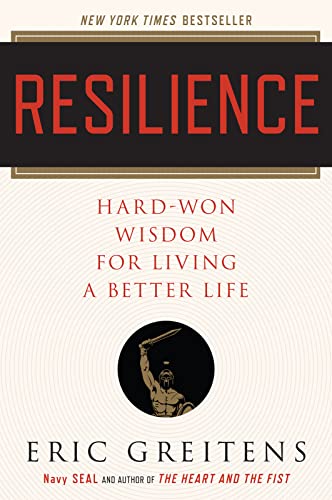
Inhaltsangabe
New York Times bestseller
Author of The Heart and the Fist
“Eric Greitens provides a brilliant and brave course of action to help navigate life’s roughest waters.” —Admiral Mike Mullen, seventeenth chairman of the Joint Chiefs of Staff
In 2012, Eric Greitens unexpectedly heard from a former SEAL comrade, a brother-in-arms he hadn’t seen in a decade. Zach Walker had been one of the toughest of the tough. But ever since he returned home from war to his young family in a small logging town, he’d been struggling. Without a sense of purpose, plagued by PTSD, and masking his pain with heavy drinking, he needed help. Zach and Eric started writing and talking nearly every day, as Eric set down his thoughts on what it takes to build resilience in our lives.
Eric’s letters—drawing on both his own experience and wisdom from ancient and modern thinkers—are now gathered and edited into this timeless guidebook. Greitens shows how we can build purpose, confront pain, practice compassion, develop a vocation, find a mentor, create happiness, and much more. Resilience is an inspiring meditation for the warrior in each of us.
“This book is a gift not only to Greitens’s comrades-in-arms, but to readers everywhere.” — Publishers Weekly, starred review
Die Inhaltsangabe kann sich auf eine andere Ausgabe dieses Titels beziehen.
Über die Autorin bzw. den Autor
ERIC GREITENS was born and raised in Missouri. After earning a Ph.D. as a Rhodes Scholar and serving as a humanitarian volunteer overseas, Eric joined the Navy SEALs and later became the 56th governor of Missouri. A boxing champion and a decorated combat veteran, he is the founder of the nonprofit The Mission Continues and the author of the New York Times bestseller The Heart and the Fist.,
Von der hinteren Coverseite
“Eric Greitens provides a brilliant and brave course of action to help navigate life’s roughest waters.” — Admiral Mike Mullen, seventeenth chairman of the Joint Chiefs of Staff
In 2012, Eric Greitens unexpectedly heard from a former SEAL comrade, a brother-in-arms he hadn’t seen in a decade. Zach Walker had been one of the toughest of the tough. But ever since he returned home from war to his young family in a small logging town, he’d been struggling. Without a sense of purpose, plagued by PTSD, and masking his pain with heavy drinking, he needed help. Zach and Eric started writing and talking nearly every day, as Eric set down his thoughts on what it takes to build resilience in our lives.
Eric’s letters—drawing on both his own experience and wisdom from ancient and modern thinkers—are now gathered and edited into this timeless guidebook. Greitens shows how we can build purpose, confront pain, practice compassion, develop a vocation, find a mentor, create happiness, and much more. Resilience is an inspiring meditation for the warrior in each of us.
“This book is a gift not only to Greitens’s comrades-in-arms, but to readers everywhere.” — Publishers Weekly, starred review
ERIC GREITENS was born and raised in Missouri. A Navy SEAL, Rhodes Scholar, boxing champion, and humanitarian leader, Greitens earned his Ph.D. from Oxford. He is the founder of The Mission Continues, and Fortune named him one of the fifty greatest leaders in the world.
In 2012, Eric Greitens unexpectedly heard from a former SEAL comrade, a brother-in-arms he hadn’t seen in a decade. Zach Walker had been one of the toughest of the tough. But ever since he returned home from war to his young family in a small logging town, he’d been struggling. Without a sense of purpose, plagued by PTSD, and masking his pain with heavy drinking, he needed help. Zach and Eric started writing and talking nearly every day, as Eric set down his thoughts on what it takes to build resilience in our lives.
Eric’s letters—drawing on both his own experience and wisdom from ancient and modern thinkers—are now gathered and edited into this timeless guidebook. Greitens shows how we can build purpose, confront pain, practice compassion, develop a vocation, find a mentor, create happiness, and much more. Resilience is an inspiring meditation for the warrior in each of us.
“This book is a gift not only to Greitens’s comrades-in-arms, but to readers everywhere.” — Publishers Weekly, starred review
ERIC GREITENS was born and raised in Missouri. A Navy SEAL, Rhodes Scholar, boxing champion, and humanitarian leader, Greitens earned his Ph.D. from Oxford. He is the founder of The Mission Continues, and Fortune named him one of the fifty greatest leaders in the world.
Auszug. © Genehmigter Nachdruck. Alle Rechte vorbehalten.
LETTER 1
Your Frontline
Walker,
You told me you cleared your house last week. You got up around 0300, grabbed a pistol, and went from room to room, closet to closet, crevice to crevice, checking . . . for what, you weren’t sure.
Nobody was in the house, of course.
You’ve been doing that a couple of times a month. You’ve been waking up in puddles of sweat. It would be tempting—very tempting—to imagine that you’re just having bad dreams. It would be even more tempting to slap a medical diagnosis on what’s going on and to let some doctor pump you full of pills.
But you are my friend, and it’s not some nightmare memory of war that’s really the problem, and you know it.
The problems at night may have a little to do with the past, but they have a lot more to do with what you are choosing to do in the present.
You’re home now, and for the first time in your life, you don’t know what you’re aiming at. You tried the concrete business. It went well for a while and then blew up.
Before, you’d been a Navy SEAL. You were one of the world’s elite commandos. You rolled out of bed every day with a sense of purpose, a meaningful mission in front of you, and a team around you. You could walk with your head held high. Now you’ve been diagnosed with a disorder, you’re unemployed, you’re surrounded by friends like the marine who is talking about “painting the ceiling with his brains,” and all the while you’re passing the weekends with your cooler full of beer. You didn’t call me until you’d been arrested, and now you’re looking at the prospect of having your kids come visit you in jail.
So what do you do?
As a Navy SEAL, you understood the word “frontline” to mean the place where you met the enemy.
The frontline was where battles were fought and fates decided. The frontline was a place of fear, struggle, and suffering. It was also a place where victories were won, where friendships of a lifetime were forged in hardship. It was a place where we lived with a sense of purpose.
But “frontline” isn’t just a military term. You have a frontline in your life now. In fact, everyone has a place where they encounter fear, where they struggle, suffer, and face hardship. We all have battles to fight.
And it’s often in those battles that we are most alive: it’s on the frontlines of our lives that we earn wisdom, create joy, forge friendships, discover happiness, find love, and do purposeful work. If you want to win any meaningful kind of victory, you’ll have to fight for it.
We did a lot of hard stuff together. We also had a lot of fun. This’ll be the same. You have a lot more to do than read a letter: you have to raise two children (with a third on the way), find direction in your life, support your family. You have some day-after-day, hard-sweating work in front of you. My hope is that if I put some of these thoughts on paper, they’ll help you on this new frontline.
And before we start, I want you to know that you are one of the best people I’ve ever known. I’m not telling you that to blow smoke or to puff you up if you’re reading this late at night and are feeling down. I’m telling you because I love you, and if somebody has a better heart or a deeper devotion to friends and family than you, I haven’t met him. You inspired me when we were in training, and you’ve motivated me to write down these thoughts. Your wife is lucky to have you as a husband, your kids are lucky to have you as a father, and I am lucky to have you as a friend.
I’m disappointed that you aren’t living as fully as you can. I’m disappointed that all of your gifts—your tough energy, your street-smart, solid intelligence, your kind heart, your vision, your belief in the power of other people—have been lying fallow for too long. The world is a poorer place because you aren’t fully in it.
The world needs what you have to offer. But because you’ve been wrestling with these demons and have been churned and turned and knocked around by your own pain—by the resistance that you’ve put in your own path—we’re all weaker for it. And that, my friend, is bull. You’re capable of more than you’re living right now.
I’m hoping that as we knock these letters back and forth, they’ll help you turn the pain you experience into the strength, wisdom, and joy you deserve.
It’s all about resilience.
Resilience is the virtue that enables people to move through hardship and become better. No one escapes pain, fear, and suffering. Yet from pain can come wisdom, from fear can come courage, from suffering can come strength—if we have the virtue of resilience.
People have known this for thousands of years. But today a lot of this ancient wisdom goes unheeded.
In my work with other veterans who have overcome injuries and loss—the loss of limbs, the loss of comrades, the loss of purpose—I have heard one thing over and over again: their moments of darkness often led, in time, to their days of greatest growth.
You can be tough on civilians, on people who “don’t understand” what you’ve been through. But the battlefield isn’t the only place where people suffer. Hardship hits in a million places. And there are a lot of people, including your neighbors, who have suffered more than any soldier, and they’ve done so with none of your training, with no unit around them, with no hospital to care for them, and sometimes with no community to support them.
And when those people reflect on their suffering, they often uncover a similar truth: that struggle helped them to build deep reservoirs of strength.
Not all growth happens this way. But a great deal of it does come when we put our shoulder into what’s painful. We choose to, or have to, step beyond the margins of our past experience and do something hard and new.
Of course fear does not automatically lead to courage. Injury does not necessarily lead to insight. Hardship will not automatically make us better.
Pain can break us or make us wiser. Suffering can destroy us or make us stronger. Fear can cripple us, or it can make us more courageous.
It is resilience that makes the difference.
When people try to help other people, they often promise that they have “new secrets” based on some revolutionary trick or the “latest scientific research.” It’s true that current science has confirmed centuries-old insights into resilience. But I don’t have any such promises. In fact, the only thing I can promise you is that these letters will be imperfect.
Some of what I’ll share with you are old insights, often from people who lived in another time altogether. I’ll also share a few stories from my own battles and from the great teachers and role models I met along the way. The insights are often old because resilience is a virtue as old as human existence. Since the beginning of recorded history, people have recognized it as essential to human flourishing. For at least three thousand years, people have been thinking and learning about how we become resilient—how we make ourselves, our children, our families, our units, and our communities stronger and wiser as we move through pain and hardship.
A lot of this, then, will strike you as common sense. But that’s the nature of common sense: it’s built from ideas that have stood time’s test. These...
Your Frontline
Walker,
You told me you cleared your house last week. You got up around 0300, grabbed a pistol, and went from room to room, closet to closet, crevice to crevice, checking . . . for what, you weren’t sure.
Nobody was in the house, of course.
You’ve been doing that a couple of times a month. You’ve been waking up in puddles of sweat. It would be tempting—very tempting—to imagine that you’re just having bad dreams. It would be even more tempting to slap a medical diagnosis on what’s going on and to let some doctor pump you full of pills.
But you are my friend, and it’s not some nightmare memory of war that’s really the problem, and you know it.
The problems at night may have a little to do with the past, but they have a lot more to do with what you are choosing to do in the present.
You’re home now, and for the first time in your life, you don’t know what you’re aiming at. You tried the concrete business. It went well for a while and then blew up.
Before, you’d been a Navy SEAL. You were one of the world’s elite commandos. You rolled out of bed every day with a sense of purpose, a meaningful mission in front of you, and a team around you. You could walk with your head held high. Now you’ve been diagnosed with a disorder, you’re unemployed, you’re surrounded by friends like the marine who is talking about “painting the ceiling with his brains,” and all the while you’re passing the weekends with your cooler full of beer. You didn’t call me until you’d been arrested, and now you’re looking at the prospect of having your kids come visit you in jail.
So what do you do?
As a Navy SEAL, you understood the word “frontline” to mean the place where you met the enemy.
The frontline was where battles were fought and fates decided. The frontline was a place of fear, struggle, and suffering. It was also a place where victories were won, where friendships of a lifetime were forged in hardship. It was a place where we lived with a sense of purpose.
But “frontline” isn’t just a military term. You have a frontline in your life now. In fact, everyone has a place where they encounter fear, where they struggle, suffer, and face hardship. We all have battles to fight.
And it’s often in those battles that we are most alive: it’s on the frontlines of our lives that we earn wisdom, create joy, forge friendships, discover happiness, find love, and do purposeful work. If you want to win any meaningful kind of victory, you’ll have to fight for it.
We did a lot of hard stuff together. We also had a lot of fun. This’ll be the same. You have a lot more to do than read a letter: you have to raise two children (with a third on the way), find direction in your life, support your family. You have some day-after-day, hard-sweating work in front of you. My hope is that if I put some of these thoughts on paper, they’ll help you on this new frontline.
And before we start, I want you to know that you are one of the best people I’ve ever known. I’m not telling you that to blow smoke or to puff you up if you’re reading this late at night and are feeling down. I’m telling you because I love you, and if somebody has a better heart or a deeper devotion to friends and family than you, I haven’t met him. You inspired me when we were in training, and you’ve motivated me to write down these thoughts. Your wife is lucky to have you as a husband, your kids are lucky to have you as a father, and I am lucky to have you as a friend.
I’m disappointed that you aren’t living as fully as you can. I’m disappointed that all of your gifts—your tough energy, your street-smart, solid intelligence, your kind heart, your vision, your belief in the power of other people—have been lying fallow for too long. The world is a poorer place because you aren’t fully in it.
The world needs what you have to offer. But because you’ve been wrestling with these demons and have been churned and turned and knocked around by your own pain—by the resistance that you’ve put in your own path—we’re all weaker for it. And that, my friend, is bull. You’re capable of more than you’re living right now.
I’m hoping that as we knock these letters back and forth, they’ll help you turn the pain you experience into the strength, wisdom, and joy you deserve.
It’s all about resilience.
Resilience is the virtue that enables people to move through hardship and become better. No one escapes pain, fear, and suffering. Yet from pain can come wisdom, from fear can come courage, from suffering can come strength—if we have the virtue of resilience.
People have known this for thousands of years. But today a lot of this ancient wisdom goes unheeded.
In my work with other veterans who have overcome injuries and loss—the loss of limbs, the loss of comrades, the loss of purpose—I have heard one thing over and over again: their moments of darkness often led, in time, to their days of greatest growth.
You can be tough on civilians, on people who “don’t understand” what you’ve been through. But the battlefield isn’t the only place where people suffer. Hardship hits in a million places. And there are a lot of people, including your neighbors, who have suffered more than any soldier, and they’ve done so with none of your training, with no unit around them, with no hospital to care for them, and sometimes with no community to support them.
And when those people reflect on their suffering, they often uncover a similar truth: that struggle helped them to build deep reservoirs of strength.
Not all growth happens this way. But a great deal of it does come when we put our shoulder into what’s painful. We choose to, or have to, step beyond the margins of our past experience and do something hard and new.
Of course fear does not automatically lead to courage. Injury does not necessarily lead to insight. Hardship will not automatically make us better.
Pain can break us or make us wiser. Suffering can destroy us or make us stronger. Fear can cripple us, or it can make us more courageous.
It is resilience that makes the difference.
When people try to help other people, they often promise that they have “new secrets” based on some revolutionary trick or the “latest scientific research.” It’s true that current science has confirmed centuries-old insights into resilience. But I don’t have any such promises. In fact, the only thing I can promise you is that these letters will be imperfect.
Some of what I’ll share with you are old insights, often from people who lived in another time altogether. I’ll also share a few stories from my own battles and from the great teachers and role models I met along the way. The insights are often old because resilience is a virtue as old as human existence. Since the beginning of recorded history, people have recognized it as essential to human flourishing. For at least three thousand years, people have been thinking and learning about how we become resilient—how we make ourselves, our children, our families, our units, and our communities stronger and wiser as we move through pain and hardship.
A lot of this, then, will strike you as common sense. But that’s the nature of common sense: it’s built from ideas that have stood time’s test. These...
„Über diesen Titel“ kann sich auf eine andere Ausgabe dieses Titels beziehen.
Suchergebnisse für Resilience: Hard-Won Wisdom for Living a Better Life

Beispielbild für diese ISBN
Resilience: Hard-Won Wisdom for Living a Better Life
Anbieter: World of Books (was SecondSale), Montgomery, IL, USA
Verkäuferbewertung 5 von 5 Sternen

Zustand: Acceptable. Item in good condition. Textbooks may not include supplemental items i.e. CDs, access codes etc. Artikel-Nr. 00064077490
Gebraucht kaufen
EUR 3,92
Versand gratis
Versand innerhalb von USA
Versand innerhalb von USA
Anzahl: 1 verfügbar
Beispielbild für diese ISBN
Resilience: Hard-Won Wisdom for Living a Better Life
Anbieter: World of Books (was SecondSale), Montgomery, IL, USA
Verkäuferbewertung 5 von 5 Sternen
Zustand: Good. Item in good condition. Textbooks may not include supplemental items i.e. CDs, access codes etc. Artikel-Nr. 00093461826
Gebraucht kaufen
EUR 3,92
Versand gratis
Versand innerhalb von USA
Versand innerhalb von USA
Anzahl: 16 verfügbar
Beispielbild für diese ISBN
Resilience: Hard-Won Wisdom for Living a Better Life
Anbieter: World of Books (was SecondSale), Montgomery, IL, USA
Verkäuferbewertung 5 von 5 Sternen
Zustand: Very Good. Item in very good condition! Textbooks may not include supplemental items i.e. CDs, access codes etc. Artikel-Nr. 00101845393
Gebraucht kaufen
EUR 3,92
Versand gratis
Versand innerhalb von USA
Versand innerhalb von USA
Anzahl: 5 verfügbar
Beispielbild für diese ISBN
Resilience: Hard-Won Wisdom for Living a Better Life
Anbieter: ThriftBooks-Phoenix, Phoenix, AZ, USA
Verkäuferbewertung 5 von 5 Sternen
Paperback. Zustand: Very Good. No Jacket. May have limited writing in cover pages. Pages are unmarked. ~ ThriftBooks: Read More, Spend Less. Artikel-Nr. G0544705262I4N00
Gebraucht kaufen
EUR 5,91
Versand gratis
Versand innerhalb von USA
Versand innerhalb von USA
Anzahl: 1 verfügbar
Beispielbild für diese ISBN
Resilience: Hard-Won Wisdom for Living a Better Life
Anbieter: ThriftBooks-Reno, Reno, NV, USA
Verkäuferbewertung 5 von 5 Sternen
Paperback. Zustand: Very Good. No Jacket. May have limited writing in cover pages. Pages are unmarked. ~ ThriftBooks: Read More, Spend Less. Artikel-Nr. G0544705262I4N00
Gebraucht kaufen
EUR 5,91
Versand gratis
Versand innerhalb von USA
Versand innerhalb von USA
Anzahl: 1 verfügbar
Beispielbild für diese ISBN
Resilience: Hard-Won Wisdom for Living a Better Life
Anbieter: ThriftBooks-Dallas, Dallas, TX, USA
Verkäuferbewertung 5 von 5 Sternen
Paperback. Zustand: Very Good. No Jacket. Missing dust jacket; May have limited writing in cover pages. Pages are unmarked. ~ ThriftBooks: Read More, Spend Less. Artikel-Nr. G0544705262I4N01
Gebraucht kaufen
EUR 5,92
Versand gratis
Versand innerhalb von USA
Versand innerhalb von USA
Anzahl: 1 verfügbar
Beispielbild für diese ISBN
Resilience: Hard-Won Wisdom for Living a Better Life
Anbieter: ThriftBooks-Dallas, Dallas, TX, USA
Verkäuferbewertung 5 von 5 Sternen
Paperback. Zustand: Very Good. No Jacket. May have limited writing in cover pages. Pages are unmarked. ~ ThriftBooks: Read More, Spend Less. Artikel-Nr. G0544705262I4N00
Gebraucht kaufen
EUR 5,96
Versand gratis
Versand innerhalb von USA
Versand innerhalb von USA
Anzahl: 2 verfügbar
Beispielbild für diese ISBN
Resilience: Hard-Won Wisdom for Living a Better Life
Anbieter: ThriftBooks-Atlanta, AUSTELL, GA, USA
Verkäuferbewertung 5 von 5 Sternen
Paperback. Zustand: Very Good. No Jacket. May have limited writing in cover pages. Pages are unmarked. ~ ThriftBooks: Read More, Spend Less. Artikel-Nr. G0544705262I4N00
Gebraucht kaufen
EUR 5,96
Versand gratis
Versand innerhalb von USA
Versand innerhalb von USA
Anzahl: 1 verfügbar
Beispielbild für diese ISBN
Resilience : Hard-Won Wisdom for Living a Better Life
Verlag:
HarperCollins Publishers, 2016
ISBN 10: 0544705262
ISBN 13: 9780544705265
Gebraucht
Softcover
Anbieter: Better World Books: West, Reno, NV, USA
Verkäuferbewertung 5 von 5 Sternen
Zustand: Good. Pages intact with minimal writing/highlighting. The binding may be loose and creased. Dust jackets/supplements are not included. Stock photo provided. Product includes identifying sticker. Better World Books: Buy Books. Do Good. Artikel-Nr. 10262137-6
Gebraucht kaufen
EUR 5,98
Versand gratis
Versand innerhalb von USA
Versand innerhalb von USA
Anzahl: 3 verfügbar
Beispielbild für diese ISBN
Resilience : Hard-Won Wisdom for Living a Better Life
Verlag:
HarperCollins Publishers, 2016
ISBN 10: 0544705262
ISBN 13: 9780544705265
Gebraucht
Softcover
Anbieter: Better World Books, Mishawaka, IN, USA
Verkäuferbewertung 5 von 5 Sternen
Zustand: Good. Pages intact with minimal writing/highlighting. The binding may be loose and creased. Dust jackets/supplements are not included. Stock photo provided. Product includes identifying sticker. Better World Books: Buy Books. Do Good. Artikel-Nr. 10262137-6
Gebraucht kaufen
EUR 5,98
Versand gratis
Versand innerhalb von USA
Versand innerhalb von USA
Anzahl: 4 verfügbar