
Verwandte Artikel zu Innocence: A Novel: A Literary Comedy of Errors About...
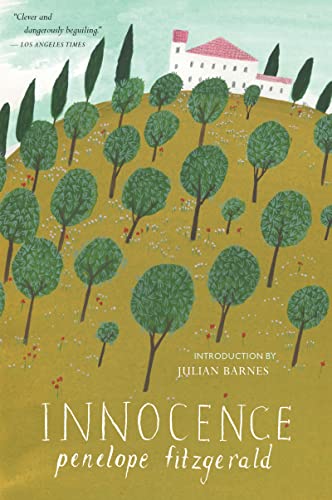
Innocence: A Novel: A Literary Comedy of Errors About Guileless Lovers and Impossible Romance in Post-War Florence - Softcover
Inhaltsangabe
“A delectable comedy of manners.” —Boston Globe
The Ridolfi are a Florentine family of long lineage and little money. It is 1955, Italy is still struggling back after the war, and the family, like its decrepit villa and farm, has seen better days. Among the Ridolfi, only eighteen-year-old Chiara shows anything like vitality. But it’s a vitality matched by innocence—a dangerous combination, to herself and to all who love her.
Chiara sets her heart on the bull-headed Salvatore, a brilliant young doctor from the south who resolved long ago to be emotionally dependent on no one. Stymied, she calls on her resourceful English girlfriend, Barney, to help her make the impossible match. And so ensues a comedy of errors, in which guileless lovers, with the best of intentions, considerable charm, and the kindest of instincts, succeed in making one another thoroughly and astonishingly miserable.
“An exquisite mosaic, where every tiny piece is part of a world.” —A. S. Byatt, Threepenny Review
Die Inhaltsangabe kann sich auf eine andere Ausgabe dieses Titels beziehen.
Über die Autorin bzw. den Autor
PENELOPE FITZGERALD wrote many books small in size but enormous in popular and critical acclaim over the past two decades. Over 300,000 copies of her novels are in print, and profiles of her life appeared in both The New Yorker and The New York Times Magazine. In 1979, her novel Offshore won Britain's Booker Prize, and in 1998 she won the National Book Critics Circle Prize for The Blue Flower. Though Fitzgerald embarked on her literary career when she was in her 60's, her career was praised as "the best argument ... for a publishing debut made late in life" (New York Times Book Review). She told the New York Times Magazine, "In all that time, I could have written books and I didn’t. I think you can write at any time of your life." Dinitia Smith, in her New York Times Obituary of May 3, 2000, quoted Penelope Fitzgerald from 1998 as saying, "I have remained true to my deepest convictions, I mean to the courage of those who are born to be defeated, the weaknesses of the strong, and the tragedy of misunderstandings and missed opportunities, which I have done my best to treat as comedy, for otherwise how can we manage to bear it?"
Von der hinteren Coverseite
“A delectable comedy of manners.” —Boston Globe
The Ridolfi are a Florentine family of long lineage and little money. It is 1955, Italy is still struggling back after the war, and the family, like its decrepit villa and farm, has seen better days. Among the Ridolfi, only eighteen-year-old Chiara shows anything like vitality. But it’s a vitality matched by innocence—a dangerous combination, to herself and to all who love her.
Chiara sets her heart on the bull-headed Salvatore, a brilliant young doctor from the south who resolved long ago to be emotionally dependent on no one. Stymied, she calls on her resourceful English girlfriend, Barney, to help her make the impossible match. And so ensues a comedy of errors, in which guileless lovers, with the best of intentions, considerable charm, and the kindest of instincts, succeed in making one another thoroughly and astonishingly miserable.
“An exquisite mosaic, where every tiny piece is part of a world.” —A. S. Byatt, Threepenny Review
PENELOPE FITZGERALD (1916–2000) was one of the most elegant and distinctive voices in British fiction. She won the National Book Critics Circle Award in fiction for The Blue Flower, the Booker Prize for Offshore, and three of her novels—The Bookshop, The Gate of Angels, and The Beginning of Spring—were short-listed for the Booker Prize.
Auszug. © Genehmigter Nachdruck. Alle Rechte vorbehalten.
Innocence
By Penelope FitzgeraldHoughton Mifflin Harcourt Publishing Company
Copyright © 1986 Penelope Fitzgerald
All rights reserved.
ISBN: 978-0-544-35946-8All rights reserved.
CHAPTER 1
Anyone can tell when they are passing the Ridolfi villa, the Ricordanza, because of the stone statues of what are known as 'the Dwarfs' on the highest part of the surrounding walls. You see them best from the right hand side of the road, driving towards Val di Pesa. Strictly speaking they are not dwarfs, but midgets, that's to say they represent adults of less than 1.3 metres, pathologically small, but quite in proportion.
Because the villa's grounds slope sharply away to the southwest nothing, from the road, can be seen beyond them. You just see the coping and the gestures of the midgets, poised against the airy blue wash of the sky. Some of these gestures are welcoming, as though signalling to the passer-by to come in, some suggest quite the contrary. You can buy coloured postcards of the villa, but the statues don't look quite the same as they do in old engravings, or even in the older postcards. Perhaps some of them have been replaced.
The owner of La Ricordanza, in 1568, was a member of the Ridolfi family, certainly, but a midget, married to a midget, and with a daughter, born to them after many disappointments, who was also a midget. They seem to have been by no means the only family in this predicament, or something like it, at the time. There were, for example, the Valmarana at Monte Berico, just outside Verona. Here the daughter of the house was a dwarf, and in order that she should never know that she was different from the rest of the world, only dwarfs were allowed into the Villa Valmarana as her playmates and attendants. At the Ricordanza, however, Count Ridolfi consulted a medical man of scholarly reputation, Paolo della Torre, who practised at Torre da Santacroce. Paolo advised him in a letter that it was all very well for the Valmarana, who had an abundance of dwarfs in both the villages beneath their walls. Travellers through those parts used to make a detour to see these dwarfs, and if none appeared the carriage-driver would offer to get down from his seat and root them out of their dwellings to be looked at. It was not realized at the time that the inhabitants of Monte Berico suffered from a lung disease and the low concentration of oxygen in their blood produced a high incidence of dwarfism.
'Such people would not be suitable to serve your worship,' Paolo went on. 'I would advise you not to lament the scarcity of them at the Ricordanza. In respect to stock, or race, we must remember that, in Macchiavelli's words, Nature has implanted in everything a hidden energy which gives its own resemblance to everything that springs from it, making it like itself. We can see the truth of this in the lemon tree, whose smallest twig, even if the tree is unfortunate enough to be barren, still has the fragrance which is the soul of the lemon.' This letter was relevant, and it was civilized, but it was not helpful. With great difficulty and many enquiries the Ridolfi followed up reported instances of midget families, so that by the time she was six their only child had a retinue suitable to her position, a tiny governess, a tiny doctor, a tiny notary, and so forth, all to size. The child never went out, and was confident that the world consisted of people less than 1.3 metres high. To amuse her, a dwarf (not a midget) was sent for from Valmarana, but without success. She pitied him, because she thought how much he must suffer from knowing that, as a dwarf, he was different from anyone else at Ricordanza. Then, in trying harder and harder to make her laugh, he fell and cracked his head, which made the little girl cry so bitterly that he had to be sent away.
The Ridolfi suffered from having to practise so many deceptions on their daughter. But deception, to a quite unexpected extent, grows easier with habit. The whole property had, of course, been extensively adapted, although only one of the special stairways through the gardens remains today, with its miniature steps of grass and marble. As to the statues, none of them were made by local sculptors, though so many stone-quarries were handy. The commission was given to someone completely unknown, thought by some authorities to have been a Turkish prisoner of war.
At the same time Count Ridolfi heard of a little midget girl, illegitimate but of good family, who lived as far away as Terracina, and they arranged for her to come and live with them. Fortunately she was born dumb, or, at all events, when she arrived at the Ricordanza she was dumb. It was impossible, therefore, for her to describe the human beings she had seen while she lived outside the walls of the villa.
All the care and attention of the little Ridolfi were now for Gemma da Terracina. Having failed to teach this new and beloved friend to talk, which was something even the cage birds could do, she asked to give up studying Latin and Greek herself, or, at least, never to have them read aloud. Music was an even more serious matter. The Ridolfi had a private organist, and nobody who has ever seen it will ever forget the toy-like instrument in the salotto, whose sounds are still as clear as a bird's. It must have been a sacrifice to silence this organ, and probably quite a needless one, since there was no proof that Gemma was deaf.
But less than twelve months later Gemma began to grow at a very noticeable rate, as though her body had set itself to make up for its eight stunted years. By the next spring she was a head taller than the family doctor, who lived with the chaplain and the notary in a suite of rooms built for them over the chapel. The doctor, consulted, had very little to suggest. He tried administering oil of juniper to stunt the growth, and then, when this failed, a remedy of Pliny's, who says that Greek tradesmen used to rub a hyacinth bulb over young slaves to prevent the growth of pubic hair. The Ridolfi began to fear that their doctor was a fool. In anguish, they searched on all sides for better advice. Della Torre was, once again, of little comfort. Another letter of his, now in the Biblioteca Nazionale, points out the folly, in the last resort, of attempting to reverse Nature. 'Don't be so concerned,' he adds, 'with the matter of happiness.' There is also an exchange between Ridolfi and his brother, the Cardinal Archbishop of Florence, who says nothing about Nature, but warns that human happiness must be left to Heaven. 'Certainly,' the Count replies, 'as far as I myself am concerned, but surely I am right to exert myself on other people's account, what better study could there be?' And his daughter was not in the least concerned about herself, only about her friend. She knew, after all, that if Gemma were ever to have to go back to the outside world, where no-one was more than 1.3 metres in height, she would be treated as a monster — dumb, into the bargain, and unable to explain herself. The whole situation was cruelly embarrassing already. And the little girl took to walking a few steps ahead of Gemma, so that their shadows would be seen to be the same length.
The Count reflected that neither Nature nor Heaven has allowed for anyone, certainly not for any child, with such a compassionate heart as this only daughter of his. Impossible and unthinkable to separate her now from Gemma, and he was driven to promise her that if she could think of any way to help Gemma in her desperate condition they would try it, no matter what the cost.
She was now about eight years old, the age at which the mind works logically and without hesitation on what it has learned so far, because it is...
„Über diesen Titel“ kann sich auf eine andere Ausgabe dieses Titels beziehen.
Suchergebnisse für Innocence: A Novel: A Literary Comedy of Errors About...

Beispielbild für diese ISBN
Innocence
Anbieter: World of Books (was SecondSale), Montgomery, IL, USA
Verkäuferbewertung 5 von 5 Sternen

Paperback. Zustand: Good. "A delectable comedy of manners." --Boston Globe The Ridolfi are a Florentine family of long lineage and little money. It is 1955, Italy is still struggling back after the war, and the family, like its decrepit villa and farm, has seen better days. Among the Ridolfi, only eighteen-year-old Chiara shows anything like vitality. But it's a vitality matched by innocence--a dangerous combination, to herself and to all who love her. Chiara sets her heart on the bull-headed Salvatore, a brilliant young doctor from the south who resolved long ago to be emotionally dependent on no one. Stymied, she calls on her resourceful English girlfriend, Barney, to help her make the impossible match. And so ensues a comedy of errors, in which guileless lovers, with the best of intentions, considerable charm, and the kindest of instincts, succeed in making one another thoroughly and astonishingly miserable. "An exquisite mosaic, where every tiny piece is part of a world." --A. S. Byatt, Threepenny Review. Artikel-Nr. 00105909188
Gebraucht kaufen
EUR 4,59
Versand gratis
Versand innerhalb von USA
Versand innerhalb von USA
Anzahl: 2 verfügbar
Beispielbild für diese ISBN
Innocence: A Novel
Verlag:
Mariner Books (edition Reprint), 2014
ISBN 10: 0544359461
ISBN 13: 9780544359468
Gebraucht
Paperback
Anbieter: BooksRun, Philadelphia, PA, USA
Verkäuferbewertung 5 von 5 Sternen
Paperback. Zustand: Very Good. Reprint. It's a well-cared-for item that has seen limited use. The item may show minor signs of wear. All the text is legible, with all pages included. It may have slight markings and/or highlighting. Artikel-Nr. 0544359461-11-1
Gebraucht kaufen
EUR 4,60
Versand gratis
Versand innerhalb von USA
Versand innerhalb von USA
Anzahl: 1 verfügbar
Beispielbild für diese ISBN
Innocence
Anbieter: ThriftBooks-Atlanta, AUSTELL, GA, USA
Verkäuferbewertung 5 von 5 Sternen
Paperback. Zustand: Good. No Jacket. Pages can have notes/highlighting. Spine may show signs of wear. ~ ThriftBooks: Read More, Spend Less. Artikel-Nr. G0544359461I3N00
Gebraucht kaufen
EUR 6,20
Versand gratis
Versand innerhalb von USA
Versand innerhalb von USA
Anzahl: 1 verfügbar
Beispielbild für diese ISBN
Innocence
Anbieter: ThriftBooks-Dallas, Dallas, TX, USA
Verkäuferbewertung 5 von 5 Sternen
Paperback. Zustand: Good. No Jacket. Former library book; Pages can have notes/highlighting. Spine may show signs of wear. ~ ThriftBooks: Read More, Spend Less. Artikel-Nr. G0544359461I3N10
Gebraucht kaufen
EUR 6,24
Versand gratis
Versand innerhalb von USA
Versand innerhalb von USA
Anzahl: 1 verfügbar
Beispielbild für diese ISBN
Innocence
Anbieter: Revaluation Books, Exeter, Vereinigtes Königreich
Verkäuferbewertung 5 von 5 Sternen
Paperback. Zustand: Brand New. reprint edition. 340 pages. 7.75x5.25x1.25 inches. In Stock. Artikel-Nr. x-0544359461
Neu kaufen
EUR 21,30
EUR 11,93 Versand
Versand von Vereinigtes Königreich nach USA
Versand von Vereinigtes Königreich nach USA
Anzahl: 2 verfügbar