
Verwandte Artikel zu The Plateau Effect: Getting from Stuck to Success
Inhaltsangabe
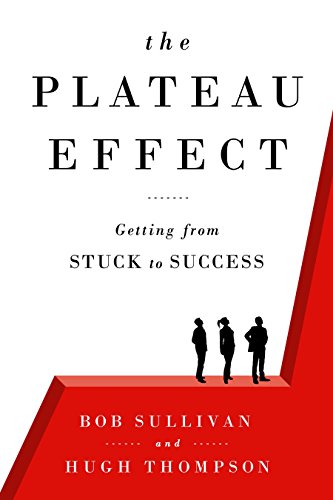
The Plateau Effect is a powerful law of nature that affects everyone. Learn to identify plateaus and break through any stagnancy in your life— from diet and exercise, to work, to relationships.
The Plateau Effect shows how athletes, scientists, therapists, companies, and musicians around the world are learning to break through their plateaus—to turn off the forces that cause people to “get used to” things—and turn on human potential and happiness in ways that seemed impossible. The book identifies three key flattening forces that generate plateaus, two principles to guide readers in engineering a plateau’s destruction, and three actions to take to achieve peak behavior. It helps us to stop wasting time on things that are no longer of value and to focus on the things that leverage our time and energy in spectacular ways.
Anything you want to do better—play guitar, make friends, communicate with your children, run a business—you can accomplish faster by understanding the plateau effect.
Die Inhaltsangabe kann sich auf eine andere Ausgabe dieses Titels beziehen.
Über die Autorin bzw. den Autor
BOB SULLIVAN and HUGH THOMPSON are entrepreneurial analysts with 40 years of experience between them researching, writing, and analyzing systems and human nature. Bob is an investigative journalist for NBC News and MSNBC.com and the bestselling author of Gotcha Capitalism and Stop Getting Ripped Off. Hugh is a mathematics and computer science professor and speaker who teaches executives how to protect themselves from 21st Century hazards.
Auszug. © Genehmigter Nachdruck. Alle Rechte vorbehalten.
The Beginning
Give us three minutes, your imagination, and your nose, and we bet we’ll convince you that The Plateau Effect is the most powerful force of nature you’ve never heard about.
Let us take you to the Paris of the West, to a block in San Francisco where the unmistakable aroma – stench? – of garlic suddenly overpowers every other gritty smell on Columbus Avenue. About half a mile from the famous triangular Transamerica building in San Francisco, there’s a restaurant that you can’t help but notice. The unusual name, “The Stinking Rose” might persuade you to take a look inside, but that’s not what really grabs your attention. No, it’s that smell wafting out the front door onto the sidewalk, swirling around all the passers-by.
The Stinking Rose is a sort of homage to garlic, and has every garlic dish you could possibly imagine. These range from the traditional, such as garlic spaghetti, to the exceptional, like garlic ice cream. The restaurant serves over 3,000 pounds of garlic a month, as you walk inside, you can smell every clove of it.
But once you are seated at your table, something remarkable starts to happen. With stunning speed, the scent of garlic fades and the other smells of San Francisco return. Your wife’s perfume, or the grapy wine, or the bleached tablecloth, curiously re-emerge, and their aroma seems to overpower the garlic.
Of course, that’s not at all what’s happened. Your nose has simply gotten tired of the garlic scent and stops telling your brain that it’s there. You might say you’ve grown numb to the garlic, but the word numb hardly does justice the amazing evolutionary trait we’ve just described.
We’ve become so used to this disappearing smell phenomenon that most of us don’t even think about it. It’s why you might need someone else to tell you it’s time to reapply deodorant or suck on a breath mint. It’s why most of us grow queasy at the thought of entering a high school locker room, but the athletes don’t seem to mind. With incredible speed, people become immune to even the most pungent odors.
This immunity is the body’s natural defense against being constantly distracted by stimulus. If our bodies didn’t adapt, our attention would be relentlessly divided by millions of smells – even our own scent -- and unable to notice changes in the environment around us. The effect is called “acclimation.” Without it, stopping to smell the roses would be an act of unending distraction. Acclimation is a critical element of our evolutionary design.
Naturally, acclimation is not limited to smell; it governs all our senses. Acclimation is why people who live in big cities learn to ignore the sound of traffic outside their windows while it drives suburban guests crazy. It’s why we forget that we’re wearing a wedding ring, or glasses, when initially they are so irritating. Acclimation is why we “get used” to things.
Humans are hard-wired to eventually ignore consistency, especially in the form of smell, taste, touch and hearing. At its most base level, this behavior is a survival instinct: the ability to adapt and ignore distracting information is a natural form of self-defense. It allows us to focus on changes and new things that enter the environment that might be a potential threat. This ignoring of persistent stimulus is generally a welcome feature of how the body works. But often, acclimation does more harm than good.
There are times when it would be very helpful to turn off this defense mechanism.
The Plateau Effect will show how athletes, scientists, relationship therapists, companies, and musicians around the world are learning to do just that – to turn off the forces that cause people to “peak out” or “get used to” things -- and turn on human potential and happiness in ways you probably think impossible. The Plateau Effect will show you why the world is full of one-hit-wonders, why all good things come to an end, why all trends eventually fall, why most people get less for more, and how you can break through, again and again. Plateaus are like governors that cap your Uhaul van speed at 50 mph. We will show you how to disable this secret governor and turn on your inner Maserati.
Just give us another few hours or your time.
Understanding why we reach a plateau can help us stop wasting time on things that we’ve stopped getting value from and focus on other things that leverage our time and energy better. The Plateau Effect tells us when to eat, what we should do in the gym, how to build a successful business, and even how to build stronger and broader relationships. Knowing how The Effect influences everything in our lives helps us get maximum value in minimum time and then move on quickly once we’ve reached a goal. It helps us do a good enough job quickly for things that aren’t very important to free up time to concentrate on things that are. Those who master The Effect, who can identify a plateau and break through, leave one-hit wonders in the dust.
* * *
Just try harder. Just work harder. Just do more.
That’s the advice you’ve heard again and again, from teachers, coaches, bosses, and parents. But what if you’re already trying as hard as you can? In fact, try harder is often the worst advice you could possibly give. Have you ever found yourself giving more and more to task you care about – learning to play piano, trying to fix a broken love relationship – and getting less and less return for your effort? Of course you have. That’s how the universe is built. Physics, biology, chemistry, even economics, all dictate this truth – effort follows the law of diminishing returns. Trying harder is a failed, frustrating strategy. Trying harder to smell the garlic after your nose has acclimated to The Stinking Rose won’t reawaken your olfactory nerves. It doesn’t work anywhere else in your life, either.
Bodybuilders and dieters know this well. They begin a new regimen of weightlifting or starvation. For 10 days or so, the results are fantastic, even inspiring. Down 4 pounds, or up another 10 on the military press. But somewhere near that two-week mark, they hit a wall. The scale seems frozen in place. The strength gains top out. They have, cruelly, plateaued.
Plateaus may seem subtle at first, but once you know what to look for, you’ll begin to see them everywhere. In fact, millions of Americans watch them, perhaps unknowingly, during prime time television. Fans of the hit NBC TV show The Biggest Loser witness cruel plateaus every season. Contestants nearly always lose an extraordinary amount of weight in week 1, when their bodies are shocked by the new lifestyle. Then, what insiders call the “Week 2 Plateau,” hits, and the results are downright depressing. We analyzed data from all contestants during the first four seasons of the show. On average, they lost an amazing 5 percent of their body weight during week one. But even under the most scrutinized conditions, with the best possible trainers available, the plateau effect couldn’t be beat. Week two always brings a dramatic lack of progress – and a lot more yelling by trainers. During season two, for example, contestants averaged less than 2 percent weight loss in week two. And during the inaugural season, they dropped a completely discouraging 0.6 percent, or roughly 90 percent less than in week one. Contestants who survive get as their reward the even louder screaming voice of a trainer. The screaming really doesn’t help. It’s just The Plateau Effect in action.
We believe the Plateau Effect is a law of nature, as real and as...
„Über diesen Titel“ kann sich auf eine andere Ausgabe dieses Titels beziehen.
Suchergebnisse für The Plateau Effect: Getting from Stuck to Success

Beispielbild für diese ISBN
The Plateau Effect: Getting from Stuck to Success
Verlag:
Dutton (edition First Edition), 2013
ISBN 10: 0525952802
ISBN 13: 9780525952800
Gebraucht
Hardcover
Erstausgabe
Anbieter: BooksRun, Philadelphia, PA, USA
Verkäuferbewertung 5 von 5 Sternen

Hardcover. Zustand: Very Good. First Edition. With dust jacket. It's a well-cared-for item that has seen limited use. The item may show minor signs of wear. All the text is legible, with all pages included. It may have slight markings and/or highlighting. Artikel-Nr. 0525952802-11-1-29
Gebraucht kaufen
EUR 5,31
Versand gratis
Versand innerhalb von USA
Versand innerhalb von USA
Anzahl: 1 verfügbar
Beispielbild für diese ISBN
The Plateau Effect: Getting from Stuck to Success
Anbieter: World of Books (was SecondSale), Montgomery, IL, USA
Verkäuferbewertung 5 von 5 Sternen
Hardback. Zustand: Very Good. The Plateau Effect is a powerful law of nature that affects everyone. Learn to identify plateaus and break through any stagnancy in your life- from diet and exercise, to work, to relationships. The Plateau Effect shows how athletes, scientists, therapists, companies, and musicians around the world are learning to break through their plateaus-to turn off the forces that cause people to get used to things-and turn on human potential and happiness in ways that seemed impossible. The book identifies three key flattening forces that generate plateaus, two principles to guide listeners in engineering a plateau's destruction, and three actions to take to achieve peak behavior. It helps us to stop wasting time on things that are no longer of value and to focus on the things that leverage our time and energy in spectacular ways. Anything you want to do better-play guitar, make friends, communicate with your children, run a business-you can accomplish faster by understanding the plateau effect. Artikel-Nr. 00106242091
Gebraucht kaufen
EUR 5,39
Versand gratis
Versand innerhalb von USA
Versand innerhalb von USA
Anzahl: 2 verfügbar
Beispielbild für diese ISBN
The Plateau Effect: Getting from Stuck to Success
Anbieter: World of Books (was SecondSale), Montgomery, IL, USA
Verkäuferbewertung 5 von 5 Sternen
Hardback. Zustand: Fair. The Plateau Effect is a powerful law of nature that affects everyone. Learn to identify plateaus and break through any stagnancy in your life- from diet and exercise, to work, to relationships. The Plateau Effect shows how athletes, scientists, therapists, companies, and musicians around the world are learning to break through their plateaus-to turn off the forces that cause people to get used to things-and turn on human potential and happiness in ways that seemed impossible. The book identifies three key flattening forces that generate plateaus, two principles to guide listeners in engineering a plateau's destruction, and three actions to take to achieve peak behavior. It helps us to stop wasting time on things that are no longer of value and to focus on the things that leverage our time and energy in spectacular ways. Anything you want to do better-play guitar, make friends, communicate with your children, run a business-you can accomplish faster by understanding the plateau effect. Artikel-Nr. 00101922023
Gebraucht kaufen
EUR 5,39
Versand gratis
Versand innerhalb von USA
Versand innerhalb von USA
Anzahl: 1 verfügbar
Beispielbild für diese ISBN
The Plateau Effect: Getting from Stuck to Success
Anbieter: World of Books (was SecondSale), Montgomery, IL, USA
Verkäuferbewertung 5 von 5 Sternen
Hardback. Zustand: Good. The Plateau Effect is a powerful law of nature that affects everyone. Learn to identify plateaus and break through any stagnancy in your life- from diet and exercise, to work, to relationships. The Plateau Effect shows how athletes, scientists, therapists, companies, and musicians around the world are learning to break through their plateaus-to turn off the forces that cause people to get used to things-and turn on human potential and happiness in ways that seemed impossible. The book identifies three key flattening forces that generate plateaus, two principles to guide listeners in engineering a plateau's destruction, and three actions to take to achieve peak behavior. It helps us to stop wasting time on things that are no longer of value and to focus on the things that leverage our time and energy in spectacular ways. Anything you want to do better-play guitar, make friends, communicate with your children, run a business-you can accomplish faster by understanding the plateau effect. Artikel-Nr. 00107535854
Gebraucht kaufen
EUR 5,39
Versand gratis
Versand innerhalb von USA
Versand innerhalb von USA
Anzahl: 1 verfügbar
Beispielbild für diese ISBN
The Plateau Effect: Getting from Stuck to Success
Anbieter: ThriftBooks-Atlanta, AUSTELL, GA, USA
Verkäuferbewertung 5 von 5 Sternen
Hardcover. Zustand: As New. No Jacket. Pages are clean and are not marred by notes or folds of any kind. ~ ThriftBooks: Read More, Spend Less. Artikel-Nr. G0525952802I2N00
Gebraucht kaufen
EUR 6,14
Versand gratis
Versand innerhalb von USA
Versand innerhalb von USA
Anzahl: 1 verfügbar
Beispielbild für diese ISBN
The Plateau Effect: Getting from Stuck to Success
Anbieter: ThriftBooks-Atlanta, AUSTELL, GA, USA
Verkäuferbewertung 5 von 5 Sternen
Hardcover. Zustand: Very Good. No Jacket. May have limited writing in cover pages. Pages are unmarked. ~ ThriftBooks: Read More, Spend Less. Artikel-Nr. G0525952802I4N00
Gebraucht kaufen
EUR 6,14
Versand gratis
Versand innerhalb von USA
Versand innerhalb von USA
Anzahl: 1 verfügbar
Beispielbild für diese ISBN
The Plateau Effect: Getting from Stuck to Success
Anbieter: ThriftBooks-Dallas, Dallas, TX, USA
Verkäuferbewertung 5 von 5 Sternen
Hardcover. Zustand: Very Good. No Jacket. May have limited writing in cover pages. Pages are unmarked. ~ ThriftBooks: Read More, Spend Less. Artikel-Nr. G0525952802I4N00
Gebraucht kaufen
EUR 6,14
Versand gratis
Versand innerhalb von USA
Versand innerhalb von USA
Anzahl: 1 verfügbar
Beispielbild für diese ISBN
The Plateau Effect: Getting from Stuck to Success
Anbieter: ThriftBooks-Atlanta, AUSTELL, GA, USA
Verkäuferbewertung 5 von 5 Sternen
Hardcover. Zustand: Good. No Jacket. Pages can have notes/highlighting. Spine may show signs of wear. ~ ThriftBooks: Read More, Spend Less. Artikel-Nr. G0525952802I3N00
Gebraucht kaufen
EUR 6,14
Versand gratis
Versand innerhalb von USA
Versand innerhalb von USA
Anzahl: 1 verfügbar
Beispielbild für diese ISBN
The Plateau Effect: Getting from Stuck to Success
Anbieter: ThriftBooks-Dallas, Dallas, TX, USA
Verkäuferbewertung 5 von 5 Sternen
Hardcover. Zustand: Very Good. No Jacket. Former library book; May have limited writing in cover pages. Pages are unmarked. ~ ThriftBooks: Read More, Spend Less. Artikel-Nr. G0525952802I4N10
Gebraucht kaufen
EUR 6,14
Versand gratis
Versand innerhalb von USA
Versand innerhalb von USA
Anzahl: 1 verfügbar
Beispielbild für diese ISBN
The Plateau Effect : Getting from Stuck to Success
Verlag:
Penguin Publishing Group, 2013
ISBN 10: 0525952802
ISBN 13: 9780525952800
Gebraucht
Hardcover
Erstausgabe
Anbieter: Better World Books, Mishawaka, IN, USA
Verkäuferbewertung 5 von 5 Sternen
Zustand: Very Good. 1st. Former library copy. Pages intact with possible writing/highlighting. Binding strong with minor wear. Dust jackets/supplements may not be included. Includes library markings. Stock photo provided. Product includes identifying sticker. Better World Books: Buy Books. Do Good. Artikel-Nr. 626936-6
Gebraucht kaufen
EUR 6,34
Versand gratis
Versand innerhalb von USA
Versand innerhalb von USA
Anzahl: 1 verfügbar