
Verwandte Artikel zu And a Bottle of Rum, Revised and Updated: A History...
Inhaltsangabe
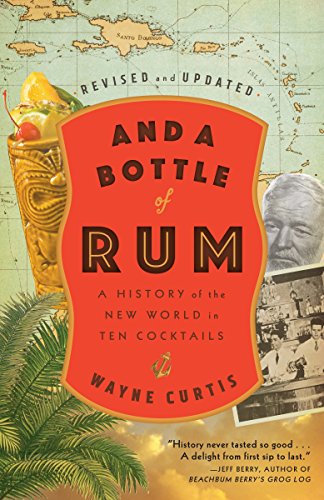
Now revised, updated, and with new recipes, And a Bottle of Rum tells the raucously entertaining story of this most American of liquors
From the grog sailors drank on the high seas in the 1700s to the mojitos of Havana bar hoppers, spirits and cocktail columnist Wayne Curtis offers a history of rum and the Americas alike, revealing that the homely spirit once distilled from the industrial waste of the booming sugar trade has managed to infiltrate every stratum of New World society.
Curtis takes us from the taverns of the American colonies, where rum delivered both a cheap wallop and cash for the Revolution; to the plundering pirate ships off the coast of Central America; to the watering holes of pre-Castro Cuba; and to the kitsch-laden tiki bars of 1950s America. Here are sugar barons and their armies conquering the Caribbean, Paul Revere stopping for a nip during his famous ride, Prohibitionists marching against "demon rum," Hemingway fattening his liver with Havana daiquiris, and today's bartenders reviving old favorites like Planter's Punch.
In an age of microbrewed beer and single-malt whiskeys, rum--once the swill of the common man--has found its way into the tasting rooms of the most discriminating drinkers. Complete with cocktail recipes for would-be epicurean time-travelers, this is history at its most intoxicating.
Die Inhaltsangabe kann sich auf eine andere Ausgabe dieses Titels beziehen.
Über die Autorin bzw. den Autor
Wayne Curtis was the spirits and cocktails columnist for The Atlantic magazine for eight years, and has also written about drinks for the Wall Street Journal, Imbibe, The Daily Beast, and The American Scholar. In 2002 Curtis was named Lowell Thomas Travel Journalist of the Year by the Society of American Travel Writers. He lives in New Orleans and Maine.
Auszug. © Genehmigter Nachdruck. Alle Rechte vorbehalten.
Chapter 1
[ Kill-devil ]
The people have a very generous fashion that if one come to a house to inquire the way to any place, they will make him drink, and if the traveler does deny to stay to drink they take it very unkindly of him. —Henry Whistler on Barbados customs, 1655
Rum—a spirit distilled from the juice of a sugarcane plant or its by-products—was first invented in the early seventeenth century on the British island colony of Barbados.
Or not. In which case it may have been invented on the Spanish islands of Hispaniola or Cuba (where it would have been called aguadiente, or “burning water”), or by Portuguese colonists on the coast of Brazil (where it would later be called cachaça). Or possibly it was first distilled by the French on one of their Caribbean island strongholds (where the poorer grades of rum were known as tafia). On the other hand, it may have been first concocted in the 1400s somewhere in Europe by secretive alchemists searching for the elixir of life and feeding through their retorts whatever fermentable matter they could get their hands on. Or just maybe it was invented even earlier by an anonymous chemist tinkering near the cane fields of coastal India.
The thing is, no one really knows when rum first appeared. If you want to know about the history of sugar, overflowing archives provide enough information to lead to mental obesity. But for rum, it’s a starvation diet. The West Indian island of Barbados has long claimed that first Barbadians invented rum, and it’s telling that no historians have roused themselves to seriously dispute this point. Some, like rum expert Edward Hamilton, have argued that rum was first produced commercially in the Portuguese or Spanish colonies, probably in Brazil, and he has been rooting around for customs documents or ship manifests to back this up. He hasn’t found anything yet. (And he guesses he may never: Rum exports from the colonies were prohibited by Spain and Portugal, which meant any rum produced was smuggled and undocumented. And even if it had been documented, the ports of the West Indies were laid waste by attackers with numbing regularity, so the archives of the earliest days are often nonexistent.)
This much at least is known about rum: Sometime around the middle of the seventeenth century, an outbreak of rum occurred almost everywhere the Dutch, Spanish, French, and English were engaged in their New World errand-running. The British sea captain John Josselyn wrote of a dinner held on a ship off the coast of present-day Maine in September 1639, at which another captain toasted him with a pint of rum. Laws controlling the sale of rum abruptly cropped up in different colonies, as a warden in pursuit of a persistent truant—in Bermuda in 1653, in Connecticut in 1654, in Massachusetts in 1657.
Then, sometime shortly before 1650, rum surfaced at an extravagant feast held at the Barbados estate of James Drax, the most important planter on Great Britain’s most important island colony. For anyone curious about the cultural history of rum—or who wants to learn about the ancestry of that bottle of West Indian rum in the back of their liquor cabinet—I’d argue that this is as fine a place to begin the story as any.
P
Barbados is pear-shaped and just twenty-one miles long by fourteen miles wide—or about one-seventh the size of Rhode Island. On a map of the Caribbean, Barbados lies far to the east, like a wayward child refusing to stand in line with the rest of the Lesser Antilles, which sweep in a great arc from Puerto Rico to Trinidad. Adventurers from Portugal and Spain landed here in the sixteenth century, but finding no precious metals to mine nor Indians to enslave, they lingered only long enough to name the island “Los Barbados,” after the “bearded” fig trees. Barbados lay unmolested until 1625, when a British sailing ship stopped off while heading home from Brazil. The captain claimed the island for the British throne and reported on its pleasing qualities to Sir William Courteen, the ship’s owner. Courteen hastened to cobble together a syndicate, then dispatched a ship with supplies to support several dozen colonists. On February 20, 1627, eighty colonists—plus ten slaves captured along the way—disembarked near present-day Holetown on the island’s west coast.
The mandate given the first settlers by Courteen was not complicated: Go forth and produce. Specifically, produce for export such things as were in demand in England. The colonists tried growing cotton, indigo, and fustic wood, the latter a sort of tropical mulberry useful in making yellow dye. These crops did not produce great fortunes. Taking a cue from the colony at Virginia, which had been settled two decades earlier, the islanders planted tobacco, which was then the most profitable agricultural staple in the colonies. But a glut in London soon undercut prices, and Barbados tobacco was hampered by another problem: It was “so earthy and worthless,” wrote one seventeenth-century island visitor, that it provided “little or no return from England.” A 1628 shipment was described as “foul, full of stalks, and evil colored.” Even the islanders wouldn’t smoke it.
And then came sugar.
The species Saccharum officinarum (“sugar of the apothecaries”), a freakishly tall and sharp-edged grass, had first appeared around 4000 b.c. in Asia, most likely in Papua New Guinea, where primitive agriculturists had selected the sweetest canes for further breeding. These plants migrated eastward with traders, to India and on to the Mediterranean. In 325 b.c. a general under Alexander the Great came upon sugarcane for the first time and described it with wonder as a plant that “brings forth honey without the help of bees.”
Sugar soon became an essential crop in the colonial Atlantic islands off Africa, including Madeira, the Canary Islands, and the Azores. It made the leap to the New World with Christopher Columbus, whose father-in-law was a Madeira sugar planter. On the explorer’s second trip across the Atlantic in 1493, he brought live sugarcane seedlings and oversaw their planting on Hispaniola. The sugar grew fabulously, and colonists were quick to establish plantations over the next two decades in Mexico, Cuba, Jamaica, and Puerto Rico. The Portuguese, demonstrating a flair for running complex businesses in difficult environments far from home, planted cane aggressively on the damp Brazilian coast and brought in sugar presses and copper boiling vats from home. The number of sugar refineries in Brazil grew from 5 in 1550 to 350 less than a century later. With great quantities of sugar now being produced in the New World, the price fell, and many of the sugar producers of the Mediterranean and the Atlantic islands were ruined. The New World sugar era was dawning.
Barbados made the most of it. In England, the demand for sugar soared as it quickly evolved from a luxury for aristocrats to a staple for the masses. It was in great demand for making sweets, masking the taste of rancid meat, and sweetening new beverages, including coffee (which arrived in Britain in 1650), chocolate (1657), and tea (1660). Between 1660 and 1700, the per capita consumption of sugar in England quadrupled, and then it doubled again in the next quarter century. The value of sugar shipped to England and Wales was worth twice that...
„Über diesen Titel“ kann sich auf eine andere Ausgabe dieses Titels beziehen.
Suchergebnisse für And a Bottle of Rum, Revised and Updated: A History...

Beispielbild für diese ISBN
And a Bottle of Rum, Revised and Updated: A History of the New World in Ten Cocktails
Anbieter: World of Books (was SecondSale), Montgomery, IL, USA
Verkäuferbewertung 5 von 5 Sternen

Zustand: Good. Item in good condition. Textbooks may not include supplemental items i.e. CDs, access codes etc. Artikel-Nr. 00106907168
Gebraucht kaufen
EUR 3,35
Versand gratis
Versand innerhalb von USA
Versand innerhalb von USA
Anzahl: 4 verfügbar
Beispielbild für diese ISBN
And a Bottle of Rum, Revised and Updated: A History of the New World in Ten Cocktails
Verlag:
Crown (edition Updated), 2018
ISBN 10: 0525575022
ISBN 13: 9780525575023
Gebraucht
Paperback
Anbieter: BooksRun, Philadelphia, PA, USA
Verkäuferbewertung 5 von 5 Sternen
Paperback. Zustand: Very Good. Updated. It's a well-cared-for item that has seen limited use. The item may show minor signs of wear. All the text is legible, with all pages included. It may have slight markings and/or highlighting. Artikel-Nr. 0525575022-11-1
Gebraucht kaufen
EUR 4,77
Versand gratis
Versand innerhalb von USA
Versand innerhalb von USA
Anzahl: 1 verfügbar
Foto des Verkäufers
And a Bottle of Rum, Revised and Updated: A History of the New World in Ten Cocktails
Anbieter: Dream Books Co., Denver, CO, USA
Verkäuferbewertung 5 von 5 Sternen
Zustand: acceptable. This copy has clearly been enjoyedâ"expect noticeable shelf wear and some minor creases to the cover. Binding is strong, and all pages are legible. May contain previous library markings or stamps. Artikel-Nr. DBV.0525575022.A
Gebraucht kaufen
EUR 4,90
Versand gratis
Versand innerhalb von USA
Versand innerhalb von USA
Anzahl: 1 verfügbar
Beispielbild für diese ISBN
And a Bottle of Rum, Revised and Updated: A History of the New World in Ten Cocktails
Verlag:
Crown Publishing Group (NY), 2018
ISBN 10: 0525575022
ISBN 13: 9780525575023
Gebraucht
Paperback
Anbieter: ThriftBooks-Dallas, Dallas, TX, USA
Verkäuferbewertung 5 von 5 Sternen
Paperback. Zustand: Good. No Jacket. Pages can have notes/highlighting. Spine may show signs of wear. ~ ThriftBooks: Read More, Spend Less. Artikel-Nr. G0525575022I3N00
Gebraucht kaufen
EUR 5,76
Versand gratis
Versand innerhalb von USA
Versand innerhalb von USA
Anzahl: 1 verfügbar
Beispielbild für diese ISBN
And a Bottle of Rum, Revised and Updated: A History of the New World in Ten Cocktails
Verlag:
Crown Publishing Group (NY), 2018
ISBN 10: 0525575022
ISBN 13: 9780525575023
Gebraucht
Paperback
Anbieter: ThriftBooks-Atlanta, AUSTELL, GA, USA
Verkäuferbewertung 5 von 5 Sternen
Paperback. Zustand: Good. No Jacket. Pages can have notes/highlighting. Spine may show signs of wear. ~ ThriftBooks: Read More, Spend Less. Artikel-Nr. G0525575022I3N00
Gebraucht kaufen
EUR 5,76
Versand gratis
Versand innerhalb von USA
Versand innerhalb von USA
Anzahl: 1 verfügbar
Beispielbild für diese ISBN
And a Bottle of Rum, Revised and Updated: A History of the New World in Ten Cocktails
Verlag:
Crown Publishing Group (NY), 2018
ISBN 10: 0525575022
ISBN 13: 9780525575023
Gebraucht
Paperback
Anbieter: ThriftBooks-Dallas, Dallas, TX, USA
Verkäuferbewertung 5 von 5 Sternen
Paperback. Zustand: Very Good. No Jacket. May have limited writing in cover pages. Pages are unmarked. ~ ThriftBooks: Read More, Spend Less. Artikel-Nr. G0525575022I4N00
Gebraucht kaufen
EUR 5,76
Versand gratis
Versand innerhalb von USA
Versand innerhalb von USA
Anzahl: 1 verfügbar
Beispielbild für diese ISBN
And a Bottle of Rum, Revised and Updated: A History of the New World in Ten Cocktails
Verlag:
Crown Publishing Group (NY), 2018
ISBN 10: 0525575022
ISBN 13: 9780525575023
Gebraucht
Paperback
Anbieter: ThriftBooks-Atlanta, AUSTELL, GA, USA
Verkäuferbewertung 5 von 5 Sternen
Paperback. Zustand: As New. No Jacket. Pages are clean and are not marred by notes or folds of any kind. ~ ThriftBooks: Read More, Spend Less. Artikel-Nr. G0525575022I2N00
Gebraucht kaufen
EUR 5,76
Versand gratis
Versand innerhalb von USA
Versand innerhalb von USA
Anzahl: 1 verfügbar
Beispielbild für diese ISBN
And a Bottle of Rum, Revised and Updated: A History of the New World in Ten Cocktails
Verlag:
Crown Publishing Group (NY), 2018
ISBN 10: 0525575022
ISBN 13: 9780525575023
Gebraucht
Paperback
Anbieter: ThriftBooks-Reno, Reno, NV, USA
Verkäuferbewertung 5 von 5 Sternen
Paperback. Zustand: Very Good. No Jacket. May have limited writing in cover pages. Pages are unmarked. ~ ThriftBooks: Read More, Spend Less. Artikel-Nr. G0525575022I4N00
Gebraucht kaufen
EUR 5,76
Versand gratis
Versand innerhalb von USA
Versand innerhalb von USA
Anzahl: 1 verfügbar
Beispielbild für diese ISBN
And a Bottle of Rum, Revised and Updated: A History of the New World in Ten Cocktails
Verlag:
Crown Publishing Group (NY), 2018
ISBN 10: 0525575022
ISBN 13: 9780525575023
Gebraucht
Paperback
Anbieter: ThriftBooks-Reno, Reno, NV, USA
Verkäuferbewertung 5 von 5 Sternen
Paperback. Zustand: Good. No Jacket. Pages can have notes/highlighting. Spine may show signs of wear. ~ ThriftBooks: Read More, Spend Less. Artikel-Nr. G0525575022I3N00
Gebraucht kaufen
EUR 5,76
Versand gratis
Versand innerhalb von USA
Versand innerhalb von USA
Anzahl: 1 verfügbar
Beispielbild für diese ISBN
And a Bottle of Rum, Revised and Updated: A History of the New World in Ten Cocktails
Verlag:
Crown Publishing Group (NY), 2018
ISBN 10: 0525575022
ISBN 13: 9780525575023
Gebraucht
Paperback
Anbieter: ThriftBooks-Atlanta, AUSTELL, GA, USA
Verkäuferbewertung 5 von 5 Sternen
Paperback. Zustand: Very Good. No Jacket. May have limited writing in cover pages. Pages are unmarked. ~ ThriftBooks: Read More, Spend Less. Artikel-Nr. G0525575022I4N00
Gebraucht kaufen
EUR 5,76
Versand gratis
Versand innerhalb von USA
Versand innerhalb von USA
Anzahl: 1 verfügbar