
Verwandte Artikel zu PROPELLER: Accelerating Change by Getting Accountability...
Inhaltsangabe
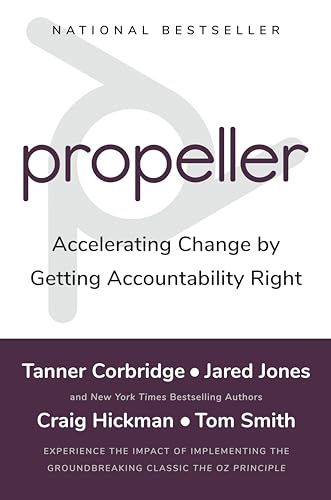
The newest addition to Partners In Leadership's accountability series that began with the classic The Oz Principle.
The Oz Principle has sold more than a million copies since it debuted in 1994, establishing it as the go-to reference on workplace accountability throughout the world. By embracing its practical and invaluable advice, tens of thousands of companies have improved their organizational accountability -- the key to achieving and sustaining exceptional results.
Now, the team at Partners In Leadership is applying thirty years of proven success to a whole new concept: Propeller. This book presents a modern take on accountability, while remaining faithful to the elegantly simple premise: When people take personal ownership of their organization's priorities and accept responsibility for their own performance, they become more engaged and perform at a higher level.
With all new examples and stories, Propeller builds on the The Oz Principle's legacy to inspire the next generation of readers to tap the incredible power of personal, team, and organizational accountability.
Die Inhaltsangabe kann sich auf eine andere Ausgabe dieses Titels beziehen.
Über die Autorin bzw. den Autor
Tanner Corbridge is a Senior Partner at Partners In Leadership. He has led large scale transformation projects with Fortune 1000 clients across numerous global industries. Clients include over half of the Dow Jones Index companies as well as many smaller organizations.
Jared Jones is a Senior Partner at Partners In Leadership. He has consulted with CEOs and senior leadership teams in some of the most successful organizations in the world. Clients include over half of the Fortune top 50 companies as well as numerous mid-sized companies.
Craig Hickman is Senior Vice President of New Product Development at Partners In Leadership. He has authored or co-authored seventeen books, including Creating Excellence, The Strategy Game, Mind of a Manager Soul of a Leader, and Results Revolution.
Tom Smith is cofounder and board member of Partners in Leadership. His clients include almost half of the Dow Jones Industrial Average Companies and Fortune 50 largest companies in the United States. He has co-authored The Oz Principle, How Did That Happen?, and Change the Game.
Auszug. © Genehmigter Nachdruck. Alle Rechte vorbehalten.
Chapter One
Accountability for Key Results
Applying the Oz Principle, C-Suite to Front Line
"Do you think," he asked, "if I go to the Emerald City with you that Oz would give me some brains?"
-The Wonderful Wizard of Oz, L. Frank Baum
Have you ever looked at the people around you-at work, in your circle of friends, or in your extended family-and wondered why some people are going places with their careers while others aren't? Why do some individuals achieve the results they want while others explain what went wrong along the way? Why do some teams generate a powerful sense of unity and purpose in their work while other teams limp along with never-ending currents of infighting and finger-pointing that suck the morale out of the culture? The answer is accountability.
Many years ago, our firm noticed a pervasive problem in society: a serious and growing lack of accountability. The problem continues to manifest itself in different ways, but there are always common patterns in those differences. For example, we found ourselves constantly interacting with leaders who were tired of the blame game that had taken root in their day-to-day work cultures. They were exhausted by the amount of time and energy they spent in hallway or behind-closed-doors conversations listening to explanations and justifications for lack of performance rather than discussing ideas and solutions for moving forward. In most cases, the people in their organizations had grown numb to the "blame game" that was raging all around. It had metastasized into the organizational narrative. These same leaders would review the current year's annual employee engagement surveys only to find the statements to be a virtual repeat of the previous year's feedback, suggesting a severe lack of individual accountability and an overabundance of blaming. Every one of these leaders also had something else in common: They each knew the solution was to create greater ownership and accountability, but they didn't know how to do it in an effective way. That's why we published the first edition of The Oz Principle in 1994, why we published a second edition in 2004, and why we're now publishing this edition.
In the upcoming pages, we'll explore the accountability paradox-the more we hold people accountable the wrong way, the less accountability we get-and show you how to solve it quickly. We'll also introduce you to a few simple principles and models, honed and proven over thirty years of research, observation, and experiential application within our client organizations. The stories and examples we'll share with you have been chosen from literally thousands of client engagements.
Reframing Accountability
Consider what images spring to mind when you hear the word accountability. Most likely you picture some sort of punishment for a mistake, perhaps someone in authority holding your feet to the fire or hammering you for wrongdoing. The team here at Partners in Leadership has spent decades combating that negative view of accountability. Defining it negatively only disenfranchises people and kills morale. In our view, accountability is not an accounting for misdeeds or a reckoning for one's missteps; it's a powerful motivator to get results. Individuals, teams, and entire organizations can use a positive and engaging approach to accountability to propel them toward whatever goals they must reach. Most important, accountability is not something someone else does to you; it's something you do for yourself, your team, and your organization to help you get better results.
We saw the importance of individuals taking charge of their own results during one memorable consulting engagement. We found ourselves standing on the tail section of a massive military aircraft, looking five stories down to the tarmac as we asked Ray Burick, one of the key leaders at Lockheed Martin Aeronautics, "Why do you need us here?"
Looking down at the plane, he said, "We're behind schedule and over budget. You see those guys working on the wing? They're doing their job and working really hard to do it right. You see those guys working on the fuselage, the main section of the plane where the wing connects? They're working super hard to get everything done that needs to be done. Now move up the fuselage and look at the cockpit and watch the team tackling that amazing bundle of wires feeding the control panel. They are doing everything they feel they are supposed to do to finish their section of the plane."
So, we asked again, "What's the problem?"
Ray continued, "When the wing is handed off to the fuselage team, something inevitably needs to be tweaked or adjusted. So, the fuselage team blames the wing team for not doing its work thoroughly enough. They kick everything back to the wing team and wait for the corrections to be made. Meanwhile, the wing team blames the fuselage team for not following the plans properly and complains that it didn't do what it was asked to do and blames the planning team for not being clear. While this is going on, the work on the plane comes to a halt until someone figures out what to do next. They are all focused on their sections of the plane. I need you guys [Partners in Leadership] because I have to redefine what the job is. I don't need them to take accountability for the wing or cockpit; I need them to take accountability for the entire plane getting out the door on time and under budget."
It was a classic example of the limited, departmental thinking that afflicts organizations, large and small, across the globe. But more so, it epitomized what we call the blame game, a bad habit that poisons the well of problem solving and diverts energy away from delivering the Key Results. "It's not my fault! Someone else screwed up!" or "I'm paying for their mistakes. Hold them accountable." Of course, finger-pointing and playing the helpless victim will never move the needle closer to the results you need, whether you're trying to execute continuous improvement initiatives, inspire innovation, improve your customer's experience, or retain top talent. Achieving any of those results depends more than anything else on getting people to rise above their circumstances and constantly ask, "What else can I do to get the result?" Sadly, too many people pay lip service to accountability while clinging to the old, tired definition of doing something to someone else as a punishment for something that went wrong. Ray was successful in shifting the mind-set on his team at Lockheed Martin. Taking accountability for complete work and achieving the needed results became the watch cry on that team. Within nine months the team was back on schedule and starting to beat their aggressive timelines. Eventually they were operating under budget with increased quality.
In his celebrated book The Wonderful Wizard of Oz, L. Frank Baum got it right. Dorothy and her companions discovered that the all-powerful wizard was a sham and that only they could achieve the outcomes they wanted. It took a long and sometimes dangerous journey down the Yellow Brick Road to learn that crucial life-changing lesson:
You have the power to get the results you want.
What Is the True Meaning of Accountability?
Ask ten managers in almost any organization to define accountability, and you will probably hear ten different definitions. That's a serious problem. When an organization's leaders cannot agree on what accountability means, they certainly can't expect people to agree on how to take it. A number of years ago we began looking at how dictionaries define accountability. Most say something like the following:
Accountability: subject to having to report, explain, or justify; liable, responsible; answerable.
What does that mean? It sounds so cold and excuse oriented. And it doesn't include the most important word of all:...
„Über diesen Titel“ kann sich auf eine andere Ausgabe dieses Titels beziehen.
Suchergebnisse für PROPELLER: Accelerating Change by Getting Accountability...

Beispielbild für diese ISBN
Propeller: Accelerating Change by Getting Accountability Right
Anbieter: World of Books (was SecondSale), Montgomery, IL, USA
Verkäuferbewertung 5 von 5 Sternen

Zustand: Good. Item in good condition. Textbooks may not include supplemental items i.e. CDs, access codes etc. Artikel-Nr. 00088708252
Gebraucht kaufen
EUR 3,62
Versand gratis
Versand innerhalb von USA
Versand innerhalb von USA
Anzahl: 4 verfügbar
Beispielbild für diese ISBN
Propeller: Accelerating Change by Getting Accountability Right
Anbieter: ThriftBooks-Atlanta, AUSTELL, GA, USA
Verkäuferbewertung 5 von 5 Sternen
Hardcover. Zustand: Very Good. No Jacket. Former library book; May have limited writing in cover pages. Pages are unmarked. ~ ThriftBooks: Read More, Spend Less. Artikel-Nr. G052553783XI4N10
Gebraucht kaufen
EUR 6,16
Versand gratis
Versand innerhalb von USA
Versand innerhalb von USA
Anzahl: 1 verfügbar
Beispielbild für diese ISBN
Propeller: Accelerating Change by Getting Accountability Right
Anbieter: ThriftBooks-Dallas, Dallas, TX, USA
Verkäuferbewertung 5 von 5 Sternen
Hardcover. Zustand: Good. No Jacket. Pages can have notes/highlighting. Spine may show signs of wear. ~ ThriftBooks: Read More, Spend Less. Artikel-Nr. G052553783XI3N00
Gebraucht kaufen
EUR 6,16
Versand gratis
Versand innerhalb von USA
Versand innerhalb von USA
Anzahl: 1 verfügbar
Beispielbild für diese ISBN
Propeller: Accelerating Change by Getting Accountability Right
Anbieter: ThriftBooks-Atlanta, AUSTELL, GA, USA
Verkäuferbewertung 5 von 5 Sternen
Hardcover. Zustand: Good. No Jacket. Pages can have notes/highlighting. Spine may show signs of wear. ~ ThriftBooks: Read More, Spend Less. Artikel-Nr. G052553783XI3N00
Gebraucht kaufen
EUR 6,16
Versand gratis
Versand innerhalb von USA
Versand innerhalb von USA
Anzahl: 1 verfügbar
Beispielbild für diese ISBN
Propeller : Accelerating Change by Getting Accountability Right
Verlag:
Penguin Publishing Group, 2019
ISBN 10: 052553783X
ISBN 13: 9780525537830
Gebraucht
Hardcover
Anbieter: Better World Books, Mishawaka, IN, USA
Verkäuferbewertung 5 von 5 Sternen
Zustand: Good. Pages intact with minimal writing/highlighting. The binding may be loose and creased. Dust jackets/supplements are not included. Stock photo provided. Product includes identifying sticker. Better World Books: Buy Books. Do Good. Artikel-Nr. 40755755-6
Gebraucht kaufen
EUR 6,41
Versand gratis
Versand innerhalb von USA
Versand innerhalb von USA
Anzahl: 1 verfügbar
Beispielbild für diese ISBN
Propeller : Accelerating Change by Getting Accountability Right
Verlag:
Penguin Publishing Group, 2019
ISBN 10: 052553783X
ISBN 13: 9780525537830
Gebraucht
Hardcover
Anbieter: Better World Books, Mishawaka, IN, USA
Verkäuferbewertung 5 von 5 Sternen
Zustand: Good. Former library copy. Pages intact with minimal writing/highlighting. The binding may be loose and creased. Dust jackets/supplements are not included. Includes library markings. Stock photo provided. Product includes identifying sticker. Better World Books: Buy Books. Do Good. Artikel-Nr. 18266515-20
Gebraucht kaufen
EUR 6,41
Versand gratis
Versand innerhalb von USA
Versand innerhalb von USA
Anzahl: 2 verfügbar
Beispielbild für diese ISBN
Propeller : Accelerating Change by Getting Accountability Right
Verlag:
Penguin Publishing Group, 2019
ISBN 10: 052553783X
ISBN 13: 9780525537830
Gebraucht
Hardcover
Anbieter: Better World Books, Mishawaka, IN, USA
Verkäuferbewertung 5 von 5 Sternen
Zustand: Very Good. Pages intact with possible writing/highlighting. Binding strong with minor wear. Dust jackets/supplements may not be included. Stock photo provided. Product includes identifying sticker. Better World Books: Buy Books. Do Good. Artikel-Nr. 17465841-6
Gebraucht kaufen
EUR 6,41
Versand gratis
Versand innerhalb von USA
Versand innerhalb von USA
Anzahl: 1 verfügbar
Beispielbild für diese ISBN
Propeller
Anbieter: PBShop.store UK, Fairford, GLOS, Vereinigtes Königreich
Verkäuferbewertung 5 von 5 Sternen
HRD. Zustand: New. New Book. Shipped from UK. Established seller since 2000. Artikel-Nr. EB-9780525537830
Neu kaufen
EUR 27,22
EUR 4,85 Versand
Versand von Vereinigtes Königreich nach USA
Versand von Vereinigtes Königreich nach USA
Anzahl: 4 verfügbar
Beispielbild für diese ISBN
The Oz Principle - Next Generation: Taking Accountability for Key Results, C-suite to Frontline
Anbieter: Revaluation Books, Exeter, Vereinigtes Königreich
Verkäuferbewertung 5 von 5 Sternen
Hardcover. Zustand: Brand New. 288 pages. 9.50x6.25x1.00 inches. In Stock. Artikel-Nr. __052553783X
Neu kaufen
EUR 24,34
EUR 11,66 Versand
Versand von Vereinigtes Königreich nach USA
Versand von Vereinigtes Königreich nach USA
Anzahl: 2 verfügbar
Beispielbild für diese ISBN
Propeller: Accelerating Change by Getting Accountability Right
Anbieter: Majestic Books, Hounslow, Vereinigtes Königreich
Verkäuferbewertung 4 von 5 Sternen

Zustand: New. Artikel-Nr. 383778592
Neu kaufen
EUR 29,65
EUR 7,58 Versand
Versand von Vereinigtes Königreich nach USA
Versand von Vereinigtes Königreich nach USA
Anzahl: 3 verfügbar