
Verwandte Artikel zu First Person: A novel
Inhaltsangabe
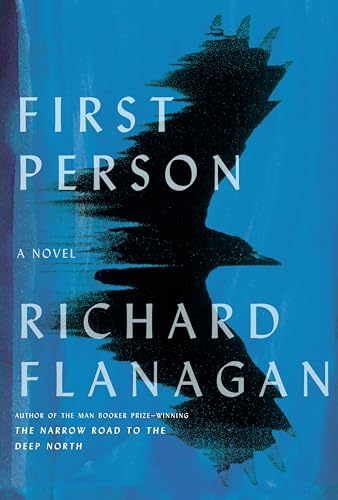
Kif Kehlmann, a young, penniless writer, thinks he’s finally caught a break when he’s offered $10,000 to ghostwrite the memoir of Siegfried “Ziggy” Heidl, the notorious con man and corporate criminal. Ziggy is about to go to trial for defrauding banks for $700 million; they have six weeks to write the book.
But Ziggy swiftly proves almost impossible to work with: evasive, contradictory, and easily distracted by his still-running “business concerns”—which Kif worries may involve hiring hitmen from their shared office. Worse, Kif finds himself being pulled into an odd, hypnotic, and ever-closer orbit of all things Ziggy. As the deadline draws near, Kif becomes increasingly unsure if he is ghostwriting a memoir, or if Ziggy is rewriting him—his life, his future, and the very nature of the truth.
By turns comic, compelling, and finally chilling, First Person is a haunting look at an age where fact is indistinguishable from fiction, and freedom is traded for a false idea of progress.
Die Inhaltsangabe kann sich auf eine andere Ausgabe dieses Titels beziehen.
Über die Autorin bzw. den Autor
RICHARD FLANAGAN's novels, Death of a River Guide, The Sound of One Hand Clapping, Gould's Book of Fish, The Unknown Terrorist, Wanting, and The Narrow Road to the Deep North, for which he was awarded the 2014 Man Booker Prize, are published in 42 countries. He lives in Tasmania.
Auszug. © Genehmigter Nachdruck. Alle Rechte vorbehalten.
1
Our first battle was birth. I wanted it in, he wanted it out. All that day and half of the next we argued. He said it had nothing to do with him. Later I began to see his point, but at the time it seemed bloody-mindedness and evidence of an inexplicable obstruction—as though he didn’t actually want any memoir ever written. Of course, he didn’t want a memoir written, but that wasn’t his point. Or the point. But I only realised this later, much later, when I came to fear that the beginning of that book was also the end of me.
Too late, in other words.
These days I content myself with reality TV. There is a void, a loneliness that aches and rattles. That frightens. That terrifies me that I should have lived and never did. Reality TV doesn’t have this effect on me.
Back then though, all this was confusing. It was feared by others that I might relapse into literature. By which I mean allegory, symbol, the tropes of time dancing; of books that didn’t have a particular beginning or end, or at least not in that order. By whom I mean the publisher, a man by the unexpected name of Gene Paley. He had been quite specific in this regard: I was to tell a simple story simply, and where it was not simple—when it dealt with the complexities of the spectacular crime—simplify, illustrate by way of anecdote, and never have a sentence that lingered longer than two lines.
It was whispered around the publishing house that Gene Paley was frightened of literature. And not without good reason. For one thing, it doesn’t sell. For another, it can fairly be said that it asks questions that it can’t answer. It astonishes people with themselves, which, on balance, is rarely a good thing. It reminds them that the business of life is failure, and that the failure to know this is true ignorance. Maybe there is transcendence in all this, or wisdom in some of it, but Gene Paley didn’t see himself in the transcendence game. Gene Paley was all for books telling you one or two things over and over again. But preferably only one.
Selling, Gene Paley would say, is telling.
I opened the manuscript again and re-read the opening lines.
On 17 May 1983, I signed my application letter for the position of Acting Safety Officer (supervisor) (Acting Class 4/5) at the Australian Safety Organisation, with two words, Siegfried Heidl, and my new life began.
Only much later did I discover that Siegfried Heidl had never existed until that day he signed the letter, so—strictly speaking—it was an honest account. But the past is always unpredictable and, as I was to learn, not his least gift as a con man was that he rarely lied.
Ziggy Heidl’s point of view was that his twelve-thousand-word manuscript—the thin pile of stacked papers on which he would frequently press down with his outstretched hand as if it were a basketball to be bounced and put back into play—said everything that anyone would ever be interested in reading about Ziggy Heidl. My job as a writer, he went on, was simply to sharpen his sentences, and perhaps elaborate here and there a little on his account.
He said this, as he said so much else, with such belief, with such confidence and such conviction, that I found it very difficult to point out, as I had to, that his manuscript made no mention of his childhood, his parents or even, for that matter, his year of birth. His reply has remained with me, even after all these years.
A life isn’t an onion to be peeled, a palimpsest to be scraped back to some original, truer meaning. It’s an invention that never ends.
And when I must have looked struck by his elaborate turn of phrase, Heidl added, as if giving directions to a public toilet: Tebbe. It’s one of his aphorisms.
What he lacked in facts, he made up for with an understated conviction; and what he lacked in conviction he made up for with facts, albeit mostly invented, and rendered all the more plausible because they were so lightly thrown up from an unexpected angle.
The great German installationist, Heidl said. Tomas Tebbe.
I had no idea what a palimpsest might be. Or who Tebbe was, or what an installationist did, or was, and said so. Heidl made no reply. Maybe, as he told me another time, we take from our past and the past of others to make ourselves anew, and the something new is our memory too. Tebbe, whom I only read many years later, put it best: It may be someone else’s blood soaking into the dust, he wrote, but I am that dust.
I looked up.
Out of interest, I said, whereabouts in Germany did you grow up?
Germany? Ziggy Heidl said, looking out the window. I never went there until I was twenty-six. I told you. I grew up in South Australia.
Your accent is German.
Roger that, Ziggy Heidl said. And when he turned his fleshy face back to me I tried not to stare at the small muscle in his otherwise puffy cheek that twitched when he smiled, a knot of tautness amidst the slackness, a single tight muscle pulsing in and out.
I know it’s odd, but there you are—I grew up with German-speaking parents and no one to play with. But I was happy. Write that.
He was smiling.
His smile: an undertow of sinister complicity.
What? I said.
That.
What?
Write: I was happy.
That terrible smile. That twitching cheek.
Boom-boom, it silently went. Boom-boom.
2
We were working in a publishing executive’s corner office in a publishing company’s headquarters in Port Melbourne. Perhaps it had been the office of an editorial director or a sales manager, recently retired or lately sacked. Who knows? We were never told, but the office made Ziggy Heidl feel important and that was important, and if I felt embarrassed, that wasn’t. It was 1992, that time so close and now so far away when publishing executives still had such rooms and liquor cabinets; before Amazon and e-books; before phrases like granular analytics, customer fulfilment, and supply chain alignment had connected like tightening coils in a hangman’s noose; before the relentless rise of property values and the collapse of publishing saw publishers’ offices morph into abattoir-like assembly lines, where all staff sat cheek by jowl at long benches reminiscent of, say, a Red Army canteen in Kabul, circa 1979.
And like the Red Army then, publishing was entering a crisis of stagnation not yet understood as either a crisis or as terminal. And beneath where the publishing people sat were so many little holes being bored by redundancies slowly coming together into one large sink hole through which, a few years hence, the several floors of the publishing house would suddenly and unexpectedly fall until they landed with a crash and compressed into just one floor. Then that floor, in turn, would begin to shrink as a rising sea of start-ups, finance companies and net businesses flooded over the publisher’s office space—an encroaching ocean of disruption—until the floor was now only half a floor, and on that vanishing island books were now only content and writers only content providers, sandbag fillers, but of an ever lower and lower caste, if such a thing were possible. All of which may suggest I write with some nostalgia, that the Port Melbourne office had charm or character.
I don’t.
It didn’t.
If it was bookcase lined, the bookcases were, on closer examination, like the world of publishing then, dispiriting. The shelving was particleboard covered with a hokey teak veneer, an uncomfortably faecal brown, more plasticised than varnished. And the books! The books that house—the then mighty Schlegel TransPacific (or as it was...
„Über diesen Titel“ kann sich auf eine andere Ausgabe dieses Titels beziehen.
Suchergebnisse für First Person: A novel

Beispielbild für diese ISBN
First Person: A novel
Anbieter: World of Books (was SecondSale), Montgomery, IL, USA
Verkäuferbewertung 5 von 5 Sternen

Zustand: Good. Item in good condition. Textbooks may not include supplemental items i.e. CDs, access codes etc. Artikel-Nr. 00084407209
Gebraucht kaufen
EUR 4,04
Versand gratis
Versand innerhalb von USA
Versand innerhalb von USA
Anzahl: 3 verfügbar
Beispielbild für diese ISBN
First Person: A novel
Anbieter: World of Books (was SecondSale), Montgomery, IL, USA
Verkäuferbewertung 5 von 5 Sternen
Zustand: Good. Item in good condition. Textbooks may not include supplemental items i.e. CDs, access codes etc. Artikel-Nr. 00086767808
Gebraucht kaufen
EUR 4,04
Versand gratis
Versand innerhalb von USA
Versand innerhalb von USA
Anzahl: 1 verfügbar
Beispielbild für diese ISBN
First Person
Anbieter: World of Books (was SecondSale), Montgomery, IL, USA
Verkäuferbewertung 5 von 5 Sternen
Zustand: Good. Item in good condition. Textbooks may not include supplemental items i.e. CDs, access codes etc. Artikel-Nr. 00098450094
Gebraucht kaufen
EUR 4,53
Versand gratis
Versand innerhalb von USA
Versand innerhalb von USA
Anzahl: 2 verfügbar
Beispielbild für diese ISBN
First Person
Anbieter: World of Books (was SecondSale), Montgomery, IL, USA
Verkäuferbewertung 5 von 5 Sternen
Zustand: Very Good. Item in very good condition! Textbooks may not include supplemental items i.e. CDs, access codes etc. Artikel-Nr. 00098383604
Gebraucht kaufen
EUR 4,53
Versand gratis
Versand innerhalb von USA
Versand innerhalb von USA
Anzahl: 1 verfügbar
Beispielbild für diese ISBN
First Person: A novel
Verlag:
Knopf (edition 1st American), 2018
ISBN 10: 0525520023
ISBN 13: 9780525520023
Gebraucht
Hardcover
Anbieter: BooksRun, Philadelphia, PA, USA
Verkäuferbewertung 5 von 5 Sternen
Hardcover. Zustand: Very Good. 1st American. It's a well-cared-for item that has seen limited use. The item may show minor signs of wear. All the text is legible, with all pages included. It may have slight markings and/or highlighting. Artikel-Nr. 0525520023-11-1
Gebraucht kaufen
EUR 6,14
Versand gratis
Versand innerhalb von USA
Versand innerhalb von USA
Anzahl: 1 verfügbar
Beispielbild für diese ISBN
First Person: A novel
Anbieter: Wonder Book, Frederick, MD, USA
Verkäuferbewertung 5 von 5 Sternen
Zustand: Very Good. Very Good condition. Good dust jacket. A copy that may have a few cosmetic defects. May also contain light spine creasing or a few markings such as an owner's name, short gifter's inscription or light stamp. Artikel-Nr. K10N-01196
Gebraucht kaufen
EUR 6,22
Versand gratis
Versand innerhalb von USA
Versand innerhalb von USA
Anzahl: 1 verfügbar
Beispielbild für diese ISBN
First Person: A novel
Anbieter: Wonder Book, Frederick, MD, USA
Verkäuferbewertung 5 von 5 Sternen
Zustand: Very Good. Very Good condition. Very Good dust jacket. With remainder mark. A copy that may have a few cosmetic defects. May also contain light spine creasing or a few markings such as an owner's name, short gifter's inscription or light stamp. Artikel-Nr. F06D-02064
Gebraucht kaufen
EUR 6,22
Versand gratis
Versand innerhalb von USA
Versand innerhalb von USA
Anzahl: 1 verfügbar
Beispielbild für diese ISBN
First Person : A Novel
Verlag:
Knopf Doubleday Publishing Group, 2018
ISBN 10: 0525520023
ISBN 13: 9780525520023
Gebraucht
Hardcover
Anbieter: Better World Books, Mishawaka, IN, USA
Verkäuferbewertung 5 von 5 Sternen
Zustand: Fine. Used book that is in almost brand-new condition. May contain a remainder mark. Better World Books: Buy Books. Do Good. Artikel-Nr. 15902928-6
Gebraucht kaufen
EUR 6,70
Versand gratis
Versand innerhalb von USA
Versand innerhalb von USA
Anzahl: 1 verfügbar
Beispielbild für diese ISBN
First Person : A Novel
Verlag:
Knopf Doubleday Publishing Group, 2018
ISBN 10: 0525520023
ISBN 13: 9780525520023
Gebraucht
Hardcover
Anbieter: Better World Books, Mishawaka, IN, USA
Verkäuferbewertung 5 von 5 Sternen
Zustand: Good. Former library copy. Pages intact with minimal writing/highlighting. The binding may be loose and creased. Dust jackets/supplements are not included. Includes library markings. Stock photo provided. Product includes identifying sticker. Better World Books: Buy Books. Do Good. Artikel-Nr. 14586932-6
Gebraucht kaufen
EUR 6,70
Versand gratis
Versand innerhalb von USA
Versand innerhalb von USA
Anzahl: 1 verfügbar
Beispielbild für diese ISBN
First Person
Anbieter: ThriftBooks-Reno, Reno, NV, USA
Verkäuferbewertung 5 von 5 Sternen
Hardcover. Zustand: Very Good. No Jacket. Former library book; May have limited writing in cover pages. Pages are unmarked. ~ ThriftBooks: Read More, Spend Less. Artikel-Nr. G0525520023I4N10
Gebraucht kaufen
EUR 7,10
Versand gratis
Versand innerhalb von USA
Versand innerhalb von USA
Anzahl: 1 verfügbar