
Verwandte Artikel zu The Body in the Castle Well (Bruno, Chief of Police)
The Body in the Castle Well (Bruno, Chief of Police) - Hardcover
Buch 12 von 20: Bruno Chief Of Police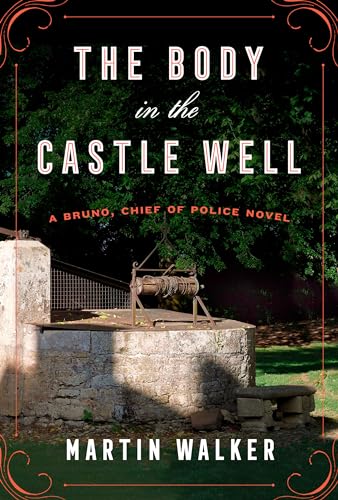
Inhaltsangabe
When Claudia Muller, a young American woman, turns up dead in the courtyard of an ancient castle in his jurisdiction, Bruno Courrèges initially assumes that she died of an overdose. But Claudia's doctor soon persuades him that things may not be so simple, setting Bruno on an investigation that will lead him from the Renaissance to the French Resistance and beyond. Claudia had been studying with Monsieur de Bourdeille, a renowned art historian who became extraordinarily wealthy through the sale of paintings that may have been falsely attributed'or so Claudia suggested shortly before her death. In his younger days, Bourdeille had aided the Resistance and been arrested by a Vichy police officer whose own life story also becomes inexorably entangled with the case. Also in the mix is a young falconer who works at the Château des Milandes, the former home of fabled jazz singer Josephine Baker. Once again, it's up to Bruno to make sure that justice is served'along with a generous helping of his signature Périgordian cuisine, of course.
Die Inhaltsangabe kann sich auf eine andere Ausgabe dieses Titels beziehen.
Über die Autorin bzw. den Autor
Martin Walker is a senior fellow of the Global Business Policy Council, a private think tank based in Washington, D.C. His previous novels in the Bruno series are Black Diamond; Bruno, Chief of Police; The Children Return; The Crowded Grave; The Dark Vineyard; The Devil's Cave; Fatal Pursuit; The Patriarch; The Resistance Man; A Taste for Vengeance; and The Templars' Last Secret, all international best sellers. He lives in Washington, D.C., and the Dordogne. www.brunochiefofpolice.com
Auszug. © Genehmigter Nachdruck. Alle Rechte vorbehalten.
Chapter 1
Bruno was still glowing from his morning canter at Pamela's riding school as he sipped his first coffee of the day at Fauquet's café and scanned the headlines of Sud Ouest. Balzac, his basset hound, was waiting patiently at Bruno's feet for his customary portion of croissant when the dog felt rather than heard the vibration of the phone at his master's belt. Balzac slumped glumly onto his belly and lowered his head onto his paws, knowing that this meant his morning treat was likely to be delayed.
'Bonjour, Florence," said Bruno after checking the caller's number on the screen. 'this is an early call. Everything okay with the children?"
'We're fine, Bruno, but I'm worried about Claudia. She was really sick last night at a lecture in the castle in Limeuil, but there was no answer when I called just now to see how she was. And her landlady says she never came home."
Along with several of his friends, Bruno had instantly liked and befriended Claudia, an American student from Yale University working on her doctorate in art history and studying with an eminent local scholar. 'maybe she met a boyfriend," he suggested.
'I don't think there is one, at least not in France. Bruno, she really wasn't in good shape last night, dizzy and white as a sheet. I wanted to walk her home, but she said she'd be fine, just needed to lie down and rest."
'Did you check with the urgences?'
'No, I have to get the kids to the maternelle.'
'Okay, I'll take care of it.'
Bruno ended the call, knowing instantly that he wouldn't be able to perform his usual morning role, managing the traffic at the town's nursery school. He called the local fire station'the pompiers also served as the local emergency medical service'to learn that they had not been called out the previous evening. Then he phoned the town medical clinic. They also reported nothing unusual. He paid for his coffee and croissant and climbed the steps to the mairie to tell the mayor's secretary he would be going to Limeuil. Back downstairs, he installed Balzac in the passenger seat of his van and set off past the fire station, past the town vineyard and up the long sloping hill that led to the top of one of the prettiest villages in France, and one of the oldest.
Bruno knew there had been an Iron Age hill fort on this site before Julius Caesar's Roman legions stormed it. They then built their own fortification to command the strategic hilltop that overlooked the point at which the River Vézère flowed into the larger Dordogne. What Florence had called the castle was a modern addition, little more than a century old and erected by a former doctor of the sultan of Morocco who had retired to his native Périgord. He bought the hilltop, ruins of the old medieval fortress and all, and commissioned a new house designed, Bruno assumed, to look like one of the French Foreign Legion forts in the Moroccan desert. The original white stucco of the walls and battlements was now gray, and the building held the gift shop, café and offices of the team of young gardeners who tended the sprawling hilltop for the town and had turned it into a popular tourist attraction. The castle's large rooms with their view over the two river valleys were now the local cultural center, hosting lectures, literary events and occasional art exhibitions.
The previous evening there had been a lecture by a local historian on the archaeology of Limeuil, which Bruno would normally have attended but for the weekly meeting of St. Denis's town council. It had been a routine session, and Bruno's only role had been to report on the progress of the plans he'd drafted for the free concerts, night markets and fireworks displays that were mounted for the summer tourist season. This role as impresario for civic entertainments gave Bruno huge pleasure. The session had ended early, and after a brief vin d'honneur for a veteran council member who was retiring, Bruno and the mayor had taken him for a convivial dinner at Ivan's bistro. Bruno had been home and in bed with the latest issue of Archéologie magazine soon after ten and asleep by ten-thirty, and looking forward to riding his horse, Hector, at seven the next morning.
Limeuil's hilltop parking lot was already full, the cars bearing license plates from Holland, England and Germany, although it was April, still early in the season for tourists. Bruno left his van outside the nearby restaurant and followed Balzac up the twisting path into the gardens, not yet open to the public, and asked for David, the bearded young man who ran the place. Bruno found him weeding in an area called the apothecary's garden, full of medicinal plants and herbs. As always, whatever the weather, David was wearing ancient leather shorts and several layers of T-shirts, and he and Balzac greeted each other like old friends.
'I haven't seen anything unusual this morning, but I'll ask the others," David said when Bruno explained the reason for his visit. "Do you want us to organize a search for her?"
Bruno nodded. "I'm told she was feeling dizzy, so she may have fainted. Were any of the staff at the lecture, someone who saw her leave?"
'I'll call a staff meeting, organize a search," David said, pulling out the kind of whistle used by sports referees. "We've got a school group coming in forty minutes, but we should have enough time."
He blew three quick blasts, and from various spreads of foliage, past the giant sequoia tree and water garden and around the heap of stones that were all that remained of the medieval tower, two young men and two young women emerged with pruning shears or spades in their hands. Each put out a forearm for Bruno to shake rather than offer a muddied hand and then bent down to greet Balzac as David explained the reason for his visit.
'I was at the lecture," said Félicité, whom Bruno remembered from his tennis class when she'd been a schoolgirl. "I know Claudia and I remember she got up, said something to Florence and left very discreetly not long after the speaker dimmed the lights to start screening slides. Florence said later that Claudia wasn't feeling well.'
'What time would that have been?' Bruno asked.
'We were all there by seven, and I think the lecture started by seven-fifteen. The part with the slides came a few minutes later," Félicité said. 'there was fruit punch before the talk began. Maybe it disagreed with her.'
The search began while Bruno, Balzac at his heels, went down the hill to Madame Darrail's house, where Claudia had rented a room. Built on a slope so that the entrance from the street seemed to lead into a small, single-story building, the house once entered revealed a much larger home. Stairs led to a second, lower floor down the slope of the hill, with the rooftop of another house below. The widow of a man who had run the local canoe-rental center, Madame Darrail was a dour woman of about sixty with a trim build, dark brown eyes, a sallow skin and iron-gray hair. She spent her summers in the kiosk by the river, taking bookings and money and handing out life jackets while her son, Dominic, ran the canoe business. A native of Limeuil, she was accustomed to walking up and down the steep slopes three or four times a day at a pace that left Bruno breathless. This morning, he felt himself lucky to find her at home.
'Ah, Bruno, you must have got my message," she began, a worried expression on her face that eased into a faint smile as she noticed Balzac and bent down to pet him. "About the American girl."
'there was no message on my mobile," he replied. "If you called the landline, I'll get it later when I get back to the...
„Über diesen Titel“ kann sich auf eine andere Ausgabe dieses Titels beziehen.
Suchergebnisse für The Body in the Castle Well (Bruno, Chief of Police)

Beispielbild für diese ISBN
The Body in the Castle Well: A Bruno, Chief of Police Novel
Anbieter: World of Books (was SecondSale), Montgomery, IL, USA
Verkäuferbewertung 5 von 5 Sternen

Hardback. Zustand: Fair. An aging art scholar and a visiting student, haunting echoes of France's colonialist past, and a delicious navarin of lamb--Bruno is back, and his latest case leads him from the Renaissance to the French Resistance and beyond by way of a corpse at the bottom of a well. When Claudia, a young American, turns up dead in the courtyard of an ancient castle in Bruno's jurisdiction, her death is assumed to be an accident related to opioid use. But her doctor persuades Bruno that things may not be so simple. Thus begins an investigation that leads Bruno to the girl's host and mentor in France, and then through his past. He is a renowned art historian who became extraordinarily wealthy through the sale of paintings that may have been falsely attributed--or so Claudia suggested shortly before her death. In his younger days the scholar had fought for the Resistance and been arrested by a Vichy policeman whose own complicated life story also becomes inexorably entangled with the case. Also in the mix is a young falconer who works at the Chateau des Milandes, the former home of fabled entertainer Josephine Baker. In the end, of course, Bruno will tie all the loose threads together and see that justice is served--along with a generous helping of his signature P rigordian cuisine. Artikel-Nr. 00106529333
Gebraucht kaufen
EUR 4,11
Versand gratis
Versand innerhalb von USA
Versand innerhalb von USA
Anzahl: 1 verfügbar
Beispielbild für diese ISBN
The Body in the Castle Well: A Bruno, Chief of Police Novel
Anbieter: World of Books (was SecondSale), Montgomery, IL, USA
Verkäuferbewertung 5 von 5 Sternen
Hardback. Zustand: Good. An aging art scholar and a visiting student, haunting echoes of France's colonialist past, and a delicious navarin of lamb--Bruno is back, and his latest case leads him from the Renaissance to the French Resistance and beyond by way of a corpse at the bottom of a well. When Claudia, a young American, turns up dead in the courtyard of an ancient castle in Bruno's jurisdiction, her death is assumed to be an accident related to opioid use. But her doctor persuades Bruno that things may not be so simple. Thus begins an investigation that leads Bruno to the girl's host and mentor in France, and then through his past. He is a renowned art historian who became extraordinarily wealthy through the sale of paintings that may have been falsely attributed--or so Claudia suggested shortly before her death. In his younger days the scholar had fought for the Resistance and been arrested by a Vichy policeman whose own complicated life story also becomes inexorably entangled with the case. Also in the mix is a young falconer who works at the Chateau des Milandes, the former home of fabled entertainer Josephine Baker. In the end, of course, Bruno will tie all the loose threads together and see that justice is served--along with a generous helping of his signature P rigordian cuisine. Artikel-Nr. 00104292365
Gebraucht kaufen
EUR 4,11
Versand gratis
Versand innerhalb von USA
Versand innerhalb von USA
Anzahl: 3 verfügbar
Beispielbild für diese ISBN
The Body in the Castle Well: A Bruno, Chief of Police Novel
Anbieter: ThriftBooks-Dallas, Dallas, TX, USA
Verkäuferbewertung 5 von 5 Sternen
Hardcover. Zustand: Good. No Jacket. Pages can have notes/highlighting. Spine may show signs of wear. ~ ThriftBooks: Read More, Spend Less. Artikel-Nr. G052551998XI3N00
Gebraucht kaufen
EUR 5,92
Versand gratis
Versand innerhalb von USA
Versand innerhalb von USA
Anzahl: 1 verfügbar
Beispielbild für diese ISBN
The Body in the Castle Well: A Bruno, Chief of Police Novel
Anbieter: ThriftBooks-Dallas, Dallas, TX, USA
Verkäuferbewertung 5 von 5 Sternen
Hardcover. Zustand: Very Good. No Jacket. Former library book; May have limited writing in cover pages. Pages are unmarked. ~ ThriftBooks: Read More, Spend Less. Artikel-Nr. G052551998XI4N10
Gebraucht kaufen
EUR 5,92
Versand gratis
Versand innerhalb von USA
Versand innerhalb von USA
Anzahl: 2 verfügbar
Beispielbild für diese ISBN
The Body in the Castle Well: A Bruno, Chief of Police Novel
Anbieter: ThriftBooks-Reno, Reno, NV, USA
Verkäuferbewertung 5 von 5 Sternen
Hardcover. Zustand: Very Good. No Jacket. Former library book; May have limited writing in cover pages. Pages are unmarked. ~ ThriftBooks: Read More, Spend Less. Artikel-Nr. G052551998XI4N10
Gebraucht kaufen
EUR 5,92
Versand gratis
Versand innerhalb von USA
Versand innerhalb von USA
Anzahl: 1 verfügbar
Beispielbild für diese ISBN
The Body in the Castle Well: A Bruno, Chief of Police Novel
Anbieter: ThriftBooks-Reno, Reno, NV, USA
Verkäuferbewertung 5 von 5 Sternen
Hardcover. Zustand: Good. No Jacket. Former library book; Pages can have notes/highlighting. Spine may show signs of wear. ~ ThriftBooks: Read More, Spend Less. Artikel-Nr. G052551998XI3N10
Gebraucht kaufen
EUR 5,92
Versand gratis
Versand innerhalb von USA
Versand innerhalb von USA
Anzahl: 1 verfügbar
Beispielbild für diese ISBN
The Body in the Castle Well: A Bruno, Chief of Police Novel
Anbieter: ThriftBooks-Phoenix, Phoenix, AZ, USA
Verkäuferbewertung 5 von 5 Sternen
Hardcover. Zustand: Good. No Jacket. Pages can have notes/highlighting. Spine may show signs of wear. ~ ThriftBooks: Read More, Spend Less. Artikel-Nr. G052551998XI3N00
Gebraucht kaufen
EUR 5,92
Versand gratis
Versand innerhalb von USA
Versand innerhalb von USA
Anzahl: 1 verfügbar
Beispielbild für diese ISBN
The Body in the Castle Well: A Bruno, Chief of Police Novel
Anbieter: ThriftBooks-Phoenix, Phoenix, AZ, USA
Verkäuferbewertung 5 von 5 Sternen
Hardcover. Zustand: Very Good. No Jacket. Former library book; May have limited writing in cover pages. Pages are unmarked. ~ ThriftBooks: Read More, Spend Less. Artikel-Nr. G052551998XI4N10
Gebraucht kaufen
EUR 5,92
Versand gratis
Versand innerhalb von USA
Versand innerhalb von USA
Anzahl: 1 verfügbar
Beispielbild für diese ISBN
The Body in the Castle Well: A Bruno, Chief of Police Novel
Anbieter: ThriftBooks-Atlanta, AUSTELL, GA, USA
Verkäuferbewertung 5 von 5 Sternen
Hardcover. Zustand: Very Good. No Jacket. May have limited writing in cover pages. Pages are unmarked. ~ ThriftBooks: Read More, Spend Less. Artikel-Nr. G052551998XI4N00
Gebraucht kaufen
EUR 5,92
Versand gratis
Versand innerhalb von USA
Versand innerhalb von USA
Anzahl: 2 verfügbar
Beispielbild für diese ISBN
The Body in the Castle Well: A Bruno, Chief of Police Novel
Anbieter: ThriftBooks-Phoenix, Phoenix, AZ, USA
Verkäuferbewertung 5 von 5 Sternen
Hardcover. Zustand: Good. No Jacket. Former library book; Pages can have notes/highlighting. Spine may show signs of wear. ~ ThriftBooks: Read More, Spend Less. Artikel-Nr. G052551998XI3N10
Gebraucht kaufen
EUR 5,92
Versand gratis
Versand innerhalb von USA
Versand innerhalb von USA
Anzahl: 1 verfügbar