
Verwandte Artikel zu The Distance Home: A Novel
Inhaltsangabe
“[Paula] Saunders skillfully illuminates how time heals certain wounds while deepening others. . . . A mediation of the violence of American ambition.”—The New York Times Book Review
NAMED ONE OF THE BEST BOOKS OF THE YEAR BY REAL SIMPLE
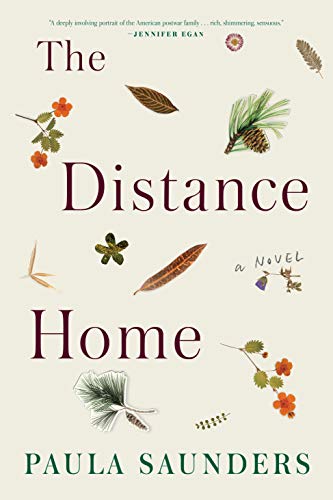
“A deeply involving portrait of the American postwar family” (Jennifer Egan) about sibling rivalry, dark secrets, and a young girl’s struggle with freedom and artistic desire
In the years after World War II, the bleak yet beautiful plains of South Dakota still embody all the contradictions—the ruggedness and the promise—of the old frontier. This is a place where you can eat strawberries from wild vines, where lightning reveals a boundless horizon, where descendants of white settlers and native Indians continue to collide, and where, for most, there are limited options.
René shares a home, a family, and a passion for dance with her older brother, Leon. Yet for all they have in common, their lives are on remarkably different paths. In contrast to René, a born spitfire, Leon is a gentle soul. The only boy in their ballet class, Leon silently endures often brutal teasing. Meanwhile, René excels at everything she touches, basking in the delighted gaze of their father, whom Leon seems to disappoint no matter how hard he tries.
As the years pass, René and Leon’s parents fight with increasing frequency—and ferocity. Their father—a cattle broker—spends more time on the road, his sporadic homecomings both yearned for and dreaded by the children. And as René and Leon grow up, they grow apart. They grasp whatever they can to stay afloat—a word of praise, a grandmother’s outstretched hand, the seductive attention of a stranger—as René works to save herself, crossing the border into a larger, more hopeful world, while Leon embarks on a path of despair and self-destruction.
Tender, searing, and unforgettable, The Distance Home is a profoundly American story spanning decades—a tale of haves and have-nots, of how our ideas of winning and losing, success and failure, lead us inevitably into various problems with empathy and caring for one another. It’s a portrait of beauty and brutality in which the author’s compassionate narration allows us to sympathize, in turn, with everyone involved.
“A riveting family saga for the ages . . . one of the best books I’ve read in years.”—Mary Karr
“Saunders’ debut is an exquisite, searing portrait of family and of people coping with whatever life throws at them while trying to keep close to one another.”—Booklist (starred review)
Die Inhaltsangabe kann sich auf eine andere Ausgabe dieses Titels beziehen.
Über die Autorin bzw. den Autor
Paula Saunders grew up in Rapid City, South Dakota. She is a graduate of the Syracuse University creative writing program, and was awarded a postgraduate Albert Schweitzer Fellowship at the State University of New York at Albany, under then-Schweitzer chair Toni Morrison. She lives in California with her husband. They have two grown daughters.
Auszug. © Genehmigter Nachdruck. Alle Rechte vorbehalten.
1
The End: A Refrain
“It’s you or me next,” René said to get a laugh.
Her brother had already passed away, as had her father. Now René and her sister were once again driving the length of the state. Black cattle dotted the yellow hillsides. Out their open windows, long-abandoned homesteads flew by—roofs pitched eerily to one side, windmills cracked in half, groaning. With this one more passing, it was down to just the two of them.
Mostly René had been steely, while Jayne had been unable to stop crying. René was older, but it didn’t matter how old they were. Their mother had finally stopped messing the bed and tearing her clothes off in the middle of the night, ending up naked and haywire on the mattress or sprawled, drooling, on the carpet next to it, her translucent body shimmering with sweat. She’d lain unconscious for the final week, cold and luminous as porcelain, as the girls came in to handle her by hip bones and shoulder blades, to turn her this way and that.
They would bury her ashes next to their father’s and brother’s.
They’d been busy—cleaned and sold her house, divided everything without jealousy or rancor. In so many ways it was all done, and in so many ways it was just beginning.
“You girls will miss her,” someone had said at the service. “No one in the world can love you like your mother does.”
René had nodded and smiled coolly, dismissing the sentiment as tired and trite, while Jayne reached for a tissue.
“Thank you for coming,” René had said. She’d found herself repeating the same line all morning, as if by rote, wondering if it was the right thing to say or if perhaps there was something fundamentally cold and incorrect about her that was causing her to sound standoffish and transparently unfeeling.
2
Eve
Yvonne, called Eve, grew up around the corner and down the long dirt road from Al, two houses from the muddy banks of the Bad River, just where it joined with the Missouri, so there was always the problem of flood and river smell. On wash day she and her mother would change the sheets, moving top sheet to bottom, because it hadn’t been too badly used, then bottom sheet to the washtub, through the wringer, and out onto the line, where the wind was kicking up dirt and chicken scat. Despite the sun-burnt yard, the pile of old tractor tires, the chickens underfoot, and the yellow haze that rose around the confluence of the two rivers, Eve never considered herself a country girl. She was just on the wrong side of the Missouri. Across the water, in Pierre, the state capital, were the politicians and doctors, the green lawns with walkways and trimmed hedges. On her side, in old Fort Pierre, were the bars, the yards full of chickens and stray cats, the overgrown lots thick with snakes and broken-down cars, and on the hill as you were coming down into town, a plaque indicating a stop on the Lewis and Clark Expedition.
She knew from the beginning she’d have to have grit, have to make her own way, so she’d come up with a plan to apply to the South Dakota College of Business, to be an executive secretary, a professional girl. Then the uniformed men had arrived at her door, holding their hats like dinner plates, to say that her eldest brother, Buddy, had been killed by a land mine in Germany, on his way home, the war already won. And not two weeks later—as the house was still reeling in grief, her mother still laid up in bed—her baby brother, Tom, the skinny little six-year-old Eve was mostly raising herself, combing his hair for school and yelling for him to get in out of the rain, drowned in the dried-up Bad River, disappearing into a sinkhole so deep that no one was ever able to recover his remains.
And suddenly, at seventeen, Eve was weary. She was tired of watching her little sister, Fanny, flirt with the priests, lifting her skirt at every town dance to show off her raggedy underthings, making an ass of herself, and tired of seeing her mother—a woman who’d never sat down in all her life—stunned and speechless with grief, first unable to rise from her bed, then unwilling to get up from her chair, her once-auburn hair a shock of white, her strong, steady hands taken with uncontrollable tremors, and her father, who after a day or two of stumbling through the house as if blind, simply went back to work, an invisible weight pressing him forward, bending his spine, so that each day seemed to set him a little closer to the earth.
So Eve finalized the year’s last edition of the school newspaper, wrote the class remembrances for the yearbook, finished her run as lead in the senior play, graduated valedictorian from Fort Pierre High School, and made up her mind to marry Al from up the street, as he’d been asking her to do. When her folks refused to grant permission for her to marry him ahead of legal age, she bit her tongue and set her wedding for the day of her eighteenth birthday.
Al was tall with glossy black curls, fine cowboy boots, and a smile big enough to make the town girls blush and call him “Pretty Boy.” But it wasn’t just his looks that spoke to Eve. Al had a dignity, an elegance, a quality of floating above that captured her attention and seemed to match her idea of what was right. Plus, he had a red-and-white convertible, a sweet green motorboat on a tow in the driveway, and his folks had the nicest house this side of the Missouri—stately, with fieldstone pillars, fresh white paint, and a wrap-around porch overlooking Deadwood Street, the only paved, tree-lined thoroughfare in town.
He’d been in the service, training as a bombardier in North Carolina, when Germany surrendered and the boys started coming home. And during all his time away, he told Eve, he’d been thinking about her—about how she had the greatest legs in town. So when he got back to Fort Pierre, he came straight to the café where she was working after school. He’d come in during her breaks just to sit with her in a booth and help her refill ketchup bottles and salt shakers, occasionally wrapping his feet around her slim ankles or letting a hand fall under the table to graze her firm, bare calves. He’d even loiter all through the dinner service just to walk her home. They went on picnics, they went on boat rides, they dressed up in their best clothes and went out to the movies, and in no time, they fell in love.
So Eve and Al were married with both a wedding cake and a birthday cake, her old dad walking her down the aisle with his mouth pulled into a crescent-moon frown. Then Eve leaned out the window of Al’s new pickup for a photo, tossed her bouquet, and they took off for Chicago. And just a week later, they came back and moved in with Al’s parents, occupying the little basement apartment, not taking the least notice of his mother’s heavy tread above them.
Still, it wasn’t lost on Eve that, whenever they happened to speak, her new mother-in-law, Emma—who’d known her since Eve was a tow-headed tomboy running the streets in her brothers’ hand-me-down overalls, climbing trees and throwing stones down by the Bad River—would now feign visible shock at her presence, unfailingly turning her head away and sniffing as though she’d just smelled something vinegary. Most likely Emma was busy wondering how her fine boy could have ended up married to that little street urchin whose father plowed the county roads and filled in pot holes, sweating in the sun all day, whose pack of older brothers were known all over town for their fall-down-drunk escapades, whose rat-haired little sister was out and about at all hours of day and night. It...
„Über diesen Titel“ kann sich auf eine andere Ausgabe dieses Titels beziehen.
Suchergebnisse für The Distance Home: A Novel

Beispielbild für diese ISBN
The Distance Home
Anbieter: World of Books (was SecondSale), Montgomery, IL, USA
Verkäuferbewertung 5 von 5 Sternen

Hardback. Zustand: Very Good. Paula] Saunders skillfully illuminates how time heals certain wounds while deepening others. . . . A mediation of the violence of American ambition.--The New York Times Book Review NAMED ONE OF THE BEST BOOKS OF THE YEAR BY REAL SIMPLE A deeply involving portrait of the American postwar family (Jennifer Egan) about sibling rivalry, dark secrets, and a young girl's struggle with freedom and artistic desire In the years after World War II, the bleak yet beautiful plains of South Dakota still embody all the contradictions--the ruggedness and the promise--of the old frontier. This is a place where you can eat strawberries from wild vines, where lightning reveals a boundless horizon, where descendants of white settlers and native Indians continue to collide, and where, for most, there are limited options. Ren shares a home, a family, and a passion for dance with her older brother, Leon. Yet for all they have in common, their lives are on remarkably different paths. In contrast to Ren , a born spitfire, Leon is a gentle soul. The only boy in their ballet class, Leon silently endures often brutal teasing. Meanwhile, Ren excels at everything she touches, basking in the delighted gaze of their father, whom Leon seems to disappoint no matter how hard he tries. As the years pass, Ren and Leon's parents fight with increasing frequency--and ferocity. Their father--a cattle broker--spends more time on the road, his sporadic homecomings both yearned for and dreaded by the children. And as Ren and Leon grow up, they grow apart. They grasp whatever they can to stay afloat--a word of praise, a grandmother's outstretched hand, the seductive attention of a stranger--as Ren works to save herself, crossing the border into a larger, more hopeful world, while Leon embarks on a path of despair and self-destruction. Tender, searing, and unforgettable, The Distance Home is a profoundly American story spanning decades--a tale of haves and have-nots, of how our ideas of winning and losing, success and failure, lead us inevitably into various problems with empathy and caring for one another. It's a portrait of beauty and brutality in which the author's compassionate narration allows us to sympathize, in turn, with everyone involved. A riveting family saga for the ages . . . one of the best books I've read in years.--Mary Karr Saunders' debut is an exquisite, searing portrait of family and of people coping with whatever life throws at them while trying to keep close to one another.--Booklist (starred review). Artikel-Nr. 00102776989
Gebraucht kaufen
EUR 4,46
Versand gratis
Versand innerhalb von USA
Versand innerhalb von USA
Anzahl: 2 verfügbar
Beispielbild für diese ISBN
The Distance Home
Anbieter: World of Books (was SecondSale), Montgomery, IL, USA
Verkäuferbewertung 5 von 5 Sternen
Hardback. Zustand: Good. Paula] Saunders skillfully illuminates how time heals certain wounds while deepening others. . . . A mediation of the violence of American ambition.--The New York Times Book Review NAMED ONE OF THE BEST BOOKS OF THE YEAR BY REAL SIMPLE A deeply involving portrait of the American postwar family (Jennifer Egan) about sibling rivalry, dark secrets, and a young girl's struggle with freedom and artistic desire In the years after World War II, the bleak yet beautiful plains of South Dakota still embody all the contradictions--the ruggedness and the promise--of the old frontier. This is a place where you can eat strawberries from wild vines, where lightning reveals a boundless horizon, where descendants of white settlers and native Indians continue to collide, and where, for most, there are limited options. Ren shares a home, a family, and a passion for dance with her older brother, Leon. Yet for all they have in common, their lives are on remarkably different paths. In contrast to Ren , a born spitfire, Leon is a gentle soul. The only boy in their ballet class, Leon silently endures often brutal teasing. Meanwhile, Ren excels at everything she touches, basking in the delighted gaze of their father, whom Leon seems to disappoint no matter how hard he tries. As the years pass, Ren and Leon's parents fight with increasing frequency--and ferocity. Their father--a cattle broker--spends more time on the road, his sporadic homecomings both yearned for and dreaded by the children. And as Ren and Leon grow up, they grow apart. They grasp whatever they can to stay afloat--a word of praise, a grandmother's outstretched hand, the seductive attention of a stranger--as Ren works to save herself, crossing the border into a larger, more hopeful world, while Leon embarks on a path of despair and self-destruction. Tender, searing, and unforgettable, The Distance Home is a profoundly American story spanning decades--a tale of haves and have-nots, of how our ideas of winning and losing, success and failure, lead us inevitably into various problems with empathy and caring for one another. It's a portrait of beauty and brutality in which the author's compassionate narration allows us to sympathize, in turn, with everyone involved. A riveting family saga for the ages . . . one of the best books I've read in years.--Mary Karr Saunders' debut is an exquisite, searing portrait of family and of people coping with whatever life throws at them while trying to keep close to one another.--Booklist (starred review). Artikel-Nr. 00102342670
Gebraucht kaufen
EUR 4,46
Versand gratis
Versand innerhalb von USA
Versand innerhalb von USA
Anzahl: 3 verfügbar
Beispielbild für diese ISBN
The Distance Home: A Novel
Verlag:
Random House (edition First Edition), 2018
ISBN 10: 0525508740
ISBN 13: 9780525508748
Gebraucht
Hardcover
Erstausgabe
Anbieter: BooksRun, Philadelphia, PA, USA
Verkäuferbewertung 5 von 5 Sternen
Hardcover. Zustand: Very Good. First Edition. It's a well-cared-for item that has seen limited use. The item may show minor signs of wear. All the text is legible, with all pages included. It may have slight markings and/or highlighting. Artikel-Nr. 0525508740-11-1
Gebraucht kaufen
EUR 4,98
Versand gratis
Versand innerhalb von USA
Versand innerhalb von USA
Anzahl: 1 verfügbar
Beispielbild für diese ISBN
The Distance Home: A Novel
Verlag:
Random House Publishing Group, 2018
ISBN 10: 0525508740
ISBN 13: 9780525508748
Gebraucht
Hardcover
Anbieter: Better World Books, Mishawaka, IN, USA
Verkäuferbewertung 5 von 5 Sternen
Zustand: Good. Former library copy. Pages intact with minimal writing/highlighting. The binding may be loose and creased. Dust jackets/supplements are not included. Includes library markings. Stock photo provided. Product includes identifying sticker. Better World Books: Buy Books. Do Good. Artikel-Nr. 15661514-6
Gebraucht kaufen
EUR 6,33
Versand gratis
Versand innerhalb von USA
Versand innerhalb von USA
Anzahl: 2 verfügbar
Beispielbild für diese ISBN
The Distance Home: A Novel
Anbieter: Wonder Book, Frederick, MD, USA
Verkäuferbewertung 5 von 5 Sternen
Zustand: Very Good. Very Good condition. Very Good dust jacket. A copy that may have a few cosmetic defects. May also contain light spine creasing or a few markings such as an owner's name, short gifter's inscription or light stamp. Artikel-Nr. G06A-02802
Gebraucht kaufen
EUR 6,40
Versand gratis
Versand innerhalb von USA
Versand innerhalb von USA
Anzahl: 1 verfügbar
Beispielbild für diese ISBN
The Distance Home: A Novel
Anbieter: Wonder Book, Frederick, MD, USA
Verkäuferbewertung 5 von 5 Sternen
Zustand: Very Good. Very Good condition. Very Good dust jacket. A copy that may have a few cosmetic defects. May also contain light spine creasing or a few markings such as an owner's name, short gifter's inscription or light stamp. Bundled media such as CDs, DVDs, floppy disks or access codes may not be included. Artikel-Nr. E08K-00181
Gebraucht kaufen
EUR 6,40
Versand gratis
Versand innerhalb von USA
Versand innerhalb von USA
Anzahl: 1 verfügbar
Beispielbild für diese ISBN
The Distance Home
Anbieter: ThriftBooks-Atlanta, AUSTELL, GA, USA
Verkäuferbewertung 5 von 5 Sternen
Hardcover. Zustand: As New. No Jacket. Pages are clean and are not marred by notes or folds of any kind. ~ ThriftBooks: Read More, Spend Less. Artikel-Nr. G0525508740I2N00
Gebraucht kaufen
EUR 6,97
Versand gratis
Versand innerhalb von USA
Versand innerhalb von USA
Anzahl: 1 verfügbar
Beispielbild für diese ISBN
The Distance Home
Anbieter: ThriftBooks-Atlanta, AUSTELL, GA, USA
Verkäuferbewertung 5 von 5 Sternen
Hardcover. Zustand: Very Good. No Jacket. May have limited writing in cover pages. Pages are unmarked. ~ ThriftBooks: Read More, Spend Less. Artikel-Nr. G0525508740I4N00
Gebraucht kaufen
EUR 6,97
Versand gratis
Versand innerhalb von USA
Versand innerhalb von USA
Anzahl: 1 verfügbar
Foto des Verkäufers
The Distance Home
Anbieter: WeBuyBooks, Rossendale, LANCS, Vereinigtes Königreich
Verkäuferbewertung 5 von 5 Sternen
hardcover. Zustand: Very Good. Most items will be dispatched the same or the next working day. A copy that has been read, but is in excellent condition. Pages are intact and not marred by notes or highlighting. The spine remains undamaged. Artikel-Nr. rev5209623581
Gebraucht kaufen
EUR 6,19
EUR 8,10 Versand
Versand von Vereinigtes Königreich nach USA
Versand von Vereinigtes Königreich nach USA
Anzahl: 1 verfügbar
Beispielbild für diese ISBN
The Distance Home: A Novel
Anbieter: Robinson Street Books, IOBA, Binghamton, NY, USA
Verkäuferbewertung 4 von 5 Sternen

Hard cover wit. Zustand: Used: Good. Prompt Shipment, shipped in Boxes, Tracking PROVIDEDContemporary Fiction; Good hardcover with dustjacket; previous owner name sticker front free end page; dustjacket tip/edges bumped; slight signs of use and wear; clean pages; prompt shipping with tracking. Artikel-Nr. Bing782NP033
Gebraucht kaufen
EUR 12,36
EUR 8,44 Versand
Versand innerhalb von USA
Versand innerhalb von USA
Anzahl: 1 verfügbar