
Verwandte Artikel zu Seeing Race Again: Countering Colorblindness across...
Inhaltsangabe
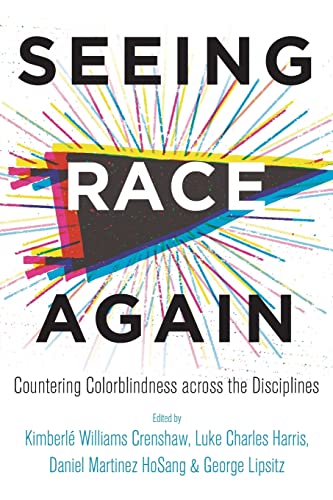
Every academic discipline has an origin story complicit with white supremacy. Racial hierarchy and colonialism structured the very foundations of most disciplines’ research and teaching paradigms. In the early twentieth century, the academy faced rising opposition and correction, evident in the intervention of scholars including W. E. B. Du Bois, Zora Neale Hurston, Carter G. Woodson, and others. By the mid-twentieth century, education itself became a center in the struggle for social justice. Scholars mounted insurgent efforts to discredit some of the most odious intellectual defenses of white supremacy in academia, but the disciplines and their keepers remained unwilling to interrogate many of the racist foundations of their fields, instead embracing a framework of racial colorblindness as their default position.
This book challenges scholars and students to see race again. Examining the racial histories and colorblindness in fields as diverse as social psychology, the law, musicology, literary studies, sociology, and gender studies, Seeing Race Again documents the profoundly contradictory role of the academy in constructing, naturalizing, and reproducing racial hierarchy. It shows how colorblindness compromises the capacity of disciplines to effectively respond to the wide set of contemporary political, economic, and social crises marking public life today.
This book challenges scholars and students to see race again. Examining the racial histories and colorblindness in fields as diverse as social psychology, the law, musicology, literary studies, sociology, and gender studies, Seeing Race Again documents the profoundly contradictory role of the academy in constructing, naturalizing, and reproducing racial hierarchy. It shows how colorblindness compromises the capacity of disciplines to effectively respond to the wide set of contemporary political, economic, and social crises marking public life today.
Die Inhaltsangabe kann sich auf eine andere Ausgabe dieses Titels beziehen.
Über die Autorin bzw. den Autor
Kimberlé Williams Crenshaw is Professor of Law at University of California, Los Angeles, and Columbia University.
Luke Charles Harris is Associate Professor of Political Science at Vassar College.
Daniel Martinez HoSang is Associate Professor of American Studies and Ethnicity, Race, and Migration at Yale University.
George Lipsitz is Professor of Sociology and Black Studies at the University of California, Santa Barbara.
Luke Charles Harris is Associate Professor of Political Science at Vassar College.
Daniel Martinez HoSang is Associate Professor of American Studies and Ethnicity, Race, and Migration at Yale University.
George Lipsitz is Professor of Sociology and Black Studies at the University of California, Santa Barbara.
Von der hinteren Coverseite
“A powerful compendium on the discourse of colorblindness shaping American society, which forcefully demonstrates that it is not a change of heart but an epistemic shift in a long racial project. Seeing Race Again assembles an impressive array of scholars from diverse academic locations who represent leading and emergent voices in the study of race.”—Roderick A. Ferguson, author of The Reorder of Things: The University and Its Pedagogies of Minority Difference
“Structural white domination shapes social cognition not merely at the individual level but within the supposedly objective academy. But yesterday’s overt racism in the humanities, social sciences, natural sciences, and legal theory is no longer acceptable in a post-civil rights epoch—hence, the shift toward today’s ‘colorblindness.’ This trailblazing and courageous text exposes the ongoing illicit white advantage concealed beneath the pretense of racial neutrality.”—Charles W. Mills, author of Black Rights/White Wrongs: The Critique of Racial Liberalism
“Seeing Race Again offers astute cross-disciplinary analysis of the ideology of colorblindness as a mechanism for perpetuating white supremacy. It also provides a crucial analytical frame for countering it. Valuably recognizing the importance of its project to racial-justice efforts in broader society, Seeing Race Again takes an intellectually pioneering look at the role that the ‘knowledge-production’ industry plays in producing, as well as reproducing, racial hierarchy in academic disciplines as varied as law, history, sociology, psychology, education, and musicology.”— Kimberly West-Faulcon, Professor of Law and James P. Bradley Chair in Constitutional Law, Loyola Law School, Los Angeles
“Seeing Race Again is an unprecedented collection that examines the longstanding complicities between the American academy and the settler, colonial, and racialized society that it shaped and continues to advantage. With essays from leading lights in their fields, this anthology breaks new ground by revealing how the major disciplines of modern thought promote ‘race-blind’ and ‘post-racial’ methods and values that both advance and obscure past and present patterns of white supremacy, racial impoverishment, disenfranchisement, and the wholesale violations of life at the center of American society. In this moment of racial emergency when Muslim bans are repackaged by the law as mere ‘travel bans,’ Seeing Race Again explains not only how we got here as scholars and intellectuals but also how we might repurpose our disciplines for genuinely emancipatory ends.”— Chandan Reddy, author of Freedom with Violence: Race, Sexuality, and the U.S. State
“Structural white domination shapes social cognition not merely at the individual level but within the supposedly objective academy. But yesterday’s overt racism in the humanities, social sciences, natural sciences, and legal theory is no longer acceptable in a post-civil rights epoch—hence, the shift toward today’s ‘colorblindness.’ This trailblazing and courageous text exposes the ongoing illicit white advantage concealed beneath the pretense of racial neutrality.”—Charles W. Mills, author of Black Rights/White Wrongs: The Critique of Racial Liberalism
“Seeing Race Again offers astute cross-disciplinary analysis of the ideology of colorblindness as a mechanism for perpetuating white supremacy. It also provides a crucial analytical frame for countering it. Valuably recognizing the importance of its project to racial-justice efforts in broader society, Seeing Race Again takes an intellectually pioneering look at the role that the ‘knowledge-production’ industry plays in producing, as well as reproducing, racial hierarchy in academic disciplines as varied as law, history, sociology, psychology, education, and musicology.”— Kimberly West-Faulcon, Professor of Law and James P. Bradley Chair in Constitutional Law, Loyola Law School, Los Angeles
“Seeing Race Again is an unprecedented collection that examines the longstanding complicities between the American academy and the settler, colonial, and racialized society that it shaped and continues to advantage. With essays from leading lights in their fields, this anthology breaks new ground by revealing how the major disciplines of modern thought promote ‘race-blind’ and ‘post-racial’ methods and values that both advance and obscure past and present patterns of white supremacy, racial impoverishment, disenfranchisement, and the wholesale violations of life at the center of American society. In this moment of racial emergency when Muslim bans are repackaged by the law as mere ‘travel bans,’ Seeing Race Again explains not only how we got here as scholars and intellectuals but also how we might repurpose our disciplines for genuinely emancipatory ends.”— Chandan Reddy, author of Freedom with Violence: Race, Sexuality, and the U.S. State
Auszug. © Genehmigter Nachdruck. Alle Rechte vorbehalten.
Seeing Race Again
Countering Colorblindness Across The Disciplines
By Kimberlé Williams Crenshaw, Luke Charles Harris, Daniel Martinez Hosang, George LipsitzUNIVERSITY OF CALIFORNIA PRESS
Copyright © 2019 The Regents of the University of California
All rights reserved.
ISBN: 978-0-520-30099-6All rights reserved.
Contents
Preface and Acknowledgments: Praying to the Disciplinary Gods with One Eye Open Kimberlé Williams Crenshaw, Luke Charles Harris, Daniel Martinez HoSang, and George Lipsitz,
1 • Introduction Kimberlé Williams Crenshaw, Luke Charles Harris, Daniel Martinez HoSang, and George Lipsitz,
PART ONE: MASKS,
2 • The Sounds of Silence: How Race Neutrality Preserves White Supremacy George Lipsitz,
3 • Unmasking Colorblindness in the Law: Lessons from the Formation of Critical Race Theory Kimberlé Williams Crenshaw,
4 • Masking Legitimized Racism: Indigeneity, Colorblindness, and the Sociology of Race Dwanna L. McKay,
5 • On the Transportability, Malleability, and Longevity of Colorblindness: Reproducing White Supremacy in Brazil and South Africa Marzia Milazzo,
6 • How Colorblindness Flourished in the Age of Obama Kimberlé Williams Crenshaw,
PART TWO: MOVES,
7 • The Possessive Investment in Classical Music: Confronting Legacies of White Supremacy in U.S. Schools and Departments of Music Loren Kajikawa,
8 • Powerblind Intersectionality: Feminist Revanchism and Inclusion as a One-Way Street Barbara Tomlinson,
9 • Colorblind Intersectionality Devon W. Carbado,
10 • Causality, Context, and Colorblindness: Equal Educational Opportunity and the Politics of Racist Disavowal Leah N. Gordon,
11 • Affirmative Action as Equalizing Opportunity: Challenging the Myth of "Preferential Treatment" Luke Charles Harris and Uma Narayan,
PART THREE: RESISTANCE AND TRANSFORMATION,
12 • They (Color) Blinded Me with Science: Counteracting Coloniality of Knowledge in Hegemonic Psychology Glenn Adams and Phia S. Salter,
13 • Toward a New Research Agenda? Foucault, Whiteness, and Indigenous Sovereignty Aileen Moreton-Robinson,
14 • Why Black Lives Matter in the Humanities Felice Blake,
15 • Negotiating Privileged Students' Affective Resistances: Why a Pedagogy of Emotional Engagement Is Necessary Paula Ioanide,
16 • Shifting Frames: Pedagogical Interventions in Colorblind Teaching Practice Milton Reynolds,
List of Contributors,
Index,
CHAPTER 1
Introduction
Kimberlé Williams Crenshaw, Luke Charles Harris, Daniel Martinez HoSang, and George Lipsitz
The essays in this volume reflect and engage the profoundly contradictory role of the university in constructing, naturalizing, and reproducing racial stratification and domination. Stretching from the racially specific projects of the past to the colorblind conventions of academic performance today, leading scholars in the social sciences, law, and humanities reveal in this book how disciplinary frameworks, research methodologies, and pedagogical strategies have both facilitated and obscured the social reproduction of racial hierarchy. The indictment of the knowledge-producing industry contained in these pages uncovers the chapters of racial history that remain undisturbed behind the walls of disciplinary convention and colorblind ideology. At the same time, the conditions of possibility out of which these essays were produced situate the university as a site in which antiracist projects can be seeded and developed. The disciplines not only produce racial power and inhibit racial knowledge, they also offer discursive tools and analytic moves that, properly contextualized, enable and enhance the telling of race and the reimagination of racial justice. In grappling with this duality, this collection embodies the twin objectives of the Countering Colorblindness project: to unpack and disrupt the racial foundations of the disciplines, and to aggregate and repurpose disciplinary insights into an alternative understanding of the social world.
This volume amplifies the methods and challenges that are foundational to critical race projects that interrogate the epistemic parameters of racial power in order to enable emancipatory possibilities both within the academy and in the social world beyond. Countering Colorblindness transcends the institutional and discursive boundaries that contain racial knowledge in multiple ways. The project is first and foremost transdisciplinary. The story it tells about the foundations of racial hierarchy and its contemporary disavowals across the university — in particular the traveling and uptake of particular orientations toward race between disciplines — can only become fully legible through the aggregated sum of its disciplinary parts. One cannot, for example, understand the narrowed ways in which racism has come to be imagined within law as the bigotry of specific individuals without engaging similar containments within sociology, social psychology, and the like.
Countering Colorblindness, however, transcends not only boundaries within the university, but boundaries between the university and civil society more broadly. The contemporary social conditions shaped by histories of white supremacy — education, health, criminal justice, employment, housing — are linked to the construction and disavowal of race within the academic disciplines themselves. Most institutions are now formally organized around the untested assumption that colorblindness is the exclusive measure of a fair and just organizational practice, an assumption that is predicated on and enabled by the privileging of colorblind solutions to color-bound problems within scholarly disciplines. Questions of racial discrimination, inequity, and injustice are typically framed as problematic only to the extent that the troubling conditions can be attributed to contraventions against the colorblind ideal. This resort to colorblindness is not solely an institutional-level response. As Eduardo Bonilla-Silva's work has long documented, individuals now defend themselves against the slightest intimation that their preferences or decisions might be racially inflected with the all-purpose disclaimer that they neither see race nor take it into account.
As a political project, colorblindness derives from a seeming naturalness and inevitability. It resonates with time-honored practices and ideals in Western thought and social relations. A long history of artistic expression and humanities scholarship has grounded aspirations for social justice in the elision of difference. The market subject of classical capitalist theory, the citizen subject of liberalism — and even the universal worker of Marxism and the universal woman of feminism — all rest upon an ideal of interchangeability wherein differences are said not to matter. These traditions teach that similarity should trump difference; that beneath the surface the appearance of "otherness" masks a common human condition.
Although many humane and egalitarian projects in history have been based on humanist concepts of liberal interchangeability, contemporary scholars have raised questions about the dangers of ignoring fundamental differences, particularly distinctions linked to social position, vulnerability, and power. While conceding that all of our fates are linked and acknowledging the sordid histories of parochial particularism, these scholars contend that some important differences do...
„Über diesen Titel“ kann sich auf eine andere Ausgabe dieses Titels beziehen.
Suchergebnisse für Seeing Race Again: Countering Colorblindness across...

Beispielbild für diese ISBN
Seeing Race Again: Countering Colorblindness across the Disciplines
Verlag:
University of California Press (edition First Edition), 2019
ISBN 10: 0520300998
ISBN 13: 9780520300996
Gebraucht
Paperback
Erstausgabe
Anbieter: BooksRun, Philadelphia, PA, USA
Verkäuferbewertung 5 von 5 Sternen

Paperback. Zustand: Very Good. First Edition. It's a well-cared-for item that has seen limited use. The item may show minor signs of wear. All the text is legible, with all pages included. It may have slight markings and/or highlighting. Artikel-Nr. 0520300998-8-1
Gebraucht kaufen
EUR 23,59
Versand gratis
Versand innerhalb von USA
Versand innerhalb von USA
Anzahl: 1 verfügbar
Beispielbild für diese ISBN
Seeing Race Again : Countering Colorblindness Across the Disciplines
Verlag:
University of California Press, 2019
ISBN 10: 0520300998
ISBN 13: 9780520300996
Gebraucht
Softcover
Anbieter: Better World Books Ltd, Dunfermline, Vereinigtes Königreich
Verkäuferbewertung 5 von 5 Sternen
Zustand: Good. Pages intact with minimal writing/highlighting. The binding may be loose and creased. Dust jackets/supplements are not included. Stock photo provided. Product includes identifying sticker. Better World Books: Buy Books. Do Good. Artikel-Nr. 55489818-6
Gebraucht kaufen
EUR 19,05
EUR 5,83 Versand
Versand von Vereinigtes Königreich nach USA
Versand von Vereinigtes Königreich nach USA
Anzahl: 1 verfügbar
Beispielbild für diese ISBN
Seeing Race Again: Countering Colorblindness across the Disciplines
Verlag:
University of California Press, 2019
ISBN 10: 0520300998
ISBN 13: 9780520300996
Gebraucht
Paperback
Anbieter: WorldofBooks, Goring-By-Sea, WS, Vereinigtes Königreich
Verkäuferbewertung 5 von 5 Sternen
Paperback. Zustand: Very Good. The book has been read, but is in excellent condition. Pages are intact and not marred by notes or highlighting. The spine remains undamaged. Artikel-Nr. GOR012769006
Gebraucht kaufen
EUR 20,26
EUR 6,53 Versand
Versand von Vereinigtes Königreich nach USA
Versand von Vereinigtes Königreich nach USA
Anzahl: 2 verfügbar
Beispielbild für diese ISBN
Seeing Race Again
Anbieter: PBShop.store UK, Fairford, GLOS, Vereinigtes Königreich
Verkäuferbewertung 5 von 5 Sternen
PAP. Zustand: New. New Book. Shipped from UK. Established seller since 2000. Artikel-Nr. WF-9780520300996
Neu kaufen
EUR 28,52
EUR 5,85 Versand
Versand von Vereinigtes Königreich nach USA
Versand von Vereinigtes Königreich nach USA
Anzahl: 15 verfügbar
Beispielbild für diese ISBN
Seeing Race Again – Countering Colorblindness across the Disciplines
Verlag:
University of California Press, 2019
ISBN 10: 0520300998
ISBN 13: 9780520300996
Neu
Softcover
Anbieter: Majestic Books, Hounslow, Vereinigtes Königreich
Verkäuferbewertung 4 von 5 Sternen

Zustand: New. pp. 392. Artikel-Nr. 370294449
Neu kaufen
EUR 36,44
EUR 7,58 Versand
Versand von Vereinigtes Königreich nach USA
Versand von Vereinigtes Königreich nach USA
Anzahl: 3 verfügbar
Beispielbild für diese ISBN
Seeing Race Again: Countering Colorblindness across the Disciplines
Verlag:
University of California Press, 2019
ISBN 10: 0520300998
ISBN 13: 9780520300996
Neu
Softcover
Anbieter: Kennys Bookstore, Olney, MD, USA
Verkäuferbewertung 5 von 5 Sternen
Zustand: New. 2019. First. Paperback. . . . . . Books ship from the US and Ireland. Artikel-Nr. V9780520300996
Neu kaufen
EUR 38,36
EUR 9,14 Versand
Versand innerhalb von USA
Versand innerhalb von USA
Anzahl: 18 verfügbar
Beispielbild für diese ISBN
Seeing Race Again: Countering Colorblindness across the Disciplines
Verlag:
University of California Press, 2019
ISBN 10: 0520300998
ISBN 13: 9780520300996
Neu
Softcover
Anbieter: Ria Christie Collections, Uxbridge, Vereinigtes Königreich
Verkäuferbewertung 5 von 5 Sternen
Zustand: New. In English. Artikel-Nr. ria9780520300996_new
Neu kaufen
EUR 34,95
EUR 13,17 Versand
Versand von Vereinigtes Königreich nach USA
Versand von Vereinigtes Königreich nach USA
Anzahl: 20 verfügbar
Beispielbild für diese ISBN
Seeing Race Again Countering Colorblindness across the Disciplines
Anbieter: Revaluation Books, Exeter, Vereinigtes Königreich
Verkäuferbewertung 5 von 5 Sternen
Paperback. Zustand: Brand New. 392 pages. 9.00x6.00x1.00 inches. In Stock. Artikel-Nr. __0520300998
Neu kaufen
EUR 36,48
EUR 14,58 Versand
Versand von Vereinigtes Königreich nach USA
Versand von Vereinigtes Königreich nach USA
Anzahl: 2 verfügbar
Beispielbild für diese ISBN
SEEING RACE AGAIN
Verlag:
University of California Press, 2019
ISBN 10: 0520300998
ISBN 13: 9780520300996
Neu
Softcover
Anbieter: Speedyhen, Hertfordshire, Vereinigtes Königreich
Verkäuferbewertung 5 von 5 Sternen
Zustand: NEW. Artikel-Nr. NW9780520300996
Neu kaufen
EUR 28,09
EUR 47,81 Versand
Versand von Vereinigtes Königreich nach USA
Versand von Vereinigtes Königreich nach USA
Anzahl: 2 verfügbar
Foto des Verkäufers
Seeing Race Again : Countering Colorblindness across the Disciplines
Verlag:
University Of California Press Feb 2019, 2019
ISBN 10: 0520300998
ISBN 13: 9780520300996
Neu
Taschenbuch
Anbieter: AHA-BUCH GmbH, Einbeck, Deutschland
Verkäuferbewertung 5 von 5 Sternen
Taschenbuch. Zustand: Neu. Neuware - Every academic discipline has an origin story complicit with white supremacy. Racial hierarchy and colonialism structured the very foundations of most disciplines' research and teaching paradigms. In the early twentieth century, the academy faced rising opposition and correction, evident in the intervention of scholars including W. E. B. Du Bois, Zora Neale Hurston, Carter G. Woodson, and others. By the mid-twentieth century, education itself became a center in the struggle for social justice. Scholars mounted insurgent efforts to discredit some of the most odious intellectual defenses of white supremacy in academia, but the disciplines and their keepers remained unwilling to interrogate many of the racist foundations of their fields, instead embracing a framework of racial colorblindness as their default position. This book challenges scholars and students to see race again. Examining the racial histories and colorblindness in fields as diverse as social psychology, the law, musicology, literary studies, sociology, and gender studies, Seeing Race Again documents the profoundly contradictory role of the academy in constructing, naturalizing, and reproducing racial hierarchy. It shows how colorblindness compromises the capacity of disciplines to effectively respond to the wide set of contemporary political, economic, and social crises marking public life today. Artikel-Nr. 9780520300996
Neu kaufen
EUR 56,88
EUR 30,50 Versand
Versand von Deutschland nach USA
Versand von Deutschland nach USA
Anzahl: 1 verfügbar