
Verwandte Artikel zu The Odes (World Literature in Translation)
The Odes (World Literature in Translation) - Softcover
Buch 10 von 28: World Literature in Translation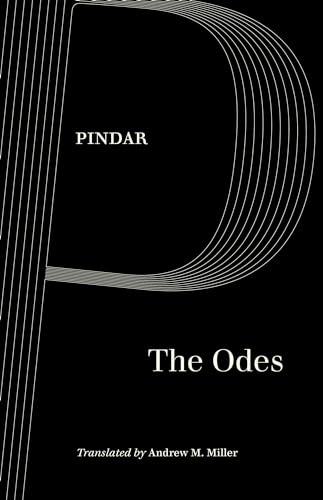
Inhaltsangabe
One of the most celebrated poets of the classical world, Pindar wrote odes for athletes that provide a unique perspective on the social and political life of ancient Greece. Commissioned in honor of successful contestants at the Olympic games and other Panhellenic contests, these odes were performed in the victors’ hometowns and conferred enduring recognition on their achievements.
Andrew M. Miller’s superb new translation captures the beauty of Pindar’s forty-five surviving victory odes, preserving the rhythm, elegance, and imagery for which they have been admired since antiquity while adhering closely to the meaning of the original Greek. This edition provides a comprehensive introduction and interpretive notes to guide readers through the intricacies of the poems and the worldview that they embody.
Andrew M. Miller’s superb new translation captures the beauty of Pindar’s forty-five surviving victory odes, preserving the rhythm, elegance, and imagery for which they have been admired since antiquity while adhering closely to the meaning of the original Greek. This edition provides a comprehensive introduction and interpretive notes to guide readers through the intricacies of the poems and the worldview that they embody.
Die Inhaltsangabe kann sich auf eine andere Ausgabe dieses Titels beziehen.
Über die Autorin bzw. den Autor
Andrew M. Miller is Professor Emeritus of Classics at the University of Pittsburgh and the author of From Delos to Delphi: A Literary Study of the Homeric Hymn to Apollo and Greek Lyric: An Anthology in Translation.
Von der hinteren Coverseite
“These translations offer a full rendering of the experience of a Pindaric ode. Miller’s phenomenal knowledge of Greek, ear for English poetry, and meticulous fidelity to the original will make this volume a treasure for any readers who wish to understand and enjoy Greece’s greatest lyric poet." —William H. Race, George L. Paddison Professor of Classics, Emeritus, University of North Carolina at Chapel Hill
“Miller has achieved the seemingly impossible, delivering a highly readable translation, made all the more accessible by his erudite introduction and notes, without diminishing the strange beauty of Pindaric poetry."—Margaret Foster, Associate Professor of Classical Studies, Indiana University
“Miller has achieved the seemingly impossible, delivering a highly readable translation, made all the more accessible by his erudite introduction and notes, without diminishing the strange beauty of Pindaric poetry."—Margaret Foster, Associate Professor of Classical Studies, Indiana University
Aus dem Klappentext
“These translations offer a full rendering of the experience of a Pindaric ode. Miller’s phenomenal knowledge of Greek, ear for English poetry, and meticulous fidelity to the original will make this volume a treasure for any readers who wish to understand and enjoy Greece’s greatest lyric poet." —William H. Race, George L. Paddison Professor of Classics, Emeritus, University of North Carolina at Chapel Hill
“Miller has achieved the seemingly impossible, delivering a highly readable translation, made all the more accessible by his erudite introduction and notes, without diminishing the strange beauty of Pindaric poetry."—Margaret Foster, Associate Professor of Classical Studies, Indiana University
“Miller has achieved the seemingly impossible, delivering a highly readable translation, made all the more accessible by his erudite introduction and notes, without diminishing the strange beauty of Pindaric poetry."—Margaret Foster, Associate Professor of Classical Studies, Indiana University
Auszug. © Genehmigter Nachdruck. Alle Rechte vorbehalten.
The Odes
By Pindar, Andrew M. MillerUNIVERSITY OF CALIFORNIA PRESS
Copyright © 2019 Andrew M. Miller
All rights reserved.
ISBN: 978-0-520-30000-2All rights reserved.
Contents
Preface,
Maps,
Introduction,
The Olympian Odes,
The Pythian Odes,
The Nemean Odes,
The Isthmian Odes,
Appendix on Conventions and Motifs,
Glossary of Names,
Textual Conspectus,
INTRODUCTION
1. Generally reckoned the greatest lyric poet of ancient Greece, Pindar was born in a village near Thebes, the chief city of Boeotia, in 518 B.C. According to ancient accounts of his life, he studied music and choral poetry in Athens as a youth; the training was evidently effective, since his earliest datable poem, Pythian 10, was composed in 498, when he was only twenty. In the collected edition produced by the Hellenistic scholar Aristophanes of Byzantium (ca. 257–180 B.C.) his large and varied poetic output filled seventeen volumes (i.e., papyrus rolls), their contents organized according to genre; among the different types of composition were hymns, paeans, dithyrambs, maiden-songs (partheneia), dirges, and odes for victorious athletes (epinikia or epinicians). Pindar received poetic commissions from individuals, families, and whole communities throughout the Greek world, including the rulers of some of its wealthiest and most powerful cities; the distribution of dedicatees among his epinicians suggests that he found a particularly eager market for his services in Sicily and on the island of Aegina, which together account for more than half the corpus. His latest datable epinician, Pythian 8, was composed in 446. If one ancient source is correct in asserting that he lived to his eightieth year, he died in 438.
2. Out of Pindar's extensive oeuvre only the four books of victory odes have come down to us through a continuous manuscript tradition, accompanied by numerous marginal notes ("scholia") extracted from earlier commentaries, most notably those written by Aristarchus (ca. 217–145 B.C.) and Didymus (ca. 80–10 B.C.). Each of the books contains odes written for victories gained at one of the four major game-sites of ancient Greece (Olympia, Pytho, Nemea, and the Isthmus of Corinth), while within each book odes are arranged according to the types of contest that they celebrate (first equestrian events, then combat sports, then footraces). In the original edition of Pindar's works the Isthmian odes were placed ahead of the Nemeans to reflect the relative prestige of the two festivals (see below, §4), and for that reason it was to the Nemeans as the final volume that three otherwise unclassifiable poems (N. 9, N. 10, N. 11) were attached as a kind of appendix; at a later point the order was reversed and the volume of Isthmians lost its final pages. As extant, the corpus comprises forty-five complete odes: fourteen Olympians, twelve Pythians, eleven Nemeans (three of them Nemean in name only), and eight Isthmians (plus the first eight lines of a ninth). Individual odes are conventionally identified by book and numerical position, e.g., Olympian 2 (O. 2), Pythian 4 (P. 4), Nemean 6 (N. 6), Isthmian 8 (I. 8).
GREEK ATHLETICS
3. The fact that out of all Pindar's many works it was the victory odes that survived essentially intact — like, indeed, the fact that there was such a genre as the victory ode in the first place — reflects the central role played by athletics in the life of the ancient Greeks. That centrality is itself reflective of a culture-wide competitiveness that finds archetypical expression in the injunction issued by Peleus to his son Achilles when he went off to fight at Troy (Iliad 11.783): "Always to be the best and preeminent over others." From the realm of myth, with its Judgment of Paris (which of three goddesses deserved a golden apple inscribed "to the fairest"?) and its Contest of Arms (should Ajax or Odysseus be the one to inherit Achilles' armor and, with it, his status as "best of the Achaeans"?), to the dramatic festivals of Athens, where every year both tragic and comic poets vied for first, second, and third place, to the military custom of awarding "prizes of valor" (aristeia) to individual warriors or entire contingents in the aftermath of victory, to female beauty-contests on the island of Lesbos and even a boys' kissing-contest at Megara — everywhere the drive to excel and to outdo others is apparent. Among its various institutional manifestations none were as ubiquitous and long-enduring as the games, the athloi or agones that have given us the words "athlete" and "athletics" and provided a somewhat abstruse synonym for "competitive" in "agonistic." The representation of athletics in Greek literature is as old as Greek literature itself, since Book 23 of the Iliad contains a lengthy and detailed account of the funeral games put on by Achilles for his beloved friend Patroclus, while Book 8 of the Odyssey offers a briefer description of contests staged by the Phaeacians for the entertainment of Odysseus. In historical times, however, the usual context for competition was provided by regularly recurring religious festivals in dozens of different cities and locales, each one held in honor of some patron deity or hero and accompanied by a full array of animal sacrifices and other ritual activities.
4. Among these athletic festivals — called panegyreis as well as agones, both terms in origin meaning "gathering" or "assembly" — four enjoyed special status as being Panhellenic ("all Greek") in character, drawing competitors and spectators from throughout the Greek-speaking world. By far the oldest and most celebrated of the four were the games at Olympia, a sanctuary of Olympian Zeus in the western Peloponnesus, which were founded in 776 B.C. and held thereafter at four-year intervals (known as Olympiads) for well over a millennium. Next in order of prestige were the Pythian games at Delphi in central Greece, a site known also as Pytho; likewise quadrennial but dedicated to the god Apollo, they were established in 582 and took place in the third year of each Olympiad. Very shortly thereafter (ca. 581 and ca. 573) biennial games were instituted at the Isthmus of Corinth and at Nemea in the northeastern Peloponnesus, dedicated respectively to Poseidon and to Zeus. Since these festivals were held in the second and fourth year of each Olympiad (the Isthmian in the spring, the Nemean in the summer), athletes were able to compete in at least one Panhellenic contest every year. The four festivals taken together constituted a well-defined circuit or cycle (periodos) of competition, with Nemea as the lowest rung on the ladder, the Isthmus next, then Pytho, and Olympia at the very top. Ambitious athletes would aspire to win victories at all four venues and thereby earn the coveted status of "circuit-victor" (periodonikes). Lying outside of the Panhellenic circuit, but still playing an important role in the careers of athletes, were numerous local festivals hosted by communities large and small throughout the Greek-speaking world, including venues in Attica and its environs (Eleusis, Marathon, Megara), Boeotia (Thebes, Orchomenus), the Peloponnesus (Argos, Epidaurus, Sicyon, Pellene, Arcadia), the Aegean islands (Aegina, Euboea), North Africa (Cyrene), and Sicily. Several of these local contests, most notably the Athenian Panathenaea and the festival of Hera (Heraea) in Argos, enjoyed a position of prestige...
„Über diesen Titel“ kann sich auf eine andere Ausgabe dieses Titels beziehen.
Suchergebnisse für The Odes (World Literature in Translation)

Beispielbild für diese ISBN
The Odes
Verlag:
University of California Press, 2019
ISBN 10: 0520300009
ISBN 13: 9780520300002
Gebraucht
Softcover
Anbieter: Better World Books, Mishawaka, IN, USA
Verkäuferbewertung 5 von 5 Sternen

Zustand: Very Good. Pages intact with possible writing/highlighting. Binding strong with minor wear. Dust jackets/supplements may not be included. Stock photo provided. Product includes identifying sticker. Better World Books: Buy Books. Do Good. Artikel-Nr. 52841277-6
Gebraucht kaufen
EUR 15,18
Versand gratis
Versand innerhalb von USA
Versand innerhalb von USA
Anzahl: 3 verfügbar
Beispielbild für diese ISBN
The Odes (World Literature in Translation)
Verlag:
University of California Press, 2019
ISBN 10: 0520300009
ISBN 13: 9780520300002
Gebraucht
paperback
Anbieter: Books From California, Simi Valley, CA, USA
Verkäuferbewertung 4 von 5 Sternen

paperback. Zustand: Good. Artikel-Nr. mon0003830188
Gebraucht kaufen
EUR 12,90
EUR 4,47 Versand
Versand innerhalb von USA
Versand innerhalb von USA
Anzahl: 1 verfügbar
Beispielbild für diese ISBN
The Odes (World Literature in Translation)
Verlag:
University of California Press, 2019
ISBN 10: 0520300009
ISBN 13: 9780520300002
Gebraucht
paperback
Anbieter: Books From California, Simi Valley, CA, USA
Verkäuferbewertung 4 von 5 Sternen
paperback. Zustand: Very Good. Cover shows minimal external wear. In otherwise near pristine condition with minimal/no other wear, crisp & clean interiors showing unmarked text, and firm binding! A very good copy. Artikel-Nr. mon0004056941
Gebraucht kaufen
EUR 13,26
EUR 4,47 Versand
Versand innerhalb von USA
Versand innerhalb von USA
Anzahl: 1 verfügbar
Beispielbild für diese ISBN
The Odes (World Literature in Translation)
Verlag:
University of California Press, 2019
ISBN 10: 0520300009
ISBN 13: 9780520300002
Gebraucht
paperback
Anbieter: Books From California, Simi Valley, CA, USA
Verkäuferbewertung 4 von 5 Sternen
paperback. Zustand: Fine. Artikel-Nr. mon0004063166
Gebraucht kaufen
EUR 13,26
EUR 4,47 Versand
Versand innerhalb von USA
Versand innerhalb von USA
Anzahl: 7 verfügbar
Foto des Verkäufers
The Odes
Verlag:
University of California Press, Berkeley, CA, 2019
ISBN 10: 0520300009
ISBN 13: 9780520300002
Gebraucht
Paperback
Erstausgabe
Anbieter: True Oak Books, Highland, NY, USA
Verkäuferbewertung 5 von 5 Sternen
Paperback. Zustand: Very Good+. First Edition; First Printing. World Literature In Translation; 5.25 X 1.25 X 8 inches; 360 pages; Very Good condition. No noteworthy defects. No markings. ; Your satisfaction is our priority. We offer free returns and respond promptly to all inquiries. Your item will be packaged with care and ship on the same or next business day. Buy with confidence. Artikel-Nr. HVD-63942-A-0
Gebraucht kaufen
EUR 18,46
Versand gratis
Versand innerhalb von USA
Versand innerhalb von USA
Anzahl: 1 verfügbar
Beispielbild für diese ISBN
The Odes
Anbieter: PBShop.store US, Wood Dale, IL, USA
Verkäuferbewertung 5 von 5 Sternen
PAP. Zustand: New. New Book. Shipped from UK. Established seller since 2000. Artikel-Nr. FW-9780520300002
Beispielbild für diese ISBN
The Odes
Anbieter: PBShop.store UK, Fairford, GLOS, Vereinigtes Königreich
Verkäuferbewertung 5 von 5 Sternen
PAP. Zustand: New. New Book. Shipped from UK. Established seller since 2000. Artikel-Nr. FW-9780520300002
Neu kaufen
EUR 19,92
EUR 4,99 Versand
Versand von Vereinigtes Königreich nach USA
Versand von Vereinigtes Königreich nach USA
Anzahl: 5 verfügbar
Beispielbild für diese ISBN
The Odes
Verlag:
University of California Press, 2019
ISBN 10: 0520300009
ISBN 13: 9780520300002
Neu
Softcover
Anbieter: Majestic Books, Hounslow, Vereinigtes Königreich
Verkäuferbewertung 4 von 5 Sternen
Zustand: New. pp. 376. Artikel-Nr. 379761052
Neu kaufen
EUR 27,32
EUR 7,80 Versand
Versand von Vereinigtes Königreich nach USA
Versand von Vereinigtes Königreich nach USA
Anzahl: 3 verfügbar
Beispielbild für diese ISBN
The Odes
Verlag:
University of California Press, 2019
ISBN 10: 0520300009
ISBN 13: 9780520300002
Neu
Softcover
Anbieter: Kennys Bookstore, Olney, MD, USA
Verkäuferbewertung 5 von 5 Sternen
Zustand: New. 2019. Paperback. . . . . . Books ship from the US and Ireland. Artikel-Nr. V9780520300002
Neu kaufen
EUR 25,96
EUR 9,41 Versand
Versand innerhalb von USA
Versand innerhalb von USA
Anzahl: 1 verfügbar
Beispielbild für diese ISBN
The Odes (World Literature in Translation)
Verlag:
University of California Press, 2019
ISBN 10: 0520300009
ISBN 13: 9780520300002
Neu
Softcover
Anbieter: Ria Christie Collections, Uxbridge, Vereinigtes Königreich
Verkäuferbewertung 5 von 5 Sternen
Zustand: New. In English. Artikel-Nr. ria9780520300002_new
Neu kaufen
EUR 25,76
EUR 11,24 Versand
Versand von Vereinigtes Königreich nach USA
Versand von Vereinigtes Königreich nach USA
Anzahl: 5 verfügbar