
Verwandte Artikel zu Black against Empire: The History and Politics of the...
Black against Empire: The History and Politics of the Black Panther Party (The George Gund Foundation Imprint in African American Studies) - Softcover
Inhaltsangabe
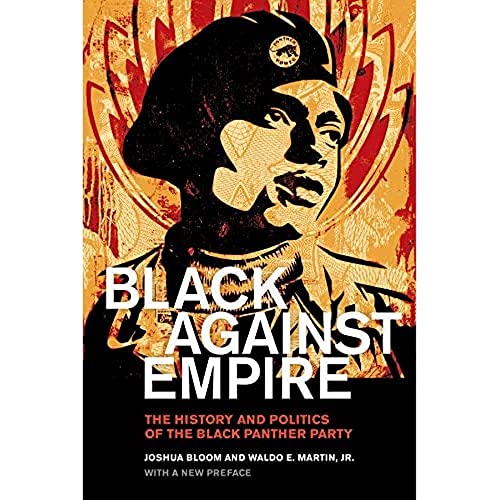
This timely special edition, published on the fiftieth anniversary of the founding of the Black Panther Party, features a new preface by the authors that places the Party in a contemporary political landscape, especially as it relates to Black Lives Matter and other struggles to fight police brutality against black communities.
In Oakland, California, in 1966, community college students Bobby Seale and Huey Newton armed themselves, began patrolling the police, and promised to prevent police brutality. Unlike the Civil Rights Movement that called for full citizenship rights for blacks within the United States, the Black Panther Party rejected the legitimacy of the U.S. government and positioned itself as part of a global struggle against American imperialism. In the face of intense repression, the Party flourished, becoming the center of a revolutionary movement with offices in sixty-eight U.S. cities and powerful allies around the world.
Black against Empire is the first comprehensive overview and analysis of the history and politics of the Black Panther Party. The authors analyze key political questions, such as why so many young black people across the country risked their lives for the revolution, why the Party grew most rapidly during the height of repression, and why allies abandoned the Party at its peak of influence. Bold, engrossing, and richly detailed, this book cuts through the mythology and obfuscation, revealing the political dynamics that drove the explosive growth of this revolutionary movement and its disastrous unraveling. Informed by twelve years of meticulous archival research, as well as familiarity with most of the former Party leadership and many rank-and-file members, this book is the definitive history of one of the greatest challenges ever posed to American state power.
In Oakland, California, in 1966, community college students Bobby Seale and Huey Newton armed themselves, began patrolling the police, and promised to prevent police brutality. Unlike the Civil Rights Movement that called for full citizenship rights for blacks within the United States, the Black Panther Party rejected the legitimacy of the U.S. government and positioned itself as part of a global struggle against American imperialism. In the face of intense repression, the Party flourished, becoming the center of a revolutionary movement with offices in sixty-eight U.S. cities and powerful allies around the world.
Black against Empire is the first comprehensive overview and analysis of the history and politics of the Black Panther Party. The authors analyze key political questions, such as why so many young black people across the country risked their lives for the revolution, why the Party grew most rapidly during the height of repression, and why allies abandoned the Party at its peak of influence. Bold, engrossing, and richly detailed, this book cuts through the mythology and obfuscation, revealing the political dynamics that drove the explosive growth of this revolutionary movement and its disastrous unraveling. Informed by twelve years of meticulous archival research, as well as familiarity with most of the former Party leadership and many rank-and-file members, this book is the definitive history of one of the greatest challenges ever posed to American state power.
Die Inhaltsangabe kann sich auf eine andere Ausgabe dieses Titels beziehen.
Über die Autorin bzw. den Autor
Joshua Bloom is Assistant Professor of Sociology at the University of Pittsburgh. He is the coeditor of Working for Justice: The L.A. Model of Organizing and Advocacy. His articles have been published in American Sociological Review and other venues.
Waldo E. Martin, Jr., is Alexander F. and May T. Morrison Professor of History and Citizenship at the University of California, Berkeley. He is the author of No Coward Soldiers: Black Cultural Politics in Postwar America, Brown v. Board of Education: A Brief History with Documents, and The Mind of Frederick Douglass.
Waldo E. Martin, Jr., is Alexander F. and May T. Morrison Professor of History and Citizenship at the University of California, Berkeley. He is the author of No Coward Soldiers: Black Cultural Politics in Postwar America, Brown v. Board of Education: A Brief History with Documents, and The Mind of Frederick Douglass.
Von der hinteren Coverseite
"I read Black against Empire while on sabbatical, and it changed something in me. #BlackLivesMatter was created just a few months later. The political history of one of the most misunderstood black political efforts in our nation's history, Black against Empire offers important considerations for today's black liberation movement."—Alicia Garza, cofounder, #BlackLivesMatter network
Praise for the original edition:
“Finally! A book that clarifies the history of our movement, our aspirations, our struggles, and the bitter challenges we faced. This is a profoundly important and revealing work. Everyone who lived through these events, anyone who wants to understand the Black Panther Party, and especially the younger generations striving to shape the future must read this book!”—Bobby Seale, Chairman, Black Panther Party
“This is the definitive history of one of the great revolutionary organizations in the history of this country. Let us learn deep democratic lessons and strong anti-imperial conclusions from this magisterial book!”—Cornel West, author of Race Matters
“This meticulously researched history explores the combination of revolutionary commitment and historical circumstance that enabled the emergence of the Black Panther Party. Because they do not shy away from the contradictions that animated this movement, Joshua Bloom and Waldo Martin pose crucial questions about the genesis, rise, and decline of the BPP that are as relevant to young generations of activists as they are to those who came of age during that era.” —Angela Y. Davis, Distinguished Professor Emerita, History of Consciousness, University of California, Santa Cruz
“In a stunning historical account, Bloom and Martin map the complex trajectory of the ideology and practice of the Black Panther Party. Going beyond merely chronicling ‘what happened,’ the authors situate the rise and fall of the Panthers within the prevailing, and constantly shifting, political climate at home and abroad. Much has been written about the Party, but Black against Empire is the definitive history of the Panthers—one that helps us rethink the very meaning of a revolutionary movement.”—Michael Omi, Professor of Ethnic Studies, University of California, Berkeley
“As important as the Black Panthers were to the evolution of Black Power, the African American freedom struggle, and, indeed, the sixties as a whole, scholarship on the group has been surprisingly thin and all too often polemical. Certainly no definitive scholarly account of the Panthers has been produced to date, or rather had been produced to date. Bloom and Martin can now lay claim to that honor. This is, by a wide margin, the most detailed, analytically sophisticated, and balanced account of the organization yet written. Anyone who hopes to understand the group and its impact on American culture and politics will need to read this book.”—Doug McAdam, Ray Lyman Wilbur Professor of Sociology, Stanford University
“This is the book we’ve all been waiting for: the first complete history of the Black Panther Party, devoid of the hype, the nonsense, the one-dimensional heroes and villains, the myths, or the tunnel vision that has limited scholarly and popular treatments across the ideological spectrum. Bloom and Martin’s riveting, nuanced, and highly original account revises our understanding of the party’s size, scope, ideology, and political complexity, and offers the most compelling explanations for its ebbs and flows and ultimate demise. Moreover, they reveal with spectacular clarity that the Party’s primary target was not just police brutality or urban poverty or white supremacy but U.S. empire in all of its manifestations.”—Robin D. G. Kelley, author of Freedom Dreams: The Black Radical Imagination
“Black against Empire puts the Black Panthers in dialogue with the varieties of political unrest across the country. Through a fresh analytical framework that helps us understand the revolutionary fervor of the 1960s, Bloom and Martin make clear that the Panthers were not an aberration or figment of the popular imaginary. They were the vanguard among black people seeking a way out of nowhere.”—Jane Rhodes, author of Framing the Black Panthers: The Spectacular Rise of a Black Power Icon
“The remarkable history of the Black Panther Party—its battles with the police, its repression at the hands of the FBI, its Free Breakfast for Children and sickle-cell-anemia programs, its ability to distribute 100,000 newspapers by hand each week—is in danger of being blotted from memory. This history by Bloom and Martin, based mainly on historical documents, is remarkable in the scope of its narrative and attention to detail. As one who lived through the Panther era, I believe this book should become a standard historical work for years to come.” —Tom Hayden, author of The Port Huron Statement
“Bloom and Martin have written the first comprehensive political history of the Black Panther Party. They present an unvarnished, judicious treatment of a much-revered, much-maligned, and widely misunderstood revolutionary organization leading the charge for ‘Black Power’ in the late 1960s and early 1970s. They provide persuasive answers to questions about the Party’s rise and fall that others have failed to fully address. All other scholars will henceforth have to grapple with their substantial findings. General readers will find it compelling too.” —Tera Hunter, Professor of History and African American Studies, Princeton University
"An essential, deeply researched, and insightful study—the best so far—of the complex history, inner workings, and conflicted legacy of the Black Panther Party as it waged its relentless battle for human rights and racial dignity in the streets of urban America.” —Leon F. Litwack, President, Organization of American Historians
“Bloom and Martin bring to light an important chapter in American history. They carefully mine the archival data to give us an account of the rise of the Black Panther Party, of its successes, and the shoals of American politics on which it fractured. In the process they give full credit to the strategic agency of the remarkable revolutionaries at the center of the story.” —Frances Fox Piven, President, American Sociological Association
Praise for the original edition:
“Finally! A book that clarifies the history of our movement, our aspirations, our struggles, and the bitter challenges we faced. This is a profoundly important and revealing work. Everyone who lived through these events, anyone who wants to understand the Black Panther Party, and especially the younger generations striving to shape the future must read this book!”—Bobby Seale, Chairman, Black Panther Party
“This is the definitive history of one of the great revolutionary organizations in the history of this country. Let us learn deep democratic lessons and strong anti-imperial conclusions from this magisterial book!”—Cornel West, author of Race Matters
“This meticulously researched history explores the combination of revolutionary commitment and historical circumstance that enabled the emergence of the Black Panther Party. Because they do not shy away from the contradictions that animated this movement, Joshua Bloom and Waldo Martin pose crucial questions about the genesis, rise, and decline of the BPP that are as relevant to young generations of activists as they are to those who came of age during that era.” —Angela Y. Davis, Distinguished Professor Emerita, History of Consciousness, University of California, Santa Cruz
“In a stunning historical account, Bloom and Martin map the complex trajectory of the ideology and practice of the Black Panther Party. Going beyond merely chronicling ‘what happened,’ the authors situate the rise and fall of the Panthers within the prevailing, and constantly shifting, political climate at home and abroad. Much has been written about the Party, but Black against Empire is the definitive history of the Panthers—one that helps us rethink the very meaning of a revolutionary movement.”—Michael Omi, Professor of Ethnic Studies, University of California, Berkeley
“As important as the Black Panthers were to the evolution of Black Power, the African American freedom struggle, and, indeed, the sixties as a whole, scholarship on the group has been surprisingly thin and all too often polemical. Certainly no definitive scholarly account of the Panthers has been produced to date, or rather had been produced to date. Bloom and Martin can now lay claim to that honor. This is, by a wide margin, the most detailed, analytically sophisticated, and balanced account of the organization yet written. Anyone who hopes to understand the group and its impact on American culture and politics will need to read this book.”—Doug McAdam, Ray Lyman Wilbur Professor of Sociology, Stanford University
“This is the book we’ve all been waiting for: the first complete history of the Black Panther Party, devoid of the hype, the nonsense, the one-dimensional heroes and villains, the myths, or the tunnel vision that has limited scholarly and popular treatments across the ideological spectrum. Bloom and Martin’s riveting, nuanced, and highly original account revises our understanding of the party’s size, scope, ideology, and political complexity, and offers the most compelling explanations for its ebbs and flows and ultimate demise. Moreover, they reveal with spectacular clarity that the Party’s primary target was not just police brutality or urban poverty or white supremacy but U.S. empire in all of its manifestations.”—Robin D. G. Kelley, author of Freedom Dreams: The Black Radical Imagination
“Black against Empire puts the Black Panthers in dialogue with the varieties of political unrest across the country. Through a fresh analytical framework that helps us understand the revolutionary fervor of the 1960s, Bloom and Martin make clear that the Panthers were not an aberration or figment of the popular imaginary. They were the vanguard among black people seeking a way out of nowhere.”—Jane Rhodes, author of Framing the Black Panthers: The Spectacular Rise of a Black Power Icon
“The remarkable history of the Black Panther Party—its battles with the police, its repression at the hands of the FBI, its Free Breakfast for Children and sickle-cell-anemia programs, its ability to distribute 100,000 newspapers by hand each week—is in danger of being blotted from memory. This history by Bloom and Martin, based mainly on historical documents, is remarkable in the scope of its narrative and attention to detail. As one who lived through the Panther era, I believe this book should become a standard historical work for years to come.” —Tom Hayden, author of The Port Huron Statement
“Bloom and Martin have written the first comprehensive political history of the Black Panther Party. They present an unvarnished, judicious treatment of a much-revered, much-maligned, and widely misunderstood revolutionary organization leading the charge for ‘Black Power’ in the late 1960s and early 1970s. They provide persuasive answers to questions about the Party’s rise and fall that others have failed to fully address. All other scholars will henceforth have to grapple with their substantial findings. General readers will find it compelling too.” —Tera Hunter, Professor of History and African American Studies, Princeton University
"An essential, deeply researched, and insightful study—the best so far—of the complex history, inner workings, and conflicted legacy of the Black Panther Party as it waged its relentless battle for human rights and racial dignity in the streets of urban America.” —Leon F. Litwack, President, Organization of American Historians
“Bloom and Martin bring to light an important chapter in American history. They carefully mine the archival data to give us an account of the rise of the Black Panther Party, of its successes, and the shoals of American politics on which it fractured. In the process they give full credit to the strategic agency of the remarkable revolutionaries at the center of the story.” —Frances Fox Piven, President, American Sociological Association
Aus dem Klappentext
"I read Black against Empire while on sabbatical, and it changed something in me. #BlackLivesMatter was created just a few months later. The political history of one of the most misunderstood black political efforts in our nation's history, Black against Empire offers important considerations for today's black liberation movement."&;Alicia Garza, cofounder, #BlackLivesMatter network
Praise for the original edition:
&;Finally! A book that clarifies the history of our movement, our aspirations, our struggles, and the bitter challenges we faced. This is a profoundly important and revealing work. Everyone who lived through these events, anyone who wants to understand the Black Panther Party, and especially the younger generations striving to shape the future must read this book!&;&;Bobby Seale, Chairman, Black Panther Party
&;This is the definitive history of one of the great revolutionary organizations in the history of this country. Let us learn deep democratic lessons and strong anti-imperial conclusions from this magisterial book!&;&;Cornel West, author of Race Matters
&;This meticulously researched history explores the combination of revolutionary commitment and historical circumstance that enabled the emergence of the Black Panther Party. Because they do not shy away from the contradictions that animated this movement, Joshua Bloom and Waldo Martin pose crucial questions about the genesis, rise, and decline of the BPP that are as relevant to young generations of activists as they are to those who came of age during that era.&; &;Angela Y. Davis, Distinguished Professor Emerita, History of Consciousness, University of California, Santa Cruz
&;In a stunning historical account, Bloom and Martin map the complex trajectory of the ideology and practice of the Black Panther Party. Going beyond merely chronicling &;what happened,&; the authors situate the rise and fall of the Panthers within the prevailing, and constantly shifting, political climate at home and abroad. Much has been written about the Party, but Black against Empire is the definitive history of the Panthers&;one that helps us rethink the very meaning of a revolutionary movement.&;&;Michael Omi, Professor of Ethnic Studies, University of California, Berkeley
&;As important as the Black Panthers were to the evolution of Black Power, the African American freedom struggle, and, indeed, the sixties as a whole, scholarship on the group has been surprisingly thin and all too often polemical. Certainly no definitive scholarly account of the Panthers has been produced to date, or rather had been produced to date. Bloom and Martin can now lay claim to that honor. This is, by a wide margin, the most detailed, analytically sophisticated, and balanced account of the organization yet written. Anyone who hopes to understand the group and its impact on American culture and politics will need to read this book.&;&;Doug McAdam, Ray Lyman Wilbur Professor of Sociology, Stanford University
&;This is the book we&;ve all been waiting for: the first complete history of the Black Panther Party, devoid of the hype, the nonsense, the one-dimensional heroes and villains, the myths, or the tunnel vision that has limited scholarly and popular treatments across the ideological spectrum. Bloom and Martin&;s riveting, nuanced, and highly original account revises our understanding of the party&;s size, scope, ideology, and political complexity, and offers the most compelling explanations for its ebbs and flows and ultimate demise. Moreover, they reveal with spectacular clarity that the Party&;s primary target was not just police brutality or urban poverty or white supremacy but U.S. empire in all of its manifestations.&;&;Robin D. G. Kelley, author of Freedom Dreams: The Black Radical Imagination
&;Black against Empire puts the Black Panthers in dialogue with the varieties of political unrest across the country. Through a fresh analytical framework that helps us understand the revolutionary fervor of the 1960s, Bloom and Martin make clear that the Panthers were not an aberration or figment of the popular imaginary. They were the vanguard among black people seeking a way out of nowhere.&;&;Jane Rhodes, author of Framing the Black Panthers: The Spectacular Rise of a Black Power Icon
&;The remarkable history of the Black Panther Party&;its battles with the police, its repression at the hands of the FBI, its Free Breakfast for Children and sickle-cell-anemia programs, its ability to distribute 100,000 newspapers by hand each week&;is in danger of being blotted from memory. This history by Bloom and Martin, based mainly on historical documents, is remarkable in the scope of its narrative and attention to detail. As one who lived through the Panther era, I believe this book should become a standard historical work for years to come.&; &;Tom Hayden, author of The Port Huron Statement
&;Bloom and Martin have written the first comprehensive political history of the Black Panther Party. They present an unvarnished, judicious treatment of a much-revered, much-maligned, and widely misunderstood revolutionary organization leading the charge for &;Black Power&; in the late 1960s and early 1970s. They provide persuasive answers to questions about the Party&;s rise and fall that others have failed to fully address. All other scholars will henceforth have to grapple with their substantial findings. General readers will find it compelling too.&; &;Tera Hunter, Professor of History and African American Studies, Princeton University
"An essential, deeply researched, and insightful study&;the best so far&;of the complex history, inner workings, and conflicted legacy of the Black Panther Party as it waged its relentless battle for human rights and racial dignity in the streets of urban America.&; &;Leon F. Litwack, President, Organization of American Historians
&;Bloom and Martin bring to light an important chapter in American history. They carefully mine the archival data to give us an account of the rise of the Black Panther Party, of its successes, and the shoals of American politics on which it fractured. In the process they give full credit to the strategic agency of the remarkable revolutionaries at the center of the story.&; &;Frances Fox Piven, President, American Sociological Association
 
Praise for the original edition:
&;Finally! A book that clarifies the history of our movement, our aspirations, our struggles, and the bitter challenges we faced. This is a profoundly important and revealing work. Everyone who lived through these events, anyone who wants to understand the Black Panther Party, and especially the younger generations striving to shape the future must read this book!&;&;Bobby Seale, Chairman, Black Panther Party
&;This is the definitive history of one of the great revolutionary organizations in the history of this country. Let us learn deep democratic lessons and strong anti-imperial conclusions from this magisterial book!&;&;Cornel West, author of Race Matters
&;This meticulously researched history explores the combination of revolutionary commitment and historical circumstance that enabled the emergence of the Black Panther Party. Because they do not shy away from the contradictions that animated this movement, Joshua Bloom and Waldo Martin pose crucial questions about the genesis, rise, and decline of the BPP that are as relevant to young generations of activists as they are to those who came of age during that era.&; &;Angela Y. Davis, Distinguished Professor Emerita, History of Consciousness, University of California, Santa Cruz
&;In a stunning historical account, Bloom and Martin map the complex trajectory of the ideology and practice of the Black Panther Party. Going beyond merely chronicling &;what happened,&; the authors situate the rise and fall of the Panthers within the prevailing, and constantly shifting, political climate at home and abroad. Much has been written about the Party, but Black against Empire is the definitive history of the Panthers&;one that helps us rethink the very meaning of a revolutionary movement.&;&;Michael Omi, Professor of Ethnic Studies, University of California, Berkeley
&;As important as the Black Panthers were to the evolution of Black Power, the African American freedom struggle, and, indeed, the sixties as a whole, scholarship on the group has been surprisingly thin and all too often polemical. Certainly no definitive scholarly account of the Panthers has been produced to date, or rather had been produced to date. Bloom and Martin can now lay claim to that honor. This is, by a wide margin, the most detailed, analytically sophisticated, and balanced account of the organization yet written. Anyone who hopes to understand the group and its impact on American culture and politics will need to read this book.&;&;Doug McAdam, Ray Lyman Wilbur Professor of Sociology, Stanford University
&;This is the book we&;ve all been waiting for: the first complete history of the Black Panther Party, devoid of the hype, the nonsense, the one-dimensional heroes and villains, the myths, or the tunnel vision that has limited scholarly and popular treatments across the ideological spectrum. Bloom and Martin&;s riveting, nuanced, and highly original account revises our understanding of the party&;s size, scope, ideology, and political complexity, and offers the most compelling explanations for its ebbs and flows and ultimate demise. Moreover, they reveal with spectacular clarity that the Party&;s primary target was not just police brutality or urban poverty or white supremacy but U.S. empire in all of its manifestations.&;&;Robin D. G. Kelley, author of Freedom Dreams: The Black Radical Imagination
&;Black against Empire puts the Black Panthers in dialogue with the varieties of political unrest across the country. Through a fresh analytical framework that helps us understand the revolutionary fervor of the 1960s, Bloom and Martin make clear that the Panthers were not an aberration or figment of the popular imaginary. They were the vanguard among black people seeking a way out of nowhere.&;&;Jane Rhodes, author of Framing the Black Panthers: The Spectacular Rise of a Black Power Icon
&;The remarkable history of the Black Panther Party&;its battles with the police, its repression at the hands of the FBI, its Free Breakfast for Children and sickle-cell-anemia programs, its ability to distribute 100,000 newspapers by hand each week&;is in danger of being blotted from memory. This history by Bloom and Martin, based mainly on historical documents, is remarkable in the scope of its narrative and attention to detail. As one who lived through the Panther era, I believe this book should become a standard historical work for years to come.&; &;Tom Hayden, author of The Port Huron Statement
&;Bloom and Martin have written the first comprehensive political history of the Black Panther Party. They present an unvarnished, judicious treatment of a much-revered, much-maligned, and widely misunderstood revolutionary organization leading the charge for &;Black Power&; in the late 1960s and early 1970s. They provide persuasive answers to questions about the Party&;s rise and fall that others have failed to fully address. All other scholars will henceforth have to grapple with their substantial findings. General readers will find it compelling too.&; &;Tera Hunter, Professor of History and African American Studies, Princeton University
"An essential, deeply researched, and insightful study&;the best so far&;of the complex history, inner workings, and conflicted legacy of the Black Panther Party as it waged its relentless battle for human rights and racial dignity in the streets of urban America.&; &;Leon F. Litwack, President, Organization of American Historians
&;Bloom and Martin bring to light an important chapter in American history. They carefully mine the archival data to give us an account of the rise of the Black Panther Party, of its successes, and the shoals of American politics on which it fractured. In the process they give full credit to the strategic agency of the remarkable revolutionaries at the center of the story.&; &;Frances Fox Piven, President, American Sociological Association
 
Auszug. © Genehmigter Nachdruck. Alle Rechte vorbehalten.
Black against Empire
The History and Politics of the Black Panther Party
By Joshua Bloom, Waldo E. Martin Jr.UNIVERSITY OF CALIFORNIA PRESS
Copyright © 2016 Joshua Bloom and Waldo E. Martin, Jr.
All rights reserved.
ISBN: 978-0-520-29328-1All rights reserved.
Contents
List of Figures, xi,
Preface to the 2016 Edition, xiii,
Introduction, 1,
PART ONE. ORGANIZING RAGE, 17,
1 Huey and Bobby, 19,
2 Policing the Police, 45,
PART TWO. BAPTISM IN BLOOD, 63,
3 The Correct Handling of a Revolution, 65,
4 Free Huey!, 99,
5 Martyrs, 115,
6 National Uprising, 139,
PART THREE. RESILIENCE, 177,
7 Breakfast, 179,
8 Law and Order, 199,
9 41st and Central, 216,
10 Hampton and Clark, 226,
11 Bobby and Ericka, 247,
PART FOUR. REVOLUTION HAS COME!, 267,
12 Black Studies and Third World Liberation, 269,
13 Vanguard of the New Left, 288,
14 International Alliance, 309,
PART FIVE. CONCESSIONS AND UNRAVELING, 339,
15 Rupture, 341,
16 The Limits of Heroism, 372,
Conclusion, 390,
Notes, 403,
Acknowledgments, 487,
Index, 491,
CHAPTER 1
Huey and Bobby
On February 17, 1942, in Monroe, Louisiana, Huey P. Newton was born, the seventh and youngest child of Walter and Armelia Newton. Walter Newton was a paragon of responsibility. He held down two jobs at any given time, working in the gravel pit, the carbon plant, sugarcane mills, sawmills, and eventually as a brakeman for the Union Saw Mill Company. On Sundays, he served as the minister at the Bethel Baptist Church in Monroe, where he and his family lived. He preached as the spirit moved him, often promising to address his parishioners on a particular topic, then improvising an inspirational sermon salient to the moment. The rest of the time he spent with his family, the joy and purpose of his life.
Armelia Johnson liked to say that she married young and finished growing up with her children. She was only seventeen when she gave birth to her first child. The others soon followed. Unlike most black women in the South in the 1930s and 1940s, Armelia stayed at home, raising her children, seeing them through life's challenges, and relishing life's humor. The Newton family saw Armelia's not working as a domestic servant for whites as an act of rebellion.
Walter Newton often used to say, "You can take a killing but you can't take a beating." On one occasion, Walter Newton got into an argument with a younger white man for whom he worked about a detail of the job. The white man told him that when a "colored" disputed his word, he whipped him. Walter Newton replied that no man whipped him unless he was a better man, and he doubted that the white man qualified. The man was shocked at this uncharacteristic response and backed down.
This was just one of many times that Walter Newton defied whites in ways that often got blacks in the South lynched. He developed a reputation for being "crazy," so whites steered clear of him, gaining him powerful respect among blacks. Newton's ability to challenge whites and stay alive is something of a mystery. One factor, according to Huey Newton, may have been his mixed race. Walter Newton's father was a white man who had raped his black mother. Thus, local whites knew his father, cousins, aunts, and blood relatives, and while they might not have hesitated to kill a black person, they may have been reluctant to shed his white family's blood.
The Newtons moved to Oakland in 1945, following the path of many black families migrating from the South to the cities of the North and West to fill the jobs in the shipyards and industries that opened up with the onset of World War II. When the war ended, many blacks were laid off as wartime industry waned, and soldiers returning from the war created a labor surplus. Both new and expanded black communities in cities across the country rapidly sank into poverty. While the Newtons were better off than many of the black families they knew, they were poor, with seven children to feed, and often ate cush, a dish made of fried cornbread, several times a day. Making payments on the family's bills became Walter Newton's constant preoccupation.
The Newton family was on the edge, and Huey looked to his older brothers for survival strategies. Each coped with ghetto life in a different way. Walter Newton Jr., the oldest, became a hustler, working outside legal channels to keep poverty at bay. He always dressed sharp, and he drove a nice car. Everyone in the neighborhood called him "Sonny Man." Lee Edward gained a reputation as a street fighter before joining the military. He knew how "to persist in the face of bad odds, always to look an adversary straight in the eye, and to keep moving forward." Melvin Newton took a different path. He became a bookworm, went to college, and eventually taught sociology at Oakland's Merritt College.
Huey P. Newton became all of these things—hustler, fighter, and scholar. From his oldest brothers, Lee Edward and "Sonny Man," he mastered the ways of the street and learned how to fight. Through his teen years, Huey fought constantly. Unlike Melvin, Huey was not a bookworm. For years he rebelled at school. By the time he entered the eleventh grade, he still could not read, and his teachers often told him he was unintelligent. But outside of school, he had been learning how to think. With Melvin, he memorized and analyzed poetry. When a counselor in his high school told him he was "not college material," Huey decided to prove him wrong. Over the next two years, through intense focus and will, he taught himself to read, graduated high school, and in 1959, enrolled in Merritt College.
By the time Huey Newton became involved in the Afro-American Association at Merritt, he could debate theory as well as any of his peers. Yet he had a side that most of the budding intellectuals around him lacked; he knew the street. He could understand and relate to the plight of the swelling ranks of unemployed, the "brothers on the block" who lived outside the law. Newton's street knowledge helped put him through college, as he covered his bills through theft and fraud. But when Newton was caught, he used his book knowledge to study the law and defend himself in court, impressing the jury and defeating several misdemeanor charges.
In 1962, at a rally at Merritt College opposing the U.S. blockade of Cuba, Newton's political life took a leap forward: there, he met fellow student Bobby Seale, with whom he would eventually found the Black Panther Party. The rally featured Donald Warden, leader of the Afro-American Association. Warden praised Cuba's Fidel Castro and voiced opposition to domestic civil rights organizations. After the speeches, an informal debate began among the students, during which Newton convinced Seale that the U.S. policy in Cuba was wrong and also made him question mainstream civil rights organizations. Newton impressed Seale with his command of the argument presented by E. Franklin Frazier in Black Bourgeoisie, a scathing critique of the black middle class that he had read with Warden. Seale soon joined Warden's group.
More than five years older than Newton, Bobby Seale was born in Dallas, Texas, on October 22, 1936, the oldest of three siblings, and raised in Oakland. His father worked as a carpenter, and his mother also worked, sometimes as a caterer. Besides teaching Bobby how to build things and how to hunt and fish, Bobby's father also taught him about injustice, often beating him badly for no apparent reason.
The...
„Über diesen Titel“ kann sich auf eine andere Ausgabe dieses Titels beziehen.
Suchergebnisse für Black against Empire: The History and Politics of the...

Beispielbild für diese ISBN
Black against Empire: The History and Politics of the Black Panther Party (The George Gund Foundation Imprint in African American Studies)
Verlag:
University of California Press, 2016
ISBN 10: 0520293282
ISBN 13: 9780520293281
Gebraucht
Softcover
Anbieter: Wonder Book, Frederick, MD, USA
Verkäuferbewertung 5 von 5 Sternen

Zustand: Very Good. Very Good condition. A copy that may have a few cosmetic defects. May also contain light spine creasing or a few markings such as an owner's name, short gifter's inscription or light stamp. Artikel-Nr. H10L-00747
Gebraucht kaufen
EUR 22,65
Versand gratis
Versand innerhalb von USA
Versand innerhalb von USA
Anzahl: 1 verfügbar
Beispielbild für diese ISBN
Black against Empire: The History and Politics of the Black Panther Party (The George Gund Foundation Imprint in African American Studies)
ISBN 10: 0520293282
ISBN 13: 9780520293281
Gebraucht
Paperback
Anbieter: BooksRun, Philadelphia, PA, USA
Verkäuferbewertung 5 von 5 Sternen
Paperback. Zustand: Very Good. First Edition, With a New Preface. It's a well-cared-for item that has seen limited use. The item may show minor signs of wear. All the text is legible, with all pages included. It may have slight markings and/or highlighting. Artikel-Nr. 0520293282-11-1
Gebraucht kaufen
EUR 24,47
Versand gratis
Versand innerhalb von USA
Versand innerhalb von USA
Anzahl: 3 verfügbar
Beispielbild für diese ISBN
Black against Empire
Anbieter: PBShop.store UK, Fairford, GLOS, Vereinigtes Königreich
Verkäuferbewertung 5 von 5 Sternen
PAP. Zustand: New. New Book. Shipped from UK. Established seller since 2000. Artikel-Nr. WF-9780520293281
Neu kaufen
EUR 25,21
EUR 6,85 Versand
Versand von Vereinigtes Königreich nach USA
Versand von Vereinigtes Königreich nach USA
Anzahl: 5 verfügbar
Beispielbild für diese ISBN
Black against Empire: The History and Politics of the Black Panther Party
Verlag:
University of California Press, 2016
ISBN 10: 0520293282
ISBN 13: 9780520293281
Neu
Softcover
Anbieter: Kennys Bookstore, Olney, MD, USA
Verkäuferbewertung 5 von 5 Sternen
Zustand: New. Published on the fiftieth anniversary of the founding of the Black Panther Party, this book features a new preface by the authors that places the Party in a contemporary political landscape, especially as it relates to Black Lives Matter and other struggles to fight police brutality against black communities. Num Pages: 568 pages, 50 b/w photographs. BIC Classification: 1KBB; 3JJP; 3JM; HBJK; HBLW3; JFSL3; JPWQ. Category: (G) General (US: Trade). Dimension: 155 x 229 x 36. Weight in Grams: 764. . 2016. New. Paperback. . . . . Books ship from the US and Ireland. Artikel-Nr. V9780520293281
Neu kaufen
EUR 33,65
EUR 9,01 Versand
Versand innerhalb von USA
Versand innerhalb von USA
Anzahl: 1 verfügbar
Beispielbild für diese ISBN
Black against Empire: The History and Politics of the Black Panther Party (The George Gund Foundation Imprint in African American Studies)
Verlag:
University of California Press, 2016
ISBN 10: 0520293282
ISBN 13: 9780520293281
Neu
Softcover
Anbieter: Ria Christie Collections, Uxbridge, Vereinigtes Königreich
Verkäuferbewertung 5 von 5 Sternen
Zustand: New. In. Artikel-Nr. ria9780520293281_new
Neu kaufen
EUR 30,78
EUR 13,98 Versand
Versand von Vereinigtes Königreich nach USA
Versand von Vereinigtes Königreich nach USA
Anzahl: Mehr als 20 verfügbar
Beispielbild für diese ISBN
Black against Empire The History and Politics of the Black Panther Party
Anbieter: Revaluation Books, Exeter, Vereinigtes Königreich
Verkäuferbewertung 5 von 5 Sternen
Paperback. Zustand: Brand New. new edition. 539 pages. 9.00x6.00x1.25 inches. In Stock. Artikel-Nr. xi0520293282
Neu kaufen
EUR 40,11
EUR 14,58 Versand
Versand von Vereinigtes Königreich nach USA
Versand von Vereinigtes Königreich nach USA
Anzahl: 2 verfügbar
Beispielbild für diese ISBN
Black against Empire The History and Politics of the Black Panther Party
Anbieter: Revaluation Books, Exeter, Vereinigtes Königreich
Verkäuferbewertung 5 von 5 Sternen
Paperback. Zustand: Brand New. new edition. 539 pages. 9.00x6.00x1.25 inches. In Stock. Artikel-Nr. xr0520293282
Neu kaufen
EUR 40,11
EUR 14,58 Versand
Versand von Vereinigtes Königreich nach USA
Versand von Vereinigtes Königreich nach USA
Anzahl: 2 verfügbar
Beispielbild für diese ISBN
Black Against Empire: The History and Politics of the Black Panther Party
Verlag:
University of California Press, 2016
ISBN 10: 0520293282
ISBN 13: 9780520293281
Neu
Softcover
Anbieter: Majestic Books, Hounslow, Vereinigtes Königreich
Verkäuferbewertung 4 von 5 Sternen

Zustand: New. pp. 580. Artikel-Nr. 371294768
Neu kaufen
EUR 49,17
EUR 7,58 Versand
Versand von Vereinigtes Königreich nach USA
Versand von Vereinigtes Königreich nach USA
Anzahl: 1 verfügbar
Foto des Verkäufers
Black against Empire : The History and Politics of the Black Panther Party
Anbieter: AHA-BUCH GmbH, Einbeck, Deutschland
Verkäuferbewertung 5 von 5 Sternen
Taschenbuch. Zustand: Neu. Neuware - This timely special edition, published on the fiftieth anniversary of the founding of the Black Panther Party, features a new preface by the authors that places the Party in a contemporary political landscape, especially as it relates to Black Lives Matter and other struggles to fight police brutality against black communities. In Oakland, California, in 1966, community college students Bobby Seale and Huey Newton armed themselves, began patrolling the police, and promised to prevent police brutality. Unlike the Civil Rights Movement that called for full citizenship rights for blacks within the United States, the Black Panther Party rejected the legitimacy of the U.S. government and positioned itself as part of a global struggle against American imperialism. In the face of intense repression, the Party flourished, becoming the center of a revolutionary movement with offices in sixty-eight U.S. cities and powerful allies around the world. Black against Empire is the first comprehensive overview and analysis of the history and politics of the Black Panther Party. The authors analyze key political questions, such as why so many young black people across the country risked their lives for the revolution, why the Party grew most rapidly during the height of repression, and why allies abandoned the Party at its peak of influence. Bold, engrossing, and richly detailed, this book cuts through the mythology and obfuscation, revealing the political dynamics that drove the explosive growth of this revolutionary movement and its disastrous unraveling. Informed by twelve years of meticulous archival research, as well as familiarity with most of the former Party leadership and many rank-and-file members, this book is the definitive history of one of the greatest challenges ever posed to American state power. Artikel-Nr. 9780520293281
Neu kaufen
EUR 30,00
EUR 30,50 Versand
Versand von Deutschland nach USA
Versand von Deutschland nach USA
Anzahl: 2 verfügbar
Beispielbild für diese ISBN
BLACK AGAINST EMPIRE : THE HISTORY AND POLITICS OF THE BLACK PANTHER PARTY
Verlag:
University of California Press, 2016
ISBN 10: 0520293282
ISBN 13: 9780520293281
Gebraucht
Softcover
Anbieter: Libros Feroces, Castellgali, B, Spanien
Verkäuferbewertung 5 von 5 Sternen
Zustand: Usado. Artikel-Nr. 9780520293281
Gebraucht kaufen
EUR 20,35
EUR 50,00 Versand
Versand von Spanien nach USA
Versand von Spanien nach USA
Anzahl: 1 verfügbar