
Inhaltsangabe
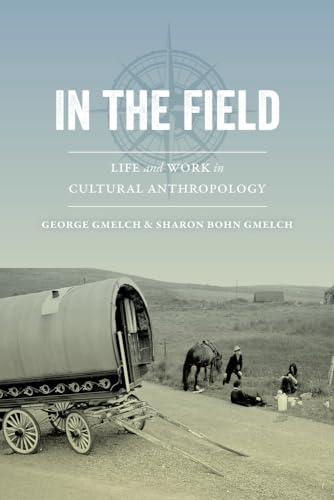
This book offers an invaluable look at what cultural anthropologists do when they are in the field. Through fascinating and often entertaining accounts of their lives and work in varied cultural settings, the authors describe the many forms fieldwork can take, the kinds of questions anthropologists ask, and the common problems they encounter. From these accounts and the experiences of the student field workers the authors have mentored over the years, In the Field makes a powerful case for the value of the anthropological approach to knowledge.
Die Inhaltsangabe kann sich auf eine andere Ausgabe dieses Titels beziehen.
Über die Autorin bzw. den Autor
George Gmelch is Professor of Anthropology at the University of San Francisco and Union College. He has published fourteen books and has also written for the New York Times, the Washington Post, Psychology Today, Society, and Natural History.
Sharon Bohn Gmelch is Professor of Anthropology at the University of San Francisco and Union College. She is the author or editor of ten books, coproducer of an ethnographic film, and the winner of several awards including Ireland’s Book of the Year.
Sharon Bohn Gmelch is Professor of Anthropology at the University of San Francisco and Union College. She is the author or editor of ten books, coproducer of an ethnographic film, and the winner of several awards including Ireland’s Book of the Year.
Von der hinteren Coverseite
"A treasure trove of fieldwork experience! Where was this book when I was trying to uncover the mysteries of ethnography? If the devil is in the details, then the Gmelches have banished him with a richly woven tapestry of insights into the questions that we all are plagued with when doing fieldwork."—Alan Klein, author of Dominican Baseball: New Pride, Old Prejudice
"There is no better review for students of anthropology of the travails and exhilaration of ethnographic fieldwork than this examination of over forty years of their research by the indomitable and inexhaustible Gmelches. Whether with students or on their own, from Ireland to the Caribbean, Tanzania to Tasmania, Sitka to Napa Valley, among urban nomads, dockworkers, migrants and baseball players, George and Sharon Bohn Gmelch show how ethnography as method and methodology has been transformed as anthropology has matured, diversified, and expanded. I envy all those students who had a chance to learn about anthropology from them, and I encourage all who are curious about what it takes to be an anthropologist to savor this treat of a book."—Thomas M. Wilson, Professor of Anthropology, Binghamton University, State University of New York
"There is no better review for students of anthropology of the travails and exhilaration of ethnographic fieldwork than this examination of over forty years of their research by the indomitable and inexhaustible Gmelches. Whether with students or on their own, from Ireland to the Caribbean, Tanzania to Tasmania, Sitka to Napa Valley, among urban nomads, dockworkers, migrants and baseball players, George and Sharon Bohn Gmelch show how ethnography as method and methodology has been transformed as anthropology has matured, diversified, and expanded. I envy all those students who had a chance to learn about anthropology from them, and I encourage all who are curious about what it takes to be an anthropologist to savor this treat of a book."—Thomas M. Wilson, Professor of Anthropology, Binghamton University, State University of New York
“This is an outstanding resource for introducing and teaching the craft of anthropological fieldwork. George and Sharon Bohn Gmelch are consummate, inveterate fieldworkers who convey vividly the challenges and pleasures of their own wide-ranging research and the projects of their students, in the field and in the classroom. It is instructive, engaging, and inspirational.”—William W. Kelly, Professor of Anthropology and Sumitomo Professor of Japanese Studies, Yale University
"Engaging, candid, and always thought provoking, In the Field provides an exceptional guide to the practices and possibilities central to an ethnographic sensibility. The authors draw upon a remarkable range of field experiences to shape an exemplary case for how and why ethnography makes a difference."—Don Brenneis, Distinguished Professor of Anthropology, UC Santa Cruz
"This useful and entertaining book can teach us about fieldwork. The many case studies range from nomads in Ireland to middle-class Japan, from applied anthropology in Alaska to field schools in Africa. The up-to-date topics include ethics and computer privacy, collaboration and team work, and bringing family and children to the field. Thank you George and Sharon!"—Nelson Graburn, UC Berkeley
"Engaging, candid, and always thought provoking, In the Field provides an exceptional guide to the practices and possibilities central to an ethnographic sensibility. The authors draw upon a remarkable range of field experiences to shape an exemplary case for how and why ethnography makes a difference."—Don Brenneis, Distinguished Professor of Anthropology, UC Santa Cruz
"This useful and entertaining book can teach us about fieldwork. The many case studies range from nomads in Ireland to middle-class Japan, from applied anthropology in Alaska to field schools in Africa. The up-to-date topics include ethics and computer privacy, collaboration and team work, and bringing family and children to the field. Thank you George and Sharon!"—Nelson Graburn, UC Berkeley
"In the Field is a wonderful book by two anthropologists who've done it all. Reflecting on their fieldwork around the world, the Gmelches show how fieldwork transforms professors and students alike. Their book gets to the core of anthropology, offering inspiration to those who tread the same path."—R. Kenji Tierney, State University of New York, New Paltz
"This book is a remarkably refreshing reminder of fieldwork’s centrality as a rite of passage for anthropologists to establish collaborative, professional, respectful relationships with people around the world. These stories illustrate that despite forty years of changes in global trajectories and technology, the enduring ethnographic challenge is to forge meaningful connections that improve understanding among people."—Bill Roberts, St. Mary’s College of Maryland
Aus dem Klappentext
"A treasure trove of fieldwork experience! Where was this book when I was trying to uncover the mysteries of ethnography? If the devil is in the details, then the Gmelches have banished him with a richly woven tapestry of insights into the questions that we all are plagued with when doing fieldwork."&;Alan Klein, author of Dominican Baseball: New Pride, Old Prejudice
"There is no better review for students of anthropology of the travails and exhilaration of ethnographic fieldwork than this examination of over forty years of their research by the indomitable and inexhaustible Gmelches. Whether with students or on their own, from Ireland to the Caribbean, Tanzania to Tasmania, Sitka to Napa Valley, among urban nomads, dockworkers, migrants and baseball players, George and Sharon Bohn Gmelch show how ethnography as method and methodology has been transformed as anthropology has matured, diversified, and expanded. I envy all those students who had a chance to learn about anthropology from them, and I encourage all who are curious about what it takes to be an anthropologist to savor this treat of a book."&;Thomas M. Wilson, Professor of Anthropology, Binghamton University, State University of New York
"There is no better review for students of anthropology of the travails and exhilaration of ethnographic fieldwork than this examination of over forty years of their research by the indomitable and inexhaustible Gmelches. Whether with students or on their own, from Ireland to the Caribbean, Tanzania to Tasmania, Sitka to Napa Valley, among urban nomads, dockworkers, migrants and baseball players, George and Sharon Bohn Gmelch show how ethnography as method and methodology has been transformed as anthropology has matured, diversified, and expanded. I envy all those students who had a chance to learn about anthropology from them, and I encourage all who are curious about what it takes to be an anthropologist to savor this treat of a book."&;Thomas M. Wilson, Professor of Anthropology, Binghamton University, State University of New York
&;This is an outstanding resource for introducing and teaching the craft of anthropological fieldwork. George and Sharon Bohn Gmelch are consummate, inveterate fieldworkers who convey vividly the challenges and pleasures of their own wide-ranging research and the projects of their students, in the field and in the classroom. It is instructive, engaging, and inspirational.&;&;William W. Kelly, Professor of Anthropology and Sumitomo Professor of Japanese Studies, Yale University
"Engaging, candid, and always thought provoking, In the Field provides an exceptional guide to the practices and possibilities central to an ethnographic sensibility. The authors draw upon a remarkable range of field experiences to shape an exemplary case for how and why ethnography makes a difference."&;Don Brenneis, Distinguished Professor of Anthropology, UC Santa Cruz
"This useful and entertaining book can teach us about fieldwork. The many case studies range from nomads in Ireland to middle-class Japan, from applied anthropology in Alaska to field schools in Africa. The up-to-date topics include ethics and computer privacy, collaboration and team work, and bringing family and children to the field. Thank you George and Sharon!"&;Nelson Graburn, UC Berkeley
"Engaging, candid, and always thought provoking, In the Field provides an exceptional guide to the practices and possibilities central to an ethnographic sensibility. The authors draw upon a remarkable range of field experiences to shape an exemplary case for how and why ethnography makes a difference."&;Don Brenneis, Distinguished Professor of Anthropology, UC Santa Cruz
"This useful and entertaining book can teach us about fieldwork. The many case studies range from nomads in Ireland to middle-class Japan, from applied anthropology in Alaska to field schools in Africa. The up-to-date topics include ethics and computer privacy, collaboration and team work, and bringing family and children to the field. Thank you George and Sharon!"&;Nelson Graburn, UC Berkeley
"In the Field is a wonderful book by two anthropologists who've done it all. Reflecting on their fieldwork around the world, the Gmelches show how fieldwork transforms professors and students alike. Their book gets to the core of anthropology, offering inspiration to those who tread the same path."&;R. Kenji Tierney, State University of New York, New Paltz
"This book is a remarkably refreshing reminder of fieldwork&;s centrality as a rite of passage for anthropologists to establish collaborative, professional, respectful relationships with people around the world. These stories illustrate that despite forty years of changes in global trajectories and technology, the enduring ethnographic challenge is to forge meaningful connections that improve understanding among people."&;Bill Roberts, St. Mary&;s College of Maryland
Auszug. © Genehmigter Nachdruck. Alle Rechte vorbehalten.
In the Field
Life and Work in Cultural Anthropology
By George Gmelch, Sharon Bohn GmelchUNIVERSITY OF CALIFORNIA PRESS
Copyright © 2018 The Regents of the University of California
All rights reserved.
ISBN: 978-0-520-28962-8All rights reserved.
Contents
List of Illustrations,
Acknowledgments,
1. The Fieldwork Tradition,
2. First Fieldwork: Irish Travellers,
3. Politics and Fieldwork: Nomads in English Cities,
4. Applying Anthropology in an Alaskan National Park,
5. Studying Subsistence in Sitka,
6. On the Move: Work and Mobility in Newfoundland,
7. Native Anthropology: Studying the Culture of Baseball,
8. Falling into Fieldwork in Japan,
9. Photography and Film in Ireland and Alaska,
10. Taking Students to the Field: Barbados,
11. When the Field Is a City: Hobart, Tasmania,
12. In the Shadow of Kilimanjaro: Students in Tanzania,
13. Fieldwork from Campus,
14. The Changing Nature of Fieldwork,
Appendix Discussion Points,
Notes,
References,
Index,
CHAPTER 1
The Fieldwork Tradition
This book offers a personal and humanistic glimpse of the life and work of cultural anthropology. Many manuals or "how to" books on fieldwork are available. Our aim instead is to explore what being an anthropologist and doing fieldwork are like. We tell stories from our own experiences as well as recount some from the many students we have taught over the years. By doing so we hope to convey the range of topics anthropologists study and the different kinds of research they do. We describe the strategies and techniques we used to gather data, some of our findings, and the problems and pleasures of doing fieldwork. We hope these stories impart a sense of the anthropological approach to knowledge as well as the excitement and challenge of living in and learning from other cultures. The chapters that follow include experiences in diverse cultures, with representatives from Africa, Asia, Europe, North America, and the Caribbean.
THE FIELD
"The field" refers to the cultural setting where anthropologists do their research. Until a few decades ago, this was usually a non-Western place and involved living among tribal or peasant peoples. Typically, fieldwork meant moving into a village, learning the language, gaining rapport, and living as closely as possible to the way of the "natives" for at least a year. Many anthropologists still go to distant and unfamiliar places to do this kind of fieldwork, but today the field can be just about anywhere, from a village in Kenya to a New York City street corner, an ethnic enclave in Paris, or the corridors of a transnational corporation. It can also refer to more than one place, since more and more research requires or benefits from a multisited approach. Now it is common among scholars studying migration, for example, to do fieldwork in both the migrants' home society and their destination communities. Regardless of geographic location or cultural group, however, the notion of "the field" or being "in the field" is symbolically and emotionally laden. Doing fieldwork remains a rite of passage in anthropology, turning graduate students into professionals.
The appeal of and opportunity to travel abroad and learn about another culture by living among its people probably attract as many students to anthropology as its vast subject matter. The prospect of conducting surveys or reading manuscripts, in contrast, holds less allure as the reason someone would choose to go into sociology or history. While in the field, there is no sharp boundary between an anthropologist's work and play, public and personal life. In contrast, the sociologist administering a survey or the historian reading documents in an archive usually commutes to his or her research site and returns home at the end of the day. Not so for most anthropologists. Even during casual conversations or while just hanging out at their research site, anthropologists are always "on the job," their antennae up.
As we hope becomes evident in the following chapters, fieldwork is more than a particular methodology of research. It is also a transformative experience for the individuals who engage in it. Going to the field means leaving one's own culture and immersing oneself deeply in the life of another and is usually totally absorbing. As such, it is a personal as well as a professional crucible. In the process of learning about others, anthropologists also discover a great deal about themselves and their own culture. It is no wonder that a mystique surrounds the discipline.
FIELDWORK: PAST AND PRESENT
For readers who may not know the history of anthropology, we should point out that fieldwork has not always been a core component of the discipline. Most nineteenth-century anthropologists were "armchair" scholars who never ventured into the field, relying instead on the descriptions of native life written by missionaries, colonial administrators, and explorers as the data upon which they based their hypotheses and theories. These early cultural anthropologists were less interested in individual cultures than in developing grand schemes of how culture had evolved.
Fieldwork did not become an essential part of the professional practice of anthropology until the early twentieth century, largely due to the pioneering research of Franz Boas among the Inuit and Kwakiutl (or Kwakwaka'wakw) and Bronislaw Malinowski among the Trobriand Islanders. By residing among the people they were studying, and living to a large extent as the locals did, Boas and Malinowski produced descriptions of culture far richer and vastly more reliable than the schema produced by earlier armchair anthropologists.
When we began graduate school in the late 1960s, there were few published accounts of fieldwork. Ethnographies were written almost as if no fieldworker had been present. In fact, most anthropologists said little about how they collected their data and even less about their experiences in gaining entrée into a distant society, learning a little-known language, or getting along with their subjects. Some observers have suggested that anthropologists didn't say much because of the idiosyncratic and personal nature of field research. Perhaps. But there were a few exceptions, all written by women and at a time when there were not that many women in the discipline. Laura Bohannon, under the nom de plume of Elenore Bowen, published Return to Laughter in 1954, a popularized and somewhat fictionalized version of her research among the Tiv of Nigeria. She used a pseudonym to protect her reputation as a serious ethnographer. Hortense Powdermaker in Stranger and Friend (1966) described her research experiences in four differentcultures. A few years later, Jean Briggs in Never in Anger (1970) vividly recounted the hardship and cultural misunderstandings of her fieldwork among the Inuit, who shunned her for a time.
We remember an anthropology department meeting at the University of California, Santa Barbara (UCSB) in 1969 when a group of graduate students asked the faculty to offer a course on field-research methods. Some were preparing to depart for field sites across the developing world with only a vague idea about how to carry out this mysterious thing called "fieldwork." One senior professor told us that he couldn't teach such a course because fieldwork was so highly individual. Every culture was different, and doing good fieldwork meant being able to adapt to and develop relationships with the people you were studying. That, he...
„Über diesen Titel“ kann sich auf eine andere Ausgabe dieses Titels beziehen.
Weitere beliebte Ausgaben desselben Titels

Suchergebnisse für In the Field: Life and Work in Cultural Anthropology

Beispielbild für diese ISBN
In the Field: Life and Work in Cultural Anthropology
Verlag:
University of California Press, 2018
ISBN 10: 0520289625
ISBN 13: 9780520289628
Gebraucht
Softcover
Anbieter: World of Books (was SecondSale), Montgomery, IL, USA
Verkäuferbewertung 5 von 5 Sternen

Zustand: Good. Item in good condition. Textbooks may not include supplemental items i.e. CDs, access codes etc. Artikel-Nr. 00105425650
Gebraucht kaufen
EUR 6,01
Versand gratis
Versand innerhalb von USA
Versand innerhalb von USA
Anzahl: 1 verfügbar
Beispielbild für diese ISBN
In the Field: Life and Work in Cultural Anthropology
Verlag:
University of California Press, 2018
ISBN 10: 0520289625
ISBN 13: 9780520289628
Gebraucht
Softcover
Anbieter: World of Books (was SecondSale), Montgomery, IL, USA
Verkäuferbewertung 5 von 5 Sternen
Zustand: Very Good. Item in very good condition! Textbooks may not include supplemental items i.e. CDs, access codes etc. Artikel-Nr. 00105240420
Gebraucht kaufen
EUR 6,01
Versand gratis
Versand innerhalb von USA
Versand innerhalb von USA
Anzahl: 2 verfügbar
Beispielbild für diese ISBN
In the Field: Life and Work in Cultural Anthropology
Verlag:
University of California Press, 2018
ISBN 10: 0520289625
ISBN 13: 9780520289628
Gebraucht
Paperback
Anbieter: ThriftBooks-Atlanta, AUSTELL, GA, USA
Verkäuferbewertung 5 von 5 Sternen
Paperback. Zustand: Very Good. No Jacket. May have limited writing in cover pages. Pages are unmarked. ~ ThriftBooks: Read More, Spend Less. Artikel-Nr. G0520289625I4N00
Gebraucht kaufen
EUR 6,02
Versand gratis
Versand innerhalb von USA
Versand innerhalb von USA
Anzahl: 1 verfügbar
Beispielbild für diese ISBN
In the Field
Anbieter: PBShop.store US, Wood Dale, IL, USA
Verkäuferbewertung 5 von 5 Sternen
PAP. Zustand: New. New Book. Shipped from UK. Established seller since 2000. Artikel-Nr. WF-9780520289628
Beispielbild für diese ISBN
In the Field
Anbieter: PBShop.store UK, Fairford, GLOS, Vereinigtes Königreich
Verkäuferbewertung 5 von 5 Sternen
PAP. Zustand: New. New Book. Shipped from UK. Established seller since 2000. Artikel-Nr. WF-9780520289628
Neu kaufen
EUR 26,22
EUR 4,88 Versand
Versand von Vereinigtes Königreich nach USA
Versand von Vereinigtes Königreich nach USA
Anzahl: 9 verfügbar
Beispielbild für diese ISBN
In the Field: Life and Work in Cultural Anthropology
Verlag:
University of California Press, 2018
ISBN 10: 0520289625
ISBN 13: 9780520289628
Neu
Softcover
Anbieter: Majestic Books, Hounslow, Vereinigtes Königreich
Verkäuferbewertung 4 von 5 Sternen

Zustand: New. pp. 304. Artikel-Nr. 383665879
Neu kaufen
EUR 33,04
EUR 7,63 Versand
Versand von Vereinigtes Königreich nach USA
Versand von Vereinigtes Königreich nach USA
Anzahl: 3 verfügbar
Beispielbild für diese ISBN
In the Field: Life and Work in Cultural Anthropology
Verlag:
University of California Press, 2018
ISBN 10: 0520289625
ISBN 13: 9780520289628
Neu
Softcover
Anbieter: Kennys Bookstore, Olney, MD, USA
Verkäuferbewertung 5 von 5 Sternen
Zustand: New. 2018. Paperback. . . . . . Books ship from the US and Ireland. Artikel-Nr. V9780520289628
Neu kaufen
EUR 35,06
EUR 9,20 Versand
Versand innerhalb von USA
Versand innerhalb von USA
Anzahl: 1 verfügbar
Beispielbild für diese ISBN
In the Field: Life and Work in Cultural Anthropology
Verlag:
University of California Press, 2018
ISBN 10: 0520289625
ISBN 13: 9780520289628
Neu
Soft cover
Anbieter: Joseph Burridge Books, Dagenham, Vereinigtes Königreich
Verkäuferbewertung 5 von 5 Sternen
Soft cover. Zustand: New. Summary:"This book offers students an invaluable look at what cultural anthropologists do when they are in the field. Through fascinating and often entertaining, accounts of their lives and work in varied cultural settings, the authors describe the many forms fieldwork can take, the kinds of questions anthropologists ask, and the common problems they encounter. From these accounts and the experiences of the student field workers the authors have mentored over the years, In the field makes a powerful case for the value of the anthropological approach to knowledge."--Provided by publisher. Artikel-Nr. BGANT80
Neu kaufen
EUR 19,35
EUR 27,00 Versand
Versand von Vereinigtes Königreich nach USA
Versand von Vereinigtes Königreich nach USA
Anzahl: 1 verfügbar
Beispielbild für diese ISBN
In the Field: Life and Work in Cultural Anthropology
Verlag:
University of California Press, 2018
ISBN 10: 0520289625
ISBN 13: 9780520289628
Neu
Softcover
Anbieter: Ria Christie Collections, Uxbridge, Vereinigtes Königreich
Verkäuferbewertung 5 von 5 Sternen
Zustand: New. In. Artikel-Nr. ria9780520289628_new
Neu kaufen
EUR 32,80
EUR 14,07 Versand
Versand von Vereinigtes Königreich nach USA
Versand von Vereinigtes Königreich nach USA
Anzahl: Mehr als 20 verfügbar
Beispielbild für diese ISBN
In the Field Life and Work in Cultural Anthropology
Anbieter: Revaluation Books, Exeter, Vereinigtes Königreich
Verkäuferbewertung 5 von 5 Sternen
Paperback. Zustand: Brand New. 283 pages. 9.00x6.00x0.75 inches. In Stock. Artikel-Nr. x-0520289625
Neu kaufen
EUR 50,25
EUR 14,68 Versand
Versand von Vereinigtes Königreich nach USA
Versand von Vereinigtes Königreich nach USA
Anzahl: 2 verfügbar