
Verwandte Artikel zu Potosi: The Silver City That Changed the World (The...
Potosi: The Silver City That Changed the World (The California World History Library, 27, Band 27) - Hardcover
Buch 24 von 27: California World History Library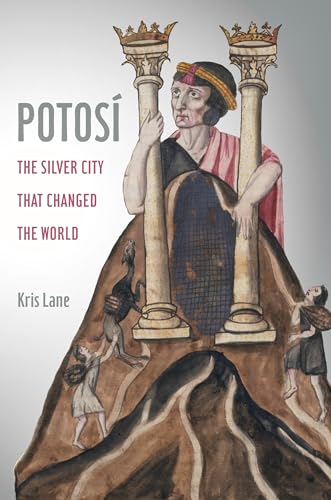
Inhaltsangabe
"For anyone who wants to learn about the rise and decline of Potosí as a city . . . Lane's book is the ideal place to begin."—New York Review of Books
In 1545, a native Andean prospector hit pay dirt on a desolate red mountain in highland Bolivia. There followed the world’s greatest silver bonanza, making the Cerro Rico, or “Rich Hill,” and the Imperial Villa of Potosí instant legends, famous from Istanbul to Beijing. The Cerro Rico alone provided over half of the world’s silver for a century, and even in decline, it remained the single richest source on Earth.
Potosí is the first interpretive history of the fabled mining city’s rise and fall. From Potosí’s startling emergence in the sixteenth century to its collapse in the nineteenth, Kris Lane tells the story of global economic transformation and the environmental and social impact of rampant colonial exploitation. Lane’s invigorating narrative offers rare details of this thriving city and its promise of prosperity. A new world—native workers, market women, African slaves, and other ordinary residents living alongside elite merchants, refinery owners, wealthy widows, and crown officials—emerges in lively, riveting stories from the original sources. An engrossing depiction of excess and devastation, Potosí reveals the relentless human tradition in boom times and bust.
Die Inhaltsangabe kann sich auf eine andere Ausgabe dieses Titels beziehen.
Über die Autorin bzw. den Autor
Kris Lane holds the France V. Scholes Chair in Colonial Latin American History at Tulane University. He is author of Colour of Paradise: The Emerald in the Age of Gunpowder Empires, Quito 1599: City and Colony in Transition, and Pillaging the Empire: Global Piracy on the High Seas, 1500–1750.
Von der hinteren Coverseite
“Potosí is the stuff of myth and the fuel of enormous global changes. With wonderful quotes and poetic, evocative language, Kris Lane's historical writing is outstanding.”—Steven Topik, editor of The Second Conquest of Latin America
“I can think of no person better suited to write this wondrous story.”—Tatiana Seijas, coauthor of Spanish Dollars and Sister Republics
“From the leading authority on mining, Potosí combines a strong narrative voice with deft use of primary sources to demystify how global flows of silver shaped world economic history.”—Zephyr Frank, author of Reading Rio de Janeiro
“When we think of mineral bonanzas, we think of the gold rushes of the 1800s in California, South Africa, and the Klondike. But arguably the discovery of a mountain full of silver at Potosí, in today’s Bolivia, centuries earlier, had far more impact on history. Kris Lane tells the full, fascinating story, from the mixture of churches, brothels, riches, and slavery in a 16th century boom town to Potosí’s reverberations throughout the Spanish Empire and the world.”—Adam Hochschild, author of Lessons from a Dark Time and Other Essays
“We overlook too often the primary reasons that explain the socio-economic phenomena we analyze, or denounce. Kris Lane's Potosí: Silver City That Changed the World is an interdisciplinary analysis of the modes of previous accumulation of capital not only related to Europe but on a global scale. This work helps us understand the global context that led progressively, from the sixteenth century, to the industrial revolution. The financial engineering, industrial innovation, scientific discoveries and political will that underlie the first major mining site in Bolivia find their counterparts in the brutal exploitation of workers, social injustice, public health crisis, and, already, ecological negligence. Foremost, in addition to analysis that contribute greatly to the history and critique of political economy, the author focuses on cultural and domestic considerations and on an interdisciplinary point of view, which are not usual in this research field.”—Alain Deneault, coauthor of Imperial Canada Inc: Legal Haven of Choice for the World’s Mining Industries
“Like the boom town it describes, Kris Lane’s book teems with life and glints with riches. Potosí is a unique urban case-study, which helps us understand how Spain´s global monarchy worked. It contributes vividly to the history of technology. It tells stories of labor, and race. It illuminates the global economy through which the silver of Potosí trickled and rippled. Above all, it is an irresistible portrait of life, work, passion, sanctity, crime, pleasure, misery, madcap consumption, and ecological disaster in ‘an improbable global city’ that started as ‘a rough-and-tumble mining camp’ and became ‘the envy of kings.’”—Felipe Fernández-Armesto, author of Our America: A Hispanic History of the United States
Aus dem Klappentext
“Potosí is the stuff of myth and the fuel of enormous global changes. With wonderful quotes and poetic, evocative language, Kris Lane's historical writing is outstanding.”—Steven Topik, editor of The Second Conquest of Latin America
“I can think of no person better suited to write this wondrous story.”—Tatiana Seijas, coauthor of Spanish Dollars and Sister Republics
“From the leading authority on mining, Potosí combines a strong narrative voice with deft use of primary sources to demystify how global flows of silver shaped world economic history.”—Zephyr Frank, author of Reading Rio de Janeiro
“When we think of mineral bonanzas, we think of the gold rushes of the 1800s in California, South Africa, and the Klondike. But arguably the discovery of a mountain full of silver at Potosí, in today’s Bolivia, centuries earlier, had far more impact on history. Kris Lane tells the full, fascinating story, from the mixture of churches, brothels, riches, and slavery in a 16th century boom town to Potosí’s reverberations throughout the Spanish Empire and the world.”—Adam Hochschild, author of Lessons from a Dark Time and Other Essays
“We overlook too often the primary reasons that explain the socio-economic phenomena we analyze, or denounce. Kris Lane's Potosí: Silver City That Changed the World is an interdisciplinary analysis of the modes of previous accumulation of capital not only related to Europe but on a global scale. This work helps us understand the global context that led progressively, from the sixteenth century, to the industrial revolution. The financial engineering, industrial innovation, scientific discoveries and political will that underlie the first major mining site in Bolivia find their counterparts in the brutal exploitation of workers, social injustice, public health crisis, and, already, ecological negligence. Foremost, in addition to analysis that contribute greatly to the history and critique of political economy, the author focuses on cultural and domestic considerations and on an interdisciplinary point of view, which are not usual in this research field.”—Alain Deneault, coauthor of Imperial Canada Inc: Legal Haven of Choice for the World’s Mining Industries
“Like the boom town it describes, Kris Lane’s book teems with life and glints with riches. Potosí is a unique urban case-study, which helps us understand how Spain´s global monarchy worked. It contributes vividly to the history of technology. It tells stories of labor, and race. It illuminates the global economy through which the silver of Potosí trickled and rippled. Above all, it is an irresistible portrait of life, work, passion, sanctity, crime, pleasure, misery, madcap consumption, and ecological disaster in ‘an improbable global city’ that started as ‘a rough-and-tumble mining camp’ and became ‘the envy of kings.’”—Felipe Fernández-Armesto, author of Our America: A Hispanic History of the United States
“I can think of no person better suited to write this wondrous story.”—Tatiana Seijas, coauthor of Spanish Dollars and Sister Republics
“From the leading authority on mining, Potosí combines a strong narrative voice with deft use of primary sources to demystify how global flows of silver shaped world economic history.”—Zephyr Frank, author of Reading Rio de Janeiro
“When we think of mineral bonanzas, we think of the gold rushes of the 1800s in California, South Africa, and the Klondike. But arguably the discovery of a mountain full of silver at Potosí, in today’s Bolivia, centuries earlier, had far more impact on history. Kris Lane tells the full, fascinating story, from the mixture of churches, brothels, riches, and slavery in a 16th century boom town to Potosí’s reverberations throughout the Spanish Empire and the world.”—Adam Hochschild, author of Lessons from a Dark Time and Other Essays
“We overlook too often the primary reasons that explain the socio-economic phenomena we analyze, or denounce. Kris Lane's Potosí: Silver City That Changed the World is an interdisciplinary analysis of the modes of previous accumulation of capital not only related to Europe but on a global scale. This work helps us understand the global context that led progressively, from the sixteenth century, to the industrial revolution. The financial engineering, industrial innovation, scientific discoveries and political will that underlie the first major mining site in Bolivia find their counterparts in the brutal exploitation of workers, social injustice, public health crisis, and, already, ecological negligence. Foremost, in addition to analysis that contribute greatly to the history and critique of political economy, the author focuses on cultural and domestic considerations and on an interdisciplinary point of view, which are not usual in this research field.”—Alain Deneault, coauthor of Imperial Canada Inc: Legal Haven of Choice for the World’s Mining Industries
“Like the boom town it describes, Kris Lane’s book teems with life and glints with riches. Potosí is a unique urban case-study, which helps us understand how Spain´s global monarchy worked. It contributes vividly to the history of technology. It tells stories of labor, and race. It illuminates the global economy through which the silver of Potosí trickled and rippled. Above all, it is an irresistible portrait of life, work, passion, sanctity, crime, pleasure, misery, madcap consumption, and ecological disaster in ‘an improbable global city’ that started as ‘a rough-and-tumble mining camp’ and became ‘the envy of kings.’”—Felipe Fernández-Armesto, author of Our America: A Hispanic History of the United States
Auszug. © Genehmigter Nachdruck. Alle Rechte vorbehalten.
Potosí
The Silver City that Changed the World
By Kris LaneUNIVERSITY OF CALIFORNIA PRESS
Copyright © 2019 Kris Lane
All rights reserved.
ISBN: 978-0-520-28084-7All rights reserved.
Contents
List of Illustrations,
Acknowledgments,
Preface,
Timeline,
Introduction,
1 • Bonanza,
2 • Age of Wind, Age of Iron,
3 • The Viceroy's Great Machine,
4 • An Improbable Global City,
5 • Secret Judgments of God,
6 • Decadence and Rebirth,
7 • From Revival to Revolution,
8 • Summing Up,
Epilogue: Potosí since Independence,
Appendix: Voices,
Glossary,
Notes,
Bibliographical Essay,
Select Bibliography,
Index,
CHAPTER 1
Bonanza
... and as several Indians belonging to a so-and-so Villaroel wandered among some mountains eighteen leagues from the Villa de la Plata, they came upon a very large peak seated on a plain, the size of which I cannot quite explain except to tell Your Mercy so that you may understand that it is as large as one might see in these parts. And they found in it signs of silver, and in smelting they found it so rich that wherever they took earth and fired it, it yielded almost nothing but silver, such that the least they got was eighty marks per hundredweight, which was almost half.
— ANONYMOUS, possibly Lic. Polo Ondegardo, 1547
AS ONE MIGHT EXPECT, Potosí's discovery generated legends. According to several Spanish writers it was early in the year 1545 that a native Andean man known either as Gualpa or Guanca happened upon an outcrop of silver ore while chasing a llama, a guanaco, or a deer up a conical red peak in the southern Bolivian highlands. The reddish mountain, possibly known as Potoc'chi, was not terribly high by Andean standards, but at just under 5,000 meters (nearly 16,000 feet) above sea level it did command an impressive view. The horizon was dominated by lumpy, barren, puna a high desert cut through by canyons topped with basalt cliffs, and with glimpses of vast salt flats framed by distant cordilleras.
According to most early accounts, there was little evidence of Inca or other pre-Hispanic mining activity on the red mountain's flanks. Not far off, about a half-day's journey southwest, were the former Inca mines of Porco, where Gualpa or Guanca was working as a yanacona or personal retainer for his presumably Spanish overlord, called "Villaroel" in the account above. Porco's silver mines were rich, but many had flooded due to the high water table, driving up costs and diminishing returns.
It was a moment of crisis according to the providentialist narratives, and in one of them Diego Gualpa became the Juan Diego of the Andes. The Virgin of Guadalupe did not appear to him, but either the Christian God or the God of Wind (in Quechua, Wayra) used him to reveal the riches of the Cerro Rico to the world. Fortunately, we have an account that seems to be from Gualpa himself, or as close to him as we may get (see appendix). In 1572, on orders of just-arrived viceroy Francisco de Toledo, a Spanish priest interviewed the nearly 70-year-old Andean man as he lay dying in his home in Potosí.
The discoverer was by this time known as don Diego Gualpa, the title "don" signifying noble ancestry. He claimed to have been from the Cuzco-area province of Chumbivilcas, a retainer for the ill-fated Inca Huascar, a keeper of sacred feathers. Gualpa was also at Cajamarca, he said, when Francisco Pizarro and his followers ambushed and captured the Inca Atahualpa in 1532. Young Gualpa attached himself to a Portuguese soldier who used him as a personal servant or yanacona but who also protected him from Spaniards who had treated him poorly. Diego Gualpa ended up in Porco mining silver a few years later. He claimed that he and other yanaconas routinely passed the hill or mountain of Potosí (he does not call it Potoc'chi in the testimony, but we must keep in mind that this was filtered through a priest in 1572) on their way back and forth between Porco and La Plata, or Chuquisaca, the budding regional capital on the eastern slope of the Andes.
Gonzalo Pizarro, younger brother of Francisco, had even ordered test diggings low on the mountain's flanks, but they yielded nothing. The occasion Diego Gualpa gave for his discovery of the great mines of the Cerro Rico was that he and a friend had been sent to the mountain's summit to search for a shrine dedicated to the resident spirit, or huaca. The pair found an offering, he claimed, which they removed and took down the hill to deliver to their masters. Presumably it included gold and silver objects, but the testimony offers no details.
On the way downhill the two men were separated, according to don Diego Gualpa, who said he was hit by a gust of wind so powerful it flattened him and nearly knocked him out. As he lifted himself, he saw that his hands were marked by a substance he immediately recognized as pay dirt. Gualpa wrapped several pounds of this material in his blanket and took it to Porco to refine. He found it rich, but his current master and other conquistadors were not convinced that the ore had come from the hill already called, apparently, Potosí.
Finally, one Spaniard accompanied Gualpa back to the red mountain, but again the wind kicked up, and was soon so fierce that it dashed the man tothe ground and blew off his hat, angering him so much that he began to beat and curse Gualpa. The two soon returned to Porco, where word of Gualpa's discovery reached the man called Villaroel, a Spaniard who moved quickly to stake claims aided by his indigenous retainer, the yanacona Chalco.
No llamas or deer or upturned roots appear in Gualpa's story, as in many other accounts of Potosí's fateful discovery, but wind figures prominently. Wayra (or guaira in Spanish phonetics), the Quechua word for wind, would continue to be providential in Potosí for several decades. Yet even this seemingly native account of Potosí's discovery smacks of Catholic legend, of the innocent yokel who witnesses an apparition, only to struggle desperately with supposedly learned authorities to prove its truth. Was Gualpa's discovery real?
ANDEAN METALLURGY AND GEOLOGY
By the time Europeans and Africans reached South America in the early sixteenth century, Andeans had spent thousands of years extracting and working gold, silver, copper, tin, mercury, salt, lapis lazuli, emeralds, turquoise, nephrite, obsidian, and many other minerals. Andean stone masonry was among the most advanced in the Americas, giving lie to the notion of "Stone Age" primitivism. One need only visit the former Inca capital of Cuzco or the ruins of Machu Picchu to see this matchless artistry firsthand.
In Central and South America as well as parts of the Caribbean, gold-silver-copper alloys were commonly used in jewelry and grave goods, and in coastal Ecuador and Colombia even the difficult metal platinum was worked, ingeniously soldered with gold dust and burnished. Metalworkers in Bolivia and Peru developed arsenical bronze, yielding durable tools and weapons, and at the great temple complex of Tiwanaku near Lake Titicaca, bronze ties held massive, hand-carved building stones in place.
Andean metallurgy was so ancient that few rich metallic mineral deposits remained unknown by the time the Spanish arrived. The conquistadors and their successors suspected this right away, and when native Andeans failed to lead them to gold or silver...
„Über diesen Titel“ kann sich auf eine andere Ausgabe dieses Titels beziehen.
Suchergebnisse für Potosi: The Silver City That Changed the World (The...

Beispielbild für diese ISBN
Potosi: The Silver City That Changed the World
Verlag:
University of California Press, 2019
ISBN 10: 0520280849
ISBN 13: 9780520280847
Gebraucht
Hardcover
Anbieter: World of Books (was SecondSale), Montgomery, IL, USA
Verkäuferbewertung 5 von 5 Sternen

Hardback. Zustand: Very Good. "For anyone who wants to learn about the rise and decline of Potosí as a city . . . Lane's book is the ideal place to begin."?New York Review of BooksIn 1545, a native Andean prospector hit pay dirt on a desolate red mountain in highland Bolivia. There followed the world?s greatest silver bonanza, making the Cerro Rico, or ?Rich Hill,? and the Imperial Villa of Potosí instant legends, famous from Istanbul to Beijing. The Cerro Rico alone provided over half of the world?s silver for a century, and even in decline, it remained the single richest source on Earth.Potosí is the first interpretive history of the fabled mining city?s rise and fall. From Potosí?s startling emergence in the sixteenth century to its collapse in the nineteenth, Kris Lane tells the story of global economic transformation and the environmental and social impact of rampant colonial exploitation. Lane?s invigorating narrative offers rare details of this thriving city and its promise of prosperity. A new world?native workers, market women, African slaves, and other ordinary residents living alongside elite merchants, refinery owners, wealthy widows, and crown officials?emerges in lively, riveting stories from the original sources. An engrossing depiction of excess and devastation, Potosí reveals the relentless human tradition in boom times and bust. Artikel-Nr. 00109606119
Gebraucht kaufen
EUR 15,05
Versand gratis
Versand innerhalb von USA
Versand innerhalb von USA
Anzahl: 1 verfügbar
Beispielbild für diese ISBN
Potosi The Silver City That Changed the World
Anbieter: Revaluation Books, Exeter, Vereinigtes Königreich
Verkäuferbewertung 5 von 5 Sternen
Hardcover. Zustand: Brand New. 248 pages. 9.25x6.50x1.25 inches. In Stock. Artikel-Nr. zk0520280849
Neu kaufen
EUR 59,31
EUR 14,93 Versand
Versand von Vereinigtes Königreich nach USA
Versand von Vereinigtes Königreich nach USA
Anzahl: 1 verfügbar