
Verwandte Artikel zu Black and Brown in Los Angeles: Beyond Conflict and...
Inhaltsangabe
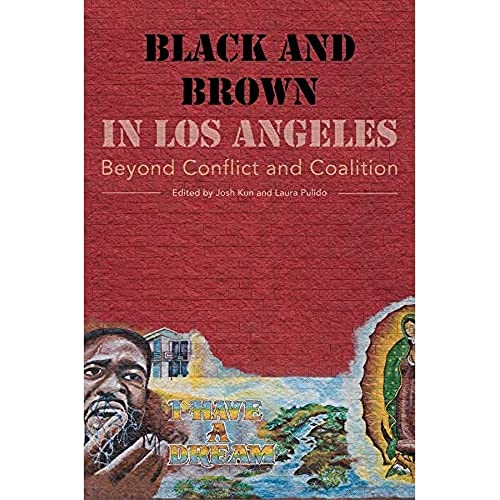
Black and Brown in Los Angeles is a timely and wide-ranging, interdisciplinary foray into the complicated world of multiethnic Los Angeles. The first book to focus exclusively on the range of relationships and interactions between Latinas/os and African Americans in one of the most diverse cities in the United States, the book delivers supporting evidence that Los Angeles is a key place to study racial politics while also providing the basis for broader discussions of multiethnic America.
Students, faculty, and interested readers will gain an understanding of the different forms of cultural borrowing and exchange that have shaped a terrain through which African Americans and Latinas/os cross paths, intersect, move in parallel tracks, and engage with a whole range of aspects of urban living. Tensions and shared intimacies are recurrent themes that emerge as the contributors seek to integrate artistic and cultural constructs with politics and economics in their goal of extending simple paradigms of conflict, cooperation, or coalition.
The book features essays by historians, economists, and cultural and ethnic studies scholars, alongside contributions by photographers and journalists working in Los Angeles.
Students, faculty, and interested readers will gain an understanding of the different forms of cultural borrowing and exchange that have shaped a terrain through which African Americans and Latinas/os cross paths, intersect, move in parallel tracks, and engage with a whole range of aspects of urban living. Tensions and shared intimacies are recurrent themes that emerge as the contributors seek to integrate artistic and cultural constructs with politics and economics in their goal of extending simple paradigms of conflict, cooperation, or coalition.
The book features essays by historians, economists, and cultural and ethnic studies scholars, alongside contributions by photographers and journalists working in Los Angeles.
Die Inhaltsangabe kann sich auf eine andere Ausgabe dieses Titels beziehen.
Über die Autorin bzw. den Autor
Josh Kun is an Associate Professor in the USC Annenberg School for Communication & Journalism. His books include Audiotopia: Music, Race, and America (California, 2005) and Songs in the Key of Los Angeles: Sheet Music and the Making of Southern California (Angel City Press, 2013). in 2016, he was the recipient of a MacArthur "Genius" Fellowship.
Laura Pulido is Professor of American Studies and Ethnicity at USC. Her books include Black, Brown, Yellow, and Left: Radical Activism in Los Angeles (California, 2006) and A People’s Guide to Los Angeles (California, 2012).
Laura Pulido is Professor of American Studies and Ethnicity at USC. Her books include Black, Brown, Yellow, and Left: Radical Activism in Los Angeles (California, 2006) and A People’s Guide to Los Angeles (California, 2012).
Von der hinteren Coverseite
"One of the most persuasive cultural conversations of the history of ‘black’ and ‘brown’ cross-racial formations in Los Angeles from the early twentieth-century to the present day. Josh Kun and Laura Pulido's skill in connecting diverse materials and theories by economists, historians, and ethnic studies scholars, the suggestiveness of many of the essayists’ insights and their passionate convictions about ethnicity and race in planetary California make Black and Brown in Los Angeles a timely, exciting, and groundbreaking book." --José David Saldívar, director of the Center for Comparative Studies in Race & Ethnicity, Stanford University
"In this anthology, two of the foremost progressive scholars of Southern California draw attention to an extraordinary range of interactions between African Americans and Latinos in Southern California. From banking and professional football fandom to residential segregation and popular music, Black and Brown Los Angeles does far more than highlight the paucity of conversations based upon the limited language of “conflict” or “cooperation.” Rather, this book offers a crucial roadmap for negotiating the complicated terrain of America’s most important racial metropolis." --Daniel Widener, author of Black Arts West: Culture and Struggle in Postwar Los Angeles
"In this anthology, two of the foremost progressive scholars of Southern California draw attention to an extraordinary range of interactions between African Americans and Latinos in Southern California. From banking and professional football fandom to residential segregation and popular music, Black and Brown Los Angeles does far more than highlight the paucity of conversations based upon the limited language of “conflict” or “cooperation.” Rather, this book offers a crucial roadmap for negotiating the complicated terrain of America’s most important racial metropolis." --Daniel Widener, author of Black Arts West: Culture and Struggle in Postwar Los Angeles
Aus dem Klappentext
"One of the most persuasive cultural conversations of the history of black and brown cross-racial formations in Los Angeles from the early twentieth-century to the present day. Josh Kun and Laura Pulido's skill in connecting diverse materials and theories by economists, historians, and ethnic studies scholars, the suggestiveness of many of the essayists insights and their passionate convictions about ethnicity and race in planetary California make Black and Brown in Los Angeles a timely, exciting, and groundbreaking book." --José David Saldívar, director of the Center for Comparative Studies in Race & Ethnicity, Stanford University
"In this anthology, two of the foremost progressive scholars of Southern California draw attention to an extraordinary range of interactions between African Americans and Latinos in Southern California. From banking and professional football fandom to residential segregation and popular music, Black and Brown Los Angeles does far more than highlight the paucity of conversations based upon the limited language of conflict or cooperation. Rather, this book offers a crucial roadmap for negotiating the complicated terrain of America s most important racial metropolis." --Daniel Widener, author of Black Arts West: Culture and Struggle in Postwar Los Angeles
"In this anthology, two of the foremost progressive scholars of Southern California draw attention to an extraordinary range of interactions between African Americans and Latinos in Southern California. From banking and professional football fandom to residential segregation and popular music, Black and Brown Los Angeles does far more than highlight the paucity of conversations based upon the limited language of conflict or cooperation. Rather, this book offers a crucial roadmap for negotiating the complicated terrain of America s most important racial metropolis." --Daniel Widener, author of Black Arts West: Culture and Struggle in Postwar Los Angeles
Auszug. © Genehmigter Nachdruck. Alle Rechte vorbehalten.
Black and Brown in Los Angeles
Beyond Conflict and Coalition
By Josh Kun, Laura PulidoUNIVERSITY OF CALIFORNIA PRESS
Copyright © 2014 The Regents of the University of California
All rights reserved.
ISBN: 978-0-520-27560-7All rights reserved.
Contents
List of Illustrations, ix,
List of Tables, xi,
Introduction Josh Kun and Laura Pulido, 1,
PART ONE. THE ECONOMICS OF PEOPLE AND PLACES,
1 Keeping It Real: Demographic Change, Economic Conflict, and Interethnic Organizing for Social Justice in Los Angeles Manuel Pastor, 33,
2 Banking on the Community: Mexican Immigrants' Experiences in a Historically African American Bank in South Central Los Angeles, 1970–2007 Abigail Rosas, 67,
3 Black Views toward Proposed Undocumented Immigration Policies: The Role of Racial Stereotypes and Economic Competition Lorrie Frasure-Yokley and Stacey Greene, 90,
PART TWO. URBAN HISTORIES,
4 The Changing Valence of White Racial Innocence: Black-Brown Unity in the 1970s Los Angeles School Desegregation Struggles Daniel Martinez HoSang, 115,
5 Fighting the Segregation Amendment: Black and Mexican American Responses to Proposition 14 in Los Angeles Max Felker-Kantor, 143,
6 The Politics of Low and Slow/Bajito y Suavecito: Black and Chicano Lowriders in Los Angeles, from the 1960s through the 1970s Denise M. Sandoval, 176,
PART THREE. COMMUNITY LIFE AND POLITICS,
7 Rainbow Coalition in the Golden State? Exposing Myths, Uncovering New Realities in Latino Attitudes toward Blacks Matt A. Barreto, Benjamin F. Gonzalez, and Gabriel R. Sánchez, 203,
8 Race and the L.A. Human: Race Relations and Violence in Globalized Los Angeles Ofelia Ortiz Cuevas, 233,
PART FOUR. REPORTING BLACK AND BROWN L.A.: A JOURNALIST'S VIEW,
9 More Than Just the Latinos-Next-Door; Piercing Black Silence on Immigration; and Plugging Immigration's Drain on Black Employment Erin Aubry Kaplan, 255,
10 Race, Real Estate, and the Mexican Mafia: A Report from the Black and Latino Killing Fields Sam Quinones, 261,
PART FIVE. CITY CULTURES,
11 Landscapes of Black and Brown Los Angeles: A Photo Essay Wendy Cheng, 301,
12 Spatial Entitlement: Race, Displacement, and Sonic Reclamation in Postwar Los Angeles Gaye Theresa Johnson, 316,
13 On Fallen Nature and the Two Cities Nery Gabriel Lemus, 341,
14 "Just Win, Baby!" The Raider Nation and Second Chances for Black and Brown L.A. Priscilla Leiva, 346,
15 What Is an MC If He Can't Rap to Banda? Making Music in Nuevo L.A. Josh Kun, 373,
List of Contributors, 395,
Index, 399,
CHAPTER 1
Keeping It Real
Demographic Change, Economic Conflict, and Interethnic Organizing for Social Justice in Los Angeles
MANUEL PASTOR
INTRODUCTION
In June 2011, federal authorities indicted fifty-one members of a Latino gang that had engaged in racially motivated attacks on black residents in a struggling suburb named Azusa, California, near Los Angeles. The tally of crime was high: between 1996 and 2001, at least eight families saw their houses firebombed, and in 2000, a young black nurse named Ge'Juan Salle was gunned down as he strolled out of an auto parts store with his cousin (Sewell 2011).
Over the last decade, a flurry of media stories has tended to focus on exactly these sorts of conflicts, creating the appearance of steadily increasing and worsening tensions between African Americans and Latinos (especially Mexicans) in Southern California. Aside from the fascination with gang activity, reporters have often focused on local politics and youth demographics, weaving together tales of troubled ethnic successions in cities like Compton and student conflagrations in the high schools of Los Angeles. The often unstated subtext: an underlying economic dynamic drives most of the conflict, with the basic storyline suggesting that Latinos, particularly immigrants, "take" jobs and impair black economic fortunes.
Both the local conflicts and the economic concerns are real—but often exaggerated or just one part of the story. For example, while the events in Azusa caused some African Americans to leave, others stayed as the city formed a hate crime task force that eventually became the Human Relations Commission, which now hosts an annual youth conference to address issues of race and difference; one of the former gang members has said, "We were all brainwashed.... Maybe the cycle will be broken now and future generations will not see color" (Sewell 2011). The failure to tell the whole tale goes beyond just one Southern California suburb or just one wave of hate incidents; in general, the media tends to overreport crime by minorities, between races, and in the inner city (Dorfman and Schiraldi 2001). This focus on the negative is endemic to journalism—it stems, in part, from news organizations' disproportionate interest in conflict. But the media's particular fixation on black-Latino conflict also seems to be related to an attempt to portray all groups, and not just whites, as having to overcome prejudice. This reportorial sleight of hand, intentional or not, takes the focus from racist structures to racist attitudes (Nieva 2009). It not only misses the daily accommodations and negotiations within neighborhoods; it also has its own ripple effect of distancing groups—and given the pressing needs of inner-city communities, there is just not much room for that.
This is not to dispute the reality of economic and other concerns: tensions do exist, and there is some evidence of job displacement by Latino immigrants, particularly in key areas of the local economy. Since this is happening to blacks, who have historically been excluded from job markets, the Latino influx can be conveniently considered as the contemporary cause of an ongoing problem. Yet, as it turns out, research suggests that the effects on black employment are overstated, and those suffering the most harm from immigrant labor market competition may actually be U.S.-born Latinos, who are crowded into market niches very similar to those of blacks. Moreover, the positive impacts of Latinos on local labor markets, particularly the newfound ability to unionize, are rarely lifted up in the popular storyline. Nuances like these—as well as examples of groups working together—should serve to relax the overwrought and unchallenged narrative of black-Latino conflict.
In fact, African Americans and Latinos have more than enough reasons to get past the dominant paradigm of competition. These two groups not only share fences in areas like South L.A.; they also share critical social needs: healthy neighborhoods, good schools, decent public transportation, well-paying work, and neighborhood safety. Forward-looking coalitions have been trying to forge ties over these issues. Laura Pulido (2006), Jaime Regalado (1994), and others have well documented the generations of these coalitions in Los Angeles. However, in this era, the sheer size of the Latino population and its increasingly immigrant character, the relative and continuing decline of black-based political power, and the changing nature of the Los Angeles economy and the stresses that this has placed on both ethnic groups constitute new dynamics, challenges, and possibilities.
Indeed, the current era is also marked by an extraordinary opening for municipal influence that has been created by community-based groups in Los Angeles, many of whom have gone well beyond the neighborhood in their organizing and have explicitly focused on building...
„Über diesen Titel“ kann sich auf eine andere Ausgabe dieses Titels beziehen.
Suchergebnisse für Black and Brown in Los Angeles: Beyond Conflict and...

Beispielbild für diese ISBN
Black and Brown in Los Angeles
Anbieter: PBShop.store UK, Fairford, GLOS, Vereinigtes Königreich
Verkäuferbewertung 5 von 5 Sternen

PAP. Zustand: New. New Book. Shipped from UK. Established seller since 2000. Artikel-Nr. WF-9780520275607
Neu kaufen
EUR 32,01
EUR 5,84 Versand
Versand von Vereinigtes Königreich nach USA
Versand von Vereinigtes Königreich nach USA
Anzahl: 1 verfügbar
Beispielbild für diese ISBN
Black and Brown in Los Angeles
Anbieter: PBShop.store US, Wood Dale, IL, USA
Verkäuferbewertung 5 von 5 Sternen
PAP. Zustand: New. New Book. Shipped from UK. Established seller since 2000. Artikel-Nr. WF-9780520275607
Beispielbild für diese ISBN
Black and Brown in Los Angeles: Beyond Conflict and Coalition
Verlag:
University of California Press, 2013
ISBN 10: 0520275608
ISBN 13: 9780520275607
Neu
Softcover
Anbieter: Kennys Bookstore, Olney, MD, USA
Verkäuferbewertung 5 von 5 Sternen
Zustand: New. Focuses on the range of relationships and interactions between Latinas/os and African Americans in one of the most diverse cities in the United States. This book delivers supporting evidence that Los Angeles is a key place to study racial politics while also providing the basis for broader discussions of multi ethnic America. Editor(s): Kun, Josh; Pulido, Laura. Num Pages: 424 pages, 30 b/w photographs, 17 line illustrations, 9 tables. BIC Classification: 1KBBWF; HBJK; HBTB; JFSL1. Category: (P) Professional & Vocational. Dimension: 153 x 229 x 25. Weight in Grams: 586. . 2013. Paperback. . . . . Books ship from the US and Ireland. Artikel-Nr. V9780520275607
Neu kaufen
EUR 35,30
EUR 9,22 Versand
Versand innerhalb von USA
Versand innerhalb von USA
Anzahl: 1 verfügbar
Beispielbild für diese ISBN
Black and Brown in Los Angeles Beyond Conflict and Coalition
Anbieter: Revaluation Books, Exeter, Vereinigtes Königreich
Verkäuferbewertung 5 von 5 Sternen
Paperback. Zustand: Brand New. 337 pages. 9.25x6.00x1.00 inches. In Stock. Artikel-Nr. __0520275608
Neu kaufen
EUR 33,00
EUR 14,53 Versand
Versand von Vereinigtes Königreich nach USA
Versand von Vereinigtes Königreich nach USA
Anzahl: 1 verfügbar
Beispielbild für diese ISBN
Black and Brown in Los Angeles: Beyond Conflict and Coalition
Verlag:
University of California Press, 2013
ISBN 10: 0520275608
ISBN 13: 9780520275607
Neu
Softcover
Anbieter: Ria Christie Collections, Uxbridge, Vereinigtes Königreich
Verkäuferbewertung 5 von 5 Sternen
Zustand: New. In English. Artikel-Nr. ria9780520275607_new
Neu kaufen
EUR 35,79
EUR 13,13 Versand
Versand von Vereinigtes Königreich nach USA
Versand von Vereinigtes Königreich nach USA
Anzahl: 1 verfügbar