
Verwandte Artikel zu Environmental Flows: Saving Rivers in the Third Millennium...
Environmental Flows: Saving Rivers in the Third Millennium (Freshwater Ecology, Band 4) - Hardcover
Buch 2 von 3: Freshwater Ecology Series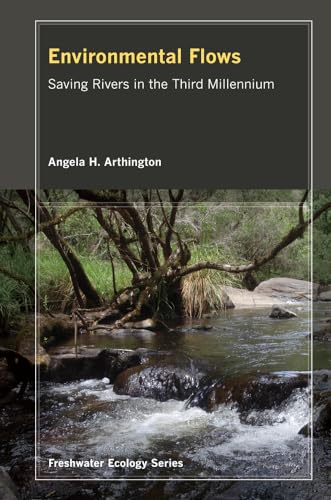
Inhaltsangabe
Environmental Flows describes the timing, quality, and quantity of water flows required to sustain freshwater and estuarine ecosystems and the human well-being and livelihoods that depend upon them. It answers crucial questions about the flow of water within and between different kinds of ecosystems. What happens when the flow or the availability of water is curtailed or diverted, either naturally or by human activity? How will climate change alter the availability of water and impact aquatic ecosystems? Methodological developments from the simplest hydrological formulas to large-scale frameworks that inform water management make this book a must-read for water managers and freshwater and estuarine ecologists contending with ever-changing conditions influencing the flow of water.
Die Inhaltsangabe kann sich auf eine andere Ausgabe dieses Titels beziehen.
Über die Autorin bzw. den Autor
Angela Arthington is Emeritus Professor in the Faculty of Environmental Science at Griffith University in Brisbane, Queensland, Australia. She is a senior Research Member of the Australian Rivers Institute and advisor to State and Commonwealth governments on environmental water management.
Von der hinteren Coverseite
“Freshwaters worldwide continue to be severely degraded by human activities, and urgent government action is needed. Angela Arthington is perfectly equipped to advise how to design environmental flows that sustain the biodiversity and ecosystem services provided by our priceless rivers.”—Colin Townsend, University of Otago, New Zealand
“Professor Arthington is a widely respected and acknowledged leader on environmental flows. Her book is an exceptional compilation and state-of-the-science overview of the subject. Well-written and easy to understand, it is essential reading for educators, scientists, practitioners, and decision-makers addressing river-related flow issues.”—Robert J. Naiman, author of /i/Riparia: Ecology, Conservation, and Management of Streamside Communities//i/
“Environmental Flows is a great gift to rivers and to people striving to protect and restore them. Arthington provides a masterful synthesis of the science and practice of environmental flows—and why their implementation is so urgently needed. Environmental Flows is a must-read for all involved with river science and management, from hydrologists and ecologists to engineers and resource managers. Educators and students will find it invaluable.”—Sandra Postel, co-author of /i/Rivers for Life: Managing Water for People and Nature//i/
"Arthington’s life work on understanding riverine ecosystems has produced this knowledgeable, accessible, and insightful book. It gives us hope that our 'enormous human adaptive capacity and the power of innovative science' will help us tackle the urgent and complex problems caused by climate change. /i/Environmental Flows//i/ is for scientists, students, policy-makers, and water managers; indeed, it is a book for all who work toward protecting healthy ecosystems for ourselves and future generations."--Poh-Ling Tan, International WaterCentre Professor of Water Law and Governance
"Managing water to balance direct human use (drinking supply, agriculture, power, and industry) and indirect use (water for river and wetland ecosystems) is a major challenge. Angela Arthington employed her exceptional knowledge and experience to guide us through a complex cross-disciplinary examination of environmental flows to create an indispensable text for people interested in managing and conserving our rivers."--Michael C. Acreman, Centre for Ecology & Hydrology
“Professor Arthington is a widely respected and acknowledged leader on environmental flows. Her book is an exceptional compilation and state-of-the-science overview of the subject. Well-written and easy to understand, it is essential reading for educators, scientists, practitioners, and decision-makers addressing river-related flow issues.”—Robert J. Naiman, author of /i/Riparia: Ecology, Conservation, and Management of Streamside Communities//i/
“Environmental Flows is a great gift to rivers and to people striving to protect and restore them. Arthington provides a masterful synthesis of the science and practice of environmental flows—and why their implementation is so urgently needed. Environmental Flows is a must-read for all involved with river science and management, from hydrologists and ecologists to engineers and resource managers. Educators and students will find it invaluable.”—Sandra Postel, co-author of /i/Rivers for Life: Managing Water for People and Nature//i/
"Arthington’s life work on understanding riverine ecosystems has produced this knowledgeable, accessible, and insightful book. It gives us hope that our 'enormous human adaptive capacity and the power of innovative science' will help us tackle the urgent and complex problems caused by climate change. /i/Environmental Flows//i/ is for scientists, students, policy-makers, and water managers; indeed, it is a book for all who work toward protecting healthy ecosystems for ourselves and future generations."--Poh-Ling Tan, International WaterCentre Professor of Water Law and Governance
"Managing water to balance direct human use (drinking supply, agriculture, power, and industry) and indirect use (water for river and wetland ecosystems) is a major challenge. Angela Arthington employed her exceptional knowledge and experience to guide us through a complex cross-disciplinary examination of environmental flows to create an indispensable text for people interested in managing and conserving our rivers."--Michael C. Acreman, Centre for Ecology & Hydrology
Aus dem Klappentext
Freshwaters worldwide continue to be severely degraded by human activities, and urgent government action is needed. Angela Arthington is perfectly equipped to advise how to design environmental flows that sustain the biodiversity and ecosystem services provided by our priceless rivers. Colin Townsend, University of Otago, New Zealand
Professor Arthington is a widely respected and acknowledged leader on environmental flows. Her book is an exceptional compilation and state-of-the-science overview of the subject. Well-written and easy to understand, it is essential reading for educators, scientists, practitioners, and decision-makers addressing river-related flow issues. Robert J. Naiman, author of /i/Riparia: Ecology, Conservation, and Management of Streamside Communities//i/
Environmental Flows is a great gift to rivers and to people striving to protect and restore them. Arthington provides a masterful synthesis of the science and practice of environmental flows and why their implementation is so urgently needed. Environmental Flows is a must-read for all involved with river science and management, from hydrologists and ecologists to engineers and resource managers. Educators and students will find it invaluable. Sandra Postel, co-author of /i/Rivers for Life: Managing Water for People and Nature//i/
"Arthington s life work on understanding riverine ecosystems has produced this knowledgeable, accessible, and insightful book. It gives us hope that our 'enormous human adaptive capacity and the power of innovative science' will help us tackle the urgent and complex problems caused by climate change. /i/Environmental Flows//i/ is for scientists, students, policy-makers, and water managers; indeed, it is a book for all who work toward protecting healthy ecosystems for ourselves and future generations."--Poh-Ling Tan, International WaterCentre Professor of Water Law and Governance
"Managing water to balance direct human use (drinking supply, agriculture, power, and industry) and indirect use (water for river and wetland ecosystems) is a major challenge. Angela Arthington employed her exceptional knowledge and experience to guide us through a complex cross-disciplinary examination of environmental flows to create an indispensable text for people interested in managing and conserving our rivers."--Michael C. Acreman, Centre for Ecology & Hydrology
Professor Arthington is a widely respected and acknowledged leader on environmental flows. Her book is an exceptional compilation and state-of-the-science overview of the subject. Well-written and easy to understand, it is essential reading for educators, scientists, practitioners, and decision-makers addressing river-related flow issues. Robert J. Naiman, author of /i/Riparia: Ecology, Conservation, and Management of Streamside Communities//i/
Environmental Flows is a great gift to rivers and to people striving to protect and restore them. Arthington provides a masterful synthesis of the science and practice of environmental flows and why their implementation is so urgently needed. Environmental Flows is a must-read for all involved with river science and management, from hydrologists and ecologists to engineers and resource managers. Educators and students will find it invaluable. Sandra Postel, co-author of /i/Rivers for Life: Managing Water for People and Nature//i/
"Arthington s life work on understanding riverine ecosystems has produced this knowledgeable, accessible, and insightful book. It gives us hope that our 'enormous human adaptive capacity and the power of innovative science' will help us tackle the urgent and complex problems caused by climate change. /i/Environmental Flows//i/ is for scientists, students, policy-makers, and water managers; indeed, it is a book for all who work toward protecting healthy ecosystems for ourselves and future generations."--Poh-Ling Tan, International WaterCentre Professor of Water Law and Governance
"Managing water to balance direct human use (drinking supply, agriculture, power, and industry) and indirect use (water for river and wetland ecosystems) is a major challenge. Angela Arthington employed her exceptional knowledge and experience to guide us through a complex cross-disciplinary examination of environmental flows to create an indispensable text for people interested in managing and conserving our rivers."--Michael C. Acreman, Centre for Ecology & Hydrology
Auszug. © Genehmigter Nachdruck. Alle Rechte vorbehalten.
Environmental Flows
Saving Rivers in the Third Millennium
By Angela H. ArthingtonUNIVERSITY OF CALIFORNIA PRESS
Copyright © 2012 The Regents of the University of California
All rights reserved.
ISBN: 978-0-520-27369-6All rights reserved.
Contents
Preface and Acknowledgments, ix,
1. River values and threats, 1,
2. Global Hydrology, Climate, and River Flow Regimes, 13,
3. Catchments, Drainage Networks, and Resource Regimes, 35,
4. River Ecology, the Natural Flow Regime Paradigm, and Hydroecological Principles, 49,
5. Effects of Catchment Change and River-Corridor Engineering, 75,
6. History of Water Control and Dam Impacts, 87,
7. Effects of Dams on Sediment, thermal, and Chemical Regimes, 99,
8. Effects of Dams on Habitat and Aquatic Biodiversity, 113,
9. Introduction to Environmental Flow Methods, 125,
10. Hydraulic Rating and Habitat Simulation Methods, 139,
11. Flow Protection Methods, 149,
12. Flow Restoration Methods, 165,
13. Ecological Limits of Hydrologic Alteration (ELoHA), 181,
14. Environmental Flow Relationships, Models, and Applications, 199,
15. Groundwater-Dependent Ecosystems and threats, 213,
16. Sustaining Groundwater-Dependent Ecosystems, 229,
17. Wetlands, threats, and Water Requirements, 243,
18. Estuaries, threats, and Flow Requirements, 259,
19. Setting Limits to Hydrologic Alteration, 273,
20. Implementing and Monitoring Environmental Flows, 287,
21. Legislation and Policy, 299,
22. Adapting to Climate Change, 311,
Appendix: the Brisbane Declaration (2007), 323,
Literature Cited, 329,
Index, 383,
CHAPTER 1
RIVER VALUES AND THREATS
THE FRESHWATER BIODIVERSITY CRISIS
Rivers and their associated floodplains, groundwater, and wetlands are in crisis. Globally they are the world's most damaged ecosystems, losing species at a rate that far outstrips the decline of biodiversity in terrestrial and marine systems (Dudgeon et al. 2006). A new synthesis of threats to the world's rivers (Vörösmarty et al. 2010) has found that over 83% of the land surface surrounding aquatic systems has been significantly influenced by the "human footprint." The stamp of human activities is manifest as widespread catchment disturbance, deforestation, water pollution, river corridor engineering, impoundments and water diversions, irrigation, extensive wetland drainage, groundwater depletion, habitat loss, and introduced species. Impoundments and depletion of river flows are the clearest sources of biodiversity threat in that they directly degrade and reduce river and floodplain habitat, with 65% of global river discharge and aquatic habitat under moderate to high threat. This threat level exceeds past estimates of human appropriation of accessible freshwater runoff and is approaching the 70% level anticipated by 2050 (Postel et al. 1996).
The worldwide pattern of anthropogenic threats to rivers documented by Vörösmarty et al. (2010) offers the most comprehensive accounting ever undertaken to explain why freshwater biodiversity is in a state of crisis. Estimates suggest that at least 10,000–20,000 freshwater species are extinct or at risk, largely from anthropogenic factors. Loss rates for freshwater biodiversity are believed to rival those of the Pleistocene-to-Holocene transition.
In 2002, Paul Crutzen suggested that the world has entered a new epoch—the Anthropocene—because humans dominate the biosphere and largely determine environmental quality (Zalasiewicz et al. 2008). Numerous correlative studies, experiments, and meta-analysis all point to human activities as the common factor in freshwater biodiversity decline. Given escalating trends in species extinction, human population growth, water use, development pressures, and the additional stresses associated with climate change, the new global synthesis predicts that freshwater systems will remain under threat well into the future.
RIVER VALUES
River degradation and loss of freshwater biodiversity have major implications for human water security, prosperity, health, and well-being because they threaten the provision of ecosystem services—the tangible benefits people gain from ecosystems. The Millennium Ecosystem Assessment, a global synthesis and analysis of the state of the world's major ecosystems, grouped ecosystem services into four main categories: provisioning, regulating, cultural, and supporting (MEA 2005).
Provisioning services (Table 1) are the products obtained from ecosystems. Rivers and lakes hold about 100,000 km3 of freshwater globally, amounting to less than 0.01% of all water on Earth (Schwarz et al. 1990). Yet this tiny fraction of global water is absolutely vital for human life support and the provision of most other ecosystem services, including those dependent on diverse biological systems. These biologically based services include food (shrimp, fish, plants), fuel products (peat), fibers and building materials (timbers and thatch), and pharmacological products. Freshwater ecosystems underpin global food production based on artisanal and commercial fisheries, aquaculture, flood-recession agriculture, and pastoral animal husbandry (MEA 2005). Clean freshwater of low salinity is essential to grow most food and fiber crops and to drive the industries that produce food products, cooking utensils, clothing, housing, infrastructure, transport, recreation, and entertainment. Some estimates suggest that global food production must double by 2050 to meet human needs, and this must be achieved using less water; already, 70% of the world's freshwater is used in agriculture (Molden 2007).
Regulating services (Table 2) are equally vital, being the benefits obtained from the regulation of ecosystem processes such as the climate regime, hydrologic cycle, nutrient processing, and natural hazards. Rivers, lakes, wetlands, and aquifers store freshwater or slow the passage of water. Floodplains and wetlands absorb large pulses of catchment runoff and help mitigate the damaging effects of floods on landscapes and the built environment (Freitag et al. 2009). Water returning off floodplains is rich in nutrients and energy sources that fuel the food webs supporting riverine biota and dependent terrestrial species such as waterbirds and amphibians (Douglas et al. 2005). Rivers also convey freshwater to estuaries, coastal wetlands, and the nearshore environment, where flow pulses contribute to maintaining habitats of tolerable salinity for plants and animals directly used by humans. Estuarine inflows carry nutrients that stimulate primary and secondary production and support the recruitment of fish and crustaceans (Gillanders and Kingsford 2002). Mangroves, salt marshes, and seagrasses that are partly dependent on freshwater help to stabilize sediments, alter water-flow patterns, produce large quantities of organic carbon, and influence nutrient cycling and food web structure (Hemminga and Duarte 2000).
Cultural services (Table 3) are the benefits people obtain through recreation, education, and aesthetics; celebrations revolving around water and its goods and services to humans; and spiritual enrichment (MEA 2005). For many societies, rivers and lakes have profound cultural and religious significance; they are the sites for important ceremonies, the burial places of beloved family members, and the dwelling places of gods and guardian spirits. The Australian Aboriginals who lived as nomads in a very dry continent with extremely patchy freshwater resources appreciated...
„Über diesen Titel“ kann sich auf eine andere Ausgabe dieses Titels beziehen.
Suchergebnisse für Environmental Flows: Saving Rivers in the Third Millennium...

Beispielbild für diese ISBN
Environmental Flows : Saving Rivers in the Third Millennium
Verlag:
University of California Press, 2012
ISBN 10: 0520273699
ISBN 13: 9780520273696
Gebraucht
Hardcover
Anbieter: Better World Books, Mishawaka, IN, USA
Verkäuferbewertung 5 von 5 Sternen

Zustand: Very Good. Former library copy. Pages intact with possible writing/highlighting. Binding strong with minor wear. Dust jackets/supplements may not be included. Includes library markings. Stock photo provided. Product includes identifying sticker. Better World Books: Buy Books. Do Good. Artikel-Nr. 17917240-6
Gebraucht kaufen
EUR 53,99
Versand gratis
Versand innerhalb von USA
Versand innerhalb von USA
Anzahl: 1 verfügbar
Beispielbild für diese ISBN
Environmental Flows
Verlag:
University of California Press, 2012
ISBN 10: 0520273699
ISBN 13: 9780520273696
Neu
Hardcover
Anbieter: PBShop.store US, Wood Dale, IL, USA
Verkäuferbewertung 5 von 5 Sternen
HRD. Zustand: New. New Book. Shipped from UK. Established seller since 2000. Artikel-Nr. WF-9780520273696
Beispielbild für diese ISBN
Environmental Flows
Verlag:
University of California Press, 2012
ISBN 10: 0520273699
ISBN 13: 9780520273696
Neu
Hardcover
Anbieter: PBShop.store UK, Fairford, GLOS, Vereinigtes Königreich
Verkäuferbewertung 5 von 5 Sternen
HRD. Zustand: New. New Book. Shipped from UK. Established seller since 2000. Artikel-Nr. WF-9780520273696
Neu kaufen
EUR 81,14
EUR 6,93 Versand
Versand von Vereinigtes Königreich nach USA
Versand von Vereinigtes Königreich nach USA
Anzahl: 4 verfügbar
Beispielbild für diese ISBN
Environmental Flows
Verlag:
University of California Press, 2012
ISBN 10: 0520273699
ISBN 13: 9780520273696
Neu
Hardcover
Anbieter: Majestic Books, Hounslow, Vereinigtes Königreich
Verkäuferbewertung 4 von 5 Sternen

Zustand: New. pp. 424. Artikel-Nr. 58129893
Neu kaufen
EUR 93,35
EUR 7,68 Versand
Versand von Vereinigtes Königreich nach USA
Versand von Vereinigtes Königreich nach USA
Anzahl: 3 verfügbar
Beispielbild für diese ISBN
Environmental Flows: Saving Rivers in the Third Millennium
Verlag:
University of California Press, 2012
ISBN 10: 0520273699
ISBN 13: 9780520273696
Neu
Hardcover
Anbieter: Kennys Bookstore, Olney, MD, USA
Verkäuferbewertung 5 von 5 Sternen
Zustand: New. 2012. F First Edition. Hardcover. Describes the timing, quality, and quantity of water flows required to sustain freshwater and estuarine ecosystems and the human well-being and livelihoods that depend upon them. This title answers crucial questions about the flow of water within and between different kinds of ecosystems. Series: Freshwater Ecology Series. Num Pages: 424 pages, 43 line illustrations, 36 tables. BIC Classification: RNC. Category: (P) Professional & Vocational. Dimension: 231 x 163 x 32. Weight in Grams: 812. Saving Rivers in the Third Millennium. Series: Freshwater Ecology Series. 424 pages, Illustrations. Describes the timing, quality, and quantity of water flows required to sustain freshwater and estuarine ecosystems and the human well-being and livelihoods that depend upon them. This title answers crucial questions about the flow of water within and between different kinds of ecosystems. Cateogry: (P) Professional & Vocational. BIC Classification: RNC. Dimension: 231 x 163 x 32. Weight: 810. . . . . . Books ship from the US and Ireland. Artikel-Nr. V9780520273696
Neu kaufen
EUR 92,22
EUR 9,37 Versand
Versand innerhalb von USA
Versand innerhalb von USA
Anzahl: 1 verfügbar
Beispielbild für diese ISBN
Environmental Flows: Saving Rivers in the Third Millennium (Freshwater Ecology Series) (Volume 4)
Verlag:
University of California Press, 2012
ISBN 10: 0520273699
ISBN 13: 9780520273696
Neu
Hardcover
Anbieter: Ria Christie Collections, Uxbridge, Vereinigtes Königreich
Verkäuferbewertung 5 von 5 Sternen
Zustand: New. In English. Artikel-Nr. ria9780520273696_new
Neu kaufen
EUR 91,61
EUR 13,34 Versand
Versand von Vereinigtes Königreich nach USA
Versand von Vereinigtes Königreich nach USA
Anzahl: 4 verfügbar
Beispielbild für diese ISBN
Environmental Flows Saving Rivers in the Third Millennium
Anbieter: Revaluation Books, Exeter, Vereinigtes Königreich
Verkäuferbewertung 5 von 5 Sternen
Hardcover. Zustand: Brand New. 424 pages. 9.50x6.50x1.50 inches. In Stock. Artikel-Nr. __0520273699
Neu kaufen
EUR 95,72
EUR 14,77 Versand
Versand von Vereinigtes Königreich nach USA
Versand von Vereinigtes Königreich nach USA
Anzahl: 2 verfügbar