
Verwandte Artikel zu Transforming Terror: Remembering the Soul of the World
Inhaltsangabe
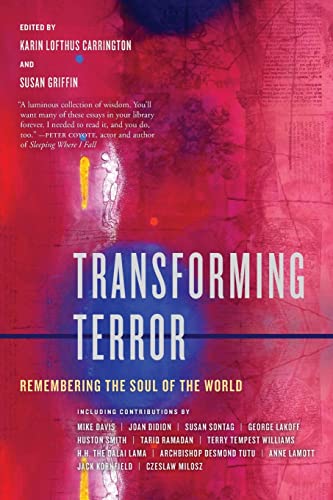
This inspired collection offers a new paradigm for moving the world beyond violence as the first, and often only, response to violence. Through essays and poetry, prayers and meditations, Transforming Terror powerfully demonstrates that terrorist violence—defined here as any attack on unarmed civilians—can never be stopped by a return to the thinking that created it. A diverse array of contributors—writers, healers, spiritual and political leaders, scientists, and activists, including Desmond Tutu, Huston Smith, Riane Eisler, Daniel Ellsberg, Amos Oz, Fatema Mernissi, Fritjof Capra, George Lakoff, Mahmoud Darwish, Terry Tempest Williams, and Jack Kornfield—considers how we might transform the conditions that produce terrorist acts and bring true healing to the victims of these acts. Broadly encompassing both the Islamic and Western worlds, the book explores the nature of consciousness and offers a blueprint for change that makes peace possible. From unforgettable firsthand accounts of terrorism, the book draws us into awareness of our ecological and economic interdependence, the need for connectedness, and the innate human capacity for compassion.
Die Inhaltsangabe kann sich auf eine andere Ausgabe dieses Titels beziehen.
Über die Autorin bzw. den Autor
Karin Lofthus Carrington is a psychotherapist, consultant, writer, and teacher whose work focuses on the interrelationship of psychology, spirituality, and social conscience. She developed curriculum for the graduate program in Transpersonal Psychology at John F. Kennedy University, served as adjunct faculty for the Masters program in depth psychology at Pacifica Graduate University, and was the psychological consultant to the American Women's Annapurna Expedition. Susan Griffin, whose best selling book A Chorus of Stones was a finalist for the Pulitzer Prize, was named by the Utne Reader as one of the new millennium’s 100 most important visionaries. She has received grants from the Guggenheim Foundation and the National Endowment for the Arts, and a MacArthur Foundation grant for Peace and International Cooperation.
Von der hinteren Coverseite
“A book and an unexploded bomb may lay equally motionless, but their kinetic potential is vastly different. A bomb may kill hundreds of people, but a book can change millions—think of Common Sense, Das Kapital, Uncle Tom’s Cabin, or The Gulag Archipelago. To that energizing company, add Transforming Terror. This practical, inspiring book cuts through moral relativism by defining terror according to how it affects its victims. It is a luminous collection of wisdom. You’ll want many of these essays in your library forever. I needed to read it and you do, too.” -Peter Coyote, actor and author of Sleeping Where I Fall
“Only an anthology could create the mosaic that would display the profound paradigm shift offered here: defining terrorism according to the experiences of the victims—unarmed civilians who are violently attacked or threatened—and not by any ideology or purpose. Each tile in the mosaic offers a catalyst to radical transformation of the calamitously increasing scale of such assaults, from suicide bombers to state terrorism, and offers real hope for a way out of the death spiral. This should be read at military academies and defense departments as well as by teachers and religious leaders.” -Deirdre English, Director, Felker Magazine Center, Graduate School of Journalism, UC Berkeley and former editor of Mother Jones
“This collection of writings reveals a wealth of proposals for transforming the combustible conditions that often produce terror, as well as for the reconciliation and healing of terror’s victims. This book is not only an inspired and singular achievement, it is a courageous and bold challenge to a world too often jaded and numbed by the omnipresence of violence to consider any creative alternatives. Here is a work that couldn’t be more timely, relevant or persuasive in its call for us to transform the terror that bedevils us all, individuals and cultures alike.” - Phil Cousineau, author of Beyond Forgiveness: Reflections on Atonement and A Seat at the Table: Huston Smith in Conversation with Native Americans on Religious Freedom
"This volume brings together the wisest voices of our era to reveal the prevalence of terror in our world, and its unconsidered consequences. Until a behavior has a name, it cannot be challenged. This amazing collection of wise and beautiful voices challenges our received definition of terror, and moves us a step further toward a world of peace.” - Marilyn Sewell, editor of Cries of the Spirit
“Only an anthology could create the mosaic that would display the profound paradigm shift offered here: defining terrorism according to the experiences of the victims—unarmed civilians who are violently attacked or threatened—and not by any ideology or purpose. Each tile in the mosaic offers a catalyst to radical transformation of the calamitously increasing scale of such assaults, from suicide bombers to state terrorism, and offers real hope for a way out of the death spiral. This should be read at military academies and defense departments as well as by teachers and religious leaders.” -Deirdre English, Director, Felker Magazine Center, Graduate School of Journalism, UC Berkeley and former editor of Mother Jones
“This collection of writings reveals a wealth of proposals for transforming the combustible conditions that often produce terror, as well as for the reconciliation and healing of terror’s victims. This book is not only an inspired and singular achievement, it is a courageous and bold challenge to a world too often jaded and numbed by the omnipresence of violence to consider any creative alternatives. Here is a work that couldn’t be more timely, relevant or persuasive in its call for us to transform the terror that bedevils us all, individuals and cultures alike.” - Phil Cousineau, author of Beyond Forgiveness: Reflections on Atonement and A Seat at the Table: Huston Smith in Conversation with Native Americans on Religious Freedom
"This volume brings together the wisest voices of our era to reveal the prevalence of terror in our world, and its unconsidered consequences. Until a behavior has a name, it cannot be challenged. This amazing collection of wise and beautiful voices challenges our received definition of terror, and moves us a step further toward a world of peace.” - Marilyn Sewell, editor of Cries of the Spirit
Aus dem Klappentext
A book and an unexploded bomb may lay equally motionless, but their kinetic potential is vastly different. A bomb may kill hundreds of people, but a book can change millions think of Common Sense, Das Kapital, Uncle Tom s Cabin, or The Gulag Archipelago. To that energizing company, add Transforming Terror. This practical, inspiring book cuts through moral relativism by defining terror according to how it affects its victims. It is a luminous collection of wisdom. You ll want many of these essays in your library forever. I needed to read it and you do, too. -Peter Coyote, actor and author of Sleeping Where I Fall
Only an anthology could create the mosaic that would display the profound paradigm shift offered here: defining terrorism according to the experiences of the victims unarmed civilians who are violently attacked or threatened and not by any ideology or purpose. Each tile in the mosaic offers a catalyst to radical transformation of the calamitously increasing scale of such assaults, from suicide bombers to state terrorism, and offers real hope for a way out of the death spiral. This should be read at military academies and defense departments as well as by teachers and religious leaders. -Deirdre English, Director, Felker Magazine Center, Graduate School of Journalism, UC Berkeley and former editor of Mother Jones
This collection of writings reveals a wealth of proposals for transforming the combustible conditions that often produce terror, as well as for the reconciliation and healing of terror s victims. This book is not only an inspired and singular achievement, it is a courageous and bold challenge to a world too often jaded and numbed by the omnipresence of violence to consider any creative alternatives. Here is a work that couldn t be more timely, relevant or persuasive in its call for us to transform the terror that bedevils us all, individuals and cultures alike. - Phil Cousineau, author of Beyond Forgiveness: Reflections on Atonement and A Seat at the Table: Huston Smith in Conversation with Native Americans on Religious Freedom
"This volume brings together the wisest voices of our era to reveal the prevalence of terror in our world, and its unconsidered consequences. Until a behavior has a name, it cannot be challenged. This amazing collection of wise and beautiful voices challenges our received definition of terror, and moves us a step further toward a world of peace. - Marilyn Sewell, editor of Cries of the Spirit
Only an anthology could create the mosaic that would display the profound paradigm shift offered here: defining terrorism according to the experiences of the victims unarmed civilians who are violently attacked or threatened and not by any ideology or purpose. Each tile in the mosaic offers a catalyst to radical transformation of the calamitously increasing scale of such assaults, from suicide bombers to state terrorism, and offers real hope for a way out of the death spiral. This should be read at military academies and defense departments as well as by teachers and religious leaders. -Deirdre English, Director, Felker Magazine Center, Graduate School of Journalism, UC Berkeley and former editor of Mother Jones
This collection of writings reveals a wealth of proposals for transforming the combustible conditions that often produce terror, as well as for the reconciliation and healing of terror s victims. This book is not only an inspired and singular achievement, it is a courageous and bold challenge to a world too often jaded and numbed by the omnipresence of violence to consider any creative alternatives. Here is a work that couldn t be more timely, relevant or persuasive in its call for us to transform the terror that bedevils us all, individuals and cultures alike. - Phil Cousineau, author of Beyond Forgiveness: Reflections on Atonement and A Seat at the Table: Huston Smith in Conversation with Native Americans on Religious Freedom
"This volume brings together the wisest voices of our era to reveal the prevalence of terror in our world, and its unconsidered consequences. Until a behavior has a name, it cannot be challenged. This amazing collection of wise and beautiful voices challenges our received definition of terror, and moves us a step further toward a world of peace. - Marilyn Sewell, editor of Cries of the Spirit
Auszug. © Genehmigter Nachdruck. Alle Rechte vorbehalten.
Transforming Terror
Remembering the Soul of the World
By Karin Lofthus Carrington, Susan Griffin, Howard TeichUNIVERSITY OF CALIFORNIA PRESS
Copyright © 2011 The Regents of the University of California
All rights reserved.
ISBN: 978-0-520-26928-6All rights reserved.
Contents
Foreword: Archbishop Desmond Tutu, xv,
Acknowledgments, xvii,
Introduction: Susan Griffin and Karin Lofthus Carrington, 1,
PART ONE. A DEEPER LOOK, 5,
1. Terror and Terrorism, 7,
2. An Unbearable Heartache: Trauma, Violence, and Memory, 67,
3. Denial, Dogma, and the Heroic Myth, 102,
PART TWO. PATHS TO TRANSFORMATION, 139,
4. In a Dark Time: The Wisdom in Grief, Fear, and Despair, 141,
5. Truth Telling and Justice, 173,
6. Reclaiming Our Selves: Gender and Violence, 213,
7. Compassion and the Interdependence of Peace, 252,
8. Paths to Transformation, 296,
Contributor Biographies, 353,
Credits, 363,
CHAPTER 1
Terror and Terrorism
You cannot solve any problem by blowing up innocent people. —Chinua Achebe
Terrorism remains a crime against humanity no matter who commits it or for what reason. As one of the six children who survived the Oklahoma City bombing, Chris Nguyen, has said, "Terrorism is terrorism, no matter where it comes from." To be free of violent attack is a primary human right; yet violence against civilians continues in many forms. In this light particularly, to limit the definition of terrorism to specific acts of violence committed in one region, in a single period of history, or by one kind of perpetrator is to harness the meaning of the term to a polemical purpose and thus reduce its meaning. For over a century, terror has been used as an instrument of power many times by every political faction, left, right, and center. The modern use of the word came into being during the French Revolution. In the Soviet Union, Stalin was famous for using terror to suppress opposition; the Nazi regime used terror, including the Holocaust, to gain and retain power; terror has been used within the United States in the service of racism, and similarly all over the world to curtail human rights.
Both the destruction of the Twin Towers on 9/11 and the aerial bombings of cities or villages that result in the death of civilians are forms of terrorism, as are the lynching of African Americans that occurred throughout America through the first half of twentieth century, the massacre of civilians that occurred in 1981 in El Mozote, a village in El Salvador, and the assassination of doctors who provide abortions.
If our consideration of terrorism is to be truthful and fair, along with suicide and car bombs, we must include land mines, drones, and strategic bombing (which by military definition means bombing off the battlefield, behind enemy lines, often in areas where civilians live). In the same vein, nuclear armaments are by definition terrorist weapons, especially because, even when uranium-tipped bullets are used, the radioactive materials stay in the environment long after a battle is waged, causing harm even to the unborn children of future generations.
Without acknowledging the broad range of suffering caused by terrorism, we cannot fully understand the current and serious threat we are facing in America today. This acknowledgment is also crucial if we are ever to break the cycle of violence that terror and terrorism fuel. We must see the problem clearly and acknowledge our own role before we can undertake any steps toward transformation. As Chinua Achebe has said, "You cannot solve any problems by blowing up innocent people."
Taken together, the essays in this chapter open up the boundaries of thought and imagination by inviting us to enlarge our picture of terrorism by including the purposeful creation of conditions that lead to destitution and starvation, for instance, or by reminding us that whether speaking of Christianity, Judaism, or Islam, religion does not cause terrorism. The essays in this chapter also explore unconscious elements that prevent us from thinking clearly about terrorism, including the use of terms such as "War on Terror" that truncate our ability to reflect on the nature of the crisis. To underscore the gravity of this issue, we have reprinted an address by Jan Egeland, former Undersecretary for Humanitarian Affairs and Emergency Relief Coordinator for the United Nations, on the prevalence of civilian casualties. In many conflicts civilian casualties are still not being counted or reported, and for this reason we have also included an excerpt from the biography of Marla Ruzicka, the young woman who gave her life to assess and redress civilian deaths in Iraq.
It is our hope that if terrorism is perceived as a threat to women, children, and men throughout the world, the worldwide movement against violence aimed at civilians that began to form after 9/11 can rise up again and turn the world away from a path of mutual, murderous violence.
Susan Griffin
* * *
CIVILIAN CASUALTIES: THE NEW FRONTLINE
Susan Griffin
These days I sense in myself a muted, nearly inexplicable unease. The cause is not just global warming and a frail economy, but a shadowy sense that right now, just under the skin of public awareness, something terrible is occurring. It is as if, in rare moments of silence, beneath the joys and vicissitudes of daily life, I can almost detect a muffled sound. Is this the sound of weeping, a cry of terror? Or a warning?
That we are currently engaged in more than one violent conflict and losing young men and women in battle every day is disturbing enough. But almost daily, another kind of casualty occurs, one that seems hidden from public scrutiny. As planes without pilots called drones fly over villages looking for Taliban fighters in Afghanistan and Pakistan, they drop bombs that kill far more civilians than terrorists. At the height of the war in Iraq, a war of words ensued over how many civilian deaths occurred since the war began in Iraq. Was it 650,000 as a study by Johns Hopkins estimated, or only 10,000 as the Bush administration once claimed? At least the subject of civilian casualties was in the news. Yet the horrific dimensions of these events do not seem to register in public consciousness. Since the Hopkins study received far less attention than the plight of a young family of four lost in the snow that week, the accidental juxtaposition of these events awakens another question in me, one that is filled with doubt, irony, and hope all at once. Why is the great feeling of care that was inspired by a single family not aroused equally toward the countless families who have been injured or have died because of the war in Iraq? This question takes on an especially urgent dimension since at this moment in history, as civilians, we are all in great danger.
A terrible shift has taken place during our century, a momentous change not only in international events but also in military tactics practiced all over the world. Though there has never been a time in recorded history when civilians did not die in warfare, over the last five decades civilians have become the primary target of warfare. The fact that at the present time more civilians are dying in battle than soldiers is at the front line of an accelerating advance, one that moves in a terrible direction. While at the beginning of the century civilians represented 10 percent of casualties and soldiers 90 percent, now those numbers are reversed. This means that today 90 percent of those injured in warfare are unarmed,...
„Über diesen Titel“ kann sich auf eine andere Ausgabe dieses Titels beziehen.
Suchergebnisse für Transforming Terror: Remembering the Soul of the World

Beispielbild für diese ISBN
Transforming Terror: Remembering the Soul of the World
Verlag:
University of California Press, 2011
ISBN 10: 0520269284
ISBN 13: 9780520269286
Gebraucht
Softcover
Anbieter: World of Books (was SecondSale), Montgomery, IL, USA
Verkäuferbewertung 5 von 5 Sternen

Zustand: Good. Item in good condition. Textbooks may not include supplemental items i.e. CDs, access codes etc. Artikel-Nr. 00101313405
Gebraucht kaufen
EUR 4,84
Versand gratis
Versand innerhalb von USA
Versand innerhalb von USA
Anzahl: 2 verfügbar
Beispielbild für diese ISBN
Transforming Terror: Remembering the Soul of the World
Verlag:
University of California Press, 2011
ISBN 10: 0520269284
ISBN 13: 9780520269286
Gebraucht
Paperback
Anbieter: ThriftBooks-Atlanta, AUSTELL, GA, USA
Verkäuferbewertung 5 von 5 Sternen
Paperback. Zustand: Good. No Jacket. Pages can have notes/highlighting. Spine may show signs of wear. ~ ThriftBooks: Read More, Spend Less. Artikel-Nr. G0520269284I3N00
Gebraucht kaufen
EUR 5,76
Versand gratis
Versand innerhalb von USA
Versand innerhalb von USA
Anzahl: 1 verfügbar
Beispielbild für diese ISBN
Transforming Terror: Remembering the Soul of the World
Verlag:
University of California Press, 2011
ISBN 10: 0520269284
ISBN 13: 9780520269286
Gebraucht
Paperback
Anbieter: ThriftBooks-Dallas, Dallas, TX, USA
Verkäuferbewertung 5 von 5 Sternen
Paperback. Zustand: Very Good. No Jacket. May have limited writing in cover pages. Pages are unmarked. ~ ThriftBooks: Read More, Spend Less. Artikel-Nr. G0520269284I4N00
Gebraucht kaufen
EUR 5,76
Versand gratis
Versand innerhalb von USA
Versand innerhalb von USA
Anzahl: 1 verfügbar
Beispielbild für diese ISBN
Transforming Terror: Remembering the Soul of the World
Verlag:
University of California Press, 2011
ISBN 10: 0520269284
ISBN 13: 9780520269286
Gebraucht
Paperback
Anbieter: ThriftBooks-Atlanta, AUSTELL, GA, USA
Verkäuferbewertung 5 von 5 Sternen
Paperback. Zustand: Very Good. No Jacket. May have limited writing in cover pages. Pages are unmarked. ~ ThriftBooks: Read More, Spend Less. Artikel-Nr. G0520269284I4N00
Gebraucht kaufen
EUR 5,76
Versand gratis
Versand innerhalb von USA
Versand innerhalb von USA
Anzahl: 1 verfügbar
Beispielbild für diese ISBN
Transforming Terror: Remembering the Soul of the World
Verlag:
University of California Press, 2011
ISBN 10: 0520269284
ISBN 13: 9780520269286
Gebraucht
Paperback
Anbieter: ThriftBooks-Dallas, Dallas, TX, USA
Verkäuferbewertung 5 von 5 Sternen
Paperback. Zustand: Very Good. No Jacket. Former library book; May have limited writing in cover pages. Pages are unmarked. ~ ThriftBooks: Read More, Spend Less. Artikel-Nr. G0520269284I4N10
Gebraucht kaufen
EUR 5,76
Versand gratis
Versand innerhalb von USA
Versand innerhalb von USA
Anzahl: 1 verfügbar
Beispielbild für diese ISBN
Transforming Terror : Remembering the Soul of the World
Verlag:
University of California Press, 2011
ISBN 10: 0520269284
ISBN 13: 9780520269286
Gebraucht
Softcover
Erstausgabe
Anbieter: Better World Books, Mishawaka, IN, USA
Verkäuferbewertung 5 von 5 Sternen
Zustand: Good. 1st Edition. Pages intact with minimal writing/highlighting. The binding may be loose and creased. Dust jackets/supplements are not included. Stock photo provided. Product includes identifying sticker. Better World Books: Buy Books. Do Good. Artikel-Nr. 41149720-6
Gebraucht kaufen
EUR 6,93
Versand gratis
Versand innerhalb von USA
Versand innerhalb von USA
Anzahl: 2 verfügbar
Beispielbild für diese ISBN
Transforming Terror
Anbieter: PBShop.store US, Wood Dale, IL, USA
Verkäuferbewertung 5 von 5 Sternen
PAP. Zustand: New. New Book. Shipped from UK. Established seller since 2000. Artikel-Nr. L2-9780520269286
Neu kaufen
EUR 35,73
Versand gratis
Versand innerhalb von USA
Versand innerhalb von USA
Anzahl: Mehr als 20 verfügbar
Beispielbild für diese ISBN
Transforming Terror: Remembering the Soul of the World
Verlag:
University of California Press, 2011
ISBN 10: 0520269284
ISBN 13: 9780520269286
Neu
Softcover
Anbieter: Ria Christie Collections, Uxbridge, Vereinigtes Königreich
Verkäuferbewertung 5 von 5 Sternen
Zustand: New. In. Artikel-Nr. ria9780520269286_new
Neu kaufen
EUR 32,51
EUR 13,94 Versand
Versand von Vereinigtes Königreich nach USA
Versand von Vereinigtes Königreich nach USA
Anzahl: Mehr als 20 verfügbar
Beispielbild für diese ISBN
Transforming Terror
Anbieter: PBShop.store UK, Fairford, GLOS, Vereinigtes Königreich
Verkäuferbewertung 5 von 5 Sternen
PAP. Zustand: New. New Book. Shipped from UK. Established seller since 2000. Artikel-Nr. L2-9780520269286
Neu kaufen
EUR 41,85
EUR 5,84 Versand
Versand von Vereinigtes Königreich nach USA
Versand von Vereinigtes Königreich nach USA
Anzahl: Mehr als 20 verfügbar
Beispielbild für diese ISBN
Transforming Terror Remembering the Soul of the World
Anbieter: Revaluation Books, Exeter, Vereinigtes Königreich
Verkäuferbewertung 5 von 5 Sternen
Paperback. Zustand: Brand New. 1st edition. 392 pages. 9.50x6.25x1.00 inches. In Stock. Artikel-Nr. x-0520269284
Neu kaufen
EUR 50,77
EUR 14,54 Versand
Versand von Vereinigtes Königreich nach USA
Versand von Vereinigtes Königreich nach USA
Anzahl: 2 verfügbar