
Verwandte Artikel zu Why Calories Count: From Science to Politics (California...
Why Calories Count: From Science to Politics (California Studies in Food and Culture, 33, Band 33) - Hardcover
Buch 32 von 83: California Studies in Food and Culture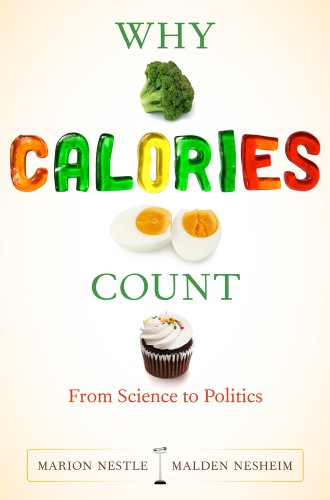
Inhaltsangabe
In an accessible and engaging style, Nestle and Nesheim have written what should become the authoritative book on calories. They provide the history, science, and the politics on the subject, systematically taking the reader through issues that are fundamental to our understanding of diet and food, weight gain and loss, and obesity. At the same time, they sort through a lot of misinformation put forth by food manufacturers and diet program promoters. There are many stake holders involved, but overall the authors argue that the forces are so strong in todays "eat more" environment and calories in food are so easily misunderstood that the result is an obesity epidemic that is growing.
The book takes a note from Michael Pollan by offering a simple mantra for thinking about calories: Get organized. Eat less. Eat better. Move more. Get political.
Die Inhaltsangabe kann sich auf eine andere Ausgabe dieses Titels beziehen.
Über die Autorin bzw. den Autor
Marion Nestle is Paulette Goddard Professor in the Department of Nutrition, Food Studies, and Public Health and Professor of Sociology at New York University. She is the author of What to Eat and, from UC Press, Food Politics: How the Food Industry Influences Nutrition and Health; Safe Food: The Politics of Food Safety; and Pet Food Politics: The Chihuahua in the Coal Mine. Malden Nesheim is Professor Emeritus of Nutritional Sciences at Cornell University. He is coauthor (with Marion Nestle) of Feed Your Pet Right: The Authoritative Guide to Feeding Your Dog and Cat and (with Ann L. Yaktine) of the Institute of Medicine report Seafood Choices: Balancing Benefits and Risks.
Von der hinteren Coverseite
"If you want to understand what's wrong with our eating habits, you must understand the central role that calories play. Nestle and Nesheim are two of America's finest nutritionists–and this book explains, clearly and succinctly, why calories count. It is essential reading not only for people interested in food policy, but for everyone who wants to eat well and be well." –Eric Schlosser, author of Fast Food Nation: The Dark Side of the All-American Meal
"This superbly well-researched and scientifically sound book makes it clear how today’s food environment often overrides physiological regulatory controls of body weight. Why Calories Count is essential reading for anyone who wants to understand why so much about food choice lies in the hands of food marketers whose goal is to sell more products, not necessarily in the interests of public health." –Dr. David Kessler, author of The End of Overeating: Taking Control of the Insatiable American Appetite
“We need to understand what ‘empty calories’ are, so that we can feed our children food that is truly nourishing. On this topic, there is no better teacher than Marion Nestle, who writes with meticulousness, clarity and grace.” –Alice Waters, author of The Art of Simple Food: Notes, Lessons, and Recipes from a Delicious Revolution
"Thank god authorities like Nestle and Nesheim have teamed up to give us an epic view of a calorie: what it is, where it came from, what it means, how and why we count them. Thank god they’ve managed to decode nutritional science into a commonsense language we can all understand. And thank god they’ve put calories in their place in a wider cultural and political context to help us think meaningfully about the food our lives depend upon. I’m grateful." –Betty Fussell, author of Raising Steaks: The Life & Times of American Beef
“Calories. We all talk about them—many are even obsessed with them—but what do we really know about them? Not much. Marion Nestle and Malden Nesheim’s latest book changes all that, pulling back the curtain on calories and helping us understand them in a whole new light. You’ll never look at a 100-calorie pack of corporate cookies the same way again.” –Anna Lappé, author of Diet for a Hot Planet: The Climate Crisis at the End of Your Fork and What You Can Do About It
"This superbly well-researched and scientifically sound book makes it clear how today’s food environment often overrides physiological regulatory controls of body weight. Why Calories Count is essential reading for anyone who wants to understand why so much about food choice lies in the hands of food marketers whose goal is to sell more products, not necessarily in the interests of public health." –Dr. David Kessler, author of The End of Overeating: Taking Control of the Insatiable American Appetite
“We need to understand what ‘empty calories’ are, so that we can feed our children food that is truly nourishing. On this topic, there is no better teacher than Marion Nestle, who writes with meticulousness, clarity and grace.” –Alice Waters, author of The Art of Simple Food: Notes, Lessons, and Recipes from a Delicious Revolution
"Thank god authorities like Nestle and Nesheim have teamed up to give us an epic view of a calorie: what it is, where it came from, what it means, how and why we count them. Thank god they’ve managed to decode nutritional science into a commonsense language we can all understand. And thank god they’ve put calories in their place in a wider cultural and political context to help us think meaningfully about the food our lives depend upon. I’m grateful." –Betty Fussell, author of Raising Steaks: The Life & Times of American Beef
“Calories. We all talk about them—many are even obsessed with them—but what do we really know about them? Not much. Marion Nestle and Malden Nesheim’s latest book changes all that, pulling back the curtain on calories and helping us understand them in a whole new light. You’ll never look at a 100-calorie pack of corporate cookies the same way again.” –Anna Lappé, author of Diet for a Hot Planet: The Climate Crisis at the End of Your Fork and What You Can Do About It
Aus dem Klappentext
"If you want to understand what's wrong with our eating habits, you must understand the central role that calories play. Nestle and Nesheim are two of America's finest nutritionists–and this book explains, clearly and succinctly, why calories count. It is essential reading not only for people interested in food policy, but for everyone who wants to eat well and be well." –Eric Schlosser, author of Fast Food Nation: The Dark Side of the All-American Meal
"This superbly well-researched and scientifically sound book makes it clear how today’s food environment often overrides physiological regulatory controls of body weight. Why Calories Count is essential reading for anyone who wants to understand why so much about food choice lies in the hands of food marketers whose goal is to sell more products, not necessarily in the interests of public health." –Dr. David Kessler, author of The End of Overeating: Taking Control of the Insatiable American Appetite
“We need to understand what ‘empty calories’ are, so that we can feed our children food that is truly nourishing. On this topic, there is no better teacher than Marion Nestle, who writes with meticulousness, clarity and grace.” –Alice Waters, author of The Art of Simple Food: Notes, Lessons, and Recipes from a Delicious Revolution
"Thank god authorities like Nestle and Nesheim have teamed up to give us an epic view of a calorie: what it is, where it came from, what it means, how and why we count them. Thank god they’ve managed to decode nutritional science into a commonsense language we can all understand. And thank god they’ve put calories in their place in a wider cultural and political context to help us think meaningfully about the food our lives depend upon. I’m grateful." –Betty Fussell, author of Raising Steaks: The Life & Times of American Beef
“Calories. We all talk about them—many are even obsessed with them—but what do we really know about them? Not much. Marion Nestle and Malden Nesheim’s latest book changes all that, pulling back the curtain on calories and helping us understand them in a whole new light. You’ll never look at a 100-calorie pack of corporate cookies the same way again.” –Anna Lappé, author of Diet for a Hot Planet: The Climate Crisis at the End of Your Fork and What You Can Do About It
"This superbly well-researched and scientifically sound book makes it clear how today’s food environment often overrides physiological regulatory controls of body weight. Why Calories Count is essential reading for anyone who wants to understand why so much about food choice lies in the hands of food marketers whose goal is to sell more products, not necessarily in the interests of public health." –Dr. David Kessler, author of The End of Overeating: Taking Control of the Insatiable American Appetite
“We need to understand what ‘empty calories’ are, so that we can feed our children food that is truly nourishing. On this topic, there is no better teacher than Marion Nestle, who writes with meticulousness, clarity and grace.” –Alice Waters, author of The Art of Simple Food: Notes, Lessons, and Recipes from a Delicious Revolution
"Thank god authorities like Nestle and Nesheim have teamed up to give us an epic view of a calorie: what it is, where it came from, what it means, how and why we count them. Thank god they’ve managed to decode nutritional science into a commonsense language we can all understand. And thank god they’ve put calories in their place in a wider cultural and political context to help us think meaningfully about the food our lives depend upon. I’m grateful." –Betty Fussell, author of Raising Steaks: The Life & Times of American Beef
“Calories. We all talk about them—many are even obsessed with them—but what do we really know about them? Not much. Marion Nestle and Malden Nesheim’s latest book changes all that, pulling back the curtain on calories and helping us understand them in a whole new light. You’ll never look at a 100-calorie pack of corporate cookies the same way again.” –Anna Lappé, author of Diet for a Hot Planet: The Climate Crisis at the End of Your Fork and What You Can Do About It
Auszug. © Genehmigter Nachdruck. Alle Rechte vorbehalten.
Why Calories Count
From Science to Politics
By Marion Nestle, Malden NesheimUNIVERSITY OF CALIFORNIA PRESS
Copyright © 2012 Marion Nestle and Malden Nesheim
All rights reserved.
ISBN: 978-0-520-26288-1All rights reserved.
Contents
Introduction, 1,
PART ONE. Understanding Calories: It All Starts with the Science, 11,
1. What Is a Calorie?, 13,
2. The History: From Ancient Greece to Modern Calorie Science, 21,
3. Foods: How Scientists Count the Calories, 30,
4. Bodies: How Scientists Measure the Use of Calories, 40,
PART TWO. Why You Need Calories: Survival, Warmth, and Work, 49,
5. Metabolism: How the Body Turns Food into Energy, 51,
6. The First Use of Calories: Basic Life Functions, 57,
7. The Second Use: Heat Losses while Metabolizing Food, 63,
8. The Third Use: Physical Activity, 69,
PART THREE. Calorie Intake and Its Regulation, 77,
9. How Many Calories Do You Need?, 79,
10. Calorie Confusion: The Struggle to Estimate Intake, 86,
11. Secret Calories: Alcohol, 94,
12. Calorie Regulation: The Body's Complex Weight Management System, 101,
PART FOUR. Too Few Calories, 111,
13. Starvation and Its Effects on the Body, 113,
14. Individuals, Communities, Nations: Calories and Global Hunger, 121,
15. Could Restricting Calories Prolong Human Life?, 130,
PART FIVE. Too Many Calories, 137,
16. An Introduction to Obesity, 139,
17. Calories and Weight Gain: Another Complex Relationship, 144,
18. Do Excess Calories Make Some People Gain Weight Faster than Others?, 150,
19. Are All Calories Created Equal?, 158,
20. Do Some Kinds of Diets Work Better than Others?, 165,
PART SIX. The Politics of Calories: A Closer Look, 175,
21. Today's "Eat More" Environment: The Role of the Food Industry, 177,
22. More Calorie Confusion: Portion Distortion, Health Halos, and Wishful Thinking, 186,
23. Calorie Labeling: Science and Politics, 192,
24. Alcohol Labels: Industry vs. Consumers, 201,
25. Will Calorie Labels Help Fight Obesity?, 209,
Conclusion: How to Cope with the Calorie Environment, 217,
Appendix One. Selected Events in the History of Calories, 1614–1919, 227,
Appendix Two. The Respiratory Quotient (RQ), 230,
Appendix Three. Frequently Asked Questions, 233,
Notes, 239,
List of Tables, 271,
List of Figures, 273,
Acknowledgments, 275,
Index, 277,
CHAPTER 1
What Is a Calorie?
In embarking on an entire book about calories, we have to begin at the beginning —what to call them. Calories are units of work or heat, but what they are called depends on who is doing the calling. We think the name inconsistencies can be so confusing that we summarize them in table 1. We believe there is an easier, commonsense way to think about the definition, as we will explain. To get to that point, let's begin with the official definition used by chemists:
One calorie is the amount of heat energy needed to raise the temperature of one gram of water by one degree centigrade, from 14.5° to 15.5°, at one unit of atmospheric pressure.
As a first step toward arriving at a more intuitive definition, let's ignore the ambient temperature and atmospheric pressure, as they usually do not make much difference except to scientists. But pay close attention to the weight units. In table 1, we emphasize gram in this definition to distinguish it from definitions based on heating an amount of water 1,000 times greater—a kilogram. A gram is about one quarter of a teaspoon. A kilogram is 2.2 pounds.
Gram units are inconvenient for most Americans, and so are so-called small calories, based on a gram standard. If food labels listed calories by the chemists' definition, your daily calorie requirements might be about 2,500,000 a day rather than 2,500, and a carrot would provide 25,000 calories instead of 25. That is why nutritionists much prefer to use kilocalories (kcal), units that are 1,000 times larger and based on the heat required to raise the temperature of a kilogram of water by one degree centigrade.
Here is where things get tricky. Because it feels awkward to say kilocalories, nutritionists shorten it to Calories, spelled with a capital C. Food labels list Calories, but they really mean kilocalories (also known as large calories or kilogram-calories). When spoken, Calories (capital C) and calories (small c) sound the same. As a result, when discussing the energy value of food, the words kilocalories (kcal), Calories (Cal), and calories (cal) have come to mean exactly the same thing: 1,000 chemists' calories. Hence: confusion.
The peculiar result of all this is that the word calories can mean two things at the same time: chemists' calories and nutritionists' Calories, which are 1,000 times greater. In common practice, most people use calories, capitalized or not, to mean kilocalories or Calories, despite the confusion this causes.
James Hargrove, who has written a fine history of the evolution of the terms, argues that "it is untenable to continue to use the same word for different thermal units (gram-calorie and kilogram-calorie) and to use different words for the same unit (Calorie and kilocalorie). The only valid use of the Calorie is in common speech and public nutrition education."
We, as it happens, are in the business of public nutrition education, and we use common speech all the time. We do not view this situation as untenable, just confusing. The various definitions lead to problems that can be amusing or annoying, depending on how you look at them. For example, Hargrove points to the inconsistent use of the terms calories and kilocalories—in this case meaning the same thing—in the U.S. Code of Federal Regulations rules for food labels: "A normal serving of the food contains at least 40 kilocalories (that is, 2 percent of a daily intake of 2,000 kilocalories).... The food contains all of the following nutrients per 100 calories based on 2,000 calorie total intake as a daily standard."
Public nutrition educators that we are, we follow common speech. Throughout this book we use calories, spelled with a small c, to refer to kilocalories/ Calories, unless we have a specific reason to use a more precise term. Food labels do this too.
JOULE CONFUSION
With this said, we must now introduce another source of confusion. We live in the United States. Practically everywhere else in the world, people use the metric system and follow the metric-based International System of Units (Système International d'Unités). In this system, food energy is expressed in joules or in their thousandfold-larger counterpart, kilojoules. We give the conversion factors in table 1. These terms also are used imprecisely, and we hear people talking about joules when they really mean kilojoules.
The easiest way to think of the conversions is to remember that 100 calories is about 420 kilojoules (or calories times 4.2) and that 2,400 calories is equivalent to 10,000 kilojoules. If you only want estimates, you can multiply calories by 4 to get kilojoules or divide kilojoules by 4 to get calories. This is obviously imprecise but should work well enough for most purposes. As you will soon see, "works well enough for most purposes" is a constant theme in this book.
And just for the record, let's add one more term. Nutrition scientists like to use megajoule (MJ) to describe...
„Über diesen Titel“ kann sich auf eine andere Ausgabe dieses Titels beziehen.
Suchergebnisse für Why Calories Count: From Science to Politics (California...

Beispielbild für diese ISBN
Why Calories Count: From Science to Politics
Verlag:
University of California Press, 2012
ISBN 10: 0520262883
ISBN 13: 9780520262881
Gebraucht
Hardcover
Anbieter: World of Books (was SecondSale), Montgomery, IL, USA
Verkäuferbewertung 5 von 5 Sternen

Hardback. Zustand: Good. Explains what calories are and how they work, both biologically and politically. This title takes readers through the issues that are fundamental to our understanding of diet and food, weight gain, loss, and obesity. Artikel-Nr. 00101350513
Gebraucht kaufen
EUR 4,71
Versand gratis
Versand innerhalb von USA
Versand innerhalb von USA
Anzahl: 3 verfügbar
Beispielbild für diese ISBN
Why Calories Count: From Science to Politics
Verlag:
University of California Press, 2012
ISBN 10: 0520262883
ISBN 13: 9780520262881
Gebraucht
Hardcover
Anbieter: World of Books (was SecondSale), Montgomery, IL, USA
Verkäuferbewertung 5 von 5 Sternen
Hardback. Zustand: Fair. Explains what calories are and how they work, both biologically and politically. This title takes readers through the issues that are fundamental to our understanding of diet and food, weight gain, loss, and obesity. Artikel-Nr. 00101428245
Gebraucht kaufen
EUR 4,71
Versand gratis
Versand innerhalb von USA
Versand innerhalb von USA
Anzahl: 1 verfügbar
Beispielbild für diese ISBN
Why Calories Count: From Science to Politics (Volume 33) (California Studies in Food and Culture)
Verlag:
University of California Press (edition First Edition), 2012
ISBN 10: 0520262883
ISBN 13: 9780520262881
Gebraucht
Hardcover
Erstausgabe
Anbieter: BooksRun, Philadelphia, PA, USA
Verkäuferbewertung 5 von 5 Sternen
Hardcover. Zustand: Very Good. First Edition. With dust jacket. It's a well-cared-for item that has seen limited use. The item may show minor signs of wear. All the text is legible, with all pages included. It may have slight markings and/or highlighting. Artikel-Nr. 0520262883-11-1-29
Gebraucht kaufen
EUR 5,30
Versand gratis
Versand innerhalb von USA
Versand innerhalb von USA
Anzahl: 1 verfügbar
Beispielbild für diese ISBN
Why Calories Count : From Science to Politics
Verlag:
University of California Press, 2012
ISBN 10: 0520262883
ISBN 13: 9780520262881
Gebraucht
Hardcover
Erstausgabe
Anbieter: Better World Books, Mishawaka, IN, USA
Verkäuferbewertung 5 von 5 Sternen
Zustand: Good. 1st Edition. Pages intact with minimal writing/highlighting. The binding may be loose and creased. Dust jackets/supplements are not included. Stock photo provided. Product includes identifying sticker. Better World Books: Buy Books. Do Good. Artikel-Nr. 5243013-6
Gebraucht kaufen
EUR 6,34
Versand gratis
Versand innerhalb von USA
Versand innerhalb von USA
Anzahl: 1 verfügbar
Beispielbild für diese ISBN
Why Calories Count : From Science to Politics
Verlag:
University of California Press, 2012
ISBN 10: 0520262883
ISBN 13: 9780520262881
Gebraucht
Hardcover
Erstausgabe
Anbieter: Better World Books: West, Reno, NV, USA
Verkäuferbewertung 5 von 5 Sternen
Zustand: Good. 1st Edition. Former library copy. Pages intact with minimal writing/highlighting. The binding may be loose and creased. Dust jackets/supplements are not included. Includes library markings. Stock photo provided. Product includes identifying sticker. Better World Books: Buy Books. Do Good. Artikel-Nr. 611949-75
Gebraucht kaufen
EUR 6,34
Versand gratis
Versand innerhalb von USA
Versand innerhalb von USA
Anzahl: 2 verfügbar
Beispielbild für diese ISBN
Why Calories Count: From Science to Politics (California Studies in Food and Culture)
Verlag:
University of California Press, 2012
ISBN 10: 0520262883
ISBN 13: 9780520262881
Gebraucht
Hardcover
Anbieter: Wonder Book, Frederick, MD, USA
Verkäuferbewertung 5 von 5 Sternen
Zustand: Very Good. Very Good condition. Good dust jacket. A copy that may have a few cosmetic defects. May also contain light spine creasing or a few markings such as an owner's name, short gifter's inscription or light stamp. Artikel-Nr. O12H-00041
Gebraucht kaufen
EUR 6,41
Versand gratis
Versand innerhalb von USA
Versand innerhalb von USA
Anzahl: 1 verfügbar
Beispielbild für diese ISBN
Why Calories Count: From Science to Politics (California Studies in Food and Culture) (Volume 33)
Verlag:
University of California Press, 2012
ISBN 10: 0520262883
ISBN 13: 9780520262881
Gebraucht
Hardcover
Anbieter: ThriftBooks-Dallas, Dallas, TX, USA
Verkäuferbewertung 5 von 5 Sternen
Hardcover. Zustand: Very Good. No Jacket. May have limited writing in cover pages. Pages are unmarked. ~ ThriftBooks: Read More, Spend Less. Artikel-Nr. G0520262883I4N00
Gebraucht kaufen
EUR 7,30
Versand gratis
Versand innerhalb von USA
Versand innerhalb von USA
Anzahl: 1 verfügbar
Beispielbild für diese ISBN
Why Calories Count: From Science to Politics (California Studies in Food and Culture) (Volume 33)
Verlag:
University of California Press, 2012
ISBN 10: 0520262883
ISBN 13: 9780520262881
Gebraucht
Hardcover
Anbieter: ThriftBooks-Reno, Reno, NV, USA
Verkäuferbewertung 5 von 5 Sternen
Hardcover. Zustand: Good. No Jacket. Pages can have notes/highlighting. Spine may show signs of wear. ~ ThriftBooks: Read More, Spend Less. Artikel-Nr. G0520262883I3N00
Gebraucht kaufen
EUR 7,30
Versand gratis
Versand innerhalb von USA
Versand innerhalb von USA
Anzahl: 1 verfügbar
Beispielbild für diese ISBN
Why Calories Count: From Science to Politics (California Studies in Food and Culture) (Volume 33)
Verlag:
University of California Press, 2012
ISBN 10: 0520262883
ISBN 13: 9780520262881
Gebraucht
Hardcover
Anbieter: ThriftBooks-Atlanta, AUSTELL, GA, USA
Verkäuferbewertung 5 von 5 Sternen
Hardcover. Zustand: Very Good. No Jacket. Missing dust jacket; May have limited writing in cover pages. Pages are unmarked. ~ ThriftBooks: Read More, Spend Less. Artikel-Nr. G0520262883I4N01
Gebraucht kaufen
EUR 7,30
Versand gratis
Versand innerhalb von USA
Versand innerhalb von USA
Anzahl: 1 verfügbar
Beispielbild für diese ISBN
Why Calories Count: From Science to Politics (California Studies in Food and Culture) (Volume 33)
Verlag:
University of California Press, 2012
ISBN 10: 0520262883
ISBN 13: 9780520262881
Gebraucht
Hardcover
Anbieter: ThriftBooks-Dallas, Dallas, TX, USA
Verkäuferbewertung 5 von 5 Sternen
Hardcover. Zustand: Very Good. No Jacket. Missing dust jacket; May have limited writing in cover pages. Pages are unmarked. ~ ThriftBooks: Read More, Spend Less. Artikel-Nr. G0520262883I4N01
Gebraucht kaufen
EUR 7,30
Versand gratis
Versand innerhalb von USA
Versand innerhalb von USA
Anzahl: 1 verfügbar