
Verwandte Artikel zu Ending Slavery: How We Free Today's Slaves
Inhaltsangabe
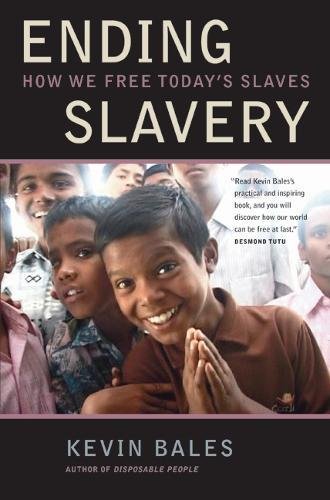
In his 1999 book, Disposable People, Kevin Bales brought to light the shocking fact of modern slavery and described how, nearly two hundred years after the slave trade was abolished (legal slavery would have to wait another fifty years), global slavery stubbornly persists. In Ending Slavery, Bales again grapples with the struggle to end this ancient evil and presents the ideas and insights that can finally lead to slavery's extinction. Recalling his own involvement in the antislavery movement, he recounts a personal journey in search of the solution and explains how governments and citizens can build a world without slavery.
Die Inhaltsangabe kann sich auf eine andere Ausgabe dieses Titels beziehen.
Über die Autorin bzw. den Autor
Kevin Bales is the author of The Slave Next Door and Disposable People, both from UC Press. He is also Co-Founder of Free the Slaves, Washington DC, and Professor of Contemporary Slavery at the WIlberforce Institute for the Study of Slavery and Emancipation at the University of Hull. He is the world's leading expert on contemporary slavery.
Von der hinteren Coverseite
"None of us is truly free while others remain enslaved. The continuing existence of slavery is one of the greatest tragedies facing our global humanity. Today we finally have the means and increasingly the conviction to end this scourge and to bring millions of slaves to freedom. Read Kevin Bales's practical and inspiring book, and you will discover how our world can be free at last."—Desmond Tutu
"Ever since the Emancipation Proclamation, Americans have congratulated themselves on ending slavery once and for all. But did we? Kevin Bales is a powerful and effective voice in pointing out the appalling degree to which servitude, forced labor and outright slavery still exist in today's world, even here. This book is a valuable primer on the persistence of these evils, their intricate links to poverty, corruption and globalization—and what we can do to combat them. He's a modern-day William Lloyd Garrison."—Adam Hochschild, author of Bury the Chains: Prophets and Rebels in the Fight to Free an Empire's Slaves
"I know modern slavery from the inside, and since coming to freedom I am committed to end it forever. This book shows us how to make a world where no more childhoods will be stolen and sold as mine was."—Given Kachepa, former U.S. slave, recipient of the Yoshiyama Award
"Kevin Bales does not just pontificate from behind a desk. From the charcoal pits of Brazil to the brothels of Thailand, he has seen the victims of modern day slavery. In Ending Slavery, Bales gives us an update on what's happening (and not happening), and a controversial plan to abolish slavery in the 21st century. This is a must read for anyone who wants to learn about the great human rights issue of our times."—Ambassador John Miller, former director of the U.S. State Department's Office to Monitor and Combat Trafficking in Persons
"Ever since the Emancipation Proclamation, Americans have congratulated themselves on ending slavery once and for all. But did we? Kevin Bales is a powerful and effective voice in pointing out the appalling degree to which servitude, forced labor and outright slavery still exist in today's world, even here. This book is a valuable primer on the persistence of these evils, their intricate links to poverty, corruption and globalization—and what we can do to combat them. He's a modern-day William Lloyd Garrison."—Adam Hochschild, author of Bury the Chains: Prophets and Rebels in the Fight to Free an Empire's Slaves
"I know modern slavery from the inside, and since coming to freedom I am committed to end it forever. This book shows us how to make a world where no more childhoods will be stolen and sold as mine was."—Given Kachepa, former U.S. slave, recipient of the Yoshiyama Award
"Kevin Bales does not just pontificate from behind a desk. From the charcoal pits of Brazil to the brothels of Thailand, he has seen the victims of modern day slavery. In Ending Slavery, Bales gives us an update on what's happening (and not happening), and a controversial plan to abolish slavery in the 21st century. This is a must read for anyone who wants to learn about the great human rights issue of our times."—Ambassador John Miller, former director of the U.S. State Department's Office to Monitor and Combat Trafficking in Persons
Aus dem Klappentext
"None of us is truly free while others remain enslaved. The continuing existence of slavery is one of the greatest tragedies facing our global humanity. Today we finally have the means and increasingly the conviction to end this scourge and to bring millions of slaves to freedom. Read Kevin Bales's practical and inspiring book, and you will discover how our world can be free at last."Desmond Tutu
"Ever since the Emancipation Proclamation, Americans have congratulated themselves on ending slavery once and for all. But did we? Kevin Bales is a powerful and effective voice in pointing out the appalling degree to which servitude, forced labor and outright slavery still exist in today's world, even here. This book is a valuable primer on the persistence of these evils, their intricate links to poverty, corruption and globalizationand what we can do to combat them. He's a modern-day William Lloyd Garrison."Adam Hochschild, author of Bury the Chains: Prophets and Rebels in the Fight to Free an Empire's Slaves
"I know modern slavery from the inside, and since coming to freedom I am committed to end it forever. This book shows us how to make a world where no more childhoods will be stolen and sold as mine was."Given Kachepa, former U.S. slave, recipient of the Yoshiyama Award
"Kevin Bales does not just pontificate from behind a desk. From the charcoal pits of Brazil to the brothels of Thailand, he has seen the victims of modern day slavery. InEnding Slavery, Bales gives us an update on what's happening (and not happening), and a controversial plan to abolish slavery in the 21st century. This is a must read for anyone who wants to learn about the great human rights issue of our times."Ambassador John Miller, former director of the U.S. State Department's Office to Monitor and Combat Trafficking in Persons
"Ever since the Emancipation Proclamation, Americans have congratulated themselves on ending slavery once and for all. But did we? Kevin Bales is a powerful and effective voice in pointing out the appalling degree to which servitude, forced labor and outright slavery still exist in today's world, even here. This book is a valuable primer on the persistence of these evils, their intricate links to poverty, corruption and globalizationand what we can do to combat them. He's a modern-day William Lloyd Garrison."Adam Hochschild, author of Bury the Chains: Prophets and Rebels in the Fight to Free an Empire's Slaves
"I know modern slavery from the inside, and since coming to freedom I am committed to end it forever. This book shows us how to make a world where no more childhoods will be stolen and sold as mine was."Given Kachepa, former U.S. slave, recipient of the Yoshiyama Award
"Kevin Bales does not just pontificate from behind a desk. From the charcoal pits of Brazil to the brothels of Thailand, he has seen the victims of modern day slavery. InEnding Slavery, Bales gives us an update on what's happening (and not happening), and a controversial plan to abolish slavery in the 21st century. This is a must read for anyone who wants to learn about the great human rights issue of our times."Ambassador John Miller, former director of the U.S. State Department's Office to Monitor and Combat Trafficking in Persons
Auszug. © Genehmigter Nachdruck. Alle Rechte vorbehalten.
Ending Slavery
How We Free Today's SlavesBy Kevin BalesUniversity of California Press
Copyright © 2007 The Regents of the University of CaliforniaAll right reserved.
ISBN: 978-0-520-25470-1
Contents
Photographs follow page 60.Introduction.......................................................................11. The Challenge: Understanding the World of New Slavery...........................52. Building the Plan...............................................................213. Rescuing Slaves Today...........................................................364. Home-Grown Freedom..............................................................615. Governments: Carrying the Biggest Stick.........................................966. Global Problem, Global Reach....................................................1397. Ending the (Product) Chain......................................................1778. Ending Poverty to End Slavery to End Poverty to End Slavery.....................213Conclusion: The Beginning of the End of Slavery....................................229Coda: What YOU Can Do to End Slavery...............................................233Appendix: Measuring the Effectiveness of Antislavery Work..........................237Notes..............................................................................243Index..............................................................................255
Chapter One
The ChallengeUnderstanding the World of New Slavery
It is just like a fisherman going to fish.... If he don't put out the bait, he can't get a fish. So they tell the parents a lovely story, you know, what [their children] will encounter when they come to the United States. But behold, when they get into the United States the picture is completely different. LOUIS
Louis works for the phone company near Washington, D.C. He also frees slaves. When he got together with family and friends for the Thanksgiving holiday a few years ago, Louis did what everyone does-he got out his video camera. As he recorded the holiday gathering, he noticed something strange: in the large group of family and friends, one teenage girl always tried to hide when he turned on the camera.
And I asked myself, you know, what's wrong with the young lady? At first I asked her, where do you come from? She told me she was visiting from Indiana. That is, she was staying with my cousin there. But something stuck in my mind.
Louis had visited his cousin in Indiana several times and didn't remember ever meeting this young woman. Driving home from the party, he asked his wife what she knew about the girl. His wife had heard that the girl had eloped and was now hiding with their cousin. Yet this seemed a little odd as well, because normally a girl seeking refuge would look first to her own family.
Louis had come to the United States from Cameroon, West Africa, in 1985 and eventually became a U.S. citizen. With a degree in management from an American university, he had a good job and served as an elder in his Presbyterian church. Living in the suburbs in Virginia, Louis and his family were pursuing the middle-class dream of stability and security. By his late forties, Louis had achieved much of his dream. But he found himself deeply unsettled by this strange and troubled girl in the middle of his family's Thanksgiving holiday. Things just weren't adding up, so a few days later he drove over to visit a relative, where the young woman was staying.
And then she began to tell me the story. And I felt so bad about it.... I mean everyone has a human feeling, if you hear a story which is so terrible, you are moved, being human. I began to put down in writing the stories she told me, and probably if you read the whole report that I wrote, you would come to the conclusion that something was really, really wrong.
The more Louis heard, the more sickened he became. There was no elopement in this girl's past. He listened as, confused, isolated, and still in shock, she painfully recounted years of slavery in the suburbs of Washington, D.C.
Her name was Rose. Back in Cameroon, at the age of fourteen, she had just begun her school's summer vacation when a friend of her aunt stopped by her house. This woman explained that a Cameroonian family in the United States needed someone to help around the house. In exchange, the family would help Rose go to school in America. It sounded like a great opportunity to Rose and to her parents. They talked it over carefully and agreed that she could go right away. Since the summer vacation had just begun, she would have time to settle in before starting school in the United States. Away from her parents, Rose was introduced to the family she would be working for. They bought her air ticket and escorted her through customs and immigration, passing her off as one of their family when they reached the United States. Everything seemed normal until they reached Rose's new home in America. Then the trap closed.
The husband and wife showed Rose the jobs they wanted her to do. Soon the jobs filled her day completely, rapidly taking control of her life. Up at six in the morning, Rose had to work until long past midnight. When she began to question her treatment, the beatings began. "They used to hit me," Rose said. "I couldn't go for three days without them beating me up." The smallest accident would lead to violence. "Sometimes I might spill a drink on the floor by mistake. They would hit me for that," she said. In a strange country, locked up in a strange house far from home, Rose was cut off from help. If she tried to use the phone, she was beaten; if she tried to write a letter, it was taken away from her. "It was just like she was lost in the middle of a forest," said Louis; "she was completely isolated."
Under the complete control of others, subject to physical abuse, paid nothing, working all hours, this fourteen-year-old schoolgirl had become a slave. The promise that she could go to school in America was just the bait used to hook her. In Cameroon her parents received no word from her, only occasional reassuring messages from the family who had enslaved their daughter. The beatings and constant verbal attacks broke Rose's will, and her life dissolved into a blur of pain, exhaustion, work, abuse, and fear. Rose lived in slavery for two and a half years.
Someday we may know the details of what happened in these years, but probably not. Until recently Rose was often nervous and withdrawn, still suffering from the trauma of her enslavement. Demonstrating remarkable resilience, she has moved on to a new life, and it would be understandable if she never wants to revisit that period of unspeakable pain. Her mind has deeply buried her memories. What we do know is that not long after she had turned eighteen, Rose was found trying to talk to a neighbor by the woman who controlled her. Dragging her away, "the woman started yelling at me, started cursing me," Rose explains, "and I couldn't take it anymore. I just had to run away." Later that day she ran to the home of a friend of her "employer." She pleaded for help, but this woman called the family who had enslaved her. When Rose realized the betrayal, she ran again, this time to the parking lot of a nearby K-Mart. Her only hope was a Cameroonian man she had met in her employers' home. He had seemed nice, and she had learned his phone number. Begging change from a stranger to make a phone call, she managed to leave a message for the...
„Über diesen Titel“ kann sich auf eine andere Ausgabe dieses Titels beziehen.
Suchergebnisse für Ending Slavery: How We Free Today's Slaves

Beispielbild für diese ISBN
Ending Slavery: How We Free Today's Slaves
Verlag:
University of California Press, 2007
ISBN 10: 0520254708
ISBN 13: 9780520254701
Gebraucht
Hardcover
Anbieter: World of Books (was SecondSale), Montgomery, IL, USA
Verkäuferbewertung 5 von 5 Sternen

Zustand: Good. Item in good condition. Textbooks may not include supplemental items i.e. CDs, access codes etc. Artikel-Nr. 00110697271
Gebraucht kaufen
EUR 5,49
Versand gratis
Versand innerhalb von USA
Versand innerhalb von USA
Anzahl: 1 verfügbar
Beispielbild für diese ISBN
Ending Slavery: How We Free Todayâs Slaves
Verlag:
University of California Press, 2007
ISBN 10: 0520254708
ISBN 13: 9780520254701
Gebraucht
Hardcover
Anbieter: ThriftBooks-Atlanta, AUSTELL, GA, USA
Verkäuferbewertung 5 von 5 Sternen
Hardcover. Zustand: Very Good. No Jacket. Missing dust jacket; May have limited writing in cover pages. Pages are unmarked. ~ ThriftBooks: Read More, Spend Less. Artikel-Nr. G0520254708I4N01
Gebraucht kaufen
EUR 6,03
Versand gratis
Versand innerhalb von USA
Versand innerhalb von USA
Anzahl: 1 verfügbar
Beispielbild für diese ISBN
Ending Slavery: How We Free Todayâs Slaves
Verlag:
University of California Press, 2007
ISBN 10: 0520254708
ISBN 13: 9780520254701
Gebraucht
Hardcover
Anbieter: ThriftBooks-Dallas, Dallas, TX, USA
Verkäuferbewertung 5 von 5 Sternen
Hardcover. Zustand: Very Good. No Jacket. May have limited writing in cover pages. Pages are unmarked. ~ ThriftBooks: Read More, Spend Less. Artikel-Nr. G0520254708I4N00
Gebraucht kaufen
EUR 6,03
Versand gratis
Versand innerhalb von USA
Versand innerhalb von USA
Anzahl: 1 verfügbar
Beispielbild für diese ISBN
Ending Slavery: How We Free Today's Slaves
Verlag:
University of California Press, 2007
ISBN 10: 0520254708
ISBN 13: 9780520254701
Gebraucht
Hardcover
Signiert
Anbieter: Wonder Book, Frederick, MD, USA
Verkäuferbewertung 5 von 5 Sternen
Zustand: Very Good. Signed Copy . Very Good dust jacket. Signed/Inscribed by author on title page. Artikel-Nr. C03OS-01309
Gebraucht kaufen
EUR 6,41
Versand gratis
Versand innerhalb von USA
Versand innerhalb von USA
Anzahl: 1 verfügbar
Beispielbild für diese ISBN
Ending Slavery: How We Free Today's Slaves
Verlag:
University of California Press, 2007
ISBN 10: 0520254708
ISBN 13: 9780520254701
Gebraucht
Hardcover
Anbieter: Wonder Book, Frederick, MD, USA
Verkäuferbewertung 5 von 5 Sternen
Zustand: Very Good. Very Good condition. Very Good dust jacket. A copy that may have a few cosmetic defects. May also contain light spine creasing or a few markings such as an owner's name, short gifter's inscription or light stamp. Artikel-Nr. D01A-03207
Gebraucht kaufen
EUR 6,41
Versand gratis
Versand innerhalb von USA
Versand innerhalb von USA
Anzahl: 3 verfügbar
Beispielbild für diese ISBN
Ending Slavery: How We Free Today's Slaves
Verlag:
University of California Press, 2007
ISBN 10: 0520254708
ISBN 13: 9780520254701
Gebraucht
Hardcover
Anbieter: Wonder Book, Frederick, MD, USA
Verkäuferbewertung 5 von 5 Sternen
Zustand: As New. Like New condition. Like New dust jacket. A near perfect copy that may have very minor cosmetic defects. Artikel-Nr. Q15O-01038
Gebraucht kaufen
EUR 6,41
Versand gratis
Versand innerhalb von USA
Versand innerhalb von USA
Anzahl: 1 verfügbar
Beispielbild für diese ISBN
Ending Slavery: How We Free Today's Slaves
Verlag:
University of California Press, 2007
ISBN 10: 0520254708
ISBN 13: 9780520254701
Gebraucht
Hardcover
Signiert
Anbieter: Wonder Book, Frederick, MD, USA
Verkäuferbewertung 5 von 5 Sternen
Zustand: Very Good. Signed Copy . Good dust jacket. Signed/Inscribed by author on title page. Artikel-Nr. SA10I-00105
Gebraucht kaufen
EUR 6,41
Versand gratis
Versand innerhalb von USA
Versand innerhalb von USA
Anzahl: 1 verfügbar
Beispielbild für diese ISBN
Ending Slavery : How We Free Today's Slaves
Verlag:
University of California Press, 2007
ISBN 10: 0520254708
ISBN 13: 9780520254701
Gebraucht
Hardcover
Erstausgabe
Anbieter: Better World Books, Mishawaka, IN, USA
Verkäuferbewertung 5 von 5 Sternen
Zustand: Very Good. 1st Edition. Pages intact with possible writing/highlighting. Binding strong with minor wear. Dust jackets/supplements may not be included. Stock photo provided. Product includes identifying sticker. Better World Books: Buy Books. Do Good. Artikel-Nr. 2025076-75
Gebraucht kaufen
EUR 7,37
Versand gratis
Versand innerhalb von USA
Versand innerhalb von USA
Anzahl: 1 verfügbar
Beispielbild für diese ISBN
Ending Slavery: How We Free Todayâs Slaves
Verlag:
University of California Press, 2007
ISBN 10: 0520254708
ISBN 13: 9780520254701
Gebraucht
Hardcover
Anbieter: Books From California, Simi Valley, CA, USA
Verkäuferbewertung 4 von 5 Sternen

hardcover. Zustand: Good. Artikel-Nr. mon0004258704
Gebraucht kaufen
EUR 3,91
EUR 4,44 Versand
Versand innerhalb von USA
Versand innerhalb von USA
Anzahl: 1 verfügbar
Beispielbild für diese ISBN
Ending Slavery: How We Free Todayâs Slaves
Verlag:
University of California Press, 2007
ISBN 10: 0520254708
ISBN 13: 9780520254701
Gebraucht
Hardcover
Anbieter: Books From California, Simi Valley, CA, USA
Verkäuferbewertung 4 von 5 Sternen
hardcover. Zustand: Very Good. The copy shows minor external wear, but is in otherwise clean condition. Artikel-Nr. mon0004033373
Gebraucht kaufen
EUR 5,31
EUR 4,44 Versand
Versand innerhalb von USA
Versand innerhalb von USA
Anzahl: 1 verfügbar