
Verwandte Artikel zu Postcolonial Disorders: Volume 8 (Ethnographic Studies...
Postcolonial Disorders: Volume 8 (Ethnographic Studies in Subjectivity, Band 8) - Softcover
Buch 6 von 12: Ethnographic Studies in Subjectivity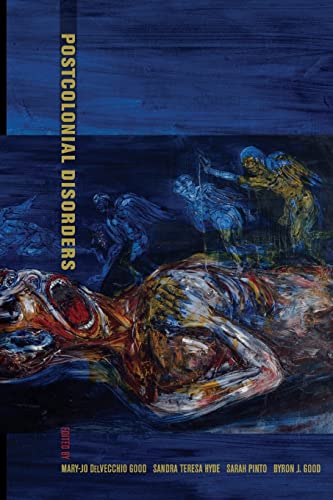
Inhaltsangabe
The essays in this volume reflect on the nature of subjectivity in the diverse places where anthropologists work at the beginning of the twenty-first century. Contributors explore everyday modes of social and psychological experience, the constitution of the subject, and forms of subjection that shape the lives of Basque youth, Indonesian artists, members of nongovernmental HIV/AIDS programs in China and the Republic of Congo, psychiatrists and the mentally ill in Morocco and Ireland, and persons who have suffered trauma or been displaced by violence in the Middle East and in South and Southeast Asia.
Painting on book jacket by Entang Wiharso
Painting on book jacket by Entang Wiharso
Die Inhaltsangabe kann sich auf eine andere Ausgabe dieses Titels beziehen.
Über die Autorin bzw. den Autor
Mary-Jo DelVecchio Good is Professor of Social Medicine at Harvard University and author of many publications, including American Medicine: The Quest for Competence (UC Press) and coeditor of Pain as Human Experience (UC Press). Sandra Teresa Hyde is Associate Professor in the Departments of Anthropology and Social Studies of Medicine, McGill University, and the author of Eating Spring Rice: The Cultural Politics of AIDS in Southwest China (UC Press). Sarah Pinto is Assistant Professor of Anthropology at Tufts University and author of Where There is No Midwife: Birth and Loss in Rural India. Byron Good is Professor of Medical Anthropology at Harvard University, author of Medicine, Rationality and Experience, and coeditor of Subjectivity: Ethnographic Investigations (UC Press), among other books.
Auszug. © Genehmigter Nachdruck. Alle Rechte vorbehalten.
POSTCOLONIAL DISORDERS
University of California Press
Copyright © 2008 The Regents of the University of CaliforniaAll right reserved.
ISBN: 978-0-520-25224-0
Contents
Acknowledgments...................................................................................................................................................................................................xiPostcolonial Disorders: Reflections on Subjectivity in the Contemporary World Byron J. Good, Mary-Jo DelVecchio Good, Sandra Teresa Hyde, and Sarah Pinto........................................................1PART I: DISORDERED STATES1. Madness and the Politically Real: Reflections on Violence in Postdictatorial Spain Begoa Aretxaga............................................................................................................432. Indonesia Sakit: Indonesian Disorders and the Subjective Experience and Interpretive Politics of Contemporary Indonesian Artists Mary-Jo DelVecchio Good and Byron J. Good....................................623. The Political Dimensions of Emasculation: Fantasy, Conspiracy, and Estrangement among Populist Leaders in Post-New Order Lombok, Indonesia John M. MacDougall.................................................1094. Haunting Ghosts: Madness, Gender, and Ensekirite in Haiti in the Democratic Era Erica Caple James.............................................................................................................1325. Laboratory of Intervention: The Humanitarian Governance of the Postcommunist Balkan Territories Mariella Pandolfi.............................................................................................157PART II: SUBJECTIVITY IN THE BORDERLANDS6. Everyday AIDS Practices: Contestations of Borders and Infectious Disease in Southwest China Sandra Teresa Hyde................................................................................................1897. Of Maids and Prostitutes: Indonesian Female Migrants in the New Asian Hinterlands Johan Lindquist.............................................................................................................2188. Ambivalent Inquiry: Dilemmas of AIDS in the Republic of Congo David Eaton.....................................................................................................................................2389. To Live with What Would Otherwise Be Unendurable, II: Caught in the Borderlands of Palestine/Israel Michael M. J. Fischer.....................................................................................260PART III: MADNESS, ALTERITY, AND PSYCHIATRY10. The Mucker War: A History of Violence and Silence Joo Biehl.................................................................................................................................................27911. Institutional Persons and Personal Institutions: The Asylum and Marginality in Rural Ireland A. Jamie Saris..................................................................................................30912. The Knot of the Soul: Postcolonial Conundrums, Madness, and the Imagination Stefania Pandolfo................................................................................................................32913. Consuming Grief: Infant Death in the Postcolonial Time of Intervention Sarah Pinto...........................................................................................................................35914. Postcoloniality as the Aftermath of Terror among Vietnamese Refugees Janis H. Jenkins and Michael Hollifield.................................................................................................37815. Cross-Cultural Psychiatry in Medical-Legal Documentation of Suffering: Human Rights Abuses Involving Transnational Corporations and the Yadana Pipeline Project in Burma Kathleen Allden.....................397Contributors......................................................................................................................................................................................................419Index.............................................................................................................................................................................................................425
Chapter One
MADNESS AND THE POLITICALLY REALReflections on Violence in Postdictatorial Spain
Begoa Aretxaga
When I was invited to take part in this seminar I was happy to have an opportunity to discuss some of my current work with former colleagues and friends. I have been increasingly preoccupied with the problem of madness as it plays and as it is displayed in the theater of politics. This is for me the beginning of a dialogue about this issue that one could broadly call "politics and madness." In this sense what I am speaking about today is more the beginning of a formulation than a crafted thesis.
One of my worries as I started to think about this seminar was that I know close to nothing about postcolonial psychiatry except perhaps for the work of that major and wonderful theorist of coloniality, Frantz Fanon. And to make matters worse I am not properly speaking about questions of postcoloniality either, even though I know a bit more about this issue, having worked for a long while in Ireland, the land of "Saints, Scholars and Schizophrenics" as Nancy Scheper-Hughes (1979) dubbed it, and known most recently as the land of crazy violence and terrorism.
But it is not about Ireland that I want to speak today but my current research in the Basque Country of Spain. The Basque Country is not a colonial or postcolonial setting, although some Basque radicals think of the Basque Country in these terms. Yet one could argue that after thirty-six years of dictatorship Spain has gone through a veritable change of status that transformed the country into another state of being. One could say that the series of issues that arise out of this transition and transformation from a totalitarian to a democratic polity have a family resemblance to at least some issues arising out of the postcolonial setting. At the risk of using postcoloniality here as a metaphor of a particular existential state let me say nevertheless that something that characterizes the postcolonial state and the transitional state of countries like Spain or those of the former socialist bloc is a marginal status within the global political and economic order. The second related characteristic is a certain dislocation and often violent disarray of things. It is a state in which the logical order of Cartesian thinking doesn't quite work and yet doesn't quite not work either. It is a state in which things are a little off where they should be and sometimes very much off, so that the state of things seems crazy. And it is frequently through the trope of madness that these "altered states" are made sense of. It is this discourse on madness, national identity, and statehood that I am trying to think about here. What does this discourse say about both the lived experience of politics in these altered states (transitional, changed states) and about the changing nature of the state in our postmodern global world (Fabian 2000; Siegel 1998; Bhabha 1994; Fanon 1967; Geertz 1973)?
I have been thinking about the question of political madness because it has become a privileged trope in the current discourse on Basque violence, particularly since the...
„Über diesen Titel“ kann sich auf eine andere Ausgabe dieses Titels beziehen.
Suchergebnisse für Postcolonial Disorders: Volume 8 (Ethnographic Studies...

Beispielbild für diese ISBN
Postcolonial Disorders
Verlag:
University of California Press, 2008
ISBN 10: 0520252241
ISBN 13: 9780520252240
Gebraucht
Softcover
Erstausgabe
Anbieter: Better World Books, Mishawaka, IN, USA
Verkäuferbewertung 5 von 5 Sternen

Zustand: Good. 1st Edition. Former library copy. Pages intact with minimal writing/highlighting. The binding may be loose and creased. Dust jackets/supplements are not included. Includes library markings. Stock photo provided. Product includes identifying sticker. Better World Books: Buy Books. Do Good. Artikel-Nr. 68343442-6
Gebraucht kaufen
EUR 11,42
Versand gratis
Versand innerhalb von USA
Versand innerhalb von USA
Anzahl: 1 verfügbar
Beispielbild für diese ISBN
Postcolonial Disorders
Anbieter: PBShop.store US, Wood Dale, IL, USA
Verkäuferbewertung 5 von 5 Sternen
PAP. Zustand: New. New Book. Shipped from UK. Established seller since 2000. Artikel-Nr. WF-9780520252240
Beispielbild für diese ISBN
Postcolonial Disorders
Anbieter: PBShop.store UK, Fairford, GLOS, Vereinigtes Königreich
Verkäuferbewertung 5 von 5 Sternen
PAP. Zustand: New. New Book. Shipped from UK. Established seller since 2000. Artikel-Nr. WF-9780520252240
Neu kaufen
EUR 36,50
EUR 5,99 Versand
Versand von Vereinigtes Königreich nach USA
Versand von Vereinigtes Königreich nach USA
Anzahl: 2 verfügbar
Beispielbild für diese ISBN
Postcolonial Disorders
Verlag:
University of California Press, 2008
ISBN 10: 0520252241
ISBN 13: 9780520252240
Neu
Softcover
Anbieter: Kennys Bookstore, Olney, MD, USA
Verkäuferbewertung 5 von 5 Sternen
Zustand: New. Explores everyday modes of social and psychological experience, the constitution of the subject, and forms of subjection that shape the lives of Basque youth, Indonesian artists, members of nongovernmental HIV/AIDS programs in China and the Republic of Congo, psychiatrists and the mentally ill in Morocco and Ireland. Editor(s): Good, Mary-Jo DelVecchio; Hyde, Sandra Teresa; Pinto, Sarah; Good, Byron J. Series: Ethnographic Studies in Subjectivity. Num Pages: 480 pages, 20 b/w photographs, 1 map. BIC Classification: JHMC; MB. Category: (P) Professional & Vocational. Dimension: 226 x 154 x 28. Weight in Grams: 634. . 2008. 1st Edition. Paperback. . . . . Books ship from the US and Ireland. Artikel-Nr. V9780520252240
Neu kaufen
EUR 43,17
EUR 9,36 Versand
Versand innerhalb von USA
Versand innerhalb von USA
Anzahl: 1 verfügbar
Beispielbild für diese ISBN
Postcolonial Disorders (Ethnographic Studies in Subjectivity) (Volume 8)
Verlag:
University of California Press, 2008
ISBN 10: 0520252241
ISBN 13: 9780520252240
Neu
Softcover
Anbieter: Ria Christie Collections, Uxbridge, Vereinigtes Königreich
Verkäuferbewertung 5 von 5 Sternen
Zustand: New. In English. Artikel-Nr. ria9780520252240_new
Neu kaufen
EUR 43,91
EUR 13,46 Versand
Versand von Vereinigtes Königreich nach USA
Versand von Vereinigtes Königreich nach USA
Anzahl: Mehr als 20 verfügbar
Beispielbild für diese ISBN
Postcolonial Disorders
Verlag:
University of California Press, 2008
ISBN 10: 0520252241
ISBN 13: 9780520252240
Neu
Softcover
Anbieter: Majestic Books, Hounslow, Vereinigtes Königreich
Verkäuferbewertung 4 von 5 Sternen

Zustand: New. pp. 480. Artikel-Nr. 8102705
Neu kaufen
EUR 62,97
EUR 7,75 Versand
Versand von Vereinigtes Königreich nach USA
Versand von Vereinigtes Königreich nach USA
Anzahl: 1 verfügbar
Beispielbild für diese ISBN
Postcolonial Disorders
Anbieter: Revaluation Books, Exeter, Vereinigtes Königreich
Verkäuferbewertung 5 von 5 Sternen
Paperback. Zustand: Brand New. 1st edition. 465 pages. 8.50x6.00x1.25 inches. In Stock. Artikel-Nr. x-0520252241
Neu kaufen
EUR 64,42
EUR 14,91 Versand
Versand von Vereinigtes Königreich nach USA
Versand von Vereinigtes Königreich nach USA
Anzahl: 2 verfügbar
Foto des Verkäufers
Good, M: Postcolonial Disorders
Verlag:
University of California Press, 2008
ISBN 10: 0520252241
ISBN 13: 9780520252240
Neu
Softcover
Anbieter: moluna, Greven, Deutschland
Verkäuferbewertung 5 von 5 Sternen
Zustand: New. Explores everyday modes of social and psychological experience, the constitution of the subject, and forms of subjection that shape the lives of Basque youth, Indonesian artists, members of nongovernmental HIV/AIDS programs in China and the Republic of Cong. Artikel-Nr. 594722507
Neu kaufen
EUR 49,13
EUR 48,99 Versand
Versand von Deutschland nach USA
Versand von Deutschland nach USA
Anzahl: Mehr als 20 verfügbar
Foto des Verkäufers
Postcolonial Disorders
Verlag:
University Of California Press Feb 2008, 2008
ISBN 10: 0520252241
ISBN 13: 9780520252240
Neu
Taschenbuch
Anbieter: AHA-BUCH GmbH, Einbeck, Deutschland
Verkäuferbewertung 5 von 5 Sternen
Taschenbuch. Zustand: Neu. Neuware - The essays in this volume reflect on the nature of subjectivity in the diverse places where anthropologists work at the beginning of the twenty-first century. Contributors explore everyday modes of social and psychological experience, the constitution of the subject, and forms of subjection that shape the lives of Basque youth, Indonesian artists, members of nongovernmental HIV/AIDS programs in China and the Republic of Congo, psychiatrists and the mentally ill in Morocco and Ireland, and persons who have suffered trauma or been displaced by violence in the Middle East and in South and Southeast Asia. 'Painting on book jacket by Entang Wiharso'. Artikel-Nr. 9780520252240
Neu kaufen
EUR 67,39
EUR 35,00 Versand
Versand von Deutschland nach USA
Versand von Deutschland nach USA
Anzahl: 1 verfügbar