
Verwandte Artikel zu Parrots of the Wild: A Natural History of the World's...
Inhaltsangabe
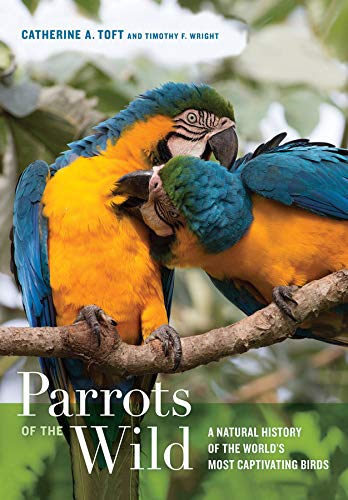
Parrots of the Wild explores recent scientific discoveries and what they reveal about the lives of wild parrots, which are among the most intelligent and rarest of birds. Catherine A. Toft and Tim Wright discuss the evolutionary history of parrots and how this history affects perceptual and cognitive abilities, diet and foraging patterns, and mating and social behavior. The authors also discuss conservation status and the various ways different populations are adapting to a world that is rapidly changing. The book focuses on general patterns across the 350-odd species of parrots, as well as what can be learned from interesting exceptions to these generalities
Die Inhaltsangabe kann sich auf eine andere Ausgabe dieses Titels beziehen.
Über die Autorin bzw. den Autor
Catherine A. Toft was Professor Emerita in the Department of Evolution and Ecology at the University of California, Davis at the time of her death in December 2011. She was coeditor of Parasite-Host Associations: Coexistence or Conflict?
Timothy F. Wright is Associate Professor in the Department of Biology at New Mexico State University. He has studied parrots in the wild and in the laboratory for more than twenty years.
Timothy F. Wright is Associate Professor in the Department of Biology at New Mexico State University. He has studied parrots in the wild and in the laboratory for more than twenty years.
Von der hinteren Coverseite
"Parrots of the Wild is an exhaustive compendium of information about parrots, from their evolutionary history to their behavior to present-day conservation issues. A must-have for anyone interested in these amazing creatures." 'Irene M. Pepperberg, Professor at Harvard University and author of Alex & Me: How a Scientist and a Parrot Discovered a Hidden World of Animal Intelligence'and Formed a Deep Bond in the Process
"The wide range of scientific expertise that Toft and Wright command is impressive and thoroughly presented. This book is extremely important as a reminder that wild parrots exist and need our conservation attention." 'John M. Marzluff, coauthor of Gifts of the Crow and In the Company of Crows and Ravens
"If you like parrots then you'll love this book. From their evolutionary past to their modern-day love lives, Parrots of the Wild presents a suitably captivating read. I thought I knew a lot about parrots--until I delved into these pages." 'tony Juniper, author of What Has Nature Ever Done for Us? and Spix's Macaw: The Race to Save the World's Rarest Bird
"Parrots of the Wild contributes very significantly to our knowledge of these fascinating birds. I am most impressed by the wealth of information provided here. I recommend it to anyone with an interest in parrots." 'Joseph M. Forshaw, Department of Ornithology, Australian Museum, and Corresponding Fellow, American Ornithologists Union
"The wide range of scientific expertise that Toft and Wright command is impressive and thoroughly presented. This book is extremely important as a reminder that wild parrots exist and need our conservation attention." 'John M. Marzluff, coauthor of Gifts of the Crow and In the Company of Crows and Ravens
"If you like parrots then you'll love this book. From their evolutionary past to their modern-day love lives, Parrots of the Wild presents a suitably captivating read. I thought I knew a lot about parrots--until I delved into these pages." 'tony Juniper, author of What Has Nature Ever Done for Us? and Spix's Macaw: The Race to Save the World's Rarest Bird
"Parrots of the Wild contributes very significantly to our knowledge of these fascinating birds. I am most impressed by the wealth of information provided here. I recommend it to anyone with an interest in parrots." 'Joseph M. Forshaw, Department of Ornithology, Australian Museum, and Corresponding Fellow, American Ornithologists Union
Aus dem Klappentext
"Parrots of the Wild is an exhaustive compendium of information about parrots, from their evolutionary history to their behavior to present-day conservation issues. A must-have for anyone interested in these amazing creatures." —Irene M. Pepperberg, Professor at Harvard University and author of Alex & Me: How a Scientist and a Parrot Discovered a Hidden World of Animal Intelligence—and Formed a Deep Bond in the Process
"The wide range of scientific expertise that Toft and Wright command is impressive and thoroughly presented. This book is extremely important as a reminder that wild parrots exist and need our conservation attention." —John M. Marzluff, coauthor of Gifts of the Crow and In the Company of Crows and Ravens
"If you like parrots then you'll love this book. From their evolutionary past to their modern-day love lives, Parrots of the Wild presents a suitably captivating read. I thought I knew a lot about parrots--until I delved into these pages." —Tony Juniper, author of What Has Nature Ever Done for Us? and Spix’s Macaw: The Race to Save the World’s Rarest Bird
"Parrots of the Wild contributes very significantly to our knowledge of these fascinating birds. I am most impressed by the wealth of information provided here. I recommend it to anyone with an interest in parrots." —Joseph M. Forshaw, Department of Ornithology, Australian Museum, and Corresponding Fellow, American Ornithologists Union
"The wide range of scientific expertise that Toft and Wright command is impressive and thoroughly presented. This book is extremely important as a reminder that wild parrots exist and need our conservation attention." —John M. Marzluff, coauthor of Gifts of the Crow and In the Company of Crows and Ravens
"If you like parrots then you'll love this book. From their evolutionary past to their modern-day love lives, Parrots of the Wild presents a suitably captivating read. I thought I knew a lot about parrots--until I delved into these pages." —Tony Juniper, author of What Has Nature Ever Done for Us? and Spix’s Macaw: The Race to Save the World’s Rarest Bird
"Parrots of the Wild contributes very significantly to our knowledge of these fascinating birds. I am most impressed by the wealth of information provided here. I recommend it to anyone with an interest in parrots." —Joseph M. Forshaw, Department of Ornithology, Australian Museum, and Corresponding Fellow, American Ornithologists Union
Auszug. © Genehmigter Nachdruck. Alle Rechte vorbehalten.
Parrots of the Wild
A Natural History of the World's Most Captivating Birds
By Catherine A. Toft, Timothy F. WrightUNIVERSITY OF CALIFORNIA PRESS
Copyright © 2015 Catherine A. Toft and James D. Gilardi
All rights reserved.
ISBN: 978-0-520-23925-8All rights reserved.
Contents
Foreword by James D. Gilardi, ix,
Preface and Acknowledgments, xiii,
PART I The World of Parrots: Introducing the Psittaciformes,
1 What Are the Parrots and Where Did They Come From? The Evolutionary History of the Parrots, 3,
PART II The Functional Parrot: Physiology, Morphology, and Behavior,
2 The Thriving Parrot: The Foods and Beaks of Parrots, 39,
3 The Sensible Parrot: How Parrots Perceive and Use Information, 81,
4 The Thinking Parrot: The Brains of Parrots and How They Use Them, 117,
PART III The Lives of Parrots: Mating, Life History, and Populations,
5 Sex and Marriage: The Mating Systems of Parrots, 147,
6 From the Cradle to the Grave: The Life Histories of Parrots, 177,
7 Populations of Parrots: Conservation and Invasion Biology, 217,
Notes, 267,
Bibliography, 277,
Index, 339,
CHAPTER 1
What are the Parrots and Where Did They Come From?
The Evolutionary History of the Parrots
PHYLOGENY
CONTENTS
The Marvelous Diversity of Parrots 3
Reconstructing Evolutionary History 5
Fossils, Bones, and Genes 5
The Evolution of Parrots 8
Parrots' Ancestors and Closest
Relatives 8
The Most Primitive Parrot 13
The Most Basal Clade of Parrots 15
Other Major Groups of Parrots 16
Box 1. Ancient DNA Reveals the
Evolutionary Relationships of the
Carolina Parakeet 19
How and When the Parrots Diversified 25
Some Parrot Enigmas 29
What Is a Budgerigar? 29
How Have Different Body Shapes Evolved in
the Parrots? 32
THE MARVELOUS DIVERSITY OF PARROTS
The parrots are one of the most marvelously diverse groups of birds in the world. They dazzle the beholder with every color in the rainbow (figure 3). They range in size from tiny pygmy parrots weighing just over 10 grams to giant macaws weighing over a kilogram. They consume a wide variety of foods, including fruit, seeds, nectar, insects, and in a few cases, flesh. They produce large repertoires of sounds, ranging from grating squawks to cheery whistles to, more rarely, long melodious songs. They inhabit a broad array of habitats, from lowland tropical rainforest to high-altitude tundra to desert scrubland to urban jungle. They range over every continent but Antarctica, and inhabit some of the most far-flung islands on the planet. They include some of the most endangered species on earth and some of the most rapidly expanding and aggressive invaders of human-altered landscapes. Increasingly, research into the lives of wild parrots is revealing that they exhibit a corresponding variety of mating systems, communication signals, social organizations, mental capacities, and life spans. In a great many respects the 360 or so species of parrots represent a textbook illustration of how the process of evolution can, over much time, lead to the diversification of many species from a single ancestral population.
At the same time, parrots are one of the most physically homogeneous groups of birds. Anyone with a passing familiarity with birds can instantly recognize a parrot by its sharply curved upper beak topped by a fleshy cere, muscular prehensile tongue, relatively big head and stout body, and distinctive zygodactyl feet with two toes pointing forward and two pointing back (figure 4). This combination of anatomical features clearly sets parrots apart from other birds. There are other, less obvious, commonalities in physiology, behavior, and ecology that tend to distinguish parrots from most other birds. These shared features illustrate another principal feature of evolution: that it tinkers with the materials at hand rather than starting anew with each species. In other words, major innovations are rare. What more typically happens is that features already present in an ancestor are slowly modified through natural selection over many generations to produce a constrained range of variations on the basic template as different lineages adapt to changing and localized environments.
In the following chapters we will delve deep into what recent scientific investigations have revealed about the lives of wild parrots. We will discuss how parrots perceive the world around them, how individuals go about their daily lives and interact with others, and how populations are adapting to a world that is rapidly changing. Our focus will be both on what these investigations tell us about parrots in general, and on what can be learned from the interesting exceptions to these generalities. But before we start this exploration, we want to set the stage by summarizing the current state of knowledge of the evolutionary history of parrots: Where did they come from, how did they diversify, who among them is most closely related to whom, and what does this evolutionary history reveal about the process of evolution itself? To understand these topics, we must first understand how scientists explore what happened in the long-distant past.
RECONSTRUCTING EVOLUTIONARY HISTORY
Fossils, Bones, and Genes
Reconstructing the past history of life is both a historical exercise and a scientific one. Scientists typically illustrate evolutionary patterns as trees, with the common ancestor of a group of species placed at the root, and existing species at the tips of the branches. The branching points between the root and the tips represent points where a single lineage split to produce two new lineages, while the length of each branch represents the amount of time or evolutionary change between branching points. As an aside, this representation of evolutionary history in tree form was an innovation of Charles Darwin himself, appearing first in his scientific notebook and then popularized in his seminal work, On the Origin of Species. These trees, or phylogenies, as they are termed by evolutionary biologists, are best viewed as hypotheses of how evolution occurred in a particular group of species. As such, they represent a well-informed supposition as to who is more closely related to whom, and when and how current species diversified from a common ancestor. As we will see below, such phylogenies also furnish predictions as to what traits or attributes might be shared among which species. Like all scientific hypotheses, they are subject to a rigorous process involving the collection and analysis of data and a careful evaluation of whether these results support or contradict the particular hypothesis in question. If the data are consistent with the hypothesis, then it remains standing as our best estimate of how evolution proceeded, for now. But, like all hypotheses, it is always subject to further testing and investigation with new data, and such investigations may well lead to modifications of the hypothesis and a new understanding of the past.
What sort of data do evolutionary biologists use to reconstruct evolutionary history? There are three primary sources: fossils of ancient taxa, physical traits measured from the anatomy of current specimens, and genetic data sampled from living or preserved animals. Fossils have the great virtue of concretely demonstrating how specific lineages appeared in the past, including lineages that have become extinct. Importantly, the geologic layer in which fossils are...
„Über diesen Titel“ kann sich auf eine andere Ausgabe dieses Titels beziehen.
Suchergebnisse für Parrots of the Wild: A Natural History of the World's...

Beispielbild für diese ISBN
Parrots of the Wild : A Natural History of the World's Most Captivating Birds
Verlag:
University of California Press, 2015
ISBN 10: 0520239253
ISBN 13: 9780520239258
Gebraucht
Hardcover
Anbieter: Better World Books, Mishawaka, IN, USA
Verkäuferbewertung 5 von 5 Sternen

Zustand: Good. Pages intact with minimal writing/highlighting. The binding may be loose and creased. Dust jackets/supplements are not included. Stock photo provided. Product includes identifying sticker. Better World Books: Buy Books. Do Good. Artikel-Nr. 14973678-6
Gebraucht kaufen
EUR 10,91
Versand gratis
Versand innerhalb von USA
Versand innerhalb von USA
Anzahl: 1 verfügbar
Beispielbild für diese ISBN
Parrots of the Wild: A Natural History of the Worldâs Most Captivating Birds
Verlag:
University of California Press (edition First Edition), 2015
ISBN 10: 0520239253
ISBN 13: 9780520239258
Gebraucht
Hardcover
Erstausgabe
Anbieter: BooksRun, Philadelphia, PA, USA
Verkäuferbewertung 5 von 5 Sternen
Hardcover. Zustand: Very Good. First Edition. With dust jacket. It's a well-cared-for item that has seen limited use. The item may show minor signs of wear. All the text is legible, with all pages included. It may have slight markings and/or highlighting. Artikel-Nr. 0520239253-11-1-29
Gebraucht kaufen
EUR 12,41
Versand gratis
Versand innerhalb von USA
Versand innerhalb von USA
Anzahl: 1 verfügbar
Beispielbild für diese ISBN
Parrots of the Wild: A Natural History of the World's Most Captivating Birds
Verlag:
University of California Press, 2015
ISBN 10: 0520239253
ISBN 13: 9780520239258
Gebraucht
Hardcover
Anbieter: ThriftBooks-Atlanta, AUSTELL, GA, USA
Verkäuferbewertung 5 von 5 Sternen
Hardcover. Zustand: Very Good. No Jacket. May have limited writing in cover pages. Pages are unmarked. ~ ThriftBooks: Read More, Spend Less. Artikel-Nr. G0520239253I4N00
Gebraucht kaufen
EUR 14,35
Versand gratis
Versand innerhalb von USA
Versand innerhalb von USA
Anzahl: 1 verfügbar
Beispielbild für diese ISBN
Parrots of the Wild: A Natural History of the Worldâs Most Captivating Birds
Verlag:
University of California Press, 2015
ISBN 10: 0520239253
ISBN 13: 9780520239258
Gebraucht
Hardcover
Anbieter: Books From California, Simi Valley, CA, USA
Verkäuferbewertung 4 von 5 Sternen

Hardcover. Zustand: Very Good. Artikel-Nr. mon0004237186
Gebraucht kaufen
EUR 10,51
EUR 4,45 Versand
Versand innerhalb von USA
Versand innerhalb von USA
Anzahl: 1 verfügbar
Beispielbild für diese ISBN
Parrots of the Wild: A Natural History of the Worldâs Most Captivating Birds
Verlag:
University of California Press, 2015
ISBN 10: 0520239253
ISBN 13: 9780520239258
Gebraucht
Hardcover
Anbieter: Books From California, Simi Valley, CA, USA
Verkäuferbewertung 4 von 5 Sternen
Hardcover. Zustand: Fine. Artikel-Nr. mon0004200142
Gebraucht kaufen
EUR 10,51
EUR 4,45 Versand
Versand innerhalb von USA
Versand innerhalb von USA
Anzahl: 1 verfügbar
Beispielbild für diese ISBN
Parrots of the Wild
Verlag:
University of California Press, 2015
ISBN 10: 0520239253
ISBN 13: 9780520239258
Gebraucht
Hardcover
Anbieter: World of Books (was SecondSale), Montgomery, IL, USA
Verkäuferbewertung 5 von 5 Sternen
Hardback. Zustand: Good. Parrots of the Wild explores recent scientific discoveries and what they reveal about the lives of wild parrots, which are among the most intelligent and rarest of birds. Catherine A. Toft and Tim Wright discuss the evolutionary history of parrots and how this history affects perceptual and cognitive abilities, diet and foraging patterns, and mating and social behavior. The authors also discuss conservation status and the various ways different populations are adapting to a world that is rapidly changing. The book focuses on general patterns across the 350-odd species of parrots, as well as what can be learned from interesting exceptions to these generalities. A synthetic account of the diversity and ecology of wild parrots, this book distills knowledge from the authors' own research and from their review of more than 2,400 published scientific studies. The book is enhanced by an array of illustrations, including nearly ninety color photos of wild parrots represented in their natural habitats. Parrots of the Wild melds scientific exploration with features directed at the parrot enthusiast to inform and delight a broad audience. Artikel-Nr. 00107883326
Gebraucht kaufen
EUR 16,17
Versand gratis
Versand innerhalb von USA
Versand innerhalb von USA
Anzahl: 1 verfügbar
Beispielbild für diese ISBN
Parrots of the Wild: A Natural History of the World's Most Captivating Birds
Verlag:
University of California Press, 2015
ISBN 10: 0520239253
ISBN 13: 9780520239258
Gebraucht
Paperback
Anbieter: WorldofBooks, Goring-By-Sea, WS, Vereinigtes Königreich
Verkäuferbewertung 5 von 5 Sternen
Paperback. Zustand: Very Good. The book has been read, but is in excellent condition. Pages are intact and not marred by notes or highlighting. The spine remains undamaged. Artikel-Nr. GOR007907883
Gebraucht kaufen
EUR 23,09
EUR 6,61 Versand
Versand von Vereinigtes Königreich nach USA
Versand von Vereinigtes Königreich nach USA
Anzahl: 1 verfügbar
Beispielbild für diese ISBN
Parrots of the Wild
Verlag:
Globe Pequot Publishing Group Inc/Bloomsbury, 2015
ISBN 10: 0520239253
ISBN 13: 9780520239258
Neu
Hardcover
Anbieter: PBShop.store UK, Fairford, GLOS, Vereinigtes Königreich
Verkäuferbewertung 5 von 5 Sternen
HRD. Zustand: New. New Book. Shipped from UK. Established seller since 2000. Artikel-Nr. WF-9780520239258
Neu kaufen
EUR 36,80
EUR 7,98 Versand
Versand von Vereinigtes Königreich nach USA
Versand von Vereinigtes Königreich nach USA
Anzahl: 10 verfügbar
Beispielbild für diese ISBN
Parrots of the Wild: A Natural History of the World s Most Captivating Birds
Verlag:
University of California Press, 2015
ISBN 10: 0520239253
ISBN 13: 9780520239258
Neu
Hardcover
Anbieter: Kennys Bookstore, Olney, MD, USA
Verkäuferbewertung 5 von 5 Sternen
Zustand: New. Explores recent scientific discoveries and what they reveal about the lives of wild parrots, which are among the most intelligent and rarest of birds. This book focuses on general patterns across the 350-odd species of parrots, as well as what can be learned from interesting exceptions to these generalities. Num Pages: 346 pages, 89 color images, 13 line illustrations, 4 tables. BIC Classification: PSVW6. Category: (G) General (US: Trade). Dimension: 254 x 178 x 25. . . 2015. Hardcover. . . . . Books ship from the US and Ireland. Artikel-Nr. V9780520239258
Neu kaufen
EUR 44,85
EUR 9,36 Versand
Versand innerhalb von USA
Versand innerhalb von USA
Anzahl: 1 verfügbar
Beispielbild für diese ISBN
Parrots of the Wild: A Natural History of the World's Most Captivating Birds
Verlag:
University of California Press, 2015
ISBN 10: 0520239253
ISBN 13: 9780520239258
Neu
Hardcover
Anbieter: Majestic Books, Hounslow, Vereinigtes Königreich
Verkäuferbewertung 4 von 5 Sternen
Zustand: New. pp. 272. Artikel-Nr. 373579631
Neu kaufen
EUR 50,69
EUR 7,67 Versand
Versand von Vereinigtes Königreich nach USA
Versand von Vereinigtes Königreich nach USA
Anzahl: 3 verfügbar