
Verwandte Artikel zu Early Daoist Scriptures (Taoist Classics, 1, Band 1)
Inhaltsangabe
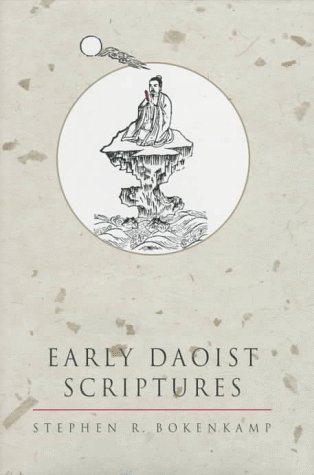
For centuries Daoism (Taoism) has played a central role in the development of Chinese thought and civilization, yet to this day only a few of its sacred texts have been translated into English. Now Stephen R. Bokenkamp introduces the reader to ancient scriptures never before published in the West, providing a systematic and easily accessible introduction to early Daoism (c. 2nd-6th C.E.). Representative works from each of the principal Daoist traditions comprise the basic structure of the book, with each chapter accompanied by an introduction that places the material within a historical and cultural context. Included are translations of the earliest Daoist commentary to Laozi's Daode jing (Tao Te Ching); historical documents relating the history of the early Daoist church; a petitioning ritual used to free believers from complaints brought against them by the dead; and two complete scriptures, one on individual meditation practice and another designed to rescue humanity from the terrors of hell through recitation of its powerful charms. In addition, Bokenkamp elucidates the connections Daoism holds with other schools of thought, particularly Confucianism and Buddhism.
This book provides a much-needed introduction to Daoism for students of religion and is a welcome addition for scholars wishing to explore Daoist sacred literature. It serves as an overview to every aspect of early Daoist tradition and all the seminal practices which have helped shape the religion as it exists today.
This book provides a much-needed introduction to Daoism for students of religion and is a welcome addition for scholars wishing to explore Daoist sacred literature. It serves as an overview to every aspect of early Daoist tradition and all the seminal practices which have helped shape the religion as it exists today.
Die Inhaltsangabe kann sich auf eine andere Ausgabe dieses Titels beziehen.
Über die Autorin bzw. den Autor
Stephen R. Bokenkamp is Professor of East Asian Languages and Culture at Indiana University.
Von der hinteren Coverseite
"A work of historic proportions. . . . A whole new world of ancient religious life is being opened to us here, and readers can trust Bokenkamp to guide them through that world."—Russell Kirkland, University of Georgia
"Bokenkamp, whose previous works on Daoism are already deservedly well known and appreciated, presents complete translations of six major Daoist texts. His introductions to each of them delineate and elucidate some points of both the history and fundamental notions of Daoism, which so far have remained unclear or subject to debate. This book will undoubtedly provide a better understanding of Daoism."—Isabelle Robinet, author of Taoist Meditation: The Mao-shan Tradition of Great Purity
"Early Daoist Scriptures combines the latest and best of world scholarship on the Daoist religion with fluent and accurate translations of essential primary sources. Professor Bokenkamp gives both the general public and specialist alike our first study of religious Daoism that tells the story of the development of its rich and complicated beliefs, practices, and institutions in historical and social context. Elegantly and cearly written, the book is a delight to read; it should also be the authoritative word on the subject for years to come." —Suzanne Cahill, University of California at San Diego
"Bokenkamp, whose previous works on Daoism are already deservedly well known and appreciated, presents complete translations of six major Daoist texts. His introductions to each of them delineate and elucidate some points of both the history and fundamental notions of Daoism, which so far have remained unclear or subject to debate. This book will undoubtedly provide a better understanding of Daoism."—Isabelle Robinet, author of Taoist Meditation: The Mao-shan Tradition of Great Purity
"Early Daoist Scriptures combines the latest and best of world scholarship on the Daoist religion with fluent and accurate translations of essential primary sources. Professor Bokenkamp gives both the general public and specialist alike our first study of religious Daoism that tells the story of the development of its rich and complicated beliefs, practices, and institutions in historical and social context. Elegantly and cearly written, the book is a delight to read; it should also be the authoritative word on the subject for years to come." —Suzanne Cahill, University of California at San Diego
Aus dem Klappentext
"A work of historic proportions. . . . A whole new world of ancient religious life is being opened to us here, and readers can trust Bokenkamp to guide them through that world."Russell Kirkland, University of Georgia
"Bokenkamp, whose previous works on Daoism are already deservedly well known and appreciated, presents complete translations of six major Daoist texts. His introductions to each of them delineate and elucidate some points of both the history and fundamental notions of Daoism, which so far have remained unclear or subject to debate. This book will undoubtedly provide a better understanding of Daoism."Isabelle Robinet, author ofTaoist Meditation: The Mao-shan Tradition of Great Purity
"Bokenkamp, whose previous works on Daoism are already deservedly well known and appreciated, presents complete translations of six major Daoist texts. His introductions to each of them delineate and elucidate some points of both the history and fundamental notions of Daoism, which so far have remained unclear or subject to debate. This book will undoubtedly provide a better understanding of Daoism."Isabelle Robinet, author ofTaoist Meditation: The Mao-shan Tradition of Great Purity
Auszug. © Genehmigter Nachdruck. Alle Rechte vorbehalten.
Early Daoist Scriptures
By Stephen R. BokenkampUniversity of California Press
Copyright 1997 Stephen R. BokenkampAll right reserved.
ISBN: 0520203224
General Introduction
Image not available.
The texts chosen for translation here represent three major traditions in the early development of the Daoist religion: the Celestial Masters, the Shangqing (Upper Clarity), and the Lingbao (Numinous Gem).1 A brief account of these traditions, and of the texts chosen to represent them here, follows.
Celestial MastersThe Way of the Celestial Masters (also known as Zhengyi [Correct Unity] Daoism or, often pejoratively, as the Way of the Five Pecks of Rice) is the first Daoist organization for which we have substantial documentation. The official date for the founding of Celestial Master
Daoism is 142 C.E. , when Laozi, in his incarnation as a deity, appeared to the first Celestial Master, Zhang Daoling, on a mountaintop in what is now Sichuan province. By the end of the second century, Zhang's grandson, Zhang Lu, had succeeded to the title, and the community, due to the turmoil attending the fall of the Han, had taken sanctuary in the Hanzhong Valley, just north of the Sichuan Basin and over two hundred kilometers southwest of the Han capital of Chang'an. In 215 C.E. , Zhang Lu surrendered to Cao Cao, the Wei general whose son was to inaugurate the Wei dynasty of the Three Kingdoms period. As a result of this act of fealty, a large portion of the Celestial Master community, perhaps a quarter of the estimated four hundred thousand who occupied the valley, was moved from Hanzhong and scattered throughout the realm, while many of its leaders were enfeoffed or otherwise ennobled.2 Although followers from the early period doubtless remained in Sichuan, the spread of Daoism throughout China as a whole began with this diaspora of the original Celestial Master community.
The aspects of Celestial Master Daoism that most caught the attention of contemporary historians were its organization, its codes of benevolent morality, and its practice of confession and petitioning ritualsthe latter being means of invoking divine powers for curing disease. The Celestial Masters introduced converts to the faith through recitations of the Laozi , which was interpreted in startling new ways to support the main tenets of their faith. Through such practices, the group was said to have won the allegiance of both Chinese and "barbarians" (in this case, partially sinicized members of various ethnic groups resident in Sichuan).
There is still considerable controversy over which of the surviving Celestial Master scriptures can be dated to the early years of the sect. Of the four texts chosen for inclusion here, three can be firmly dated; the fourth represents an aspect of the religion we know to have been present from the beginning.
1. The Xiang'er commentary to the Laozi
Although the Laozi text (also known as the Daode jing ) was important to the Celestial Masters from the very beginning, this commentary most likely dates from the time when the Celestial Master
community occupied the Hanzhong Valley, roughly from 190 to 215 C.E. In early sources, authorship of the commentary is ascribed to Zhang Lu, the third Celestial Master and grandson of Zhang Daoling.
The commentary provides unique insights into the beliefs and practices of the early Celestial Masters. It also attests to the uses to which they put the Laozi text, which was reinterpreted in ways that would inform the subsequent development of the Daoist religion. Among the more significant of these reinterpretations is that the intended audience of the Laozi , originally the potential sage or sage-ruler, is widened to include all humanity. Moral codes, derided as humanly contrived and counterproductive in the Laozi , are reinstituted, and, in fact, warrant is found for them in the text. The common people are no longer to be kept in a state of natural ignorance. Instead they are urged, under the watchful eye of the spiritual bureaucracy emanating from the Dao, to enter the ranks of the blessed through moral action. In addition, as I try to show in the introduction to my translation, the commentary contains substantial clues concerning the physiological beliefs, meditation practices, and rituals of the early Celestial Masters.
2. Commands and Admonitions for the Families of the Great Dao
This treatise, found in a collection of early Celestial Master documents, was composed for promulgation to a scattered Celestial Master community after the dispersal of the Hanzhong community. Dated precisely to 1 February 255 C.E. , the text seems to be put into the mouth of Zhang Lu but is most likely the work of someone else (perhaps one of Zhang's sons), who received it as a spirit communication.
In this text, we get our first glimpse of the cosmology of Celestial Master religion and a specific account of how the Dao incarnated itself to aid suffering humanity throughout history. We are also introduced to the concept of "seed people," those fortunate mortals selected to survive the cataclysms brought on by the end of a world age and to populate the new era of Great Peace. Although the moral world is much the same as that revealed in the Xiang'er commentary,
there are further accommodations to Confucian morality, particularly the importance of hierarchies based on the family.
Written when the Wei kingdom was on the verge of collapse, the Admonitions testifies to the further disruptions this event caused the Celestial Master sect and to internal struggles among its leaders brought about by official recognition. Though it pretends to address the Celestial Master sect as a whole, we do not in fact know how large this "saving remnant" may have been. What is clear from this text is that the fragmentation of the sect, begun with the diaspora of the Hanzhong community, was exacerbated not only by the collapse of its Wei patrons, but also by internal dissension brought on by imperial patronage itself.
3. Scripture of the Inner Explanations of the Three Heavens
After the fall of the Wei kingdom in 266 C.E. , historical documentation on the Celestial Masters is sparse for a period of some 150 years. Then, with the rise to prominence of the general Liu Yu, the most successful of the southern generals who tried to retake northern China after its capture by the Huns in 317, and his dynastic line, we encounter several Daoist texts written to support the throne. These range from demonographies to more sober treatises urging a return to ideological unity as a prerequisite for reunifying China.3 The Inner Explanations , composed between 417, when Liu Yu distinguished himself by briefly recapturing Chang'an, the old capital, and the early 420s, after Liu had proclaimed himself emperor of the new Song dynasty, is of the latter type.
A Celestial Master treatise announcing that it should be treated as scripture, this text details the concern of the Dao for the Han ruling house, now thought to be renascent in its descendant, Liu Yu. Although the history of the Celestial Masters given in this text has been to some extent rewritten to demonstrate this thesis, the Inner Explanations still provides us with a unique account of the survival of Celestial Master beliefs and...
„Über diesen Titel“ kann sich auf eine andere Ausgabe dieses Titels beziehen.
Weitere beliebte Ausgaben desselben Titels

Suchergebnisse für Early Daoist Scriptures (Taoist Classics, 1, Band 1)

Beispielbild für diese ISBN
Early Daoist Scriptures
Verlag:
Univ of California Press, Berkeley, 1997
ISBN 10: 0520203224
ISBN 13: 9780520203228
Gebraucht
Hardcover
Anbieter: Librairie Sheehy (Theologia Books), La Charite sur Loire, Frankreich
Verkäuferbewertung 4 von 5 Sternen

Hardback. Zustand: Very Good. Zustand des Schutzumschlags: Very Good. 1997, xviii, 502 pages. Very good copy in very good dustjacket. Artikel-Nr. 000920
Gebraucht kaufen
EUR 50,00
EUR 36,00 Versand
Versand von Frankreich nach USA
Versand von Frankreich nach USA
Anzahl: 1 verfügbar
Foto des Verkäufers
Early Daoist Scriptures
Verlag:
University of California Press, 1997
ISBN 10: 0520203224
ISBN 13: 9780520203228
Gebraucht
Hardcover
Erstausgabe
Anbieter: Cotswold Internet Books, Cheltenham, Vereinigtes Königreich
Verkäuferbewertung 5 von 5 Sternen

First Edition. Taoist Classics, #1. A clean, bright copy in firm binding, almost as-new Used - Very Good. VG hardback in VG dust jacket Used - Very Good. VG hardback in VG dust jacket. Artikel-Nr. BOOKS338287I
Gebraucht kaufen
EUR 72,12
EUR 16,34 Versand
Versand von Vereinigtes Königreich nach USA
Versand von Vereinigtes Königreich nach USA
Anzahl: 1 verfügbar
Beispielbild für diese ISBN
Early Daoist Scriptures
ISBN 10: 0520203224
ISBN 13: 9780520203228
Gebraucht
Hardcover
Anbieter: ACADEMIA Antiquariat an der Universität, Freiburg, Deutschland
Verkäuferbewertung 5 von 5 Sternen
16 x 23 cm. Zustand: Gut. XVIII, 502 Seiten Originalleinenband mit Rückenvergoldung. Sehr gut erhaltenes Exemplar mit Schutzumschlag. Very good condition. With dust jacket. Sprache: Englisch Gewicht in Gramm: 1. Artikel-Nr. 62884
Gebraucht kaufen
EUR 62,00
EUR 38,95 Versand
Versand von Deutschland nach USA
Versand von Deutschland nach USA
Anzahl: 1 verfügbar
Beispielbild für diese ISBN
Early Daoist Scriptures
Verlag:
Univ of California Press, Berkeley, 1997
ISBN 10: 0520203224
ISBN 13: 9780520203228
Gebraucht
Hardcover
Anbieter: Librairie Sheehy (Theologia Books), La Charite sur Loire, Frankreich
Verkäuferbewertung 4 von 5 Sternen
Cloth. Zustand: As New. Zustand des Schutzumschlags: As New. Cloth, 1997, xviii, 502 pages. As new in publisher's shrinkwrap Size: 8vo - over 7¾" - 9¾" tall. Book. Artikel-Nr. 039243
Gebraucht kaufen
EUR 75,00
EUR 36,00 Versand
Versand von Frankreich nach USA
Versand von Frankreich nach USA
Anzahl: 1 verfügbar
Beispielbild für diese ISBN
Early Daoist Scriptures Stephen R. Bokenkamp & Peter S. Nickerson
Verlag:
University of California Press, 1997
ISBN 10: 0520203224
ISBN 13: 9780520203228
Gebraucht
Hardcover
Anbieter: BUCHSERVICE / ANTIQUARIAT Lars Lutzer, Wahlstedt, Deutschland
Verkäuferbewertung 5 von 5 Sternen
Zustand: gut. 1997. Early Daoist Scriptures In englischer Sprache. pages. Artikel-Nr. BN131176
Gebraucht kaufen
EUR 179,90
EUR 39,95 Versand
Versand von Deutschland nach USA
Versand von Deutschland nach USA
Anzahl: 1 verfügbar