
Verwandte Artikel zu Building with Our Hands: New Directions in Chicana...
Inhaltsangabe
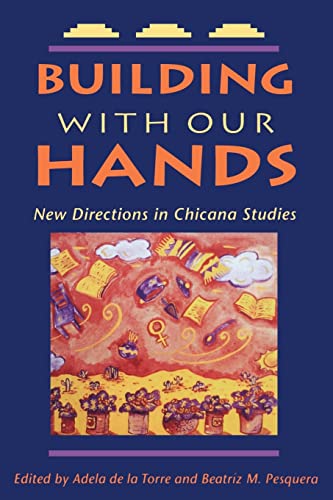
No detailed description available for "Building with Our Hands".
Die Inhaltsangabe kann sich auf eine andere Ausgabe dieses Titels beziehen.
Über die Autorin bzw. den Autor
Adela de la Torre is Chair of Mexican-American Studies and Associate Professor of Health Care Administration at California State University, Long Beach. Beatriz Pesquera is Assistant Professor of Sociology at the University of California, Davis.
Auszug. © Genehmigter Nachdruck. Alle Rechte vorbehalten.
Building with Our Hands
Directions in Chicana StudiesBy Adela de La TorreUniversity of California Press
Copyright © 1993 Adela de La TorreAll right reserved.
ISBN: 9780520070905
Two?
Sexual Violence in the Politics and Policies of Conquest:
Amerindian Women and the Spanish Conquest of Alta California
Antonia I. Castaqeda
In the morning, six or seven soldiers would set out together . . . and go to the distant ranchermas [villages] even many leagues away. When both men and women at the sight of them would take off running . . . the soldiers, adept as they are at lassoing cows and mules, would lasso Indian women?who then became prey for their unbridled lust. Several Indian men who tried to defend the women were shot to death.
Junipero Serra, 1773
In words reminiscent of sixteenth-century chroniclers Bernal Dmaz del Castillo and Bartolomi de las Casas, the father president of the California missions, Junipero Serra, described the depredations of the soldiers against Indian women in his reports and letters to Viceroy Antonio Marma Bucareli and the father guardian of the College of San Fernando, Rafail Verger. Sexual assaults against native women began shortly after the founding of the presidio and mission at Monterey in June 1770, wrote Serra, and continued throughout the length of California. The founding of each new mission and presidio brought new reports of sexual violence.
The despicable actions of the soldiers, Serra told Bucareli in 1773, were severely retarding the spiritual and material conquest of California. The native people were resisting missionization. Some were becoming warlike and hostile because of the soldiers' repeated outrages against the women. The assaults resulted in Amerindian attacks, which the soldiers countered with unauthorized reprisals, thereby further straining the capacity of the small military force to staff the presidios and guard the missions. Instead of pacification and order, the soldiers provoked greater conflict and thus jeopardized the position of the church in this region.1
Serra was particularly alarmed about occurrences at Mission San Gabriel. "Since the district is the most promising of all the missions," he wrote to Father Verger, "this mission gives me the greatest cause for anxiety; the secular armdown there was guilty of the most heinous crimes, killing the men to take their wives."2 Father Serra related that on October 10, 1771, within a month of its having been founded, a large group of Indians suddenly attacked two soldiers who were on horseback and tried to kill the one who had outraged a woman. The soldiers retaliated. "A few days later," Serra continued, "as he went out to gather the herd of cattle . . . and [it] seems more likely to get himself a woman, a soldier, along with some others, killed the principal Chief of the gentiles; they cut off his head and brought it in triumph back to the mission."3
The incident prompted the Amerindians of the coast and the sierra, mortal enemies until that time, to convene a council to make peace with each other and join forces to eliminate the Spaniards. The council planned to attack the mission on October 16 but changed the plan after a new contingent of troops arrived at the mission.4 Despite this narrowly averted disaster, the soldiers assigned to Mission San Gabriel continued their outrages.
The soldiers' behavior not only generated violence on the part of the native people as well as resistance to missionization, argued Serra; it also took its toll on the missionaries, some of whom refused to remain at their mission sites. In his 1773 memorial to Bucareli, Serra lamented the loss of one of the missionaries, who could not cope with the soldiers' disorders at San Gabriel. The priest was sick at heart, Serra stated: "He took to his bed, when he saw with his own eyes a soldier actually committing deeds of shame with an Indian who had come to the mission, and even the children who came to the mission were not safe from their baseness."5
Conditions at other missions were no better. Mission San Luis Obispo also lost a priest because of the assaults on Indian women. After spending two years as the sole missionary at San Luis, Father Domingo Juncosa asked for and received permission to return to Mexico because he was "shocked at the scandalous conduct of the soldiers" and could not work under such abominable conditions.6 Even before San Luis Obispo was founded in the early fall of 1772, Tichos women had cause to fear. The most notorious molesters of non-Christian women were among the thirteen soldiers sent on a bear hunt to this area during the previous winter of starvation at Monterey.7
The establishment of new missions subjected the women of each new area to sexual assaults. Referring to the founding of the mission at San Juan Capistrano, Serra wrote that "it seems all the sad experiences that we went through at the beginning have come to life again. The soldiers, without any restraint or shame, have behaved like brutes toward the Indian women."8 From this mission also, the priests reported to Serra that the soldier-guards went at night to the nearby villages to assault the women and that hiding the women did not restrain the brutes, who beat the men to force them to reveal where the women were hidden. Non-Christian Indians in the vicinity of the missions were simply not safe. They were at the mercy of soldiers with horses and guns.9
In 1773, a case of rape was reported at San Luis Rey, one at San Diego, andtwo cases at Monterey the following year.10 Serra expressed his fears and concern to Governor Felipe de Neve, who was considering establishing a new presidio in the channel of Santa Barbara. Serra told Neve that he took it for granted that the insulting and scandalous conduct of the soldiers "would be the same as we had experienced in other places which were connected with presidios. Perhaps this one would be worse."11
Native women and their communities were profoundly affected by the sexual attacks and attendant violence. California Amerindians were peaceable, nonaggressive people who highly valued harmonious relationships. Physical violence and the infliction of bodily harm on one another were virtually unknown. Women did not fear men. Rape rarely, if ever, occurred. If someone stole from another or caused another's death, societal norms required that the offending party make reparations to the individual and/or the family. Appropriate channels to rectify a wrong without resorting to violence existed.12
Animosity, when it did surface, was often worked out ritualistically?for example, through verbal battles in the form of war songs, or song fights that lasted eight days, or encounters in which the adversaries threw stones across a river at each other with no intent actually to hit or physically injure the other party. Even among farming groups such as the Colorado River people, who practiced warfare and took women and children captive, female captives were never sexually molested. The Yumas believed that intimate contact with enemy women caused sickness.13
Thus, neither the women nor their people were prepared for the onslaught of aggression and violence the soldiers unleashed against them. They were horrified and terrified. One source reported that women of the San Gabriel and other southern missions raped by the soldiers were considered contaminated and obliged to undergo an extensive purification, which included a long course of sweating, the drinking of herbs, and other forms of purging. This practice was consistent with the people's...
„Über diesen Titel“ kann sich auf eine andere Ausgabe dieses Titels beziehen.
Suchergebnisse für Building with Our Hands: New Directions in Chicana...

Beispielbild für diese ISBN
Building with Our Hands New Di
Verlag:
University of California Press, 1993
ISBN 10: 0520070909
ISBN 13: 9780520070905
Gebraucht
Softcover
Anbieter: World of Books (was SecondSale), Montgomery, IL, USA
Verkäuferbewertung 5 von 5 Sternen

Zustand: Very Good. Item in very good condition! Textbooks may not include supplemental items i.e. CDs, access codes etc. Artikel-Nr. 00106032172
Gebraucht kaufen
EUR 5,75
Versand gratis
Versand innerhalb von USA
Versand innerhalb von USA
Anzahl: 1 verfügbar
Beispielbild für diese ISBN
Building with Our Hands New Di
Verlag:
University of California Press, 1993
ISBN 10: 0520070909
ISBN 13: 9780520070905
Gebraucht
Softcover
Anbieter: World of Books (was SecondSale), Montgomery, IL, USA
Verkäuferbewertung 5 von 5 Sternen
Zustand: Good. Item in good condition. Textbooks may not include supplemental items i.e. CDs, access codes etc. Artikel-Nr. 00069109052
Gebraucht kaufen
EUR 5,75
Versand gratis
Versand innerhalb von USA
Versand innerhalb von USA
Anzahl: 2 verfügbar
Beispielbild für diese ISBN
Building with Our Hands: New Directions in Chicana Studies
Verlag:
University of California Press, 1993
ISBN 10: 0520070909
ISBN 13: 9780520070905
Gebraucht
Paperback
Anbieter: ThriftBooks-Dallas, Dallas, TX, USA
Verkäuferbewertung 5 von 5 Sternen
Paperback. Zustand: Good. No Jacket. Pages can have notes/highlighting. Spine may show signs of wear. ~ ThriftBooks: Read More, Spend Less. Artikel-Nr. G0520070909I3N00
Gebraucht kaufen
EUR 7,41
Versand gratis
Versand innerhalb von USA
Versand innerhalb von USA
Anzahl: 1 verfügbar
Beispielbild für diese ISBN
Building with Our Hands
Anbieter: PBShop.store US, Wood Dale, IL, USA
Verkäuferbewertung 5 von 5 Sternen
PAP. Zustand: New. New Book. Shipped from UK. Established seller since 2000. Artikel-Nr. L2-9780520070905
Neu kaufen
EUR 36,51
Versand gratis
Versand innerhalb von USA
Versand innerhalb von USA
Anzahl: Mehr als 20 verfügbar
Beispielbild für diese ISBN
Building with Our Hands
Anbieter: PBShop.store UK, Fairford, GLOS, Vereinigtes Königreich
Verkäuferbewertung 5 von 5 Sternen
PAP. Zustand: New. New Book. Shipped from UK. Established seller since 2000. Artikel-Nr. L2-9780520070905
Neu kaufen
EUR 33,87
EUR 4,86 Versand
Versand von Vereinigtes Königreich nach USA
Versand von Vereinigtes Königreich nach USA
Anzahl: Mehr als 20 verfügbar
Beispielbild für diese ISBN
Building with Our Hands: New Directions in Chicana Studies
Verlag:
University of California Press, 1993
ISBN 10: 0520070909
ISBN 13: 9780520070905
Neu
Softcover
Anbieter: Ria Christie Collections, Uxbridge, Vereinigtes Königreich
Verkäuferbewertung 5 von 5 Sternen
Zustand: New. In. Artikel-Nr. ria9780520070905_new
Neu kaufen
EUR 33,74
EUR 14,00 Versand
Versand von Vereinigtes Königreich nach USA
Versand von Vereinigtes Königreich nach USA
Anzahl: Mehr als 20 verfügbar
Beispielbild für diese ISBN
Building with Our Hands: New Directions in Chicana Studies (Paper)
Anbieter: Revaluation Books, Exeter, Vereinigtes Königreich
Verkäuferbewertung 5 von 5 Sternen
Paperback. Zustand: Brand New. 246 pages. 9.50x6.00x0.75 inches. In Stock. Artikel-Nr. x-0520070909
Neu kaufen
EUR 50,69
EUR 11,69 Versand
Versand von Vereinigtes Königreich nach USA
Versand von Vereinigtes Königreich nach USA
Anzahl: 2 verfügbar
Beispielbild für diese ISBN
Building with Our Hands: New Directions in Chicana Studies
Verlag:
University of California Press, 1993
ISBN 10: 0520070909
ISBN 13: 9780520070905
Gebraucht
paperback
Anbieter: Studibuch, Stuttgart, Deutschland
Verkäuferbewertung 5 von 5 Sternen
paperback. Zustand: Gut. 262 Seiten; 9780520070905.3 Gewicht in Gramm: 500. Artikel-Nr. 945907
Gebraucht kaufen
EUR 6,99
EUR 80,70 Versand
Versand von Deutschland nach USA
Versand von Deutschland nach USA
Anzahl: 1 verfügbar
Foto des Verkäufers
Torre, A: Building with Our Hands: New Directions in Chicana
Verlag:
University of California Press, 1993
ISBN 10: 0520070909
ISBN 13: 9780520070905
Neu
Softcover
Anbieter: moluna, Greven, Deutschland
Verkäuferbewertung 5 von 5 Sternen
Zustand: New. A collection of articles addressing the history of Chicana women. From a diverse range of perspectives, it chronicles the rich tapestry of Chicanas lives over the last three centuries. Focusing on how women have grappled with political subordination and se. Artikel-Nr. 594720153
Neu kaufen
EUR 43,66
EUR 48,99 Versand
Versand von Deutschland nach USA
Versand von Deutschland nach USA
Anzahl: Mehr als 20 verfügbar
Foto des Verkäufers
Building with Our Hands : New Directions in Chicana Studies
Anbieter: AHA-BUCH GmbH, Einbeck, Deutschland
Verkäuferbewertung 5 von 5 Sternen
Taschenbuch. Zustand: Neu. Neuware - This is the first interdisciplinary collection of articles addressing the unique history of Chicana women. From a diverse range of perspectives, a new generation of Chicana scholars here chronicles the previously undocumented rich tapestry of Chicanas' lives over the last three centuries. Focusing on how women have grappled with political subordination and sexual exploitation, the contributors confront the complex intersection of class, race, ethnicity, and gender that defines the Chicana experience in America.The book analyzes the ways that oppressive power relations and resistance to domination have shaped Chicana history, exploring subjects as diverse as sexual violence against Amerindian women during the Spanish conquest of California to contemporary Chicanas' efforts to construct feminist cultural discourses.The volume ends with a provocative dialogue among the contributors about the challenges, frustrations, and obstacles that face Chicana scholars, and the voices heard here testify to the vibrant state of Chicano scholarship.Trenchant and wide-ranging, this collection is essential reading for understanding the dynamics of feminism and multiculturalism. Artikel-Nr. 9780520070905
Neu kaufen
EUR 56,67
EUR 62,04 Versand
Versand von Deutschland nach USA
Versand von Deutschland nach USA
Anzahl: 2 verfügbar