
Verwandte Artikel zu Workbook for Organic Synthesis: Strategy and Control
Inhaltsangabe
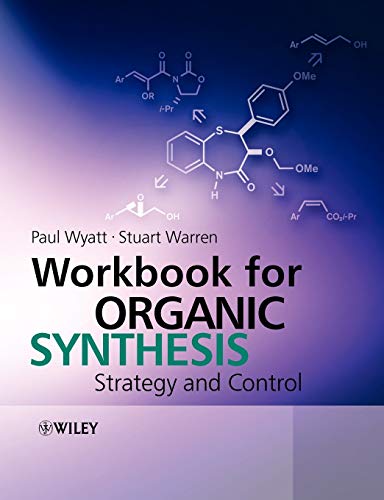
Workbook for Organic Synthesis: Strategy and Control
Paul Wyatt
Senior Lecturer and Director of Undergraduate Studies, School of Chemistry, University of Bristol, UK
Stuart Warren
Reader in Organic Chemistry, Department of Chemistry, University of Cambridge, UK.
Workbook for Organic Synthesis: Strategy and Control
This workbook provides a comprehensive graded set of problems to illustrate and develop the themes of each of the chapters in the textbook Organic Synthesis: Strategy and Control. Each problem is followed by a fully explained solution and discussion. The examples extend the student's experience of the types of molecules being synthesised by organic chemists, and the strategies they employ to control their syntheses. By working through these examples students will develop their skills in analysing synthetic challenges, and build a toolkit of strategies for planning new syntheses. Together the workbook and textbook provide a complete course in advanced organic synthesis.
Organic Synthesis: Strategy and Control
Organic Synthesis: Strategy and Control is a sequel to Stuart Warren's bestseller Organic Synthesis: The Disconnection Approach. The 'Disconnection' book concentrated on the planning behind the synthesis of compounds. This book focuses on putting the planning into practice. The two themes of the book are strategy and control: solving problems either by finding an alternative strategy or by controlling any established strategy to make it work.
The book is divided into five sections that deal with selectivity, carbon-carbon single bonds, carbon-carbon double bonds, stereochemistry and functional group strategy. Interpenetrating this structure, the 36 chapters start with classic methods and progress to modern methods and modern strategic considerations. Heterocyclic chemistry is treated throughout the book with full mechanistic explanations as part of organic chemistry rather than a separate entity.
Students and professional chemists familiar with Organic Synthesis: The Disconnection Approach will enjoy the leap into a book designed for chemists at the coalface of organic synthesis.
Die Inhaltsangabe kann sich auf eine andere Ausgabe dieses Titels beziehen.
Über die Autorin bzw. den Autor
Dr Paul Wyatt, School of Chemistry, University of Bristol, Bristol
Dr Wyatt is Director of Undergraduate Studies for the School of Chemistry at Bristol University and also Director of BRISTOL ChemLabS - a HEFCE Centre for Excellence in Teaching & Learning.
Dr Stuart Warren, Department of Chemistry, University of Cambridge, Lensfield Road, Cambridge
Dr Warren is the author of the bestselling textbooks Organic Synthesis: The Disconnection Approach (Wiley) and Organic Synthesis (OUP)
Von der hinteren Coverseite
Workbook for Organic Synthesis: Strategy and Control
Paul Wyatt
Senior Lecturer and Director of Undergraduate Studies, School of Chemistry, University of Bristol, UK
Stuart Warren
Reader in Organic Chemistry, Department of Chemistry, University of Cambridge, UK.
Workbook for Organic Synthesis: Strategy and Control
This workbook provides a comprehensive graded set of problems to illustrate and develop the themes of each of the chapters in the textbook Organic Synthesis: Strategy and Control. Each problem is followed by a fully explained solution and discussion. The examples extend the student's experience of the types of molecules being synthesised by organic chemists, and the strategies they employ to control their syntheses. By working through these examples students will develop their skills in analysing synthetic challenges, and build a toolkit of strategies for planning new syntheses. Together the workbook and textbook provide a complete course in advanced organic synthesis.
Organic Synthesis: Strategy and Control
Organic Synthesis: Strategy and Control is a sequel to Stuart Warren's bestseller Organic Synthesis: The Disconnection Approach. The 'Disconnection' book concentrated on the planning behind the synthesis of compounds. This book focuses on putting the planning into practice. The two themes of the book are strategy and control: solving problems either by finding an alternative strategy or by controlling any established strategy to make it work.
The book is divided into five sections that deal with selectivity, carbon-carbon single bonds, carbon-carbon double bonds, stereochemistry and functional group strategy. Interpenetrating this structure, the 36 chapters start with classic methods and progress to modern methods and modern strategic considerations. Heterocyclic chemistry is treated throughout the book with full mechanistic explanations as part of organic chemistry rather than a separate entity.
Students and professional chemists familiar with Organic Synthesis: The Disconnection Approach will enjoy the leap into a book designed for chemists at the coalface of organic synthesis.
Aus dem Klappentext
Workbook for Organic Synthesis: Strategy and Control
Paul Wyatt
Senior Lecturer and Director of Undergraduate Studies, School of Chemistry, University of Bristol, UK
Stuart Warren
Reader in Organic Chemistry, Department of Chemistry, University of Cambridge, UK.
Workbook for Organic Synthesis: Strategy and Control
This workbook provides a comprehensive graded set of problems to illustrate and develop the themes of each of the chapters in the textbook Organic Synthesis: Strategy and Control. Each problem is followed by a fully explained solution and discussion. The examples extend the student's experience of the types of molecules being synthesised by organic chemists, and the strategies they employ to control their syntheses. By working through these examples students will develop their skills in analysing synthetic challenges, and build a toolkit of strategies for planning new syntheses. Together the workbook and textbook provide a complete course in advanced organic synthesis.
Organic Synthesis: Strategy and Control
Organic Synthesis: Strategy and Control is a sequel to Stuart Warren's bestseller Organic Synthesis: The Disconnection Approach. The 'Disconnection' book concentrated on the planning behind the synthesis of compounds. This book focuses on putting the planning into practice. The two themes of the book are strategy and control: solving problems either by finding an alternative strategy or by controlling any established strategy to make it work.
The book is divided into five sections that deal with selectivity, carbon-carbon single bonds, carbon-carbon double bonds, stereochemistry and functional group strategy. Interpenetrating this structure, the 36 chapters start with classic methods and progress to modern methods and modern strategic considerations. Heterocyclic chemistry is treated throughout the book with full mechanistic explanations as part of organic chemistry rather than a separate entity.
Students and professional chemists familiar with Organic Synthesis: The Disconnection Approach will enjoy the leap into a book designed for chemists at the coalface of organic synthesis.
„Über diesen Titel“ kann sich auf eine andere Ausgabe dieses Titels beziehen.
Suchergebnisse für Workbook for Organic Synthesis: Strategy and Control

Beispielbild für diese ISBN
Workbook for Organic Synthesis: Strategy and Control
Anbieter: Wonder Book, Frederick, MD, USA
Verkäuferbewertung 5 von 5 Sternen

Zustand: Very Good. Very Good condition. A copy that may have a few cosmetic defects. May also contain light spine creasing or a few markings such as an owner's name, short gifter's inscription or light stamp. Artikel-Nr. V13C-03601
Gebraucht kaufen
EUR 27,68
Versand gratis
Versand innerhalb von USA
Versand innerhalb von USA
Anzahl: 1 verfügbar
Beispielbild für diese ISBN
Workbook for Organic Synthesis: Strategy and Control
Anbieter: WorldofBooks, Goring-By-Sea, WS, Vereinigtes Königreich
Verkäuferbewertung 5 von 5 Sternen
Paperback. Zustand: Very Good. The book has been read, but is in excellent condition. Pages are intact and not marred by notes or highlighting. The spine remains undamaged. Artikel-Nr. GOR011875193
Gebraucht kaufen
EUR 52,96
EUR 6,63 Versand
Versand von Vereinigtes Königreich nach USA
Versand von Vereinigtes Königreich nach USA
Anzahl: 1 verfügbar
Beispielbild für diese ISBN
Workbook for Organic Synthesis
Anbieter: PBShop.store UK, Fairford, GLOS, Vereinigtes Königreich
Verkäuferbewertung 5 von 5 Sternen
PAP. Zustand: New. New Book. Shipped from UK. Established seller since 2000. Artikel-Nr. FW-9780471929642
Neu kaufen
EUR 56,51
EUR 8,00 Versand
Versand von Vereinigtes Königreich nach USA
Versand von Vereinigtes Königreich nach USA
Anzahl: 15 verfügbar
Beispielbild für diese ISBN
Workbook for Organic Synthesis: Strategy and Control
Anbieter: medimops, Berlin, Deutschland
Verkäuferbewertung 5 von 5 Sternen
Zustand: good. Befriedigend/Good: Durchschnittlich erhaltenes Buch bzw. Schutzumschlag mit Gebrauchsspuren, aber vollständigen Seiten. / Describes the average WORN book or dust jacket that has all the pages present. Artikel-Nr. M00471929646-G
Gebraucht kaufen
EUR 64,29
EUR 10,00 Versand
Versand von Deutschland nach USA
Versand von Deutschland nach USA
Anzahl: 1 verfügbar
Beispielbild für diese ISBN
Workbook for Organic Synthesis
Anbieter: Majestic Books, Hounslow, Vereinigtes Königreich
Verkäuferbewertung 4 von 5 Sternen

Zustand: New. pp. 500. Artikel-Nr. 7491838
Neu kaufen
EUR 74,49
EUR 7,69 Versand
Versand von Vereinigtes Königreich nach USA
Versand von Vereinigtes Königreich nach USA
Anzahl: 3 verfügbar
Beispielbild für diese ISBN
Workbook for Organic Synthesis : Strategy and Control
Anbieter: Barnaby, Oxford, Vereinigtes Königreich
Verkäuferbewertung 4 von 5 Sternen
Softcover. Zustand: Very Good. An excellent copy in great condition. Only very minor wear to cover. Internally, clean and fresh, with unmarked and uncreased pages. Publisher's note: This workbook accompanies Organic Synthesis: Strategy and Control, the bestselling advanced organic textbook Provides a complete course for advanced organic students and includes a graded set of problems, solutions and discussions to illustrate and develop the themes of each of the chapters in the textbook Size: 24.9 x 19 x 2.8 cm. viii, 492 pp. Shipped Weight: Under 1 kilo. Category: Science & Technology; ISBN: 0471929646. ISBN/EAN: 9780471929642. Add. Inventory No: 251007QNS4406. Artikel-Nr. 251007QNS4406
Gebraucht kaufen
EUR 47,55
EUR 35,51 Versand
Versand von Vereinigtes Königreich nach USA
Versand von Vereinigtes Königreich nach USA
Anzahl: 1 verfügbar
Beispielbild für diese ISBN
The Strategy of Organic Synthesis, the Strategy of Organic Synthesis Workbook
Anbieter: Revaluation Books, Exeter, Vereinigtes Königreich
Verkäuferbewertung 5 von 5 Sternen
Paperback. Zustand: Brand New. 500 pages. 9.75x7.75x1.00 inches. In Stock. Artikel-Nr. __0471929646
Neu kaufen
EUR 72,86
EUR 14,80 Versand
Versand von Vereinigtes Königreich nach USA
Versand von Vereinigtes Königreich nach USA
Anzahl: 1 verfügbar
Beispielbild für diese ISBN
Workbook for Organic Synthesis: Strategy and Control
Anbieter: Ria Christie Collections, Uxbridge, Vereinigtes Königreich
Verkäuferbewertung 5 von 5 Sternen
Zustand: New. In English. Artikel-Nr. ria9780471929642_new
Neu kaufen
EUR 70,68
EUR 17,68 Versand
Versand von Vereinigtes Königreich nach USA
Versand von Vereinigtes Königreich nach USA
Anzahl: Mehr als 20 verfügbar
Beispielbild für diese ISBN
STRATEGY OF ORGANIC SYNTHESIS WORKBOOK
Anbieter: Speedyhen, Hertfordshire, Vereinigtes Königreich
Verkäuferbewertung 5 von 5 Sternen
Zustand: NEW. Artikel-Nr. NW9780471929642
Neu kaufen
EUR 54,20
EUR 48,53 Versand
Versand von Vereinigtes Königreich nach USA
Versand von Vereinigtes Königreich nach USA
Anzahl: 1 verfügbar
Beispielbild für diese ISBN
Workbook for Organic Synthesis: Strategy and Control
Anbieter: Kennys Bookstore, Olney, MD, USA
Verkäuferbewertung 5 von 5 Sternen
Zustand: New. Num Pages: 500 pages. BIC Classification: PN. Category: (P) Professional & Vocational; (U) Tertiary Education (US: College). . . 2008. 1st Edition. Paperback. . . . . Books ship from the US and Ireland. Artikel-Nr. V9780471929642
Neu kaufen
EUR 93,72
EUR 9,41 Versand
Versand innerhalb von USA
Versand innerhalb von USA
Anzahl: 1 verfügbar