
Verwandte Artikel zu Come by Here: My Mother's Life
Inhaltsangabe
Lavish praise for come by here
""With elegant simplicity and uncommon wisdom, Clarence Major gives us not just the truth of his mother's life but the unspoken truth behind the lie of color in the American story. A compelling narrative.""
-- Rilla Askew, author, Fire in Beulah
""A brilliant rendering of a rich and eventful life. With creative insight, love, and admiration, Major shows us how in family life down through the generations, race really matters.""
-- Andrew Billingsley, author, Climbing Jacob's Ladder:
The Enduring Legacy of African American Families
Critical acclaim for Clarence Major
""Clarence Major has a remarkable mind and the talent to match.""
-- Toni Morrison, Nobel Laureate
""One of America's most gifted and versatile writers.""
-- Library Journal
""With elegant simplicity and uncommon wisdom, Clarence Major gives us not just the truth of his mother's life but the unspoken truth behind the lie of color in the American story. A compelling narrative.""
-- Rilla Askew, author, Fire in Beulah
""A brilliant rendering of a rich and eventful life. With creative insight, love, and admiration, Major shows us how in family life down through the generations, race really matters.""
-- Andrew Billingsley, author, Climbing Jacob's Ladder:
The Enduring Legacy of African American Families
Critical acclaim for Clarence Major
""Clarence Major has a remarkable mind and the talent to match.""
-- Toni Morrison, Nobel Laureate
""One of America's most gifted and versatile writers.""
-- Library Journal
Die Inhaltsangabe kann sich auf eine andere Ausgabe dieses Titels beziehen.
Über die Autorinnen und Autoren
CLARENCE MAJOR is an established voice in American letters: a 1999 National Book Award Finalist and acclaimed author of twelve books of poetry, eight novels, and several nonfiction works. Major, who has been the recipient of numerous awards and fellowships, is currently a professor of modern American literature and creative writing at the University of California at Davis.
CLARENCE MAJOR is an established voice in American letters: a 1999 National Book Award Finalist and acclaimed author of twelve books of poetry, eight novels, and several nonfiction works. Major, who has been the recipient of numerous awards and fellowships, is currently a professor of modern American literature and creative writing at the University of California at Davis.
Von der hinteren Coverseite
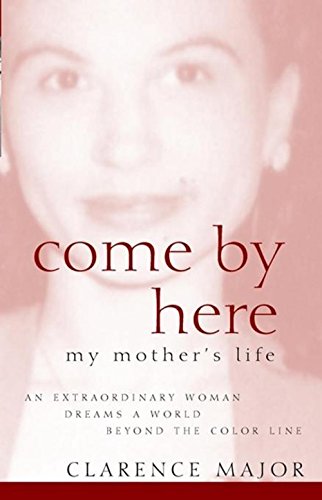
come by here
my mothers life
"One of the first things a small child, black or white, learned in the Deep South was that there were these two kinds of people–black and white–and that they were to be kept apart. They were supposed to be two rigidly separated worlds. But it was confusing for me. As soon as I became conscious of myself as black, I became conscious of myself also as white."
Inez was born in 1918–looking white without being white. A light-skinned daughter of the Deep South, she grew up determined not to let Jim Crow put limits on her happiness. So she embraced her contradictions and decided to make a different life for herself and her family.
Now, decades later, her son, critically acclaimed poet and novelist Clarence Major, tells her story. Starting with his own childhood awakening to the realization that his mother could pass for white, Major reaches back to paint a brilliant portrait of a woman on intimate terms with mysteries, secrets, and her own truth.
Escaping an abusive marriage, Inez would flee to Chicago, the city that became a symbol of her dilemmas as well as of her liberation. To survive, she had to leave her young children behind in the shadow of her past and under the color line. Passing as white, she would embark audaciously on a double life to earn a decent salary. To overcome every obstacle to her happiness, she would have to risk everything she loved and, finally, embrace herself.
Writing in Inezs down-to-earth voice, based on decades of historical research and mother-to-son conversations, Clarence Major brings acute understanding and poignant immediacy to this spirited womans life and times. The result is a sparkling narrative, full of warmth and compassion . . . a remarkable record of a mothers journey of self-discovery.
Here also is a fresh and honest portrait of race and color in American history, challenging in its lessons and indelible in its humanity. Edged with heartbreak, Come By Here traces a nearly century-long road along the boundaries of identity. In coming to terms with his mothers quest to become the person she always wanted to be–her "whole woman self"–Major offers a testament of hope.
Aus dem Klappentext
come by here
my mothers life
"One of the first things a small child, black or white, learned in the Deep South was that there were these two kinds of people black and white and that they were to be kept apart. They were supposed to be two rigidly separated worlds. But it was confusing for me. As soon as I became conscious of myself as black, I became conscious of myself also as white."
Inez was born in 1918 looking white without being white. A light-skinned daughter of the Deep South, she grew up determined not to let Jim Crow put limits on her happiness. So she embraced her contradictions and decided to make a different life for herself and her family.
Now, decades later, her son, critically acclaimed poet and novelist Clarence Major, tells her story. Starting with his own childhood awakening to the realization that his mother could pass for white, Major reaches back to paint a brilliant portrait of a woman on intimate terms with mysteries, secrets, and her own truth.
Escaping an abusive marriage, Inez would flee to Chicago, the city that became a symbol of her dilemmas as well as of her liberation. To survive, she had to leave her young children behind in the shadow of her past and under the color line. Passing as white, she would embark audaciously on a double life to earn a decent salary. To overcome every obstacle to her happiness, she would have to risk everything she loved and, finally, embrace herself.
Writing in Inezs down-to-earth voice, based on decades of historical research and mother-to-son conversations, Clarence Major brings acute understanding and poignant immediacy to this spirited womans life and times. The result is a sparkling narrative, full of warmth and compassion . . . a remarkable record of a mothers journey of self-discovery.
Here also is a fresh and honest portrait of race and color in American history, challenging in its lessons and indelible in its humanity. Edged with heartbreak, Come By Here traces a nearly century-long road along the boundaries of identity. In coming to terms with his mothers quest to become the person she always wanted to be her "whole woman self" Major offers a testament of hope.
Auszug. © Genehmigter Nachdruck. Alle Rechte vorbehalten.
Come By Here
My Mother's LifeBy Clarence MajorJohn Wiley & Sons
ISBN: 0-471-41518-9Chapter One
The train's chugging put me to sleep. I was still asleep when the train crossed the Mason-Dixon line at the first peek of daylight. With my eyes closed, I shifted in my seat, turning away from the window toward the man next to me.Then, fully conscious, I opened my eyes. I felt a sudden fearful chest tightening as I sat up and looked around. The man next to me was white. True, he was the same man who'd sat down beside me just before we pulled out of Chicago last night. But his whiteness now was so stark.
I suddenly realized that I was in an all-white car. The two colored ladies, with peanut butter sandwiches in wax paper, three seats up, and the elderly colored couple, up farther near the door, were now gone.
When you were traveling from the North into the South, at the Mason-Dixon line, the conductor came through the cars and told the Negroes not already sitting in the "colored" car to go there. If you were asleep he'd gently shake your shoulder and nod to the rear. But the conductor hadn't awakened me.
I sat there thinking over what had happened. Apparently, to his eyes, I was a white woman traveling alone. The experience was funny and sad. I'd always had a harder time passing for black than I'd had passing for white. My mother was black and her way of life was what I knew as my way. I knew very little about my birth father and his white way of life-if there was such a thing. Whenever I'd let myself start to think about him, an odd and dull pain, like the one in my chest now, stopped me.
But I could think about what was happening to me now. I was having my first experience of being white. And I felt the privilege that came with it. From that moment on I changed. In time, I came to believe that when I was taken to be white I was white. When I was seen as black, I was black.
I was like one of those chameleon lizards I saw on the rocks around our house when I was growing up. Except my color didn't change-people's perception of me changed, depending on the situation. That was how elusive these categories came to be for me.
As that train moved farther south, moving toward Atlanta, each clickety-clickety was taking me back to my miserable life as Clarence's wife. I looked out at the sunny landscape of farmland. And I sat there thinking back on my life, trying to figure out who I was, and who I was becoming.
I was a simple country girl who discovered excitement and promise in the big city, Atlanta, and now in an even bigger city, Chicago. But who I was before leaving Dublinville was still clear in my memory. That girl was put quickly through changes once she was living in the city as a grownup. Everything moved faster here. Before Atlanta and Chicago my dreams were simple. The events in a typical day were also simple and I knew pretty much what each day was likely to bring. City life, though, as exciting as it was, complicated and made everything unpredictable. Discovering the faster pace and more varied day-by-day life of Atlanta challenged me in new ways. They gave me new hope for a fuller, more promising life than I had thought possible.
I closed my eyes. While growing up in Dublinville I knew my sisters wanted to fall in love, marry and have children, to be good wives and good mothers. I remembered vaguely wanting these things but I wanted more. I couldn't remember a time when I didn't believe I could have more. All I had to do was go after what I wanted. That was what Pa always taught me. From an early age I knew I was not like most of the other girls I knew both in my hometown and in boarding school in Athens.
I wanted to improve myself. I'd grown up with the impression that we were better off than most colored families in our town, and we were, but once I moved to Atlanta I saw black families with the kind of material wealth I'd thought only white folks had. It wasn't that I wanted to be wealthy. I wanted to improve who I was as a person, and the city struck me as the place to do it. I wanted to be useful in the world, to live a fuller life.
I also wanted to feel more secure and I came to associate security with the city because that was where the jobs were. If I could earn enough money to buy my own sense of security and independence, then I would not have to ever again be dependent on a man or anybody who might let me down when I most needed help. I knew now, as I sat there on the train with my eyes closed, that I was as deeply disappointed in myself as I was in my husband. I also knew that I had associated him with the possibilities of the big city. Years later I would understand that my attraction to him had everything to do with his flash of self-confidence, his air of independence. These were qualities I rarely saw in other black men. But I couldn't help wondering if his attraction to me had more to do with my skin color than with me myself as the person I was and the person I was becoming.
The train was pulling into Atlanta and I was still deep in thought. I remembered a time when I was five. The old white man Mr. Egmont stopped in front of our house. He sat atop a squeaky wagon pulled by a tired-looking horse. It was his normal stop to sell watermelons and corn. I was outside playing.
After giving me a peach, Mr. Egmont patted the top of my head. As I was eating the peach he said, Child, when you grow up, you go up north where you can be white. You don't have to stay here and be colored all your life. People here know you colored but, on sight, to a stranger you whiter than I am. And although his words were confusing to me at the time, I never forgot them.
One of the first things a small child, black or white, learned in the Deep South was that there were these two kinds of people-black and white-and that they were to be kept apart. They were supposed to be two rigidly separated worlds. But it was confusing for me as soon as I became conscious of myself as black, I became conscious of myself also as white. No matter how friendly white people were, we were taught that they drew the line when it came to us. I didn't know why. It was just the way life was.
Not that some white people weren't friendly. The white family up the road from us, on the other side, was close to my family. Their name was Knight. They had three children-two boys and a girl, Eddie, Lee and Claudio. They were around the ages of my older brothers and sisters.
I used to go up to the Knights' house all the time, although they didn't have any little children my age. I liked them, and Mr. and Mrs. Knight were crazy about me. Mama and Pa used to get water from their well after ours went bad. From time to time we would give them fruit Mama canned. And they were always giving us things.
At age six, I was getting ready to go to school for the first time. And Pa took me aside and said, Inez, children will tell you that I am not your father. He said, Don't believe them, and don't let them upset you. They don't know any better. A real father, he said, is one who loves you and cares about you. That is a true father. So, I am your true father-just remember that when they start teasing you. I didn't yet know about my birth father, a white man whose family had a long and documented history in Georgia going back to Colonial times.
The colored schoolhouse stood down the hill from the colored Baptist church, called Mt. Zion Baptist. Pa had built both. The little two-room schoolhouse-called the Harriet Beecher Stowe School-that I started going to when I was six had only a few wooden benches for the children to sit on,...
„Über diesen Titel“ kann sich auf eine andere Ausgabe dieses Titels beziehen.
Suchergebnisse für Come by Here: My Mother's Life

Beispielbild für diese ISBN
Come By Here My Mothers Life
Anbieter: World of Books (was SecondSale), Montgomery, IL, USA
Verkäuferbewertung 5 von 5 Sternen

Zustand: Good. Item in good condition. Textbooks may not include supplemental items i.e. CDs, access codes etc. Artikel-Nr. 00101912699
Gebraucht kaufen
EUR 4,05
Versand gratis
Versand innerhalb von USA
Versand innerhalb von USA
Anzahl: 1 verfügbar
Beispielbild für diese ISBN
Come by Here
Anbieter: Majestic Books, Hounslow, Vereinigtes Königreich
Verkäuferbewertung 4 von 5 Sternen

Zustand: New. pp. xiii + 270. Artikel-Nr. 94210145
Neu kaufen
EUR 37,64
EUR 7,67 Versand
Versand von Vereinigtes Königreich nach USA
Versand von Vereinigtes Königreich nach USA
Anzahl: 1 verfügbar
Beispielbild für diese ISBN
Come by Here: My Mother's Life
Anbieter: Revaluation Books, Exeter, Vereinigtes Königreich
Verkäuferbewertung 5 von 5 Sternen
Hardcover. Zustand: Brand New. 270 pages. 8.75x5.75x1.00 inches. In Stock. Artikel-Nr. x-0471415189
Neu kaufen
EUR 38,52
EUR 11,80 Versand
Versand von Vereinigtes Königreich nach USA
Versand von Vereinigtes Königreich nach USA
Anzahl: 2 verfügbar
Foto des Verkäufers
Come by Here : My Mother's Life
Verlag:
Turner Publishing Company Apr 2002, 2002
ISBN 10: 0471415189
ISBN 13: 9780471415183
Neu
Hardcover
Anbieter: AHA-BUCH GmbH, Einbeck, Deutschland
Verkäuferbewertung 5 von 5 Sternen
Buch. Zustand: Neu. Neuware - Lavish praise for come by here''With elegant simplicity and uncommon wisdom, Clarence Major gives us not just the truth of his mother's life but the unspoken truth behind the lie of color in the American story. A compelling narrative.''-- Rilla Askew, author, Fire in Beulah''A brilliant rendering of a rich and eventful life. With creative insight, love, and admiration, Major shows us how in family life down through the generations, race really matters.''-- Andrew Billingsley, author, Climbing Jacob's Ladder:The Enduring Legacy of African American FamiliesCritical acclaim for Clarence Major''Clarence Major has a remarkable mind and the talent to match.''-- Toni Morrison, Nobel Laureate''One of America's most gifted and versatile writers.''-- Library Journal. Artikel-Nr. 9780471415183
Neu kaufen
EUR 38,46
EUR 35,00 Versand
Versand von Deutschland nach USA
Versand von Deutschland nach USA
Anzahl: 2 verfügbar
Foto des Verkäufers
Come by Here: My Mother\ s Life
Anbieter: moluna, Greven, Deutschland
Verkäuferbewertung 5 von 5 Sternen
Gebunden. Zustand: New. Über den AutorrnrnCLARENCE MAJOR is an established voice in American letters: a 1999 National Book Award Finalist and acclaimed author of twelve books of poetry, eight novels, and several nonfiction works. Major, who has been the recip. Artikel-Nr. 898054460
Neu kaufen
EUR 31,30
EUR 48,99 Versand
Versand von Deutschland nach USA
Versand von Deutschland nach USA
Anzahl: Mehr als 20 verfügbar