
Verwandte Artikel zu Neuro-Fuzzy Pattern Recognition: Methods in Soft Computing...
Neuro-Fuzzy Pattern Recognition: Methods in Soft Computing (Wiley Series on Intelligent Systems) - Hardcover
Inhaltsangabe
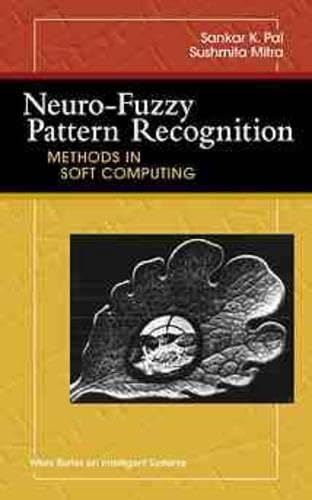
Pattern recognition is of great importance in many aspects of computer technologies, especially human-computer interactions. Voice recognition software, intelligent agents, and machine vision systems are all examples of technologies utilising pattern recognition. Written by an internationally known neural network expert, this book applies fuzzy logic and neural networks to the task of pattern recognition. It presents contemporary state-of-the-art technology in pattern recognition.
Die Inhaltsangabe kann sich auf eine andere Ausgabe dieses Titels beziehen.
Über die Autorin bzw. den Autor
SANKAR K. PAL, PhD, is a distinguished scientist and founding head of the Machine Intelligence Unit at the Indian Statistical Institute in Calcutta. SUSHMITA MITRA, PhD, is an associate professor at the Indian Statistical Institute in Calcutta.
Von der hinteren Coverseite
The neuro-fuzzy approach to pattern recognition-a unique overview Recent years have seen a surge of interest in neuro-fuzzy computing, which combines fuzzy logic, neural networks, and soft computing techniques. This book focuses on the application of this new tool to the rapidly evolving area of pattern recognition. Written by two leaders in neural networks and soft computing research, this landmark work presents a unified, comprehensive treatment of the state of the art in the field. The authors consolidate a wealth of information previously cattered in disparate articles, journals, and edited volumes, explaining both the theory of neuro-fuzzy computing and the latest methodologies for performing different pattern recognition tasks in the neuro-fuzzy network-classification, feature evaluation, rule generation, knowledge extraction, and hybridization. Special emphasis is given to the integration of neuro-fuzzy methods with rough sets and genetic algorithms (GAs) to ensure more efficient recognition systems. Clear, concise, and fully referenced, Neuro-Fuzzy Pattern Recognition features extensive examples and highlights key applications in speech, machine learning, medicine, and forensic science. It is an extremely useful resource for scientists and engineers in laboratories and industry as well as for anyone seeking up-to-date information on the advantages of neuro-fuzzy pattern recognition in new computer technologies.
„Über diesen Titel“ kann sich auf eine andere Ausgabe dieses Titels beziehen.
Suchergebnisse für Neuro-Fuzzy Pattern Recognition: Methods in Soft Computing...

Beispielbild für diese ISBN
Neuro-Fuzzy Pattern Recognition : Methods in Soft Computing
Verlag:
Wiley & Sons, Incorporated, John, 1999
ISBN 10: 0471348449
ISBN 13: 9780471348443
Gebraucht
Hardcover
Anbieter: Better World Books, Mishawaka, IN, USA
Verkäuferbewertung 5 von 5 Sternen

Zustand: Very Good. Pages intact with possible writing/highlighting. Binding strong with minor wear. Dust jackets/supplements may not be included. Stock photo provided. Product includes identifying sticker. Better World Books: Buy Books. Do Good. Artikel-Nr. 56886680-6
Gebraucht kaufen
EUR 16,25
Versand gratis
Versand innerhalb von USA
Versand innerhalb von USA
Anzahl: 1 verfügbar
Beispielbild für diese ISBN
Neuro-Fuzzy Pattern Recognition: Methods in Soft Computing
Verlag:
Wiley-Interscience (edition 1), 1999
ISBN 10: 0471348449
ISBN 13: 9780471348443
Gebraucht
Hardcover
Anbieter: BooksRun, Philadelphia, PA, USA
Verkäuferbewertung 5 von 5 Sternen
Hardcover. Zustand: Very Good. 1. It's a well-cared-for item that has seen limited use. The item may show minor signs of wear. All the text is legible, with all pages included. It may have slight markings and/or highlighting. Artikel-Nr. 0471348449-11-1
Gebraucht kaufen
EUR 20,76
Versand gratis
Versand innerhalb von USA
Versand innerhalb von USA
Anzahl: 1 verfügbar
Beispielbild für diese ISBN
Neuro-fuzzy Pattern Recognition - Methods In Soft Computing
Anbieter: Romtrade Corp., STERLING HEIGHTS, MI, USA
Verkäuferbewertung 5 von 5 Sternen
Zustand: New. This is a Brand-new US Edition. This Item may be shipped from US or any other country as we have multiple locations worldwide. Artikel-Nr. ABBB-104236
Beispielbild für diese ISBN
Neuro-Fuzzy Pattern Recognition
Anbieter: Majestic Books, Hounslow, Vereinigtes Königreich
Verkäuferbewertung 4 von 5 Sternen

Zustand: Used. pp. 378. Artikel-Nr. 7600864
Gebraucht kaufen
EUR 91,52
EUR 7,71 Versand
Versand von Vereinigtes Königreich nach USA
Versand von Vereinigtes Königreich nach USA
Anzahl: 1 verfügbar
Beispielbild für diese ISBN
Neuro-Fuzzy Pattern Recognition
Anbieter: Biblios, Frankfurt am main, HESSE, Deutschland
Verkäuferbewertung 4 von 5 Sternen
Zustand: Used. pp. 378. Artikel-Nr. 18279861
Gebraucht kaufen
EUR 90,90
EUR 9,95 Versand
Versand von Deutschland nach USA
Versand von Deutschland nach USA
Anzahl: 1 verfügbar