
Verwandte Artikel zu Building the Customer-Centric Enterprise: Data Warehousing...
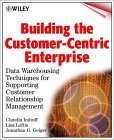
Building the Customer-Centric Enterprise: Data Warehousing Techniques for Supporting Customer Relationship Management - Softcover
Inhaltsangabe
Strategies for leveraging information technologies to improve customer relationships With E–business comes the opportunity for companies to really get to know their customers––who they are and their buying patterns. Business managers need an integrated strategy that supports customers from the moment they enter the front door––or Web site––right through to fulfillment, support, and promotion of new products and services. Along the way, IT managers need an integrated set of technologies––from Web sites to databases and data mining tools––to make all of this work. This book shows both IT and business managers how to match business strategies to the technologies needed to make them work. Claudia Imhoff helped pioneer this set of technologies, called the Corporate Information Factory (CIF). She and her coauthors take readers step–by–step through the process of using the CIF for creating a customer–focused enterprise in which the end results are increased market share and improved customer satisfaction and retention. They show how the CIF can be used to ensure accuracy, identify customer needs, tailor promotions, and more.
Die Inhaltsangabe kann sich auf eine andere Ausgabe dieses Titels beziehen.
Über die Autorin bzw. den Autor
CLAUDIA IMHOFF is a popular speaker and recognized expert on customer relationship management and the Corporate Information Factory, which she helped pioneer with Bill Inmon. She has coauthored Corporate Information Factory, Building the Operational Data Store, and Exploration Warehousing (all from Wiley) and is a regular columnist for business and technology magazines. Dr. Imhoff is also an advisor for several corporations and for The Data Warehousing Institute. LISA LOFTIS is a Senior Manager at Braun Consulting and has over fourteen years' experience working in customer relationship management in numerous industries. She has also presented extensively at national and international conferences on CRM. JONATHAN G. GEIGER is Vice President at Braun Consulting, where he specializes in helping companies plan, develop, and apply business intelligence and customer relationship management capabilities. He has presented extensively at national and international conferences, has published more than twenty articles, and coauthored Data Stores,Data Warehousing, and The Zachman Framework: Managing Enterprise Knowledge.
Von der hinteren Coverseite
"Claudia Imhoff and her coauthors, Jonathan geiger and Lisa Loftis, are giving you a roadmap to CRM. . . This is a MUST READ for every serious manager."?John Zachman, Zachman International
Building the Customer–Centric Enterprise
You already know that customer relationship management (CRM) is critical to the success of your business, but how do you go about implementing it? This book shows you how to reshape your organization and develop appropriate business strategies to nurture mutually beneficial long–term customer relationships.
Drawing on the proven architecture of the Corporate Information Factory (CIF), Claudia Imhoff and her team clearly explain how to harness CIF technologies?including Web and data warehousing technologies?to ensure success in today?s hyper–competitive marketplace. By integrating the business strategies with the supporting technologies, you will be able to:
- Establish a business strategy that supports the customer
- Recognize different types of customers
- Understand customer needs
- Understand the value of each customer
- Develop effective approaches for retaining and expanding customer relationships
- Tailor customer service and support to specific customer needs
- Ensure that customer data is accurate and up–to–date
- Integrate all sales and distribution channels, including the Internet
- Protect the privacy of the customer
Auszug. © Genehmigter Nachdruck. Alle Rechte vorbehalten.
Excerpt from Building the Customer-Centric Enterprise : Data Warehousing Techniques for Supporting Customer Relationship Management
By Imhoff, Claudia / Loftis, Lisa / Geiger, Jonathan G.
1. The Customer Becomes the Center of the Business Universe
Many Customer Relationship Management (CRM) definitions focus on the importance of knowing your customer and acting on that knowledge. Putting this principle into practice is where the complexity lies. The following example illustrates the type of dynamic CRM environment that thought-leading companies are aiming to provide. This story introduces you to two banking customers, Bob and his parents, and walks you through a "trip to the bank" with each one of them. (We'll explain later in this chapter why we view Bob's parents as one customer.) As you read through this example, keep in mind the following questions:
* Is one of these customers more profitable than the other?
* Do these two customers have different requirements when it comes to product or package features, services, and fees?
* Do these two customers have different expectations for how, where, and when they interact with their service providers?
* Will either customer go to a competitor if their current provider is unable or unwilling to satisfy these diverse requirements?
The first customer is Bob, a busy, young (late 30s) corporate executive with fairly typical banking requirements for someone in his circumstances. Bob has his paycheck automatically deposited into his checking account each month. He rarely writes checks because he has many of his standard monthly payments automatically deducted from his primary checking account, and those that cannot be paid by standing order, he pays over the Internet. He doesn't receive paper account statements or cancelled checks, preferring instead to track the activity in his accounts online as his busy schedule permits. His package of products and services provides him with no minimum balance requirements on his demand deposit accounts, no ATM fees, and a low interest rate on his credit card. His package also charges a standard fee for late credit card payments and includes fees for checks and for service interactions that require personal contact, such as calls involving a service center representative.
A well-managed banking interaction that satisfies Bob and profits the bank would go like this:
Bob logs into the bank's Web site from his hotel room one evening after taking a group of clients out to dinner. In addition to the menu of available banking options, he sees a travel icon advertising discounted rates at several popular western ski destinations. He clicks on the icon and is taken to the site of a travel service associated with his bank credit card. Bob has enough interest in the subject that he requests electronic brochures from the travel service.
Bob's encounter with the travel service is no accident. The bank understands that Bob has a high interest in active vacations because an analysis of his credit card usage has identified a consistent pattern of use at various resort hotels and ski facilities. Bob and others like him are considered to be likely candidates to take advantage of the new travel service and, as a result, they receive personalized notifications when they log onto the Web site.
After the short detour to the travel site, Bob checks the balance in his travel-expense checking account, transfers funds from savings to checking, and pays his corporate credit card bill from this checking account.
Before logging off the computer, Bob checks his personal email and finds an "info-mail" from his financial advisor who is associated with the bank's full service brokerage. The advisor recommends two stocks that fit the investment preference profile provided by Bob, and the info-mail contains links to the appropriate Web pages for each company. Bob makes a note to research these companies when he has the available time.
The second customer is Bob's parents-a busy, older (late 60s) retired couple who love to travel and who also have standard banking requirements. A point of interest here is that although Bob's parents axe individual people, each with specific relationships to bank products, they function as an economic decisionmaking unit. This unit is recognized by the bank as a type of customer and is treated as such.
Bob's parents do not own a debit card and rarely, if ever, use the ATM service. They use the monthly account statements to balance their checkbook, and they open and read all the literature that comes to their home from the bank. Bob's parents frequently visit their local branch to perform banking transactions. If they have a banking question while they are on a trip, they call the bank's service center and speak to a phone service representative. Their package of products and services provides free checks, free credit protection on their credit cards, and branch and service center transaction support at no charge. They have a minimum balance requirement on their checking account, a relatively high interest rate on their credit card, and pay a fee for each non-bank ATM use.
A well-managed banking interaction that satisfies them and profits the bank would go like this:
Bob's parents receive the monthly statement for their checking account. Included with the statement is a circular announcing an open house to introduce the new travel service associated with the bank's credit card. The statement also includes a letter from the branch manager personally inviting Bob's parents to attend the open house. The letter also details a discounted travel promotion for a Caribbean cruise that will be featured in the event.
The letter from the branch manager is no accident. The bank understands that Bob's parents have a high level of interest in luxury travel because of the consistent usage patterns on their credit card. The branches hosting the open house have also been selected with care; they are typically located in communities containing large concentrations of wealthy retired people. Bob's parents, and others like them, have been identified as likely candidates to utilize the new travel service and have received...........
„Über diesen Titel“ kann sich auf eine andere Ausgabe dieses Titels beziehen.
Suchergebnisse für Building the Customer-Centric Enterprise: Data Warehousing...

Beispielbild für diese ISBN
Building the Customer-centric Enterprise: Data Warehousing Techniques for Supporting Customer Relationship Management
Verlag:
John Wiley and Sons Ltd, 2001
ISBN 10: 0471319813
ISBN 13: 9780471319818
Gebraucht
Paperback
Anbieter: World of Books (was SecondSale), Montgomery, IL, USA
Verkäuferbewertung 5 von 5 Sternen

Paperback. Zustand: Very Good. This book presents strategies for leveraging information technologies to improve customer relationships. With E-business comes the opportunity for companies to really get to know their customers - who they are and their buying patterns. Business managers need an integrated strategy that supports customers from the moment they enter the front door - or Web site - right through to fulfillment, support, and promotion of new products and services. Along the way, IT managers need an integrated set of technologies - from Web sites to databases and data mining tools - to make all of this work. This book shows both IT and business managers how to match business strategies to the technologies needed to make them work. Claudia Imhoff helped pioneer this set of technologies, called the Corporate Information Factory (CIF). She and her coauthors take readers step-by-step through the process of using the CIF for creating a customer-focused enterprise in which the end results are increased market share and improved customer satisfaction and retention. They show how the CIF can be used to ensure accuracy, identify customer needs, tailor promotions, and more. Artikel-Nr. 00105061215
Gebraucht kaufen
EUR 6,41
Versand gratis
Versand innerhalb von USA
Versand innerhalb von USA
Anzahl: 1 verfügbar
Beispielbild für diese ISBN
Building the Customer-Centric Enterprise: Data Warehousing Techniques for Supporting Customer Relationship Management
Anbieter: ThriftBooks-Dallas, Dallas, TX, USA
Verkäuferbewertung 5 von 5 Sternen
Paperback. Zustand: Very Good. No Jacket. May have limited writing in cover pages. Pages are unmarked. ~ ThriftBooks: Read More, Spend Less. Artikel-Nr. G0471319813I4N00
Gebraucht kaufen
EUR 7,61
Versand gratis
Versand innerhalb von USA
Versand innerhalb von USA
Anzahl: 1 verfügbar
Beispielbild für diese ISBN
Building the Customer-Centric Enterprise : Data Warehousing Techniques for Supporting Customer Relationship Management
Verlag:
Wiley & Sons, Incorporated, John, 2001
ISBN 10: 0471319813
ISBN 13: 9780471319818
Gebraucht
Softcover
Erstausgabe
Anbieter: Better World Books, Mishawaka, IN, USA
Verkäuferbewertung 5 von 5 Sternen
Zustand: Good. 1st Edition. Former library copy. Pages intact with minimal writing/highlighting. The binding may be loose and creased. Dust jackets/supplements are not included. Includes library markings. Stock photo provided. Product includes identifying sticker. Better World Books: Buy Books. Do Good. Artikel-Nr. 2892208-75
Gebraucht kaufen
EUR 8,78
Versand gratis
Versand innerhalb von USA
Versand innerhalb von USA
Anzahl: 1 verfügbar
Beispielbild für diese ISBN
Building the Customer-Centric Enterprise : Data Warehousing Techniques for Supporting Customer Relationship Management
Verlag:
Wiley & Sons, Incorporated, John, 2001
ISBN 10: 0471319813
ISBN 13: 9780471319818
Gebraucht
Softcover
Erstausgabe
Anbieter: Better World Books Ltd, Dunfermline, Vereinigtes Königreich
Verkäuferbewertung 5 von 5 Sternen
Zustand: Very Good. 1st Edition. Former library copy. Pages intact with possible writing/highlighting. Binding strong with minor wear. Dust jackets/supplements may not be included. Includes library markings. Stock photo provided. Product includes identifying sticker. Better World Books: Buy Books. Do Good. Artikel-Nr. 14615558-75
Gebraucht kaufen
EUR 7,35
EUR 5,97 Versand
Versand von Vereinigtes Königreich nach USA
Versand von Vereinigtes Königreich nach USA
Anzahl: 1 verfügbar
Beispielbild für diese ISBN
Building the Customer-Centric Enterprise
Anbieter: Anybook.com, Lincoln, Vereinigtes Königreich
Verkäuferbewertung 5 von 5 Sternen
Zustand: Fair. This is an ex-library book and may have the usual library/used-book markings inside.This book has soft covers. Book contains pencil markings. In fair condition, suitable as a study copy. Please note the Image in this listing is a stock photo and may not match the covers of the actual item,850grams, ISBN:9780471319818. Artikel-Nr. 8664950
Gebraucht kaufen
EUR 10,99
EUR 15,58 Versand
Versand von Vereinigtes Königreich nach USA
Versand von Vereinigtes Königreich nach USA
Anzahl: 1 verfügbar