
Verwandte Artikel zu The Queen: A Biography of Elizabeth II: A Biography...
Inhaltsangabe
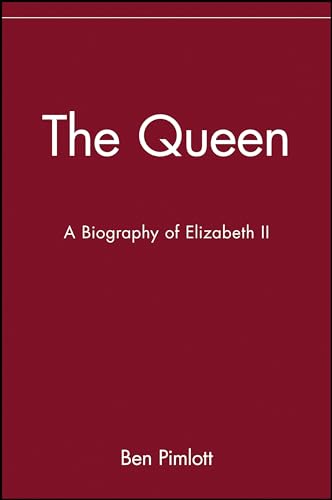
One of the many merits of Ben Pimlott's superbly judicious biography of Elizabeth II is that it understands this connection between monarchy and masses, and carefully evokes its political importance. -The New York Times Book Review "A level-headed study . . . helps us appreciate the capacities as well as the limitations of a woman who, whatever else happens, just keeps on going on" -People "There will be no better biography of Elizabeth II as a figure of state until her official one appears-and perhaps not even then . . . . Pimlott has succeeded triumphantly. He has written a book that can be enjoyed and admired by people who would never have imagined reading any previous royal biography" -The Independent (London) "An important and stimulating book" -Antonia Fraser, author of Mary, Queen of Scots in The Guardian (London) "The best all-around study of the Queen so far, showing understanding as well as amused irony" -The Sunday Telegraph (London) "There will not be a better royal biography for many years" -The Daily Telegraph (London)
Die Inhaltsangabe kann sich auf eine andere Ausgabe dieses Titels beziehen.
Über die Autorin bzw. den Autor
BEN PIMLOTT is Professor of Politics and Contemporary History at Birkbeck College, University of London, and the youngest fellow of the British Academy. His books include Harold Wilson and Hugh Dalton, winner of the Whitbread Prize. Dr. Pimlott lives in London.
Von der hinteren Coverseite
"One of the many merits of Ben Pimlott's superbly judicious biography of Elizabeth II is that it understands this connection between monarchy and masses, and carefully evokes its political importance.
—The New York Times Book Review
"A level-headed study . . . helps us appreciate the capacities as well as the limitations of a woman who, whatever else happens, just keeps on going on."
—People
"There will be no better biography of Elizabeth II as a figure of state until her official one appears—and perhaps not even then. . . . Pimlott has succeeded triumphantly. He has written a book that can be enjoyed and admired by people who would never have imagined reading any previous royal biography."
—The Independent (London)
"An important and stimulating book."
—Antonia Fraser, author of Mary, Queen of Scots in The Guardian (London)
"The best all-around study of the Queen so far, showing understanding as well as amused irony."
—The Sunday Telegraph (London)
"There will not be a better royal biography for many years."
—The Daily Telegraph (London)
Aus dem Klappentext
One of the many merits of Ben Pimlott's superbly judicious biography of Elizabeth II is that it understands this connection between monarchy and masses, and carefully evokes its political importance.
--The New York Times Book Review
A level-headed study . . . helps us appreciate the capacities as well as the limitations of a woman who, whatever else happens, just keeps on going on.
--People
There will be no better biography of Elizabeth II as a figure of state until her official one appears--and perhaps not even then. . . . Pimlott has succeeded triumphantly. He has written a book that can be enjoyed and admired by people who would never have imagined reading any previous royal biography.
--The Independent (London)
An important and stimulating book.
--Antonia Fraser, author of Mary, Queen of Scots in The Guardian (London)
The best all-around study of the Queen so far, showing understanding as well as amused irony.
--The Sunday Telegraph (London)
There will not be a better royal biography for many years.
--The Daily Telegraph (London)
Auszug. © Genehmigter Nachdruck. Alle Rechte vorbehalten.
The Queen
A Biography of Elizabeth IIBy Ben PimlottJohn Wiley & Sons
Copyright © 1998 Ben PimlottAll right reserved.
ISBN: 9780471283300
Chapter One
April 1926 was a busy month for every member of the Conservative Government, but for few ministers more than the Home Secretary, Sir William Joynson-Hicks. A long, bitter dispute in the coalfields was moving rapidly towards its climax -- with drastic implications for the nation.
`We are going to be slaves no longer and our men will starve before they accept any reductions in wages,' the miners' leader, A. J. Cook, had declared in an angry speech that crystallized the mood in the collieries, while the men resolved: `Not a penny off the pay, not a minute on the day'. On 14 April, the TUC leadership asked the Prime Minister to intervene. A week later the owners and men met, but failed to reach agreement. Thereafter, the chance of a compromise diminished, and the prospect grew closer of a terrifying industrial shutdown which -- for the first time in British history -- seemed likely to affect the majority of British manual workers. Alarm affected all levels of society. Even King George V -- mindful of his right to be consulted, and his duty both to encourage and above all to warn -- discreetly urged his ministers to show caution. Alas, royal counsels were in vain, and the General Strike began at midnight on 3rd May 1926, threatening not just economic paralysis and bankruptcy, but the constitution itself.
`Jix' Joynson-Hicks -- best known to history for his zeal in ordering police raids on the decadent writings of D.H. Lawrence and Radclyffe Hall, and for the part he later played in defeating the 1927 Bill to revise the Prayer Book -- was scarcely an outstanding or memorable holder of his post. This, however, was his most splendid hour. In swashbuckling alliance with Winston Churchill, Neville Chamberlain, Quintin Hogg and Leo Amery, the Home Secretary was a Cabinet hawk, in the thick of the fight, a scourge of the miners, opposed to an easy settlement.
If nothing else -- it was said -- he had nerve. It was Jix who, just after the Strike began, appealed for 50,000 volunteers for the special constables, in order to protect essential vehicles -- and thereby raised the temperature of the dispute. For several critical weeks, Jix was at the heart of the nation's events, in constant touch with the Metropolitan Police, and sometimes with the Prime Minister as well.
Sleep was at a premium, snatched between night-time Downing Street parleys and daytime consultations with officials. A call in the early hours of 21 April to attend a royal birth, shortly before one of the most critical meetings in the entire dispute between the Prime Minister and the coal owners, was therefore not entirely a cause for celebration. But it was a duty not to be shirked, and Joynson-Hicks was equal to it. He hurried to the bedside of the twenty-five-year-old Duchess of York, wife of the King's second son, at 17 Bruton Street -- the London home of the Duchess's parents, the Earl and Countess of Strathmore, who happened to be among the most prominent coal owners in the United Kingdom. The child was born at 2.40 a.m., and named Elizabeth Alexandra Mary, after the Duchess and two Queens.
Why the Home Secretary needed to attend the birth of the child of a minor member of the Royal Family was one of the mysteries of the British Monarchy. Later, when Princess Elizabeth herself became pregnant, an inquiry was launched at the instigation of the then Labour Home Secretary, Chuter Ede. Inspecting the archives, Home Office researchers rejected as myth a quaint belief, fondly held by the Royal Household and the public alike, that it had something to do with verification, James II and warming pans. After taking expert advice, Ede informed Sir Alan Lascelles, Private Secretary to George VI, that it was no more than `the custom of past ages by which ministers thronged the private apartments of royalty daily, and particularly at moments of special significance such as births, marriages and deaths'. In 1926, however, it was enough that it was customary -- Jix was not the kind of man to question it. According to The Times the next day, Sir William `was present in the house at the time of the birth' and conveyed the news by special messenger to the Lord Mayor.
It was a difficult delivery, despite the best attention. Not until 10 a.m. did the Duchess's doctors issue a guarded statement which revealed what had happened. `Previous to the confinement a consultation took place,' it declared, `... and a certain line of treatment' -- decorouscode for a Caesarean section -- `was successfully adopted'. The announcement had more than a purely medical significance. The risks such an operation then entailed, and would again entail in the event of subsequent pregnancies, made it unlikely that the Duchess would have a large family, and hence reduced the chances of a future male heir.
At the time, however, few regarded the Princess's proximity to the throne as important. Some later writers, looking back, argued that her succession was always likely. But this was post hoc: in 1926 the Duke of York's elder brother was young and healthy, and was expected to marry and have issue. When Princess Elizabeth was born she was third in line for the throne after her uncle, the Prince of Wales, and her father, and under the 1701 Act of Settlement she took precedence over her father's young brothers -- just as Queen Victoria had taken precedence over the Duke of Cumberland, younger brother of William IV, in 1837, even though her own father, the Duke of Kent, had predeceased him. Therefore, until either her uncle had a legitimate heir, or her father had a son, Elizabeth's eventual succession was possible, and she had a special standing as a result. But this chance initially seemed remote, and the Princess was much less afflicted during her earliest years by the isolating sense of an inescapable destiny than either her eldest uncle, or her own eldest son.
Despite the distance of the child from the throne, the newspapers took a keen interest in the birth. Perhaps they were responding to the deepening crisis with a bromide, or perhaps it was part of a patriotic reaction. Whatever the cause, far more attention was paid to Princess Elizabeth in 1926 than to George V's first two grandsons, George and Gerald Lascelles, sons of the Princess Royal, in 1923 and 1924, even though at the time of their births they had been similarly placed in the line of succession. Such, indeed, was the excitement that a crowd swiftly gathered in Bruton Street in the hope of seeing the Princess, to greet the messenger boys who arrived with telegrams and presents, and to cheer the Duchess's royal callers.
Among the first to arrive were the King and Queen. `Such a relief and joy,' wrote Queen Mary in her diary, noting that the baby was `a little darling with lovely complexion & pretty fair hair'. The Duke of York was beside himself. `We always wanted a child to make our happiness complete,' he wrote to his mother. Kings, however, prefer male descendants. The Duke therefore added a little anxiously, `I do hope that you & Papa are as delighted as we are, to have a granddaughter, or would you sooner have another grandson. I know Elizabeth wanted a daughter.'
Then the nation was plunged into turmoil and uncertainty as, for six bewildering days, industries and services were halted, and workers took to the streets. The Duke of York attended debates daily at the House of Commons; at Buckingham Palace, sentries exchanged their red coats for khaki; and the...
„Über diesen Titel“ kann sich auf eine andere Ausgabe dieses Titels beziehen.
Suchergebnisse für The Queen: A Biography of Elizabeth II: A Biography...

Beispielbild für diese ISBN
The Queen: A Biography of Elizabeth II
Anbieter: World of Books (was SecondSale), Montgomery, IL, USA
Verkäuferbewertung 5 von 5 Sternen

Zustand: Good. Item in good condition. Textbooks may not include supplemental items i.e. CDs, access codes etc. Artikel-Nr. 00102286305
Gebraucht kaufen
EUR 4,68
Versand gratis
Versand innerhalb von USA
Versand innerhalb von USA
Anzahl: 1 verfügbar
Beispielbild für diese ISBN
The Queen: A Biography of Elizabeth II
Anbieter: World of Books (was SecondSale), Montgomery, IL, USA
Verkäuferbewertung 5 von 5 Sternen
Zustand: Acceptable. Item in acceptable condition! Textbooks may not include supplemental items i.e. CDs, access codes etc. Artikel-Nr. 00103660316
Gebraucht kaufen
EUR 4,68
Versand gratis
Versand innerhalb von USA
Versand innerhalb von USA
Anzahl: 1 verfügbar
Beispielbild für diese ISBN
The Queen : A Biography of Elizabeth II
Verlag:
Wiley & Sons, Incorporated, John, 1998
ISBN 10: 0471283304
ISBN 13: 9780471283300
Gebraucht
Softcover
Erstausgabe
Anbieter: Better World Books, Mishawaka, IN, USA
Verkäuferbewertung 5 von 5 Sternen
Zustand: Good. 1st Edition. Former library copy. Pages intact with minimal writing/highlighting. The binding may be loose and creased. Dust jackets/supplements are not included. Includes library markings. Stock photo provided. Product includes identifying sticker. Better World Books: Buy Books. Do Good. Artikel-Nr. GRP102216521
Gebraucht kaufen
EUR 6,44
Versand gratis
Versand innerhalb von USA
Versand innerhalb von USA
Anzahl: 1 verfügbar
Beispielbild für diese ISBN
The Queen : A Biography of Elizabeth II
Verlag:
Wiley & Sons, Incorporated, John, 1998
ISBN 10: 0471283304
ISBN 13: 9780471283300
Gebraucht
Softcover
Erstausgabe
Anbieter: Better World Books, Mishawaka, IN, USA
Verkäuferbewertung 5 von 5 Sternen
Zustand: Fine. 1st Edition. Used book that is in almost brand-new condition. May contain a remainder mark. Better World Books: Buy Books. Do Good. Artikel-Nr. 67796888-6
Gebraucht kaufen
EUR 6,44
Versand gratis
Versand innerhalb von USA
Versand innerhalb von USA
Anzahl: 1 verfügbar
Beispielbild für diese ISBN
The Queen : A Biography of Elizabeth II
Verlag:
Wiley & Sons, Incorporated, John, 1998
ISBN 10: 0471283304
ISBN 13: 9780471283300
Gebraucht
Softcover
Erstausgabe
Anbieter: Better World Books, Mishawaka, IN, USA
Verkäuferbewertung 5 von 5 Sternen
Zustand: Good. 1st Edition. Pages intact with minimal writing/highlighting. The binding may be loose and creased. Dust jackets/supplements are not included. Stock photo provided. Product includes identifying sticker. Better World Books: Buy Books. Do Good. Artikel-Nr. 2350614-6
Gebraucht kaufen
EUR 6,44
Versand gratis
Versand innerhalb von USA
Versand innerhalb von USA
Anzahl: 1 verfügbar
Beispielbild für diese ISBN
The Queen: A Biography of Elizabeth II
Anbieter: BooksRun, Philadelphia, PA, USA
Verkäuferbewertung 5 von 5 Sternen
Paperback. Zustand: Very Good. 1. It's a well-cared-for item that has seen limited use. The item may show minor signs of wear. All the text is legible, with all pages included. It may have slight markings and/or highlighting. Artikel-Nr. 0471283304-11-22
Gebraucht kaufen
EUR 6,85
Versand gratis
Versand innerhalb von USA
Versand innerhalb von USA
Anzahl: 1 verfügbar
Beispielbild für diese ISBN
The Queen: A Biography of Elizabeth II
Anbieter: Wonder Book, Frederick, MD, USA
Verkäuferbewertung 5 von 5 Sternen
Zustand: Good. Good condition. A copy that has been read but remains intact. May contain markings such as bookplates, stamps, limited notes and highlighting, or a few light stains. Artikel-Nr. F01A-04876
Gebraucht kaufen
EUR 8,28
Versand gratis
Versand innerhalb von USA
Versand innerhalb von USA
Anzahl: 1 verfügbar
Beispielbild für diese ISBN
The Queen: A Biography of Elizabeth II
Anbieter: ThriftBooks-Dallas, Dallas, TX, USA
Verkäuferbewertung 5 von 5 Sternen
Paperback. Zustand: Very Good. No Jacket. May have limited writing in cover pages. Pages are unmarked. ~ ThriftBooks: Read More, Spend Less. Artikel-Nr. G0471283304I4N00
Gebraucht kaufen
EUR 8,80
Versand gratis
Versand innerhalb von USA
Versand innerhalb von USA
Anzahl: 1 verfügbar
Beispielbild für diese ISBN
The Queen: A Biography of Elizabeth II
Anbieter: ThriftBooks-Atlanta, AUSTELL, GA, USA
Verkäuferbewertung 5 von 5 Sternen
Paperback. Zustand: Good. No Jacket. Pages can have notes/highlighting. Spine may show signs of wear. ~ ThriftBooks: Read More, Spend Less. Artikel-Nr. G0471283304I3N00
Gebraucht kaufen
EUR 8,80
Versand gratis
Versand innerhalb von USA
Versand innerhalb von USA
Anzahl: 1 verfügbar
Beispielbild für diese ISBN
The Queen: A Biography of Elizabeth II
Anbieter: AwesomeBooks, Wallingford, Vereinigtes Königreich
Verkäuferbewertung 5 von 5 Sternen
Paperback. Zustand: Very Good. The Queen: A Biography of Elizabeth II This book is in very good condition and will be shipped within 24 hours of ordering. The cover may have some limited signs of wear but the pages are clean, intact and the spine remains undamaged. This book has clearly been well maintained and looked after thus far. Money back guarantee if you are not satisfied. See all our books here, order more than 1 book and get discounted shipping. . Artikel-Nr. 7719-9780471283300
Gebraucht kaufen
EUR 4,03
EUR 4,80 Versand
Versand von Vereinigtes Königreich nach USA
Versand von Vereinigtes Königreich nach USA
Anzahl: 1 verfügbar