
Verwandte Artikel zu Handbook of Weather, Climate, and Water: Atmospheric...
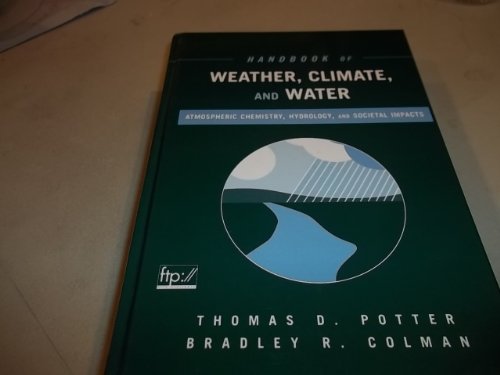
Handbook of Weather, Climate, and Water: Atmospheric Chemistry, Hydrology, and Societal Impacts - Hardcover
Inhaltsangabe
The Handbook of Weather, Climate, and Water: Atmospheric Chemistry, Hydrology, and Societal Impacts is the first of two stand-alone volumes that will be landmarks in the meteorological literature for many years to come. Each volume encompasses both fundamental topics and critical issues that have recently surfaced in studies of the hydrosphere and atmosphere. Renowned experts have contributed to every part of this handbook. Each overview chapter is followed by topic-specific chapters written by specialists who present comprehensive discussions at a greater level of detail and complexity.
The Handbook of Weather, Climate, and Water: Atmospheric Chemistry, Hydrology, and Societal Impacts covers topics that are essential for grasping the scientific bases of major issues such as global climate warming, the ozone hole, acid rain, floods, droughts, and other natural disasters. Cross-references between chapters allow readers to easily pursue a specific interest beyond a particular subtopic or individual chapter.
Other topics include:
- Aerosols and smog
- Cloud chemistry
- Greenhouse gases
- Remote sensing techniques in hydrology
- Hydrologic forecasting and simulation
- Tropical deforestation effects on the climate system
- Societal impacts of the El Niño phenomenon
The Handbook of Weather, Climate, and Water: Atmospheric Chemistry, Hydrology, and Societal Impacts will be an essential addition to the libraries of professionals and academics in the environmental sciences, and a valuable source book for university and technical libraries throughout the world.
Die Inhaltsangabe kann sich auf eine andere Ausgabe dieses Titels beziehen.
Über die Autorin bzw. den Autor
THOMAS D. POTTER, PhD, is Professor of Meteorology at the University of Utah, Salt Lake City, and Director of NOAA Cooperative Institute for Regional Prediction.
BRADLEY R. COLMAN, ScD, is Science Operations Officer for the National Weather Association in Seattle, Washington, and holds affiliate faculty positions with the University of Washington and the University of Idaho.
Both are Fellows of the American Meteorology Society.
Von der hinteren Coverseite
A comprehensive survey of fundamental principles and the latest research on atmospheric, climatic, and hydrologic sciences
The Handbook of Weather, Climate, and Water: Atmospheric Chemistry, Hydrology, and Societal Impacts is the first of two stand-alone volumes that will be landmarks in the meteorological literature for many years to come. Each volume encompasses both fundamental topics and critical issues that have recently surfaced in studies of the hydrosphere and atmosphere. Renowned experts have contributed to every part of this handbook. Each overview chapter is followed by topic-specific chapters written by specialists who present comprehensive discussions at a greater level of detail and complexity.
The Handbook of Weather, Climate, and Water: Atmospheric Chemistry, Hydrology, and Societal Impacts covers topics that are essential for grasping the scientific bases of major issues such as global climate warming, the ozone hole, acid rain, floods, droughts, and other natural disasters. Cross-references between chapters allow readers to easily pursue a specific interest beyond a particular subtopic or individual chapter.
Other topics include:
- Aerosols and smog
- Cloud chemistry
- Greenhouse gases
- Remote sensing techniques in hydrology
- Hydrologic forecasting and simulation
- Tropical deforestation effects on the climate system
- Societal impacts of the El Niño phenomenon
The Handbook of Weather, Climate, and Water: Atmospheric Chemistry, Hydrology, and Societal Impacts will be an essential addition to the libraries of professionals and academics in the environmental sciences, and a valuable source book for university and technical libraries throughout the world.
Aus dem Klappentext
A comprehensive survey of fundamental principles and the latest research on atmospheric, climatic, and hydrologic sciences
The Handbook of Weather, Climate, and Water: Atmospheric Chemistry, Hydrology, and Societal Impacts is the first of two stand-alone volumes that will be landmarks in the meteorological literature for many years to come. Each volume encompasses both fundamental topics and critical issues that have recently surfaced in studies of the hydrosphere and atmosphere. Renowned experts have contributed to every part of this handbook. Each overview chapter is followed by topic-specific chapters written by specialists who present comprehensive discussions at a greater level of detail and complexity.
The Handbook of Weather, Climate, and Water: Atmospheric Chemistry, Hydrology, and Societal Impacts covers topics that are essential for grasping the scientific bases of major issues such as global climate warming, the ozone hole, acid rain, floods, droughts, and other natural disasters. Cross-references between chapters allow readers to easily pursue a specific interest beyond a particular subtopic or individual chapter.
Other topics include:
- Aerosols and smog
- Cloud chemistry
- Greenhouse gases
- Remote sensing techniques in hydrology
- Hydrologic forecasting and simulation
- Tropical deforestation effects on the climate system
- Societal impacts of the El Niño phenomenon
The Handbook of Weather, Climate, and Water: Atmospheric Chemistry, Hydrology, and Societal Impacts will be an essential addition to the libraries of professionals and academics in the environmental sciences, and a valuable source book for university and technical libraries throughout the world.
Auszug. © Genehmigter Nachdruck. Alle Rechte vorbehalten.
Handbook of Weather, Climate, and Water
Atmospheric Chemistry, Hydrology, and Societal ImpactsJohn Wiley & Sons
Copyright © 2003 John Wiley & Sons, Inc.All right reserved.
ISBN: 978-0-471-21489-2
Chapter One
OVERVIEW: ATMOSPHERIC CHEMISTRYJACK FISHMAN
The study of atmospheric chemistry focuses on how chemical constituents cycle through the atmosphere. Excluding water vapor (which can account for as much as 2 to 3% of the volume of the atmosphere under extremely moist conditions), more than 99.9% of the remaining dry atmosphere is comprised of nitrogen (78.1%), oxygen, (20.9%), and argon (0.93%). Unlike the study of conventional meteorology, where the atmosphere is generally treated as a bulk medium, atmospheric chemistry focuses on each individual constituent (commonly referred to as trace gases) and the chemical reactions that take place among them.
When discussing atmospheric chemistry, it is perhaps most convenient to separate the discussion into two distinct chemical regimes: the stratosphere and the troposphere. In the stratosphere, the most important trace gas is ozone, [O.sub.3], whereas in the troposphere, it can be argued that one of the most important trace gases is carbon dioxide, C[O.sub.2]. Both of these trace gases are intimately tied to the issue of global change as measurements over the past several decades confirm that stratospheric ozone is decreasing and that carbon dioxide is increasing. Ozone in the stratosphere is vital for shielding the biosphere from harmful ultraviolet radiation; a decrease in the amount of ozone in the stratosphere will result in damage to biota at the ground. On the other hand, carbon dioxide is an important trace gas (second in importance to water vapor) that keeps infrared radiation within the lower atmosphere, and it is generally agreed that an increase in C[O.sub.2] may have important climatic implications and lead to global warming.
The source of energy that drives the chemical processes in the atmosphere is the same source that drives Earth's weather engine, namely the sun. Furthermore, the high-energy ultraviolet radiation emitted by the sun initiates a series of reactions in the upper atmosphere as these high-energy photons break the stable molecules, [N.sub.2] and [O.sub.2], apart into their atomic components. This high energy not only is capable of breaking these very strong molecular bonds apart, but it is also capable of stripping away electrons creating a source of ions in the atmosphere above ~50 km. This region of the atmosphere is called the ionosphere, and its chemistry will not be discussed in this section. For more information about the chemistry of the ionosphere, mesosphere, and thermosphere, see Brasseur and Solomon's (1986) Aeronomy of the Middle Atmosphere, Chapter 6 and various sections in Chapter 5. These ions and atoms can feed some of the chemical cycles that take place in the stratosphere, such as supplying reactive nitrogen species (e.g., see Fig. 1).
From an atmospheric chemistry point of view, important cycles take place in both the stratosphere and the troposphere; this section will concentrate on the chemistry taking place in these regions of the atmosphere. To a certain extent, the chemistry of the stratosphere is somewhat less complex than the chemistry in the troposphere because only large-scale meteorological processes are present at these high altitudes; smaller scale processes such as precipitation can be generally neglected. Also important is the fact that the sources of trace species in the stratosphere are not determined from small-scale sources and can thus can be quantified using a simplified methodology.
In the stratosphere, observing and gaining an understanding of how the distribution of ozone evolved was the primary research emphasis from the 1930s through the 1960s. Understanding how its abundance and distribution has been perturbed by anthropogenic inputs has been the focus of intense research efforts since the 1970s.
1 STRATOSPHERIC CHEMISTRY: UNDERSTANDING THE OZONE LAYER
Ozone was discovered in 1839 by the German scientist Christian Frederich Schonbein at the University of Basil in Switzerland. Because of its pungent odor, its name was taken from the Greek word ozein, meaning "odor." Schnbein's research, subsequent to his discovery, focused on verifying his hypothesis that ozone was a natural trace constituent of the atmosphere. As a result of interest in the late nineteenth century, there are a surprisingly large number of ambient measurements during that time.
The primary study of ozone focused on the chemistry of the stratosphere when it was hypothesized and then verified that most of Earth's ozone was located at an altitude of 20 to 50 km (also called the ozonosphere) high above Earth's surface. The British physicist Sir Sidney Chapman put forth the premise that sufficiently intense ultraviolet radiation [at wavelengths ([lambda]); [lambda] < 242 nm) breaks apart molecular oxygen into two oxygen atoms. This reaction is commonly written:
[O.sub.2] + hv [right arrow] O + O [lambda] < 242 nm (1)
where hv is the standard notation for a photon.
As the air becomes denser at lower altitudes in the stratosphere, most of this high-energy radiation is absorbed, and the oxygen molecules can no longer be broken apart. At these altitudes, the oxygen atoms will efficiently combine with the oxygen molecules and the formation of ozone occurs through the reaction:
O + [O.sub.2] + M [right arrow] [O.sub.3] + M (2)
where M is a nonreactive third body that absorbs any excess collisional energy that may be present. Thus, there is a preferred region in the atmosphere where sufficient ultraviolet energy is concurrently present with the proper amount of molecular density to create ozone, and the altitude region at which these processes are most prevalent is commonly referred to as the ozone layer.
Ozone can also be photolyzed in the atmosphere by weaker ultraviolet radiation ([lambda] < 320 nm) to give back molecular and atomic oxygen:
[O.sub.3] + hv [right arrow] [O.sub.2] + O([sup.1]D [lambda] < 320 nm (3)
and also by visible radiation ([lambda] < 600 nm) to yield atomic oxygen in its ground state, O3P+, rather than the more energetic O([sup.1]D) state; furthermore ozone can react with atomic oxygen (in either its ground or excited state) to give two molecules of oxygen:
[O.sub.3] + O [right arrow] 2[O.sub.2] (4)
To complete the possible reactions in a "pure oxygen" atmosphere, two atoms of oxygen can combine in a three-body reaction to give molecular oxygen back to the system:
O + O + M [right arrow] [O.sub.2] + M (5)
The set of five reactions involving only the various states of oxygen in the stratosphere are commonly referred to as "Chapman chemistry" and did a remarkable job of describing qualitatively why the ozone layer existed where it did. The speeds at which the five reactions took place in the atmosphere were measured independently in the laboratory and are called reaction rate constants (denoted [k.sub.4] for reaction 4, [k.sub.5] for reaction 5, etc.). Reaction rate constants are often temperature and pressure dependent. The rates of photolysis are noted by the letter j (e.g., [j.sub.3] for photolytic reaction 3, etc.) and are primarily dependent on the cross section of the individual molecule as a function of wavelength (those that have weaker bonds and can be broken apart more easily have larger cross sections) and the number of incident photons at those...
„Über diesen Titel“ kann sich auf eine andere Ausgabe dieses Titels beziehen.
Suchergebnisse für Handbook of Weather, Climate, and Water: Atmospheric...

Beispielbild für diese ISBN
Handbook of Weather, Climate, and Water: Atmospheric Chemistry, Hydrology, and Societal Impacts
Anbieter: ThriftBooks-Atlanta, AUSTELL, GA, USA
Verkäuferbewertung 5 von 5 Sternen

Hardcover. Zustand: As New. No Jacket. Pages are clean and are not marred by notes or folds of any kind. ~ ThriftBooks: Read More, Spend Less. Artikel-Nr. G0471214892I2N00
Gebraucht kaufen
EUR 44,05
Versand gratis
Versand innerhalb von USA
Versand innerhalb von USA
Anzahl: 1 verfügbar
Foto des Verkäufers
Handbook of Weather, Climate and Water: Atmospheric Chemistry, Hydrology and Societal Impacts
Anbieter: Vulkaneifel Bücher, Birgel, Deutschland
Verkäuferbewertung 5 von 5 Sternen
hardcover. Zustand: Sehr gut. Buch ist leicht verlagert (schief), kleine Lagerspuren am Buch, Inhalt einwandfrei und ungelesen Sprache: Englisch Gewicht in Gramm: 1550. Artikel-Nr. 219114
Gebraucht kaufen
EUR 35,95
EUR 124,40 Versand
Versand von Deutschland nach USA
Versand von Deutschland nach USA
Anzahl: 1 verfügbar
Foto des Verkäufers
Handbook of Weather, Climate and Water: Atmospheric Chemistry, Hydrology and Societal Impacts
Anbieter: Vulkaneifel Bücher, Birgel, Deutschland
Verkäuferbewertung 5 von 5 Sternen
Gebundene Ausgabe. Zustand: Wie neu. 966 Seiten minimale Lagerspuren am Buch, Inhalt einwandfrei und ungelesen Sprache: Englisch Gewicht in Gramm: 1565. Artikel-Nr. 217793
Gebraucht kaufen
EUR 45,95
EUR 124,40 Versand
Versand von Deutschland nach USA
Versand von Deutschland nach USA
Anzahl: 1 verfügbar
Beispielbild für diese ISBN
Handbook of Weather
Anbieter: Majestic Books, Hounslow, Vereinigtes Königreich
Verkäuferbewertung 4 von 5 Sternen

Zustand: New. pp. xxix + 966 Illus., Map (Some Col.). Artikel-Nr. 7480840
Neu kaufen
EUR 195,19
EUR 7,58 Versand
Versand von Vereinigtes Königreich nach USA
Versand von Vereinigtes Königreich nach USA
Anzahl: 1 verfügbar
Beispielbild für diese ISBN
Handbook of Weather, Climate, and Water
Anbieter: PBShop.store UK, Fairford, GLOS, Vereinigtes Königreich
Verkäuferbewertung 5 von 5 Sternen
HRD. Zustand: New. New Book. Shipped from UK. Established seller since 2000. Artikel-Nr. FW-9780471214892
Neu kaufen
EUR 238,23
EUR 9,90 Versand
Versand von Vereinigtes Königreich nach USA
Versand von Vereinigtes Königreich nach USA
Anzahl: 1 verfügbar
Beispielbild für diese ISBN
Handbook of Weather, Climate and Water: Atmospheric Chemistry, Hydrology and Societal Impacts
Anbieter: Ria Christie Collections, Uxbridge, Vereinigtes Königreich
Verkäuferbewertung 5 von 5 Sternen
Zustand: New. In English. Artikel-Nr. ria9780471214892_new
Neu kaufen
EUR 287,28
EUR 13,17 Versand
Versand von Vereinigtes Königreich nach USA
Versand von Vereinigtes Königreich nach USA
Anzahl: 1 verfügbar
Beispielbild für diese ISBN
Handbook of Weather, Climate, and Water: Atmospheric Chemistry, Hydrology, and Societal Impacts
Anbieter: Revaluation Books, Exeter, Vereinigtes Königreich
Verkäuferbewertung 5 von 5 Sternen
Hardcover. Zustand: Brand New. 1000 pages. 9.50x6.25x2.00 inches. In Stock. Artikel-Nr. __0471214892
Neu kaufen
EUR 347,97
EUR 17,49 Versand
Versand von Vereinigtes Königreich nach USA
Versand von Vereinigtes Königreich nach USA
Anzahl: 1 verfügbar
Beispielbild für diese ISBN
Handbook of Weather, Climate, and Water: Atmospheric Chemistry, Hydrology, and Societal Impacts
Anbieter: Kennys Bookstore, Olney, MD, USA
Verkäuferbewertung 5 von 5 Sternen
Zustand: New. A handbook of weather, climate, and water. Editor(s): Potter, Thomas D.; Colman, Bradley R. Num Pages: 1000 pages, Illustrations (some col.), maps (some col.). BIC Classification: PN; RBKF; RBP. Category: (G) General (US: Trade); (P) Professional & Vocational; (UP) Postgraduate, Research & Scholarly; (UU) Undergraduate. Dimension: 239 x 162 x 52. Weight in Grams: 1526. . 2003. 1st Edition. hardcover. . . . . Books ship from the US and Ireland. Artikel-Nr. V9780471214892
Neu kaufen
EUR 402,07
EUR 9,05 Versand
Versand innerhalb von USA
Versand innerhalb von USA
Anzahl: 1 verfügbar