
Verwandte Artikel zu Falling Upward: A Spirituality for the Two Halves of...
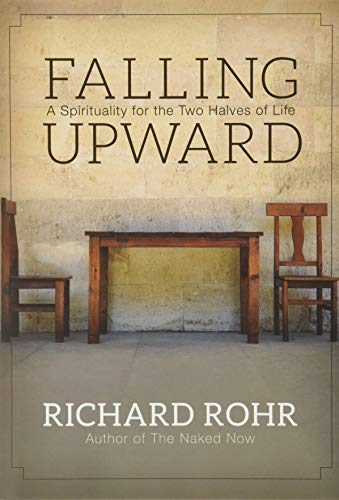
Inhaltsangabe
A fresh way of thinking about spirituality that grows throughout life
In Falling Upward, Fr. Richard Rohr seeks to help readers understand the tasks of the two halves of life and to show them that those who have fallen, failed, or "gone down" are the only ones who understand "up." Most of us tend to think of the second half of life as largely about getting old, dealing with health issues, and letting go of life, but the whole thesis of this book is exactly the opposite. What looks like falling down can largely be experienced as "falling upward." In fact, it is not a loss but somehow actually a gain, as we have all seen with elders who have come to their fullness.
- Explains why the second half of life can and should be full of spiritual richness
- Offers a new view of how spiritual growth happens?loss is gain
- Richard. Rohr is a regular contributing writer for Sojourners and Tikkun magazines
This important book explores the counterintuitive message that we grow spiritually much more by doing wrong than by doing right.
Die Inhaltsangabe kann sich auf eine andere Ausgabe dieses Titels beziehen.
Über die Autorin bzw. den Autor
Fr. Richard Rohr is a Franciscan priest of the New Mexico Province. He founded the Center for Action and Contemplation in Albuquerque, New Mexico, in 1986, where he presently serves as Founding Director. Fr. Rohr is the author of more than twenty books, an internationally known speaker, and a regular contributing writer for Sojourners and Tikkun magazines, and the CAC's quarterly journal, Radical Grace.
Von der hinteren Coverseite
In the first half of life, we are naturally and rightly preoccupied with establishing our identity'climbing, achieving, and performing. But those concerns will not serve us as we grow older and begin to embark on a further journey, one that involves challenges, mistakes, loss of control, broader horizons, and necessary suffering that actually shocks us out of our prior comfort zone. Eventually, we need to see ourselves in a different and more life-giving way. This message of "falling down"'that is in fact moving upward'is the most resisted and counterintuitive of messages in the world's religions, including and most especially Christianity.
In Falling Upward, Father Richard Rohr'the founder of the Center for Action and Contemplation'offers a new paradigm for understanding one of the most profound of life's mysteries: how our failings can be the foundation for our ongoing spiritual growth. Drawing on the wisdom from time-honored myths, heroic poems, great thinkers, and sacred religious texts, the author explores the two halves of life to show that those who have fallen, failed, or "gone down" are the only ones who understand "up." We grow spiritually more by doing it wrong than by doing it right.
With rare insight, Rohr takes us on a journey to give us an understanding of how the heartbreaks, disappointments, and first loves of life are actually stepping stones to the spiritual joys that the second half of life has in store for us.
Aus dem Klappentext
In the first half of life, we are naturally and rightly preoccupied with establishing our identity―climbing, achieving, and performing. But those concerns will not serve us as we grow older and begin to embark on a further journey, one that involves challenges, mistakes, loss of control, broader horizons, and necessary suffering that actually shocks us out of our prior comfort zone. Eventually, we need to see ourselves in a different and more life-giving way. This message of "falling down"―that is in fact moving upward―is the most resisted and counterintuitive of messages in the world's religions, including and most especially Christianity.
In Falling Upward, Father Richard Rohr―the founder of the Center for Action and Contemplation―offers a new paradigm for understanding one of the most profound of life's mysteries: how our failings can be the foundation for our ongoing spiritual growth. Drawing on the wisdom from time-honored myths, heroic poems, great thinkers, and sacred religious texts, the author explores the two halves of life to show that those who have fallen, failed, or "gone down" are the only ones who understand "up." We grow spiritually more by doing it wrong than by doing it right.
With rare insight, Rohr takes us on a journey to give us an understanding of how the heartbreaks, disappointments, and first loves of life are actually stepping stones to the spiritual joys that the second half of life has in store for us.
Auszug. © Genehmigter Nachdruck. Alle Rechte vorbehalten.
Falling Upward
A Spirituality for the Two Halves of LifeBy Richard RohrJohn Wiley & Sons
Copyright © 2011 John Wiley & Sons, LtdAll right reserved.
ISBN: 978-0-470-90775-7
Chapter One
THE TWO HALVES OF LIFE
One cannot live the afternoon of life according to the program of life's morning; for what was great in the morning will be of little importance in the evening, and what in the morning was true will at evening have become a lie. —CARL JUNG, THE STRUCTURE AND DYNAMICS OF THE PSYCHE
As I began to say in the Introduction, the task of the first half of life is to create a proper container for one's life and answer the first essential questions: "What makes me significant?" "How can I support myself?" and "Who will go with me?" The task of the second half of life is, quite simply, to find the actual contents that this container was meant to hold and deliver. As Mary Oliver puts it, "What is it you plan to do with your one wild and precious life?" In other words, the container is not an end in itself, but exists for the sake of your deeper and fullest life, which you largely do not know about yourself! Far too many people just keep doing repair work on the container itself and never "throw their nets into the deep" (John 21:6) to bring in the huge catch that awaits them.
Problematically, the first task invests so much of our blood, sweat, eggs and sperm, tears and years that we often cannot imagine there is a second task, or that anything more could be expected of us. "The old wineskins are good enough" (Luke 5:39), we say, even though according to Jesus they often cannot hold the new wine. According to him, if we do not get some new wineskins, "the wine and the wineskin will both be lost." The second half of life can hold some new wine because by then there should be some strong wineskins, some tested ways of holding our lives together. But that normally means that the container itself has to stretch, die in its present form, or even replace itself with something better. This is the big rub, as they say, but also the very source of our midlife excitement and discovery.
Various traditions have used many metaphors to make this differentiation clear: beginners and proficients, novices and initiated, milk and meat, letter and spirit, juniors and seniors, baptized and confirmed, apprentice and master, morning and evening, "Peter when you were young ... Peter when you are old" (John 21:18). Only when you have begun to live in the second half can you see the difference between the two. Yet the two halves are cumulative and sequential, and both are very necessary. You cannot do a nonstop flight to the second half of life by reading lots of books about it, including this one. Grace must and will edge you forward. "God has no grandchildren. God only has children," as some have said. Each generation has to make its own discoveries of Spirit for itself. If not, we just react to the previous generation, and often overreact. Or we conform, and often overconform. Neither is a positive or creative way to move forward.
No Pope, Bible quote, psychological technique, religious formula, book, or guru can do your journey for you. If you try to skip the first journey, you will never see its real necessity and also its limitations; you will never know why this first container must fail you, the wonderful fullness of the second half of the journey, and the relationship between the two. Such is the unreality of many people who "never grow up" or who remain narcissistic into their old age. I am afraid this is not a small number of people in our world today.
"Juniors" on the first part of the journey invariably think that true elders are naive, simplistic, "out of it," or just superfluous. They cannot understand what they have not yet experienced. They are totally involved in their first task, and cannot see beyond it. Conversely, if a person has transcended and included the previous stages, he or she will always have a patient understanding of the juniors, and can be patient and helpful to them somewhat naturally (although not without trial and effort). That is precisely what makes such people elders! Higher stages always empathetically include the lower, or they are not higher stages!
Almost all of culture, and even most of religious history, has been invested in the creation and maintenance of first-half-of-life issues: the big three concerns of identity, security, and sexuality and gender. They don't just preoccupy us; they totally take over. That is where history has been up to now, I am afraid. In fact, most generations have seen boundary marking and protecting those boundaries as their primary and sometimes only task in life. Most of history has been the forging of structures of security and appropriate loyalty symbols, to announce and defend one's personal identity, one's group, and one's gender issues and identity. Now we seem to live in a time when more and more people are asking, "Is that all there is?"
In our formative years, we are so self-preoccupied that we are both overly defensive and overly offensive at the same time, with little time left for simply living, pure friendship, useless beauty, or moments of communion with nature or anything. Yet that kind of ego structuring is exactly what a young person partly needs to get through the first twenty years or so, and what tribes need to survive. Maybe it is what humanity needed to get started. "Good fences make good neighbors," Robert Frost said, but he also presumed that you don't just build fences. You eventually need to cross beyond them too, to actually meet the neighbor.
So we need boundaries, identity, safety, and some degree of order and consistency to get started personally and culturally. We also need to feel "special"; we need our "narcissistic fix." By that I mean, we all need some successes, response, and positive feedback early in life, or we will spend the rest of our lives demanding it, or bemoaning its lack, from others. There is a good and needed "narcissism," if you want to call it that. You have to first have an ego structure to then let go of it and move beyond it. Responding to John the Baptist's hard-line approach, Jesus maintains both sides of this equation when he says, "No man born of woman is greater than John the Baptizer, yet the least who enters the kingdom of heaven is greater than he is" (Matthew 11:11). Is that double-talk? No, it is second-half-of-life talk.
Basically if you get mirrored well early in life, you do not have to spend the rest of your life looking in Narcissus's mirror or begging for the attention of others. You have already been "attended to," and now feel basically good—and always will. If you were properly mirrored when you were young, you are now free to mirror others and see yourself—honestly and helpfully. I can see why a number of saints spoke of prayer itself as simply receiving the ever-benevolent gaze of God, returning it in kind, mutually gazing, and finally recognizing that it is one single gaze received and bounced back. The Hindus called this exciting mutual beholding darshan. We will talk more about this mirroring toward the end of the book.
Once you have your narcissistic fix, you have no real need to protect your identity, defend it, prove it, or assert it. It just is, and is more than enough. This is what we actually mean by "salvation," especially when we get our narcissistic fix all the way from...
„Über diesen Titel“ kann sich auf eine andere Ausgabe dieses Titels beziehen.
Suchergebnisse für Falling Upward: A Spirituality for the Two Halves of...

Beispielbild für diese ISBN
Falling Upward: A Spirituality for the Two Halves of Life
Anbieter: World of Books (was SecondSale), Montgomery, IL, USA
Verkäuferbewertung 5 von 5 Sternen

Hardback. Zustand: Fair. A fresh way of thinking about spirituality that grows throughout life In Falling Upward , Fr. Richard Rohr seeks to help readers understand the tasks of the two halves of life and to show them that those who have fallen, failed, or "gone down" are the only ones who understand "up. Artikel-Nr. 00109185944
Gebraucht kaufen
EUR 4,42
Versand gratis
Versand innerhalb von USA
Versand innerhalb von USA
Anzahl: 6 verfügbar
Beispielbild für diese ISBN
Falling Upward: A Spirituality for the Two Halves of Life
Anbieter: World of Books (was SecondSale), Montgomery, IL, USA
Verkäuferbewertung 5 von 5 Sternen
Hardback. Zustand: Very Good. A fresh way of thinking about spirituality that grows throughout life In Falling Upward , Fr. Richard Rohr seeks to help readers understand the tasks of the two halves of life and to show them that those who have fallen, failed, or "gone down" are the only ones who understand "up. Artikel-Nr. 00109989197
Gebraucht kaufen
EUR 4,42
Versand gratis
Versand innerhalb von USA
Versand innerhalb von USA
Anzahl: 3 verfügbar
Beispielbild für diese ISBN
Falling Upward: A Spirituality for the Two Halves of Life
Anbieter: World of Books (was SecondSale), Montgomery, IL, USA
Verkäuferbewertung 5 von 5 Sternen
Hardback. Zustand: Good. A fresh way of thinking about spirituality that grows throughout life In Falling Upward , Fr. Richard Rohr seeks to help readers understand the tasks of the two halves of life and to show them that those who have fallen, failed, or "gone down" are the only ones who understand "up. Artikel-Nr. 00107538074
Gebraucht kaufen
EUR 4,42
Versand gratis
Versand innerhalb von USA
Versand innerhalb von USA
Anzahl: Mehr als 20 verfügbar
Beispielbild für diese ISBN
Falling Upward: A Spirituality for the Two Halves of Life
Verlag:
Jossey-Bass (edition 1), 2011
ISBN 10: 0470907754
ISBN 13: 9780470907757
Gebraucht
Hardcover
Anbieter: BooksRun, Philadelphia, PA, USA
Verkäuferbewertung 5 von 5 Sternen
Hardcover. Zustand: Very Good. 1. With dust jacket. It's a well-cared-for item that has seen limited use. The item may show minor signs of wear. All the text is legible, with all pages included. It may have slight markings and/or highlighting. Artikel-Nr. 0470907754-8-1-29
Gebraucht kaufen
EUR 4,61
Versand gratis
Versand innerhalb von USA
Versand innerhalb von USA
Anzahl: 1 verfügbar
Beispielbild für diese ISBN
Falling Upward: A Spirituality for the Two Halves of Life
Verlag:
Jossey-Bass (edition 1), 2011
ISBN 10: 0470907754
ISBN 13: 9780470907757
Gebraucht
Hardcover
Anbieter: BooksRun, Philadelphia, PA, USA
Verkäuferbewertung 5 von 5 Sternen
Hardcover. Zustand: Fair. 1. With dust jacket. The item might be beaten up but readable. May contain markings or highlighting, as well as stains, bent corners, or any other major defect, but the text is not obscured in any way. Artikel-Nr. 0470907754-7-1-29
Gebraucht kaufen
EUR 4,96
Versand gratis
Versand innerhalb von USA
Versand innerhalb von USA
Anzahl: 1 verfügbar
Beispielbild für diese ISBN
Falling Upward: A Spirituality for the Two Halves of Life
Anbieter: ThriftBooks-Phoenix, Phoenix, AZ, USA
Verkäuferbewertung 5 von 5 Sternen
Hardcover. Zustand: Good. No Jacket. Missing dust jacket; Pages can have notes/highlighting. Spine may show signs of wear. ~ ThriftBooks: Read More, Spend Less. Artikel-Nr. G0470907754I3N01
Gebraucht kaufen
EUR 5,87
Versand gratis
Versand innerhalb von USA
Versand innerhalb von USA
Anzahl: 9 verfügbar
Beispielbild für diese ISBN
Falling Upward: A Spirituality for the Two Halves of Life
Anbieter: ThriftBooks-Atlanta, AUSTELL, GA, USA
Verkäuferbewertung 5 von 5 Sternen
Hardcover. Zustand: Very Good. No Jacket. May have limited writing in cover pages. Pages are unmarked. ~ ThriftBooks: Read More, Spend Less. Artikel-Nr. G0470907754I4N00
Gebraucht kaufen
EUR 5,87
Versand gratis
Versand innerhalb von USA
Versand innerhalb von USA
Anzahl: Mehr als 20 verfügbar
Beispielbild für diese ISBN
Falling Upward: A Spirituality for the Two Halves of Life
Anbieter: ThriftBooks-Phoenix, Phoenix, AZ, USA
Verkäuferbewertung 5 von 5 Sternen
Hardcover. Zustand: Fair. No Jacket. Readable copy. Pages may have considerable notes/highlighting. ~ ThriftBooks: Read More, Spend Less. Artikel-Nr. G0470907754I5N00
Gebraucht kaufen
EUR 5,87
Versand gratis
Versand innerhalb von USA
Versand innerhalb von USA
Anzahl: 1 verfügbar
Beispielbild für diese ISBN
Falling Upward: A Spirituality for the Two Halves of Life
Anbieter: ThriftBooks-Reno, Reno, NV, USA
Verkäuferbewertung 5 von 5 Sternen
Hardcover. Zustand: Good. No Jacket. Pages can have notes/highlighting. Spine may show signs of wear. ~ ThriftBooks: Read More, Spend Less. Artikel-Nr. G0470907754I3N00
Gebraucht kaufen
EUR 5,87
Versand gratis
Versand innerhalb von USA
Versand innerhalb von USA
Anzahl: Mehr als 20 verfügbar
Beispielbild für diese ISBN
Falling Upward: A Spirituality for the Two Halves of Life
Anbieter: ThriftBooks-Reno, Reno, NV, USA
Verkäuferbewertung 5 von 5 Sternen
Hardcover. Zustand: Good. No Jacket. Former library book; Pages can have notes/highlighting. Spine may show signs of wear. ~ ThriftBooks: Read More, Spend Less. Artikel-Nr. G0470907754I3N10
Gebraucht kaufen
EUR 5,87
Versand gratis
Versand innerhalb von USA
Versand innerhalb von USA
Anzahl: 1 verfügbar