
Verwandte Artikel zu Strategic Employee Surveys: Evidence-based Guidelines...
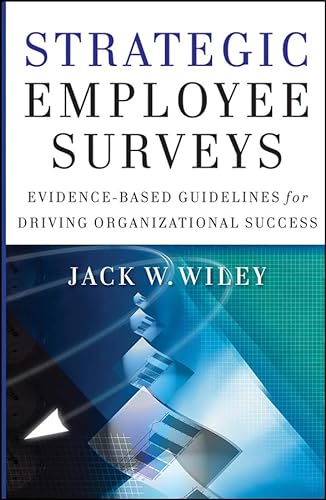
Strategic Employee Surveys: Evidence-based Guidelines for Driving Organizational Success - Hardcover
Inhaltsangabe
In part one of the book, readers receive specific examples of how to measure safety, ethics, union vulnerability, work life balance, diversity, the drivers of employee retention and employee engagement, as well as examples of survey content needed to best predict business success. With each type of survey content, also provided will be the most recent normative results, helpful for placing results from any organization into the proper interpretative context. A reader of this book could literally design their own survey, and have confidence the survey would effectively measure their strategic purpose. In part two, readers are provided with specific guidance on the other key component of ensuring employee survey program success: survey feedback and action planning processes. Wiley outlines a time-tested seven-step model of survey feedback and action planning, explaining each step of the model and through real-life client examples, identifying the most common pitfalls of the overall process. Readers will thus know how to navigate around these potential problems and will receive advice on how to set goals for improvement from one survey measurement to the next. This will include a review of specific goal-setting techniques. Finally, the characteristics of leadership teams whose organizations achieve sustained improvement over multiple iterations of survey measurement are identified and discussed. Table of Contents: Chapter 1: Introduction Chapter 2: Employee Surveys as Warning Indicators Chapter 3: Employee Surveys as Program Evaluation Measures Chapter 4: Employee Surveys to Measure Employer of Choice Chapter 5: Employee Surveys as Leading Indicators Chapter 6: Merging "Employer of Choice" and "Leading Indicator" Survey Purposes Chapter 7: An Overview of Survey Feedback and Action Planning Chapter 8: Setting Goals for Improvements in Survey Results Chapter 9: Sustaining Change Chapter 10: Final Thoughts
Die Inhaltsangabe kann sich auf eine andere Ausgabe dieses Titels beziehen.
Über die Autorinnen und Autoren
Jack W. Wiley, Ph.D., a pioneer in linkage research, is founder and executive director of the Kenexa Research Institute, a division of Kenexa, a global provider of business solutions for human resources. Prior to joining Kenexa, Dr. Wiley founded and served as the CEO of Gantz Wiley Research, a survey consulting firm that achieved industry leading status for both thought leadership and client retention.
Jack W. Wiley, Ph.D., a pioneer in linkage research, is founder and executive director of the Kenexa Research Institute, a division of Kenexa, a global provider of business solutions for human resources. Prior to joining Kenexa, Dr. Wiley founded and served as the CEO of Gantz Wiley Research, a survey consulting firm that achieved industry leading status for both thought leadership and client retention.
Von der hinteren Coverseite
Most large organizations today conduct employee surveys to measure employees' opinions regarding the organization and its policies and practices. A properly formulated employee survey program can represent an opportunity to affect and strengthen the organization, making it more competitive in the marketplace in which it operates. But although there are a handful of books available today to guide the development of survey programs, there are none that approach the topic from a strategic point of view. Strategic Employee Surveys was developed to explain the Strategic Survey Model and how it can be used to guide the development of employee survey programs, ensuring they serve their strategic purpose. In addition, this book guides organizations in the most effective survey feedback and action planning processes.
Dr. Jack Wiley explains that survey program purpose, survey content, and survey follow-up processes should all derive from business strategy. In the first part of the book he offers specific examples of how to measure safety, ethics, union vulnerability, work and life balance, and diversity. He also reveals the drivers of employee retention and employee engagement and how to measure them along with examples of survey content that best predicts customer satisfaction and loyalty and other business performance metrics. With each type of survey content, Wiley also presents the most recent normative results, useful for placing results from any organization into the proper interpretative context.
The second part of the book offers specific guidance on the other key component of ensuring employee survey program success: the survey feedback and action planning process. Wiley outlines a time-tested seven-step model of survey feedback and action planning, explaining each step of the model and providing real-life client examples that identify the most common pitfalls of the overall process. Readers will learn how to navigate around these potential problems and will receive advice on how to set goals for improvement from one survey measurement to the next. The book concludes with a discussion of the characteristics of leadership teams whose organizations achieve sustained improvement over multiple iterations of survey measurement.
Aus dem Klappentext
Most large organizations today conduct employee surveys to measure employees' opinions regarding the organization and its policies and practices. A properly formulated employee survey program can represent an opportunity to affect and strengthen the organization, making it more competitive in the marketplace in which it operates. But although there are a handful of books available today to guide the development of survey programs, there are none that approach the topic from a strategic point of view. Strategic Employee Surveys was developed to explain the Strategic Survey Model and how it can be used to guide the development of employee survey programs, ensuring they serve their strategic purpose. In addition, this book guides organizations in the most effective survey feedback and action planning processes.
Dr. Jack Wiley explains that survey program purpose, survey content, and survey follow-up processes should all derive from business strategy. In the first part of the book he offers specific examples of how to measure safety, ethics, union vulnerability, work and life balance, and diversity. He also reveals the drivers of employee retention and employee engagement and how to measure them along with examples of survey content that best predicts customer satisfaction and loyalty and other business performance metrics. With each type of survey content, Wiley also presents the most recent normative results, useful for placing results from any organization into the proper interpretative context.
The second part of the book offers specific guidance on the other key component of ensuring employee survey program success: the survey feedback and action planning process. Wiley outlines a time-tested seven-step model of survey feedback and action planning, explaining each step of the model and providing real-life client examples that identify the most common pitfalls of the overall process. Readers will learn how to navigate around these potential problems and will receive advice on how to set goals for improvement from one survey measurement to the next. The book concludes with a discussion of the characteristics of leadership teams whose organizations achieve sustained improvement over multiple iterations of survey measurement.
„Über diesen Titel“ kann sich auf eine andere Ausgabe dieses Titels beziehen.
Suchergebnisse für Strategic Employee Surveys: Evidence-based Guidelines...

Beispielbild für diese ISBN
Strategic Employee Surveys: Evidence-based Guidelines for Driving Organizational Success
Anbieter: World of Books (was SecondSale), Montgomery, IL, USA
Verkäuferbewertung 5 von 5 Sternen

Hardback. Zustand: Very Good. Offering an well-balanced approach for employee surveys, this book provides reinforcement on the essential components from purpose and development of the instrument to results analysis to action planning. It features a healthy mix of the theoretical and the practical that works for the novice and the experienced survey program manager alike. Artikel-Nr. 00100994308
Gebraucht kaufen
EUR 7,58
Versand gratis
Versand innerhalb von USA
Versand innerhalb von USA
Anzahl: 1 verfügbar
Beispielbild für diese ISBN
Strategic Employee Surveys: Evidence-Based Guidelines for Driving Organizational Success
Anbieter: ThriftBooks-Dallas, Dallas, TX, USA
Verkäuferbewertung 5 von 5 Sternen
Hardcover. Zustand: Very Good. No Jacket. May have limited writing in cover pages. Pages are unmarked. ~ ThriftBooks: Read More, Spend Less. Artikel-Nr. G0470889705I4N00
Gebraucht kaufen
EUR 7,59
Versand gratis
Versand innerhalb von USA
Versand innerhalb von USA
Anzahl: 1 verfügbar
Beispielbild für diese ISBN
Strategic Employee Surveys : Evidence-Based Guidelines for Driving Organizational Success
Verlag:
Center for Creative Leadership, 2010
ISBN 10: 0470889705
ISBN 13: 9780470889701
Gebraucht
Hardcover
Anbieter: Better World Books, Mishawaka, IN, USA
Verkäuferbewertung 5 von 5 Sternen
Zustand: Very Good. Former library copy. Pages intact with possible writing/highlighting. Binding strong with minor wear. Dust jackets/supplements may not be included. Includes library markings. Stock photo provided. Product includes identifying sticker. Better World Books: Buy Books. Do Good. Artikel-Nr. 40916059-6
Gebraucht kaufen
EUR 8,35
Versand gratis
Versand innerhalb von USA
Versand innerhalb von USA
Anzahl: 1 verfügbar
Beispielbild für diese ISBN
Strategic Employee Surveys : Evidence-Based Guidelines for Driving Organizational Success
Verlag:
Center for Creative Leadership, 2010
ISBN 10: 0470889705
ISBN 13: 9780470889701
Gebraucht
Hardcover
Anbieter: Better World Books, Mishawaka, IN, USA
Verkäuferbewertung 5 von 5 Sternen
Zustand: Very Good. Pages intact with possible writing/highlighting. Binding strong with minor wear. Dust jackets/supplements may not be included. Stock photo provided. Product includes identifying sticker. Better World Books: Buy Books. Do Good. Artikel-Nr. 17897029-6
Gebraucht kaufen
EUR 8,35
Versand gratis
Versand innerhalb von USA
Versand innerhalb von USA
Anzahl: 1 verfügbar
Beispielbild für diese ISBN
Strategic Employee Surveys: Evidence-based Guidelines for Driving Organizational Success
Anbieter: WorldofBooks, Goring-By-Sea, WS, Vereinigtes Königreich
Verkäuferbewertung 5 von 5 Sternen
Hardback. Zustand: Very Good. The book has been read, but is in excellent condition. Pages are intact and not marred by notes or highlighting. The spine remains undamaged. Artikel-Nr. GOR003189997
Gebraucht kaufen
EUR 3,42
EUR 6,61 Versand
Versand von Vereinigtes Königreich nach USA
Versand von Vereinigtes Königreich nach USA
Anzahl: 1 verfügbar
Beispielbild für diese ISBN
Strategic Employee Surveys: Evidence-based Guidelines for Driving Organizational Success
Anbieter: AwesomeBooks, Wallingford, Vereinigtes Königreich
Verkäuferbewertung 5 von 5 Sternen
Hardcover. Zustand: Very Good. Strategic Employee Surveys: Evidence-based Guidelines for Driving Organizational Success This book is in very good condition and will be shipped within 24 hours of ordering. The cover may have some limited signs of wear but the pages are clean, intact and the spine remains undamaged. This book has clearly been well maintained and looked after thus far. Money back guarantee if you are not satisfied. See all our books here, order more than 1 book and get discounted shipping. Artikel-Nr. 7719-9780470889701
Gebraucht kaufen
EUR 5,36
EUR 4,86 Versand
Versand von Vereinigtes Königreich nach USA
Versand von Vereinigtes Königreich nach USA
Anzahl: 2 verfügbar
Foto des Verkäufers
Strategic Employee Surveys
Anbieter: MusicMagpie, Stockport, Vereinigtes Königreich
Verkäuferbewertung 5 von 5 Sternen
Zustand: Very Good. 1776694087. 4/20/2026 2:08:07 PM. Artikel-Nr. U9780470889701
Gebraucht kaufen
EUR 5,34
EUR 6,48 Versand
Versand von Vereinigtes Königreich nach USA
Versand von Vereinigtes Königreich nach USA
Anzahl: 1 verfügbar
Beispielbild für diese ISBN
Strategic Employee Surveys: Evidence-based Guidelines for Driving Organizational Success
Anbieter: medimops, Berlin, Deutschland
Verkäuferbewertung 5 von 5 Sternen
Zustand: good. Befriedigend/Good: Durchschnittlich erhaltenes Buch bzw. Schutzumschlag mit Gebrauchsspuren, aber vollständigen Seiten. / Describes the average WORN book or dust jacket that has all the pages present. Artikel-Nr. M00470889705-G
Gebraucht kaufen
EUR 6,01
EUR 10,00 Versand
Versand von Deutschland nach USA
Versand von Deutschland nach USA
Anzahl: 1 verfügbar
Beispielbild für diese ISBN
Strategic Employee Surveys: Evidence-based Guidelines for Driving Organizational Success
Anbieter: Bahamut Media, Reading, Vereinigtes Königreich
Verkäuferbewertung 4 von 5 Sternen

Hardcover. Zustand: Very Good. This book is in very good condition and will be shipped within 24 hours of ordering. The cover may have some limited signs of wear but the pages are clean, intact and the spine remains undamaged. This book has clearly been well maintained and looked after thus far. Money back guarantee if you are not satisfied. See all our books here, order more than 1 book and get discounted shipping. Artikel-Nr. 6545-9780470889701
Gebraucht kaufen
EUR 13,41
EUR 8,23 Versand
Versand von Vereinigtes Königreich nach USA
Versand von Vereinigtes Königreich nach USA
Anzahl: 2 verfügbar
Beispielbild für diese ISBN
Strategic Employee Surveys: Evidence-based Guidelines for Driving Organizational Success
Anbieter: Cotswolds Rare Books, OXFORDSHIRE, Vereinigtes Königreich
Verkäuferbewertung 5 von 5 Sternen
Hardcover. Zustand: As New. Zustand des Schutzumschlags: As New. 1st Edition. As brand new. Artikel-Nr. 3625D
Gebraucht kaufen
EUR 11,84
EUR 29,61 Versand
Versand von Vereinigtes Königreich nach USA
Versand von Vereinigtes Königreich nach USA
Anzahl: 1 verfügbar