
Verwandte Artikel zu The Architect's Brain: Neuroscience, Creativity,...
Inhaltsangabe
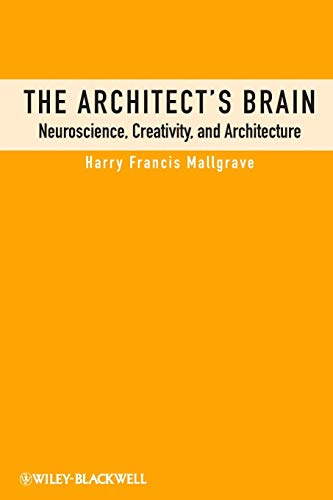
The Architect's Brain: Neuroscience, Creativity, and Architecture is the first book to consider the relationship between the neurosciences and architecture, offering a compelling and provocative study in the field of architectural theory.
- Explores various moments of architectural thought over the last 500 years as a cognitive manifestation of philosophical, psychological, and physiological theory
- Looks at architectural thought through the lens of the remarkable insights of contemporary neuroscience, particularly as they have advanced within the last decade
- Demonstrates the neurological justification for some very timeless architectural ideas, from the multisensory nature of the architectural experience to the essential relationship of ambiguity and metaphor to creative thinking
Die Inhaltsangabe kann sich auf eine andere Ausgabe dieses Titels beziehen.
Über die Autorin bzw. den Autor
Harry Francis Mallgrave is a professor of architecture at Illinois Institute of Technology, and has enjoyed a distinguished career as an award-winning scholar, translator, and architect. His most recent publications include Modern Architectural Theory: A Historical Survey, 1673-1968, and the two-volume Architectural Theory: An Anthology from Vitruvius to 2005 (Wiley-Blackwell 2008). His forthcoming Introduction to Architectual Theory will be published by Wiley-Blackwell in 2010.
Von der hinteren Coverseite
Did classical and Renaissance theory in fact have a biological basis? Does the architect possess a highly specialized brain? Is neuroscience today providing architecture with a new foundation for design thought?
These are a few of the compelling suggestions offered by this richly detailed study, which explores--from two perspectives--the issue of how architects and designers view the phenomenal world. In part one of The Architect's Brain, Mallgrave sketches various moments of architectural thought over the last 500 years as a cognitive manifestation of philosophical, psychological, and physiological theory. In part two, he repositions this question from the perspective of the remarkable insights of contemporary neuroscience, particularly as they have advanced within the last decade.
What emerges is a surprising neurological justification for some very timeless architectural ideas, from the multisensory nature of the architectural experience to the essential relationship of ambiguity and metaphor to creative thinking. The author cogently argues that architecture (aside from its intellectual affectations) is radically an emotional and perceptual act grounded in biological values that should be placed in the foreground. Not since Richard Neutra's Survival Through Design (1954) has such a provocative thesis been put forth in the field of architectural theory.
Aus dem Klappentext
Did classical and Renaissance theory in fact have a biological basis? Does the architect possess a highly specialized brain? Is neuroscience today providing architecture with a new foundation for design thought?
These are a few of the compelling suggestions offered by this richly detailed study, which explores--from two perspectives--the issue of how architects and designers view the phenomenal world. In part one of The Architect's Brain, Mallgrave sketches various moments of architectural thought over the last 500 years as a cognitive manifestation of philosophical, psychological, and physiological theory. In part two, he repositions this question from the perspective of the remarkable insights of contemporary neuroscience, particularly as they have advanced within the last decade.
What emerges is a surprising neurological justification for some very timeless architectural ideas, from the multisensory nature of the architectural experience to the essential relationship of ambiguity and metaphor to creative thinking. The author cogently argues that architecture (aside from its intellectual affectations) is radically an emotional and perceptual act grounded in biological values that should be placed in the foreground. Not since Richard Neutra's Survival Through Design (1954) has such a provocative thesis been put forth in the field of architectural theory.
„Über diesen Titel“ kann sich auf eine andere Ausgabe dieses Titels beziehen.
Suchergebnisse für The Architect's Brain: Neuroscience, Creativity,...

Beispielbild für diese ISBN
The Architect's Brain
Anbieter: PBShop.store UK, Fairford, GLOS, Vereinigtes Königreich
Verkäuferbewertung 5 von 5 Sternen

PAP. Zustand: New. New Book. Shipped from UK. Established seller since 2000. Artikel-Nr. FW-9780470658253
Neu kaufen
EUR 34,77
EUR 4,92 Versand
Versand von Vereinigtes Königreich nach USA
Versand von Vereinigtes Königreich nach USA
Anzahl: 15 verfügbar
Beispielbild für diese ISBN
The Architect's Brain: Neuroscience, Creativity, and Architecture
Anbieter: Phatpocket Limited, Waltham Abbey, HERTS, Vereinigtes Königreich
Verkäuferbewertung 5 von 5 Sternen
Zustand: Good. Your purchase helps support Sri Lankan Children's Charity 'The Rainbow Centre'. Ex-library, so some stamps and wear, but in good overall condition. Our donations to The Rainbow Centre have helped provide an education and a safe haven to hundreds of children who live in appalling conditions. Artikel-Nr. Z1-C-057-03527
Gebraucht kaufen
EUR 29,55
EUR 12,59 Versand
Versand von Vereinigtes Königreich nach USA
Versand von Vereinigtes Königreich nach USA
Anzahl: 1 verfügbar
Beispielbild für diese ISBN
The Architect's Brain
Anbieter: Majestic Books, Hounslow, Vereinigtes Königreich
Verkäuferbewertung 4 von 5 Sternen

Zustand: New. pp. 288. Artikel-Nr. 4358321
Neu kaufen
EUR 43,58
EUR 7,69 Versand
Versand von Vereinigtes Königreich nach USA
Versand von Vereinigtes Königreich nach USA
Anzahl: 3 verfügbar
Beispielbild für diese ISBN
The Architect's Brain: Neuroscience, Creativity, and Architecture
Anbieter: Ria Christie Collections, Uxbridge, Vereinigtes Königreich
Verkäuferbewertung 5 von 5 Sternen
Zustand: New. In English. Artikel-Nr. ria9780470658253_new
Neu kaufen
EUR 39,97
EUR 13,36 Versand
Versand von Vereinigtes Königreich nach USA
Versand von Vereinigtes Königreich nach USA
Anzahl: Mehr als 20 verfügbar
Beispielbild für diese ISBN
The Architect s Brain: Neuroscience, Creativity, and Architecture
Anbieter: Kennys Bookstore, Olney, MD, USA
Verkäuferbewertung 5 von 5 Sternen
Zustand: New. This richly detailed study explores the issue of how architects view the phenomenal world. Mallgrave sketches various moments of architectural thought as a cognitive manifestation of philosophical, psychological, and physiological theory. He later repositions this question from the perspective of contemporary neuroscience. Num Pages: 292 pages, Illustrations. BIC Classification: AMA. Category: (P) Professional & Vocational. Dimension: 229 x 155 x 14. Weight in Grams: 366. . 2011. 1st Edition. Paperback. . . . . Books ship from the US and Ireland. Artikel-Nr. V9780470658253
Neu kaufen
EUR 54,91
EUR 9,36 Versand
Versand innerhalb von USA
Versand innerhalb von USA
Anzahl: Mehr als 20 verfügbar
Beispielbild für diese ISBN
The Architect's Brain: Neuroscience, Creativity, and Architecture
Anbieter: Revaluation Books, Exeter, Vereinigtes Königreich
Verkäuferbewertung 5 von 5 Sternen
Paperback. Zustand: Brand New. 1st edition. 288 pages. 9.25x6.00x0.75 inches. In Stock. Artikel-Nr. x-0470658258
Neu kaufen
EUR 57,23
EUR 11,84 Versand
Versand von Vereinigtes Königreich nach USA
Versand von Vereinigtes Königreich nach USA
Anzahl: 2 verfügbar
Foto des Verkäufers
Architect's Brain
Anbieter: AHA-BUCH GmbH, Einbeck, Deutschland
Verkäuferbewertung 5 von 5 Sternen
Taschenbuch. Zustand: Neu. Neuware - The Architect's Brain: Neuroscience, Creativity, and Architecture is the first book to consider the relationship between the neurosciences and architecture, offering a compelling and provocative study in the field of architectural theory.\* Explores various moments of architectural thought over the last 500 years as a cognitive manifestation of philosophical, psychological, and physiological theory\* Looks at architectural thought through the lens of the remarkable insights of contemporary neuroscience, particularly as they have advanced within the last decade\* Demonstrates the neurological justification for some very timeless architectural ideas, from the multisensory nature of the architectural experience to the essential relationship of ambiguity and metaphor to creative thinking. Artikel-Nr. 9780470658253
Neu kaufen
EUR 54,91
EUR 35,00 Versand
Versand von Deutschland nach USA
Versand von Deutschland nach USA
Anzahl: 2 verfügbar
Foto des Verkäufers
The Architect\ s Brain
Verlag:
John Wiley & Sons, 2011
ISBN 10: 0470658258
ISBN 13: 9780470658253
Neu
Kartoniert / Broschiert
Anbieter: moluna, Greven, Deutschland
Verkäuferbewertung 5 von 5 Sternen
Kartoniert / Broschiert. Zustand: New. Hence these two books from the same publisher and by the same author, Harry Francis Mallgrave, sole writer of the former and co-author with David Goodman of the second book, make a valuable contribution to this growing field of knowledge. (Architectural R. Artikel-Nr. 446913237
Neu kaufen
EUR 45,79
EUR 48,99 Versand
Versand von Deutschland nach USA
Versand von Deutschland nach USA
Anzahl: Mehr als 20 verfügbar